News Why there's a rice shortage in Japan

The Japanese government plans to release some emergency rice stockpiles to combat soaring domestic prices. On Friday, Eto Taku, the Minister of Agriculture, Forestry, and Fisheries, announced that the government will consider selling a portion of its strategic rice reserves next week. According to Bloomberg's analysis of wholesale price data, rice prices in Japan have surged by 60% year-over-year. In its recent economic outlook report, the BOJ acknowledged the impact of rising rice prices on inflation, prompting a 17-year high in its key policy rate. Japan maintains around one million tons of rice in emergency reserves, roughly one-seventh of Japan's annual rice consumption. As of the end of June, the government has reserves totalling 910,000 tons.

The average wholesale price of rice rose to ¥24,655 ($159) per 60 kilogram bag as of December, according to government data. The minister did not give the amount or the date of the release, and added the plan will be discussed in detail on 31 January. Japan places higher tariffs on imports past a limit of 100,000 tons and its high domestic prices stand in stark contrast to other countries. Prices for Thailand white rice, which serve as an Asian benchmark, recently reached the lowest since early 2023. India, the biggest rice exporter, rolled back restrictions on shipments last year. That's benefited global supply, and the U.S. Department of Agriculture forecasts world stockpiles will rise for the first time in four seasons.


This year, the number of farmers engaging in double cropping may increase.
In warm regions such as Kyushu , Kochi, and Okinawa , double cropping of rice has been practiced for generations. However, the number of farmers engaging in double cropping has decreased due to the government's rice production reduction policy.

Rice "double cropping" in Kochi City: Harvesting and planting simultaneously (08/02/22 5:00 PM)

Here in this rice field, it's harvest season. The rice plants, heavy with fully ripened grains, are being harvested. Meanwhile, right next to the harvesting...
Reporter:
"Surprisingly, machine planting is happening right beside the harvesting!"
This is, in fact, Kochi's traditional rice farming method called "double cropping." In the rice field of Masane Nakashima in Kera, Kochi City, rice planting began on approximately one hectare of land immediately after harvesting the "Yosakoi Bijin" rice variety, which had been planted in April.
Kochi Prefecture is considered the birthplace of double cropping, where rice is cultivated twice a year in the same field. This practice dates back to the Edo period and was widely performed across the prefecture during its peak before World War II. However, due to the government's rice production adjustment policy, it declined and is now carried out in only a few regions.
Around 10 years ago, Nakashima began double cropping to produce processed rice used as livestock feed, 90% of which is currently imported.
Masane Nakashima, farmer practicing double cropping:
"We don't know what the future holds, but food needs to be accessible. Without water, air, and food close at hand, both humans and animals would struggle. It is the farmer's mission to protect agriculture for that reason."
On August 2, Kochi Prefecture was covered by a high-pressure system, causing temperatures to rise across the region. The highest temperature was 35°C (95°F) in Ekawasaki, Shimanto City, marking an extreme heat day. Other locations recorded similarly high temperatures: 34.8°C in Otoge, Kami City, and 34.5°C in Nakamura, Shimanto City, with every observation point surpassing 30°C. The Ministry of the Environment and the Japan Meteorological Agency issued the season's third heatstroke alert for the prefecture. According to Weathernews, the intense heat is expected to persist across much of the prefecture in the coming days.

Rice Harvesting of Double-Cropped Rice in Haneji, Nago City, Okinawa – A Renowned Rice-Producing Area

The season of harvest is here. In Haneji, Nago City, Okinawa, known as a prominent rice-producing area, the vast rice fields of "Haneji Taabukkuwa" are now bustling with activity as the harvest of double-cropped Hitomebore rice, planted in August, has begun.

November 6, 2024 (Wednesday)
 
Efforts to Address the Rice Shortage Have Begun.

Rice Harvested Twice: "Regenerative Double Cropping" with "Niji no Kirameki" Boosting Yields – Only One Planting Needed [Detailed Report] [Want to Know More!] [Good! Morning] (January 31, 2025)]

[Video no longer available.]

As rice prices continue to soar, efforts to increase rice yields have begun. One such method, "Regenerative Double Cropping," allows for two harvests from a single planting. What kind of rice does this method produce?

Koshihikari Price Surge: Up 70% in Tokyo, Reaching 4,018 Yen

At the Super Celsior Wadamachi store in Yokohama, all 5-kilogram rice bags are priced above 3,800 yen.

  • Ibaraki -grown "Akitakomachi": 3,878 yen
  • The most expensive variety, Niigata-grown "Shinnosuke": 4,158 yen
Customer (40s):
"It's still expensive. It's hard to afford."

Customer (70s):
"For 10 kg, it's about 7,000 yen, right? Compared to the past, it has become a luxury item."

In December 2023, the average retail price of 5 kg of Koshihikari in Tokyo was 2,386 yen. However, due to last year's extreme heat, prices have continuously risen, reaching 4,018 yen in just one year—a 70% increase.

Koji Kubota, Super Celsior Wadamachi Store:
"Even though it's the same rice and the same amount, the selling price has doubled, which is quite an abnormal situation. We've already received word from wholesalers about further price hikes in February, which is very concerning."

"Niji no Kirameki": Ideal for Regenerative Double Cropping

A rice variety gaining attention is "Niji no Kirameki."

According to the National Agriculture and Food Research Organization (NARO), "Niji no Kirameki" has a taste similar to Koshihikari, is resistant to high-temperature damage, and is expected to yield 15% more than Koshihikari.

Additionally, it is particularly suitable for Regenerative Double Cropping.

Traditional double cropping involves two harvests in one year but requires replanting after the first harvest.

In contrast, Regenerative Double Cropping allows for a second harvest by growing new grains from the remaining stubble after the first harvest. Since it eliminates the need for a second planting, it significantly reduces the burden on farmers.

A farm in Mito , Ibaraki Prefecture, tried this method for the first time last year. They planted rice in April, harvested the first crop in August, and the second crop in October.

Yohei Terunuma, CEO of Terunuma Farm:
"We tested various varieties and finally found the right one. This year, we plan to focus solely on that variety."

Second Harvest: "No Noticeable Change in Taste"

Four rice varieties were tested:

  • Koshihikari failed due to poor grain development.
  • Miyama Nishiki had too few panicles (grain-bearing spikes).
  • Togo No. 4 was unsuccessful due to unsuitable soil conditions.
The only successful variety was "Niji no Kirameki," yielding 600 kg in the first harvest and 90 kg in the second. Experts believe adding fertilizer after the first harvest could further increase yields.

What about the taste of rice from the second harvest?

Terunuma:
"The texture and mouthfeel are almost the same."

The second rice harvest was sold at a bargain price of 500 yen per kg. While the flavour had slightly deteriorated, the difference was so minor that only rice experts could notice it.

Terunuma:

"In today's market, affordable rice is scarce. With the second harvest, we can accept selling at a lower price. If we can produce and offer clean, affordable rice. It's still an unexplored field, but we're excited to keep experimenting."

(From "Good! Morning," January 31, 2025 broadcast)
 
Why don't they eat cake? 🍰

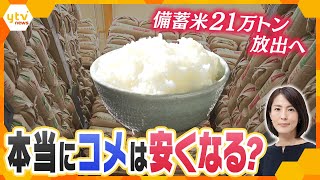
The Japanese government plans to release 200,000 tonnes of emergency rice stockpile as prices soar in an unprecedented attempt to stem soaring prices caused by record summer heat, panic buying, and distribution problems.

Agriculture minister Taku Eto noted that the government did not typically intervene in the market but conceded that recent price rises "have significantly impacted people's lives. The price hike has been too sharp, so we have made this decision." Japanese rice inventories have fallen to the lowest levels since 1999. Japan's rice stocks drop to the lowest level in decades amid the tourist boom and poor crop yields.

The latest average retail price of a 5kg bag of the Japanese staple was ¥3,688 ($24), according to a government survey, up from ¥2,023 last year. Japan's government has previously dipped into its rice reserves in the aftermath of natural disasters or crop failures, but this is the first time it has intervened over distribution issues, including when supply chain disruption contributes to rising prices. Japan's rice stockpiles had depleted after record-breaking temperatures affected the 2023 crop. Stockpiles shrank again last year, partly due to a rise in consumption caused by record tourists. Panic buying also hit supplies in the wake of typhoon and earthquake warnings, forcing some retailers to restrict sales.

 
Rice hoarding and speculation are as old as Japan's history. Despite a plethora of countermeasures, the current rice crisis is still far from relenting. The causes lie in a culmination of several adverse circumstances. In a nutshell:

  • Speculation and hoarding: Traders and non-traditional buyers bought large amounts of rice to resell at higher prices, while farmers held back sales, hoping for better prices.
  • Government delays and missteps: Officials were slow to act, and even after releasing stockpiled rice, prices didn't drop because the release volume was too small.
  • Public panic buying: A disaster advisory led consumers, restaurants, and distributors to stockpile rice, adding unexpected demand.
  • Potential supply shortage: Some experts believe rice production was overestimated, and the harvest may have been smaller than predicted.

Asahi describes how "rice traders" bought up tonnes of new rice to sell online at marked-up prices.


Meanwhile, Japanese ex-pats living in the U.S. find out that imported Japanese rice is cheaper there than in their country of origin.

 
The last thing I ever expected Japan to run out of was rice.

Are officials and police looking for business permits from the re-sellers?
 
It's crazy how rice imported from Japan can be cheaper than if it stayed in Japan!

One of the articles @thomas linked talked about how "Nishiki" is becoming popular among expats. I can understand why. We never got in the habit of buying that one, but we usually would buy this one here in the States. I used to insist on only buying rice specifically labelled as koshihikari, and the one I linked at the time was the cheapest one we could find.

Hopefully the next crop is a good one for the farmers in Japan!
 
It's crazy how rice imported from Japan can be cheaper than if it stayed in Japan!

One of the articles @thomas linked talked about how "Nishiki" is becoming popular among expats. I can understand why. We never got in the habit of buying that one, but we usually would buy this one here in the States. I used to insist on only buying rice specifically labelled as koshihikari, and the one I linked at the time was the cheapest one we could find.

Hopefully the next crop is a good one for the farmers in Japan!
Thats just America for you. We mess up everything, even prices, for better of for worse! Though you live in America so you probably already know that.
 
It's crazy how rice imported from Japan can be cheaper than if it stayed in Japan!

One of the articles @thomas linked talked about how "Nishiki" is becoming popular among expats. I can understand why. We never got in the habit of buying that one, but we usually would buy this one here in the States. I used to insist on only buying rice specifically labelled as koshihikari, and the one I linked at the time was the cheapest one we could find.

Hopefully the next crop is a good one for the farmers in Japan!
That is the one we usually get but there are pretty good Korean brands that H-Mart sometimes has as well. Sunshine Moonlight: MoonLight Koshihikari Short Grain Rice 4.4lb(2kg) - The Best of Asia in America
And another one they occasionally have that I don't recall the name of and that they don't seem to have listed on the website. It says premium on it in gold lettering I think. They are all farmed in California though.
 
Next week, Japan will begin bidding for 150,000 tons of its 210,000-ton rice reserves. Consumers are most concerned about whether this release will lead to lower rice prices. Looking at past trends, the price of a 5-kilogram bag of rice was around 2,400 yen in January last year. Now, it has surged to nearly 4,000 yen.


The Japanese government began releasing its vast emergency stockpile yesterday to curb record-high prices driven by supply chain disruptions. The rice is being distributed from a storage facility in Saitama Prefecture. In response to market instability, the agriculture ministry has revised its policy to permit the release of emergency reserves when supply issues lead to price surges. The ministry has indicated that the transfer of rice to successful bidders will accelerate, with surplus stocks expected to reach supermarket shelves by late March.

On March 18, workers started to carry out the rice from around 9:30 a.m. Twelve tons of bags of rice, which were harvested in 2024 and won in an auction by the National Federation of Agricultural Cooperative Associations (Zen-Noh), were removed from the storage facility first. The rice had been stored in the warehouse, where the temperature and humidity levels were controlled. Thirty-kilogram bags of rice, which had been piled high, were carried on pallets and loaded onto trucks by forklifts in rapid succession. In the first bidding conducted in mid-March, about 140,000 tons were won by major organizations such as Zen-Noh, which usually purchases rice from farmers and sells the crop to distributors or wholesalers. The volume was 94.2 percent of the expected 150,000 tons by the government. The winning bid for 60 kg, including consumption tax, was 22,914 yen ($153), lower than the price between dealers in January by 3,000 yen.


I also heard on the news today that farmers are planning to allocate more land to growing rice this year.
 
The government blames logistics:

The government has attributed the extremely low volume of stockpiled rice reaching retail shelves to logistical challenges. On 18 April, the Ministry of Agriculture released an analysis of Japan's first-ever sale of rice from national reserves. Although approximately 142,000 tons were made available during an auction held from 10 March to 12, the ministry reported that just 426 tons—or a mere 0.3%—had arrived at supermarkets and other retail outlets by 30 March.

The intended goal of easing rice prices was not achieved, largely due to distribution delays caused by a shortage of delivery trucks. During the auction, the ministry requested that distributors and wholesalers provide data on the final destinations of the rice they obtained. The study tracked the movement of the rice between 17 and 30 March.

The findings revealed that only about 4,071 tons—around 3% of the initial release—were delivered to distributors. Of that amount, 2,761 tons were passed on to wholesalers. However, just 426 tons eventually reached retail locations, with an additional 35 tons sold to restaurants and other commercial rice users.

 
I thought more people were eating morning pizza bread then rice these days, so why is there a rice shortage?
 
I thought more people were eating morning pizza bread then rice these days, so why is there a rice shortage?

That's what this entire thread tries to look into. :)

Meanwhile, Japan has started to import rice from South Korea for the first time in more than 25 years.

While Japanese consumers have traditionally been sceptical about the quality and taste of foreign rice – Thai rice imported after an unusually cool summer in 1993 largely went unsold – the current crisis has forced Japanese consumers to develop a taste for foreign rice. South Korea's rice exports to Japan are expected to reach their highest since 1990, according to the Yonhap news agency, while the crisis has also opened up potential export opportunities for producers in the US. Arata Hirano, who runs a restaurant in Tokyo, switched from Japanese to American rice last year when a shortage of the domestic grain triggered a steep rise in prices. Hirano told Reuters that the cost of the Californian product he now served had doubled since his first purchase last summer, but was still cheaper than homegrown rice. And he has had no complaints from diners, including Miki Nihei, who was surprised to find out the rice she had eaten wasn't grown in Japan. "I had no idea," she said. "I have no qualms about eating imported rice. Prices have increased, so I'm always looking for cheaper options."

 
That's what this entire thread tries to look into. :)

Meanwhile, Japan has started to import rice from South Korea for the first time in more than 25 years.


I just bought rice from Taiwan 5 kilos for $3,599 yen I guess the American rice now is being highly tariff it was 3, 599 . Yeah now it's sold out wow weird times we live in
 
I just bought rice from Taiwan 5 kilos for $3,599 yen I guess the American rice now is being highly tariff it was 3, 599 . Yeah now it's sold out wow weird times we live in
And the price of Japanese rice which quite frankly is still quite available at least the low-end price is sold out but the high price starting at $5,000 yen it's on the shelves still but I wonder what type of rice the these beef bowl restaurants are using these days either it's hard to imagine you're using Japanese rice maybe American rice or Taiwan rice and now South Korean rice perhaps don't know actually
 
Distribution issues or hoarding? :unsure:

According to agriculture ministry data published on 7 May, rice prices at supermarkets across Japan have continued to climb for the 17th consecutive week, even after the government released hundreds of thousands of tons from its stockpile. Between 21 and 27 April, the average price for a 5-kilogram bag of rice at roughly 1,000 supermarkets was 4,233 yen (around $30), an increase of 12 yen from the previous week. That figure is more than double the 2,088 yen average recorded during the same week in 2024.

While some 210,000 tons of government-held rice were released via auctions in March, only a limited amount has made it to retail outlets, keeping prices elevated for consumers. The Ministry of Agriculture had expected distribution issues with the released rice to be resolved by the end of April. Still, the latest figures indicate that these problems remain unresolved.

 
Koizumi Shinjiro, Japan's new "rice minister," successor of the unfortunate Eto Taku, vows to halve prices until June.

I wonder how he'll rein in the greedy tentacles of JA, which has no interest in a lower rice price.

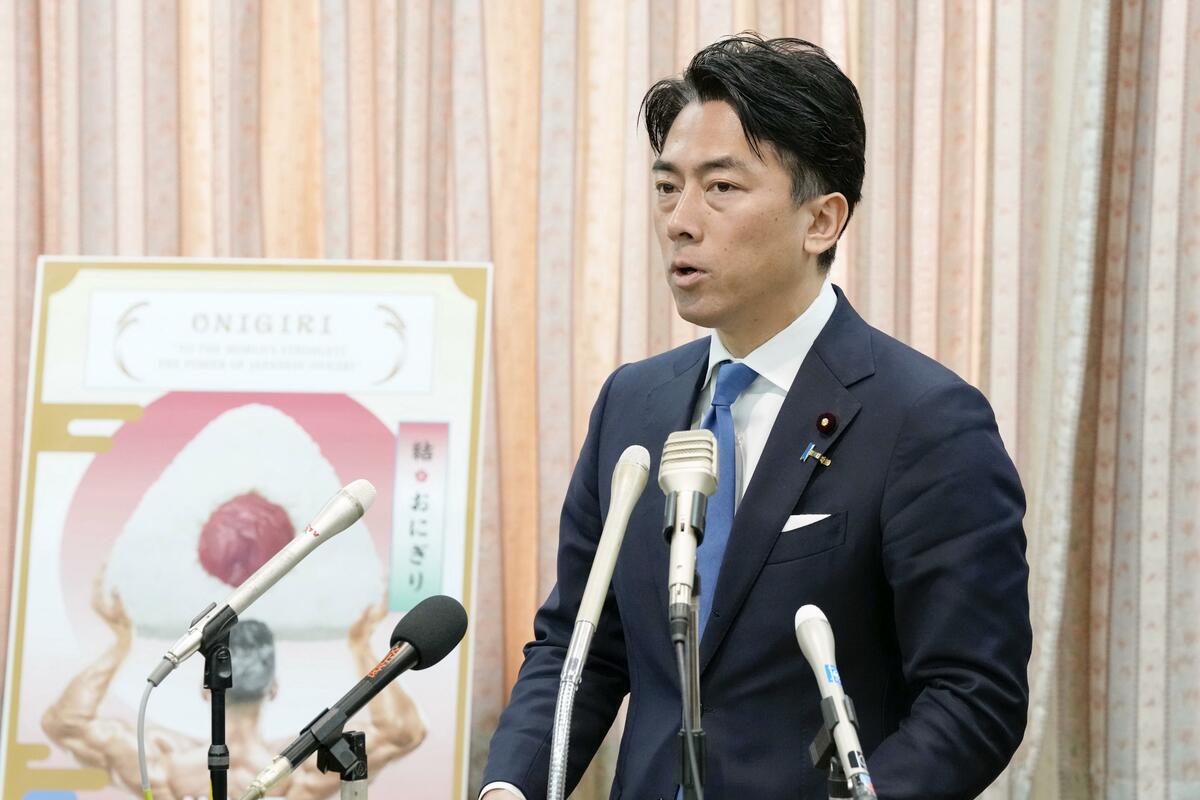
Japan's new agriculture minister reportedly pledged on Friday, 16 May, to swiftly lower rice prices to ¥2,000 (around $14) per 5 kilograms, offering relief to consumers affected by rising inflation. Shinjiro Koizumi was said to have announced on public broadcaster NHK that the government would distribute rice from its reserves to major retailers through no-bid contracts. He reportedly stated that an initial 300,000 metric tonnes would be released. He indicated there would be no upper limit if demand exceeded that amount. Koizumi, appointed to the post earlier in the week, was believed to have been selected with expectations that he would push forward much-needed reforms. His predecessor, Taku Eto, had resigned after sparking public outrage by reportedly saying he never purchased rice, as he relied on donations from supporters. Government sources indicated that the Ministry of Agriculture, Forestry and Fisheries would make an official announcement with further details on Sunday, 26 May. The rice was expected to reach supermarket shelves by early June. It was reported that the Rakuten Group had expressed interest in participating in the sale of the government's stockpiled rice. Only about 50 retailers handling at least 10,000 tonnes of rice annually were expected to be eligible for participation. The usual distribution system, which routes reserve rice through JA Group-affiliated bulk handlers and wholesalers before reaching retailers, was seen as contributing to unnecessary delays.

Paywall alert:
 
Japan, under its new "rice minister" Koizumi, commenced the sale of government-held rice stockpiles through direct contractual agreements on Monday, following a pledge by the newly appointed Minister of Agriculture to rein in surging prices of the national staple by offering the stockpiled rice at less than half the prevailing market rate. Aiming to bring prices down to approximately 2,000 yen (around $14) per 5 kilograms by early June, the government plans to release rice harvested in 2021 and 2022 through agreements with major retail outlets, including supermarkets.

The plan to release 300,000 tons of rice bypasses the auction system, under which farming cooperatives purchased most of the previously released stock, limiting the government's ability to influence prices.

The rice, harvested a few years ago, will be sold at an average pretax price of 10,700 yen per 60 kilograms, with the government covering transportation costs to regional areas. Online sales are also being considered to widen distribution. "Had we continued as we were, I did not believe we could fulfill people's expectations," farm minister Shinjiro Koizumi told Ministry of Agriculture, Forestry and Fisheries officials in a meeting, which was open to the press. "We will move at speed and with urgency to dispel the people's concerns," he said. On the same day, the agriculture ministry established a special response team of some 500 members nationwide tasked with handling high rice price issues. Koizumi said the group must prevent a situation where the public starts to turn away from rice products. Large retailers handling 10,000 tons or more rice will receive such contracts.


This will pit the Ishiba government directly against JA and the rice lobby. It will be interesting to see how it plays out.
 
Today, retailers like Ito-Yokado have started selling government-stockpiled rice. At some locations, the provisions were sold out within 30 minutes.

Leading home goods firm Iris Ohyama Inc., headquartered in Sendai, sold a combined total of 160 5-kilogram bags for 2,160 yen (about $15) each across two affiliated home center stores. Though the initially scheduled sale date was June 2, these plans were pushed forward after milling and shipping progressed more smoothly than anticipated, allowing consumers to buy the rice only five days after the company had expressed an interest in purchasing it. Sales were limited to one bag per customer and conducted at its two home centers, one in Sendai, and one in Matsudo, Chiba Prefecture. At the Sendai store, where 95 bags were available, approximately 250 people had lined up for numbered tickets by around 7:30 a.m., despite rainy weather.


Some of the rice dates back to 2021 and 2022, and many new programs started tasting and comparing the different varieties.

Tamaki Yuichiro, head of the opposition DPP, compared the stockpiled rice to "livestock feed," a comment for which he apologised today.

 
Today, retailers like Ito-Yokado have started selling government-stockpiled rice. At some locations, the provisions were sold out within 30 minutes.


Some of the rice dates back to 2021 and 2022, and many new programs started tasting and comparing the different varieties.

Tamaki Yuichiro, head of the opposition DPP, compared the stockpiled rice to "livestock feed," a comment for which he apologised today.

I'm pleasantly surprised with how quickly the government has moved on this!
 
Lawson has started selling "vintage rice."
  • "Vintage Rice Onigiri" made from rice harvested in 2023 at lower prices than its usual onigiri.
  • A 1-kilogram package of government rice to be sold for 360 yen before taxes.
  • A 2-kilogram package for 700 yen.

Vintage Rice Onigiri

Vintage Rice Onigiri


Back
Top Bottom