You and I cannot but my wife swears she can tell last years rice. It is more dry and absorbs less she says. She runs into a lot of old rice in the US she says. What year's "new crop"? My wife also can tell difference between brands, I do not often notice. Or good bags and bad bags or rice. Rice is a big deal in our house. One advantage of not being a rice solminer is that I can eat the cheaper rice
"Wait, is that really okay?" Farmers Surprised by Price Offers in Fierce Competition for Japan's Earliest New Rice (Saturday Station, June 14, 2025)
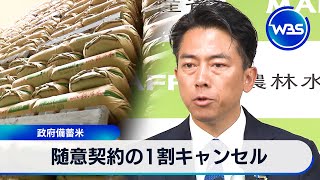
As reserve rice stocks gradually enter the market, attention is turning to the price of this year's new rice crop. A visit to one of the earliest harvesting regions revealed a fierce competition—a kind of "rice war"—that may affect these prices. (Broadcast on June 14, "Saturday Station")
Heatwaves and Pests: Farmers Worried About New Rice Yields
Mr. Kenichi Arai, a rice farmer in Saitama who owns rice paddies equivalent to the size of about 10 Tokyo Domes, showed us the following:
"This is brown rice damaged by stink bugs. Last year, due to the heat and the stink bugs, I think our yield was down 20 to 30 percent. This year, I worry that stink bug numbers might explode even further."
— Kenichi Arai, Arai Agriculture
A survey in Saitama confirmed that the overwintering density of stink bugs was about 43 times higher than the previous year, raising alarm among farmers. Mr. Arai said that in nearby farms last year, yields dropped to one-tenth of normal due to extreme heat and rice stink bugs.
Amidst these challenges, pre-harvest rice buying at high prices has already begun.
"Last year, the price was around 17,000 yen per 60 kg, but this year it's around 22,000 to 23,000 yen."
— Kenichi Arai
The advance payment offered to farmers by JA (Japan Agricultural Cooperatives) when collecting rice is reportedly 5,000 to 6,000 yen higher than last year's price. But why is JA offering such high prices?
"It's probably because JA wasn't able to collect enough rice last year. The price they offered was too low, and private buyers were offering much higher prices. As a result, rice didn't flow into JA."
— Kenichi Arai
Pre-Harvest Buying Heats Up with Surprise Offers
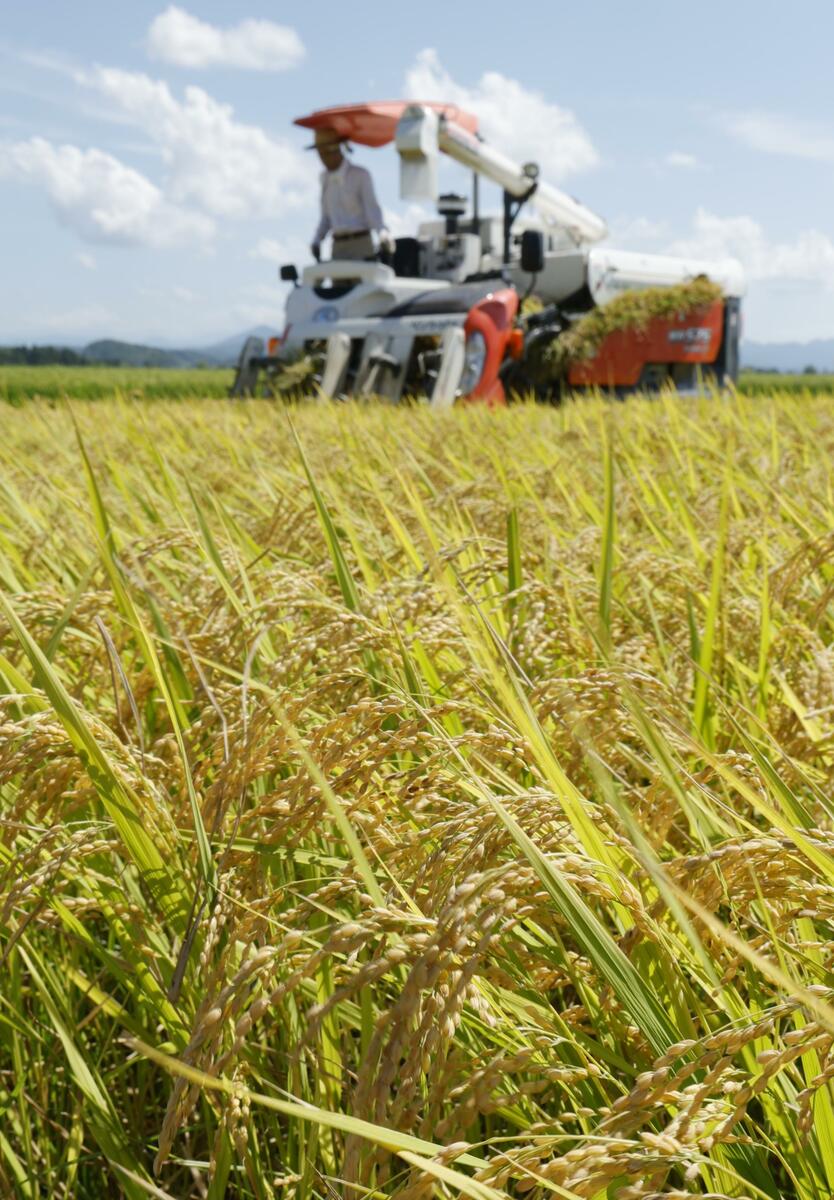
The fierce competition for new rice is also happening in Okinawa . In Ishigaki City, harvesting of Japan's earliest "early crop rice" has already begun.
"The crop this year? It's excellent. Almost too good — a bumper harvest."
— Nagatoshi Uechi, Ishigaki rice farmer
"This is the very first rice of the season. Japan's earliest new rice."
— Daiki Nakamoto, Ishigaki rice farmer
Smiling as he holds a heavy stalk of rice, Mr. Nakamoto explained that fierce competition has already begun for this new crop.
"Just yesterday, someone asked if they could visit my fields. We walked around together. Honestly, when they offered their price, I was like, 'Wait, is that really okay?'"
— Daiki Nakamoto
Although Mr. Nakamoto usually sells to JA, since March or April he has been receiving multiple inquiries from buyers outside the prefecture, offering surprisingly high prices.
"JA itself is offering prices much higher than last year, but private buyers offer even more if they negotiate directly. It was surprising. Still, as a father, I know how expensive rice can get for consumers. I don't want to sell for outrageously high prices, even though I probably could."
— Daiki Nakamoto
Rice "Spot Prices" Continue to Plummet
Meanwhile, an important index that affects rice prices is continuing to decline.
"Prices have dropped by about 12,000 yen. They've plunged twice now—it's quite a shock."
— Tomio Kanazawa, President, Kanazawa Rice Sales
Mr. Kanazawa, a rice wholesaler in Gunma Prefecture, has been closely monitoring the sudden drop in spot prices since the end of last month. Spot trading refers to deals between wholesalers that do not involve JA, and these prices serve as an important market indicator.
"The speed of the decline is astonishing."
— Tomio Kanazawa
For example, the price for a 60 kg bag of 2024 (Reiwa 6) Koshihikari from Ibaraki and Chiba has fallen from 48,500 yen at the end of last month to 36,000 yen as of yesterday—a drop of 12,500 yen.
"There's even data showing buyers hoping to push prices down another 2,000 to 3,000 yen. I expect prices will likely continue to fall, because the release of reserve rice has reduced demand for branded rice."
— Tomio Kanazawa
Retailers Still Waiting for Reserve Rice
Sales of reserve rice have also begun in Ishigaki City, Okinawa, meaning reserve stocks have now reached all 47 prefectures in Japan.
On June 10, Minister Koizumi announced additional releases of reserve rice.
"We will release an additional 200,000 tons—100,000 tons from 2021 and 100,000 tons from 2020 stockpiles. Since some stores have already sold out, we want to release more."
— Minister of Agriculture Koizumi (June 10)
However, many retailers still haven't received their stock.
At "Maruyasu" supermarket in Tokyo, they applied for 20 tons of reserve rice on May 30, but have yet to receive any.
"We had expected to get the reserve rice a bit sooner, so we had held back on other orders, and our inventory has now become quite low."
— Takashi Matsui, CEO of Super Maruyasu
Yesterday, the Ministry of Agriculture contacted the store:
"They sent us a draft contract, requesting we return it by the 18th. The earliest delivery will be in early July. It's later than I had expected."
— Takashi Matsui
What's Next? Prices May Drop to the 3,300 Yen Range by September
Anchor Aya Takashima:
"Reserve rice has started appearing in stores at about 2,000 yen, but what will happen to overall rice prices?"
Announcer Tomoki Itakura:
"Currently, the average price for rice sold at supermarkets nationwide is still over 4,200 yen for 5 kilograms. We spoke to experts: Assistant Professor Naoya Matsudaira (Utsunomiya University) and Professor Katsumi Arahata (Japan International Academy University). Both predict that with reserve rice stabilizing supply in July, prices will start falling to around 4,000 yen, and by August, may drop into the high 3,000 yen range."
Anchor Aya Takashima:
"What about by September, when new harvests arrive? Will prices fall further?"
Announcer Tomoki Itakura:
"Here the two experts differ slightly. Matsudaira expects that even though yields may be 400,000 tons higher than last year, potential heatwaves could lead to stink bug outbreaks in some regions, which may limit yields and keep prices in the high 3,000 yen range. On the other hand, Professor Arahata suggests that if the Ministry of Agriculture reports a bumper harvest in late August, prices could fall to between 3,300 and 3,500 yen."
Anchor Aya Takashima:
"Let's hope for a good harvest. What about the impact of imported rice?"
Announcer Tomoki Itakura:
"The 'minimum access' rice imports are expected to arrive starting in late September. Professor Arahata believes their impact will be limited, but Matsudaira warns that the additional supply could destabilize the market, making price trends harder to predict."
Anchor Aya Takashima:
"It seems we may need to wait a bit longer before rice prices stabilize."
Journalist Hideo Yanagisawa:
"Rice prices will be strongly affected by this summer's weather. If yields drop due to heatwaves, prices will rise. Besides reserve and imported rice, we'll need to keep an eye on the weather."
Anchor Aya Takashima:
"We also have to worry about flooding. Hopefully, the weather will cooperate and allow new rice to be sold at reasonable prices."
When I look at the nearby rice fields, I'm surprised to see that fallow fields, which had been left unused for many years, are now being cultivated and planted with rice.
I'm a bit worried that this year's rice harvest might be too abundant, causing problems due to oversupply.
The average retail price of a 5-kilogram bag of rice has fallen to ¥3,920 (about $26), dipping below the ¥4,000 mark for the first time in three and a half months, the farm ministry reported on 23 June. The figure, drawn from sales data at approximately 1,000 supermarkets nationwide between June 9 and 15, reflects a drop of ¥256—or 6.1%—compared to the previous week.
This is the fourth straight week that rice prices have declined, with the latest drop marking the first weekly decrease of more than ¥100 since March 2022, when the ministry began publishing this data. The fall in prices comes just three weeks after PM Ishiba pledged to bring the cost of rice below ¥4,000—a target that now appears to be taking effect.
The price of a 5kg bag of rice 10 years ago was 1,097 yen, so even if the price drops below 4,000 yen , it can't really be considered cheap.
In our household, we buy one 30kg bag of brown rice for 9,000 yen in the fall directly from a relative's farm.
We purchase 15bags at once and mill 10kg of brown rice each month.
The cost to mill 10kg of brown rice is 100 yen.
In the countryside, people often buy brown rice directly from farmers and use coin-operated rice milling machines.
"Polishing Your Own Rice" — Affordable and Delicious! What's the Secret? We Asked the Experts [Super J Channel, June 4, 2025]
More people are choosing to buy relatively inexpensive brown rice and polish it themselves. We spoke to professionals to learn the best techniques.■ "Polish Your Own Rice" – Tasty and Budget-Friendly!
The way people buy rice is starting to change.
A woman in her 50s says:
"If it's cheap, I'm willing to buy brown rice."
At Super Maruyasu in Tokyo's Itabashi Ward, they've applied for a discretionary purchase contract for reserve rice and are now awaiting results. But they've already decided on a unique sales method.
Takashi Matsui, President of Super Maruyasu:
"We pour about 30 kilograms of brown rice into a bin, and customers scoop it out using measuring cups."
It's a self-serve bulk system using a measuring cup. Customers typically take 2 kilograms at a time—and if there's no line, they can come back for more.
Takashi Matsui:
"We plan to sell it in 2-kilo units, probably around the high 600 yen range before tax."
That comes out to about 1,500 yen for 5 kilos before tax.
One of the key advantages of buying brown rice is the cost—because rice loses weight slightly during milling, it can be a few percent cheaper.
Another benefit is speed—without the need for milling or packaging in-store, rice can be sold right after it arrives.
Matsui:
"To speed things up, we're focusing on brown rice sales. We're aiming for at least half of all rice sold to be brown rice."
The store is preparing to install an in-store rice polishing machine so customers can polish rice themselves on-site.
An 80-year-old shopper comments:
"That kind of machine is handy. Brown rice lasts longer, so you can store it."
And now, another major shift is happening—more people are polishing rice themselves.
■ Sharp Increase in Use of "Coin-Operated Rice Mills"
There are now 16 unmanned coin-operated rice mills across Tokyo and Kanagawa Prefecture. Since rice prices began rising last September, these machines have seen a surge in users.
Yukio Suzuki (85), Five-Star Rice Meister, Suzukiya Rice Shop:
"Usage has continued throughout this year. I think it's because of this 'rice crisis.' People like being able to polish just the amount they need. You can start from as little as 2 kilos."
So how exactly do you polish rice at these machines?
First, insert coins—100 yen per 5 kilos. You can mill up to 30 kilograms.
Next, pour in the brown rice. You can choose your desired polishing level to suit your taste.
After pressing the start button, the machine makes a whirring sound as it begins milling.
In about 2 minutes, press a foot pedal—and out comes polished white rice. That's 5 kilos, fully milled.
There's even a bonus: you can take the rice bran home—useful for pickling, cleaning, and more.
More people are also polishing rice at home.
■ Booming Sales of Home Rice Mills
At Nojima Yamato store, Atsuya Ito explains:
"This is our rice mill section."
This electronics chain centered in Kanagawa has seen a sharp rise in sales of home rice milling machines.
Ito:
"Last year, demand was low. But last week, sales were up 371% year-over-year—nearly four times more."
Prices range from about 14,000 to over 30,000 yen, with most models able to mill around 5 cups of brown rice at a time.
■ Pro Tips for Polishing Rice at Home
We visited Kazuhito Arakane, who runs a rice milling shop in Yokohama and has over 23 years of experience.
Kazuhito Arakane, Suehiro Direct-from-Farm Rice Shop:
*(Q: Does the polishing method differ between new rice and older rice like "old-old-old rice"?)
"Yes. Older rice tends to have less moisture and is more likely to crack."
Home rice mills are powerful and fast, but older rice with low moisture may crack and lose more volume. To avoid that…
Arakane:
"Most home mills have settings like 'white rice,' '70% polished,' '50%,' and '30%.' I recommend starting with 70% and then doing a second run at 30%."
The key is polishing in two steps—a gentler process that reduces cracking.
Arakane:
"It's slower, but results in a more careful and refined polish."
(Q: Rice is precious—we want to eat every grain.)
"Exactly. We shouldn't waste it."
Comparing rice polished all at once to rice polished in two steps, the latter yields 20 grams more.
And freshly milled rice tastes better, too.
Arakane:
"Freshness is key. Brown rice is alive, but once it's polished into white rice, oxidation begins. Milling it right before eating—that's the best. And that means delicious."
TV announcer Moriyama then cooked the freshly milled rice in a rice cooker.
The result?
"The grains are plump and well-defined. From the very first bite, you can taste the natural sweetness of the rice, and the flavor intensifies the more you chew. There's a unique moistness and depth of flavor that only freshly milled rice has."
Rice-buying and rice-eating habits in Japan are evolving.
In our household, we buy one 30kg bag of brown rice for 9,000 yen in the fall directly from a relative's farm. We purchase 15bags at once and mill 10kg of brown rice each month. The cost to mill 10kg of brown rice is 100 yen. In the countryside, people often buy brown rice directly from farmers and use coin-operated rice milling machines.
The government's plan to stabilise rice prices by releasing stockpiled supplies into the market faces setbacks. With demand falling and an increasing number of order cancellations from retailers, rice is now lingering on store shelves. There are growing calls to extend the end-of-August sales deadline, as even discounted imported rice is failing to attract buyers. At the same time, rice prices have unexpectedly risen for the first time in ten weeks!
Initially launched as part of a campaign to flood the market and drive down prices, the plan is now prompting calls from retailers to extend the looming sales deadline. Panasonic has just unveiled a new rice cooker designed to cook even aged rice deliciously—an apparent nod to the current oversupply. But despite early enthusiasm, demand for the government-released stockpile rice has sharply declined. At one point, long lines formed before stores opened. Now, shelves are visibly stacked with unsold bags, and purchase limits have been lifted.
Some consumers remain hesitant to buy the older stockpiled rice. A woman in her 30s said her family was concerned about the fact that the rice was aged. She noted that the taste was noticeably different. Because they had young children, they had decided to return to their usual branded rice.
Agriculture Minister Koizumi stated that approximately 29,000 tons, about 10% of the 300,000 tons of stockpiled rice distributed to supermarkets and food service providers, had been cancelled. The cancellations are thought to be the result of delays in distribution and processing facilities. While the government has set the sales deadline for the end of the month, many businesses are reportedly calling for that deadline to be extended.
Japan’s government plan to flood the market with stockpiled rice to lower prices is facing setbacks, as demand slumps and cancellations from retailers increase. Initially popular, the rice is now piling up on shelves, prompting calls to extend the end-of-August sales deadline. Even discounted...
It's a rollercoaster. Releasing the government's reserves had only a temporary impact:
The average price of a 5-kilogram bag of rice at around 1,000 supermarkets in Japan rose above ¥4,000 in the week ending 7 September, marking the first time since early June that it has reached that level, according to the agriculture ministry. The average came to ¥4,155, an increase of ¥264 from the previous week and the second consecutive weekly rise. It was also the sharpest jump since records began in March 2022, driven by the arrival of this year's new crop and a reduced supply of lower-priced rice from government reserves.
Agriculture minister Koizumi noted on Thursday that prices had "stabilised to a certain degree," pointing out that they were around ¥4,200 when he assumed office in May. Still, the latest figures suggest that the effect of government stockpiles in holding prices down is starting to diminish.
Blended rice, including government-stockpiled rice, accounted for 30% of all sales during the week, down from 58% marked between late June and mid-July. Newly harvested rice and rice sold under brand names comprised 70% of sales. The average price of such rice rose ¥72 to ¥4,344. In late August, the agriculture ministry decided to extend the deadline for selling government-stockpiled rice since the ministry thought that slow deliveries to retailers made it difficult to sell it all by the original deadline set at the end of last month. At that time, the ministry said about 100,000 tons out of the contracted total of 280,000 tons remain undelivered.
Japan's 2025 rice harvest is projected to be the largest in nine years, reaching an estimated 7.48 million tonnes — about 10% more than last year, according to the agriculture ministry. The figure marks the first time since 2022 that total production is expected to surpass seven million tonnes. The estimate was based on data collected as of 25 September, when roughly 60% of the national crop had been harvested and preharvest ear counts were taken.
Last month, the ministry projected that 2025 brown rice production would amount to 7.28 million to 7.45 million tons while new crop demand would total 6.97 million to 7.11 million tons. The latest harvest estimate suggests the possibility of the rice supply excess expanding further. However, it remains to be seen whether retail rice prices, which have surged along with agricultural cooperatives' advance payments to producers, will turn lower, experts said. The ministry also showed a 2025 crop projection focusing on sieving to select larger grains, a common practice for rice farmers, saying the "sieve opening-based" yield would stand at 7.15 million tons, up 634,000 tons from the year before.
The new government is scrapping former PM Ishiba's policy to increase rice production and prevent shortages, which helped bring down sky-high prices, claiming that a potential oversupply could trigger sharp price declines and anger farmers.
What about angry citizens then?
Currently, rice prices remain high. The volume of rice production from the 2025 harvest is expected to reach 7.477 million tons, about a 10-percent increase from 2024. However, the ministry expects demand for staple food rice to range between 6.97 million tons and 7.11 million tons in 2026, roughly the same as 2025. As a result, the ministry plans to set the production forecast close to the upper end of the 2026 demand estimate. The 2026 production forecast is less than the volume of the 2025 harvest but still larger than the 2024 level. In announcing his plans to enhance rice production, Ishiba shifted away from the previous government's policy that focused on maintaining rice prices by curbing production.
The new government is scrapping former PM Ishiba's policy to increase rice production and prevent shortages, which helped bring down sky-high prices, claiming that a potential oversupply could trigger sharp price declines and anger farmers.
Prioritising farmers over citizens also suggests that the LDP will break their promise to reduce the number of rural constituencies.
All the signs are looking bad at the moment.
The Takaichi administration considers distributing rice certificates the centrepiece of its economic measures, as rice prices remain high nationwide and continue to rise. Several sources said Norikazu Suzuki, the farm minister, and Chief Cabinet Secretary Minoru Kihara met on 6 November and agreed to the rice voucher plan.
Suzuki had criticized the steps taken by Takaichi's predecessor, Shigeru Ishiba, to set targets for rice prices to ensure they did not surge out of hand. Suzuki had said the market should determine rice prices. Rice farmers were also critical about the sharp drop in rice prices brought about by the release of government stockpiled rice as an emergency measure under Ishiba. Sources said the rice voucher measure would be included in a regional tax subsidy program to help local communities. The program allows local governments to decide how to use the subsidies distributed by the central government. Some local governments are already using the subsidies to pay for their own rice certificate program.
In early November, Japan's Ministry of Agriculture released data showing that rice prices continued to climb. Between 22 October and 22 November, the average cost of a 5-kilogram bag at roughly 1,000 supermarkets nationwide rose to 4,235 yen, up 27 yen from the previous week. It was the ninth consecutive week the average price stayed above 4,000 yen, edging closer to the record high of 4,285 yen set since the current statistical system began in 2022.
Rice prices are rising again, reaching their highest level since May of this year:
Rice prices continued breaking records with the average retail price rising to 4,316 yen ($27.90), including tax, per 5 kilograms, marking a record high for the first time since May, the farm ministry announced on Nov. 14. The average price of 5 kg of rice sold at approximately 1,000 supermarkets nationwide from Nov. 3 to Nov. 9 increased by 81 yen, or 1.9 percent, from the previous week, the highest price recorded since the survey began in 2022. The price of the staple crop rose for the second consecutive week. The previous record high was 4,285 yen set during the week of May 12-18, just before the government released rice from its stockpile through discretionary contracts, which bypassed the traditional competitive bidding system. Brand-name rice sold for 4,573 yen, up 33 yen from the previous week, a record high for the fourth consecutive week. Prices of blended rice and others, including government stockpiled rice, also rose to 3,732 yen, up 176 yen from the previous week, the second consecutive week of increase.
And this was after a reasonably good harvest. The rice market in Japan is so messed up: it makes me angry how citizens are being ripped off over a staple food.
So much for the rice shortage! Japan now has huge stocks, as Japanese people have balked at paying 4,000 yen for 5 kg and switched their staple of choice or bought more reasonably priced foreign rice. Some of the comments in the article are interesting; they suggest that consumers know they've been taken for a ride by Japan's agriculture industry.
Rice is supposed to be the foundation of the Japanese diet, but these days there’s a whole lot of it that’s just sitting in warehouses. According to newly released data from Japan’s Ministry of Agriculture, Forestry and Fisheries, at the end of March there were approximately 2.7 million metric...
Japan's government on Friday acknowledged that its overestimation of rice supplies and delayed response in grasping the situation and releasing emergency stockpiles were to blame for the country's recent rice crisis. The shortage of rice became apparent around the summer of 2024, driven by supply-and-demand factors, including a poor harvest due to high temperatures, as well as increased consumption by inbound tourists and hoarding by some in preparation for a major earthquake, according to the government.
Japan's government on Friday acknowledged that its overestimation of rice supplies and delayed response in grasping the situation and releasing emergency stockpiles were to blame for the country's recent rice crisis.
english.kyodonews.net
I wonder why the White Paper does not seem to mention JA at all.
Japan's government on Friday acknowledged that its overestimation of rice supplies and delayed response in grasping the situation and releasing emergency stockpiles were to blame for the country's recent rice crisis.
english.kyodonews.net
I wonder why the White Paper does not seem to mention JA at all.
Or why the increase in rice consumption by foreign tourists is mentioned – a back-of-the-envelope calculation shows that it's a negligible factor, but the government seems determined to blame the foreigner for the country's woes.
Japan's 2026 Agricultural White Paper and the Rice Supply Crisis
In May 2026, the Japanese government approved its annual Agricultural White Paper, which reviewed the causes of the recent rice supply disruption and sharp rise in rice prices.
The report acknowledged that the government had overestimated the stability of Japan's rice supply and was slow to recognize problems in the distribution system. As a result, emergency measures, including the release of government stockpiled rice, were implemented later than they should have been.
Why Did the Rice Problem Occur?
According to the White Paper, several factors contributed to the situation:
High temperatures and weather-related impacts
Unusually hot weather affected rice production and quality in some regions.
Unexpectedly strong demand
The government had expected rice consumption to continue declining because Japan's population is shrinking.
However, demand remained stronger than anticipated.
Increase in inbound tourism
A record number of foreign visitors consumed more food, including rice, than government forecasts had assumed.
Panic buying and stockpiling
After the government's advisory regarding a possible major earthquake in the Nankai Trough region during 2024, some households purchased and stored extra rice, temporarily increasing demand.
Distribution issues
The government admitted that it did not sufficiently monitor changes in rice distribution channels and market conditions.
Government Response
The White Paper states that the government released emergency stockpiled rice in an effort to stabilize the market and reduce consumer anxiety.
However, it also acknowledges that the decision came too late and failed to immediately ease concerns among wholesalers and retailers.
Impact on Consumers
Rice prices rose significantly during the crisis, with retail prices temporarily exceeding 4,000 yen per 5 kilograms in some areas.
The high prices reportedly encouraged some households to substitute rice with other staple foods such as bread and noodles.
Growing Rice Imports
The report also noted a sharp increase in private-sector rice imports during 2025. While imports helped supplement domestic supply, the government expressed concern that excessive reliance on imported rice could negatively affect Japanese rice farmers and domestic production in the future.
Exports Continue to Grow
At the same time, international demand for Japanese agricultural products continued to expand. Exports of Japanese food products, including rice, beef, and green tea, increased substantially in 2025, reflecting growing overseas interest in Japanese agriculture.
Main Conclusion
The White Paper's central conclusion is that the rice supply disruption was caused not by a single factor, but by a combination of:
Weather-related production challenges,
Stronger-than-expected demand,
Increased tourism,
Consumer stockpiling,
Distribution bottlenecks, and
Delayed government response.
The government acknowledged shortcomings in its forecasting and market monitoring and stated that it would work to improve its ability to respond to future supply disruptions.
In short: The White Paper does not claim that foreign tourists alone caused the rice crisis. Rather, it concludes that multiple factors combined with government forecasting and distribution-management failures contributed to the rice supply and price problems.
Japan's government on Friday acknowledged that its overestimation of rice supplies and delayed response in grasping the situation and releasing emergency stockpiles were to blame for the country's recent rice crisis.
english.kyodonews.net
I wonder why the White Paper does not seem to mention JA at all.
Many people believe that Japan Agricultural Cooperatives (JA) controls most of the country's rice market. However, that is no longer the case.
Today, the JA Group collects and markets roughly 30% of Japan's table-rice production, while the remaining 70% is traded through non-JA channels, such as:
Private rice wholesalers
Food manufacturers
Restaurant chains
Supermarkets
Contract farming arrangements
Direct sales by farmers
Online sales and exports
In recent years, more farmers have chosen to sell rice directly to buyers or private companies instead of through JA, reducing JA's share of the market.
Why Is JA Still Influential?
Although JA handles only about one-third of Japan's rice production, it remains highly influential because:
It is still the single largest rice collection and marketing organization in Japan.
Its rice purchase prices often serve as a benchmark for the market.
It has an extensive nationwide network connecting farmers, cooperatives, and distributors.
It plays a major role in government rice stockpile programs.
For example, when the Japanese government released emergency stockpiled rice during the recent rice supply crisis, JA-affiliated organizations purchased the vast majority of the rice offered at auction.
Relationship to the Rice Crisis
One of the issues highlighted during the 2024–2025 rice supply disruption was that government statistics focused heavily on rice collected through traditional channels, including JA. However, a growing amount of rice was being traded through private and direct-sale channels, making it more difficult to accurately assess actual market conditions.
As a result, some analysts argue that the government underestimated demand and failed to fully understand changes in rice distribution patterns.
Summary
Category Approximate Share
JA Group About 30%
Non-JA channels About 70%
In short, JA no longer dominates Japan's rice market as it once did, but it remains a key player whose decisions can significantly influence rice prices and distribution nationwide.
This site uses cookies to help personalise content, tailor your experience and to keep you logged in if you register.
By continuing to use this site, you are consenting to our use of cookies.