- 14 Mar 2002
- 21,050
- 18,904
Water shortages are deepening across Japan as rainfall drops to levels meteorologists characterise as a once-in-30-year low. Riverbeds are emerging in places that would normally be submerged, while reservoirs in several regions have slipped toward record lows. The prolonged dryness is also being linked to a renewed rise in influenza cases.
In Tokyo, parts of the Asakawa River, which runs through Hino and surrounding districts, have dried to the extent that sections of the riverbed can now be crossed on foot. Aerial images suggest the current has all but stalled. Rainfall has been scarce for roughly a month — especially along the Pacific coast — leaving much of the country unusually parched.
Residents report that winter often results in lower water levels, yet some note that they have never observed the river this depleted. The Ogouchi Dam reservoir in Okutama, frequently described as Tokyo's main water store, stood at 40.8% on 13 February, slipping below any level recorded since the start of the Heisei era. City officials are urging households to conserve water—a familiar appeal, though the timing feels more acute this year.
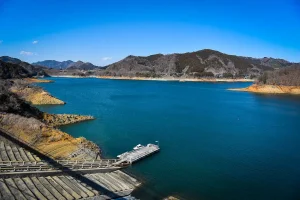
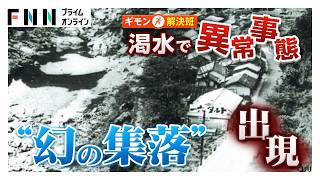
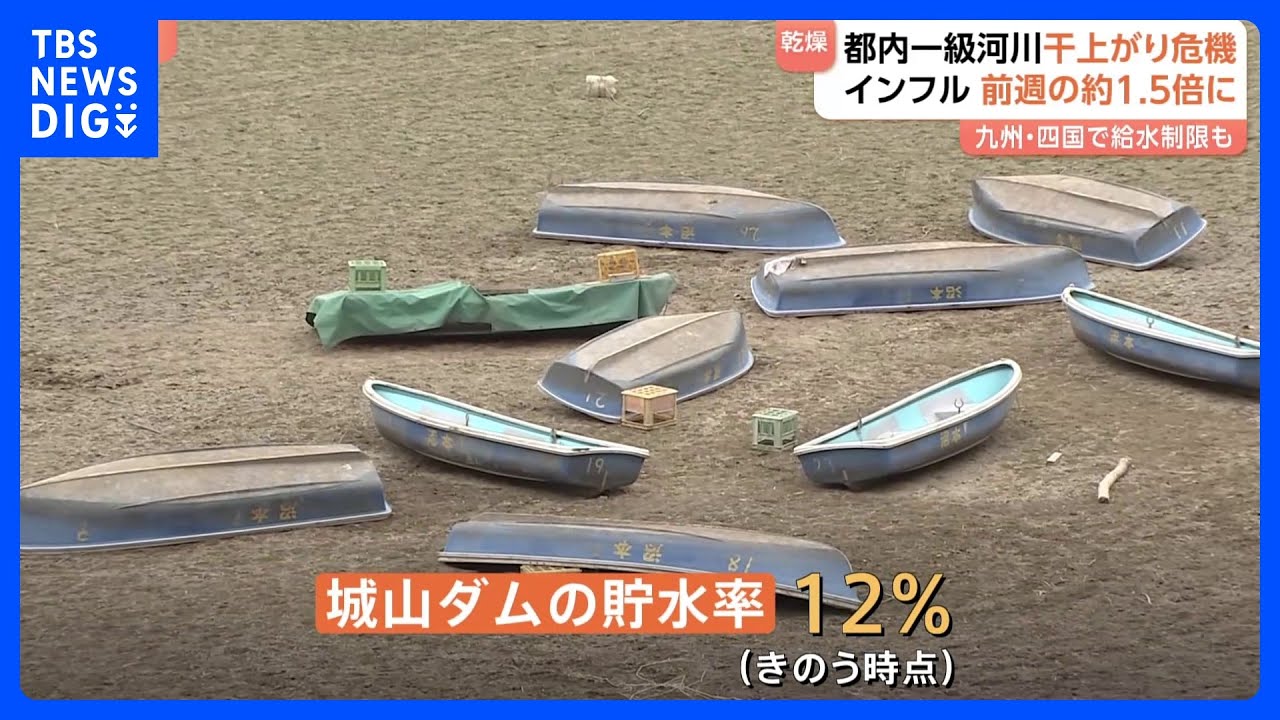
Neighbouring Kanagawa Prefecture is seeing similar conditions. At Lake Tsukui in Sagamihara, a well-known winter smelt fishing site, ground that is normally submerged now lies fully exposed. Stone steps assembled from piled rocks have surfaced in the mud, thought to be traces of a former settlement. One boat-rental operator reports that the business has been entirely closed since November because water levels have not recovered. Nearby, the Shiroyama Dam reservoir measured just 12% as of 16 February.
The Asakawa, Lake Tsukui and the Shiroyama Reservoir are our usual bicycle turf. Shocking to see them with so little or no water at all!
In Tokyo, parts of the Asakawa River, which runs through Hino and surrounding districts, have dried to the extent that sections of the riverbed can now be crossed on foot. Aerial images suggest the current has all but stalled. Rainfall has been scarce for roughly a month — especially along the Pacific coast — leaving much of the country unusually parched.
Residents report that winter often results in lower water levels, yet some note that they have never observed the river this depleted. The Ogouchi Dam reservoir in Okutama, frequently described as Tokyo's main water store, stood at 40.8% on 13 February, slipping below any level recorded since the start of the Heisei era. City officials are urging households to conserve water—a familiar appeal, though the timing feels more acute this year.
Neighbouring Kanagawa Prefecture is seeing similar conditions. At Lake Tsukui in Sagamihara, a well-known winter smelt fishing site, ground that is normally submerged now lies fully exposed. Stone steps assembled from piled rocks have surfaced in the mud, thought to be traces of a former settlement. One boat-rental operator reports that the business has been entirely closed since November because water levels have not recovered. Nearby, the Shiroyama Dam reservoir measured just 12% as of 16 February.
In western Japan, water supply restrictions have already begun. In Kochi City and 14 municipalities in Fukuoka Prefecture, authorities have started reducing water pressure to curb consumption. Kochi's restrictions mark the first in 28 years. Dry weather has also contributed to a rise in influenza cases. According to the health ministry, about 3,000 medical institutions nationwide reported an average of 43.34 influenza patients per facility in the week ending 8 February, roughly 1.5 times the previous week and the fifth consecutive weekly increase. A clinic director noted that viruses tend to remain airborne longer in dry conditions, increasing the likelihood of infection. The Japan Meteorological Agency expects below-average rainfall to continue for about another month. In central Tokyo on 16 February, temperatures reached levels typical of early April, only to swing back toward winter later that night. Snow was forecast for Tokyo's 23 wards, with possible accumulation depending on conditions.
'Once-in-30-Years' Drought Grips Japan | News On Japan
Water shortages are worsening across Japan amid what meteorologists describe as
newsonjapan.com
The Asakawa, Lake Tsukui and the Shiroyama Reservoir are our usual bicycle turf. Shocking to see them with so little or no water at all!