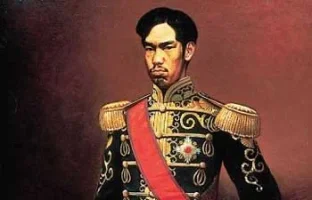
The Meiji Restoration (明治維新 Meiji Ishin) was a far-reaching process of political, social and economic transformation that reshaped Japan during the second half of the nineteenth century. Although commonly associated with the restoration of imperial rule in 1868, the changes generally referred to as the Meiji Restoration began during the closing years of the Edo period and continued well into the early Meiji era . Historians differ on its precise chronology. Some trace its origins to the Tenpō era reforms and crises of the 1830s and 1840s, while others regard the arrival of Commodore Matthew Perry in 1853 as the starting point. The endpoint is equally debated, with dates ranging from the abolition of the domains in 1871 to the suppression of the Satsuma Rebellion in 1877, or even to the establishment of constitutional government in the late 1880s.
Table of contents
- Introduction
- Historical Background
- Foreign Pressure and the Crisis of the Tokugawa Order
- Sonnō Jōi and the Rise of Reform Movements
- The Collapse of the Tokugawa Shogunate
- The Meaning of "Meiji Restoration": Restoration, Reform or Revolution?
- Establishment of the Meiji Government
- The Charter Oath and the New Political Order
- The Transfer of the Capital and the Creation of Tokyo
- Centralisation and the Abolition of the Domains
- Constitutional and Administrative Reform
- Social Transformation and the End of the Status System
- Military Reform and Conscription
- Economic Modernisation and Industrialisation
- Education, Thought and Intellectual Change
- Religion and Cultural Change
- Legacy and Historical Significance
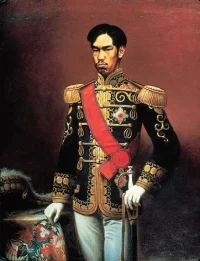
Emperor Meiji (明治天皇, 1852–1912) in Western military dress, photographed by Uchida Kuichi (内田九一, 1844–1875) in 1873. Although political power during the early Meiji period rested largely with a small group of oligarchs, the emperor became the symbolic centre of the new state and the embodiment of Japan's modernisation.
1. Introduction
In the broadest sense, the Meiji Restoration marked Japan's transition from the feudal bakuhan order of the Tokugawa shogunate to a centralised nation-state and capitalist society. It affected almost every sphere of life: politics, administration, law, the military, education, industry, finance, diplomacy, religion and social organisation.2. Historical Background
The origins of the Restoration lay in both domestic and international pressures. By the early nineteenth century, the Tokugawa system was showing signs of strain. Economic difficulties, peasant unrest and political dissatisfaction had become increasingly common. The Tenpō famine of 1833–1839 caused immense suffering and exposed weaknesses in the shogunate's administration. Uprisings such as the revolt led by Ōshio Heihachirō (大塩平八郎, 1793–1837) and the growing influence of scholars associated with kokugaku and Mito learning encouraged criticism of the existing order.3. Foreign Pressure and the Crisis of the Tokugawa Order
External developments proved equally significant. The defeat of Qing China in the First Opium War demonstrated the military superiority of the Western powers and raised fears that Japan might share the fate of other Asian states subjected to imperial expansion. When Commodore Perry arrived with the so-called Black Ships in 1853 and demanded that Japan open its ports, the shogunate faced a challenge it could not ignore.The subsequent opening of Japan to foreign trade through a series of unequal treaties provoked widespread unrest. Many samurai and intellectuals rallied behind the slogan sonnō jōi (尊皇攘夷), usually translated as "Revere the Emperor, Expel the Barbarians". Initially, this movement sought both the restoration of imperial authority and resistance to foreign influence. Yet military confrontations such as the Anglo-Satsuma War of 1863 and the Shimonoseki campaign of 1864 revealed the impossibility of expelling the Western powers by force. Increasingly, reformers concluded that Japan must modernise in order to preserve its independence.
Japanese woodblock print depicting one of Commodore Matthew Perry's steam-powered "Black Ships" (黒船 kurofune) that arrived in Japanese waters in 1853. Perry's expedition forced the Tokugawa shogunate to abandon more than two centuries of relative isolation and exposed Japan's military vulnerability to the Western powers. The arrival of the Black Ships is generally regarded as the catalyst for the political upheavals that culminated in the Meiji Restoration.
4. Sonnō Jōi and the Rise of Reform Movements
Political conflict intensified during the 1860s. The shogunate attempted to preserve its authority through policies of cooperation between the court and military government, but its prestige steadily declined. Reform-minded domains, especially Satsuma and Chōshū , emerged as centres of opposition. In 1866, leaders including Saigō Takamori (西郷隆盛, 1828–1877) and Kido Takayoshi (木戸孝允, 1833–1877) concluded the Satsuma-Chōshū Alliance, creating a powerful anti-shogunate coalition.5. The Collapse of the Tokugawa Shogunate
At the same time, various political visions competed for influence. Some advocated a government based on broad consultation among the domains, while others favoured a more centralised oligarchic system. The eventual outcome combined elements of both. In November 1867, Shogun Tokugawa Yoshinobu (徳川慶喜, 1837–1913) formally returned governing authority to the emperor in the act known as taisei hōkan (大政奉還). Shortly afterwards, the imperial court proclaimed the Restoration of Imperial Rule (Ōsei fukko). Conflict nevertheless continued. The ensuing Boshin War of 1868–1869 eliminated military resistance from supporters of the former shogunate and secured the authority of the new government.Shōkōsai Kunihiro (照皇斎国広), Mōri, Shima and Yama Government Forces Great Victory Picture (毛理嶋山官軍大勝利之図), colour woodblock triptych, 1868. This dramatic nishiki-e depicts the Battle of Toba–Fushimi (鳥羽・伏見の戦い), the opening engagement of the Boshin War (戊辰戦争). The titles' Mōri', 'Shima', and 'Yama' refer respectively to the Mōri clan of Chōshū, the Shimazu clan of Satsuma and the Yamauchi clan of Tosa, whose forces fought on the imperial side. The battle ended in a decisive defeat for the Tokugawa shogunate and marked a turning point in the struggle that culminated in the Meiji Restoration. Yodo Castle can be seen in the background as shogunate forces retreat before the advancing imperial army.
6. The Meaning of "Meiji Restoration": Restoration, Reform or Revolution?
The term "Meiji Restoration" itself has attracted considerable debate. During the late Edo and early Meiji periods, contemporaries often referred to the changes as goisshin ("great renewal") or simply isshin. The word ishin derives from a phrase in the Chinese classic Shijing meaning "renewal" or "renovation". Because the transfer of authority was formally presented as a restoration of ancient imperial rule rather than the overthrow of one dynasty by another, the term "restoration" became established in English. Nevertheless, many historians have argued that the scale of social and political change justifies describing the events as a revolution. Scholars such as Marius B. Jansen, Andrew Gordon, and Mitani Hiroshi have employed the term "Meiji Revolution" to recognise the profound restructuring of Japanese society. Others emphasise that the Restoration contained elements of restoration, reform and revolution simultaneously.7. Establishment of the Meiji Government
The new Meiji government was established in 1868 under the nominal direct rule of Emperor Meiji (明治天皇, 1852–1912). Since the emperor was still a teenager, real power rested with a small group of leaders drawn largely from Satsuma, Chōshū, Tosa and Hizen. Early administrative reforms revived many of the names and institutions associated with the ancient ritsuryō state, though they were adapted to modern circumstances.8. The Charter Oath and the New Political Order
One of the government's first acts was the promulgation of the Charter Oath (Gokajō no Goseimon), issued on 6 April 1868. This short document proclaimed principles of public deliberation, social cooperation, the abandonment of "evil customs" and the pursuit of knowledge throughout the world. It became the ideological foundation of the new regime.9. The Transfer of the Capital and the Creation of Tokyo
The capital also changed. Although some leaders initially favoured moving the capital to Osaka, Edo ultimately became the seat of government. In September 1868, the city was renamed Tokyo ("Eastern Capital"). No formal decree permanently transferring the capital was issued, but the emperor's repeated visits and the relocation of government institutions established Tokyo as Japan's de facto capital.10. Centralisation and the Abolition of the Domains
Centralisation proceeded rapidly. In 1869, the former domain lords voluntarily returned their lands and populations to the emperor in the process known as hanseki hōkan (版籍奉還). Two years later, in August 1871, the domains themselves were abolished and replaced by prefectures under direct central control. This measure, known as haihan chiken (廃藩置県), dismantled the political foundations of feudalism with remarkable speed.11. Constitutional and Administrative Reform
Government institutions remained fluid during the early years. Various ministries were created, reorganised and abolished as the state evolved. The establishment of the cabinet system in 1885 finally brought greater administrative stability. Legislative institutions also developed gradually. The Genrōin, or Senate, was established in 1875, and growing demands associated with the Freedom and People's Rights Movement eventually led Emperor Meiji to promise a national assembly in 1881. The Constitution of the Empire of Japan was promulgated in 1889, and the Imperial Diet convened for the first time the following year, creating Asia's first modern constitutional monarchy.12. Social Transformation and the End of the Status System
The Restoration also transformed Japanese society. The formal distinctions between samurai, peasants, artisans and merchants were abolished. Former court nobles and daimyō became members of the new peerage, while former samurai were classified as shizoku. Commoners gradually gained the right, and later the obligation, to adopt surnames.These changes did not eliminate social inequalities, and many former samurai resented the loss of their hereditary privileges. The abolition of stipends and the prohibition on wearing swords contributed to a series of rebellions that culminated in the Satsuma Rebellion of 1877, led by Saigō Takamori.
13. Military Reform and Conscription
Military reform formed another cornerstone of the new state. Universal conscription, introduced in 1873, created a national army based on Western models. Under the leadership of figures such as Ōmura Masujirō (大村益次郎, 1824–1869) and Yamagata Aritomo (山縣有朋, 1838–1922), Japan established modern army and naval institutions capable of defending national independence.14. Economic Modernisation and Industrialisation
Economic modernisation proceeded with equal determination. Land tax reform created a stable fiscal system based on private land ownership and monetary taxation. Government-sponsored industrialisation promoted railways, telegraph networks, shipyards and model factories, including the Tomioka Silk Mill established in 1872. The first railway line between Shimbashi and Yokohama opened that same year.Financial institutions also underwent major reform. The yen became Japan's national currency, national banks were established and the Bank of Japan was founded in 1882. Many state-owned enterprises were later sold to private interests, helping lay the foundations for modern industrial capitalism.
15. Education, Thought and Intellectual Change
Modernisation extended beyond politics and economics. Educational reform created a national school system, while intellectual movements associated with thinkers such as Fukuzawa Yukichi (福澤諭吉, 1835–1901) promoted ideas of civilisation, progress and individual advancement. The celebrated Iwakura Mission of 1871–1873, led by Iwakura Tomomi (岩倉具視, 1825–1883), travelled through the United States and Europe to study Western institutions and technologies. Although its attempt to revise the unequal treaties failed, the mission profoundly influenced subsequent reforms.16. Religion and Cultural Change
Religious policy proved more contentious. The new government initially sought to revive ancient forms of imperial-centred ritual and separated Shintō and Buddhism through the shinbutsu bunri policies. In many regions, this triggered the anti-Buddhist movement known as haibutsu kishaku (廃仏毀釈), during which numerous temples and religious artefacts were destroyed. At the same time, the government struggled to balance traditional values with diplomatic pressures from Western nations and the realities of an increasingly pluralistic society.17. Legacy and Historical Significance
The Meiji Restoration was therefore far more than a political transfer of power. It represented a comprehensive remaking of Japan. Within a few decades, the country had dismantled its feudal order, created centralised state institutions, established a modern economy and emerged as a major power in East Asia. Whether understood primarily as a restoration, a reform movement or a revolution, the Meiji Restoration remains one of the most significant transformations in modern world history.Chronology
- 1833–1839: The Tenpō Famine exposes weaknesses in the Tokugawa system and contributes to widespread social unrest.
- 1837: Ōshio Heihachirō's rebellion takes place in Osaka.
- 1839: The Bansha no goku (蛮社の獄) suppresses scholars advocating greater openness to foreign knowledge.
- 1842: Following China's defeat in the First Opium War, the shogunate relaxes its policy of expelling foreign vessels.
- 1853: Commodore Matthew Perry arrives in Japan with the "Black Ships", demanding the opening of the country.
- 1854: The Convention of Kanagawa is signed between Japan and the United States.
- 1858: The Harris Treaty and other unequal treaties are concluded; the Ansei Purge begins.
- 1860: Ii Naosuke (井伊直弼, 1815–1860) is assassinated in the Sakuradamon Incident.
- 1863: The Anglo-Satsuma War demonstrates Western military superiority.
- 1864: The Shimonoseki campaign compels Chōshū Domain to abandon militant anti-foreign policies.
- 1866: The Satsuma-Chōshū Alliance is concluded through the efforts of Sakamoto Ryōma (坂本龍馬, 1836–1867) and others.
- 1867: Tokugawa Yoshinobu returns governing authority to the emperor (taisei hōkan); the Restoration of Imperial Rule is proclaimed.
- 1868: The Boshin War begins; the Charter Oath is promulgated; Edo is renamed Tokyo; the Meiji era officially commences.
- 1869: The Boshin War ends with the fall of Hakodate; the domains surrender their registers and lands to the emperor (hanseki hōkan).
- 1871: The domains are abolished and replaced by prefectures (haihan chiken); the Iwakura Mission departs for the West.
- 1872: Japan's first railway opens between Shimbashi and Yokohama; the national education system is introduced.
- 1873: Universal military conscription and the land tax reform are introduced.
- 1874: The Movement for Freedom and People's Rights begins to gain momentum.
- 1877: The Satsuma Rebellion is suppressed, marking the end of large-scale samurai resistance.
- 1881: The emperor promises the establishment of a national assembly.
- 1885: The cabinet system is established, replacing the Daijō-kan system.
- 1889: The Constitution of the Empire of Japan is promulgated.
- 1890: The first Imperial Diet convenes.
References:
- Beasley, W. G., The Meiji Restoration, Stanford: Stanford University Press, 1972.
- Gordon, Andrew, A Modern History of Japan: From Tokugawa Times to the Present, 3rd ed., New York: Oxford University Press, 2014.
- Irokawa, Daikichi, The Culture of the Meiji Period, Princeton: Princeton University Press, 1988.
- Jansen, Marius B., The Emergence of Meiji Japan, Cambridge: Cambridge University Press, 1995.
- Jansen, Marius B., The Making of Modern Japan, Cambridge: Harvard University Press, 2000.
- Keene, Donald, Emperor of Japan: Meiji and His World, 1852–1912, New York: Columbia University Press, 2005.
- Mason, R. H. P., and J. G. Caiger, A History of Japan, revised ed., Tokyo: Tuttle Publishing, 1997.
- Swale, Alistair, The Meiji Restoration: Monarchism, Mass Communication and Conservative Revolution, Basingstoke: Palgrave Macmillan, 2009.
- Totman, Conrad, A History of Japan, 2nd ed., Malden, MA: Blackwell Publishing, 2005.
Nishiki-e (colour woodblock prints) of Meiji dignitaries, depicted by Yamazaki Toshinobu, September 1877 (Meiji 10).