

The ritsuryō (律令) system was the legal and administrative system that governed Japan from the late seventh century to the early Heian period . Based on Chinese models, particularly those of the Tang dynasty, it combined a comprehensive criminal code (ritsu) with an administrative code (ryō), laying the foundations for a centralised government, a national bureaucracy, land administration, taxation, military organisation, and the regulation of social life. Although many of its institutions gradually lost their practical effectiveness after the ninth century, the ritsuryō system shaped the development of the Japanese state for centuries and left a lasting influence on later government.
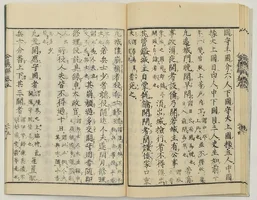
A manuscript of the Yōrō Code (養老律令), the revised version of the Taihō Code that formed the legal foundation of Japan's ritsuryō state. Although the original Taihō Code no longer survives, later copies and official commentaries preserve much of its content.
Origins
The emergence of the ritsuryō state was part of a broader effort to transform Japan from a federation of powerful regional clans into a unified empire under the authority of the emperor. The first decisive step came with the Taika Reforms of 645, launched after the overthrow of the Soga clan . Inspired by the highly organised institutions of Tang China, the reforms sought to strengthen the authority of the imperial court by centralising political power, bringing land under state control, and creating a more systematic bureaucracy. Although many reforms took decades to implement fully, they marked the beginning of Japan's transition towards a centrally governed state.The philosophical foundations of the system reflected two major currents of Chinese political thought. Confucianism emphasised moral government, hierarchy and the proper conduct of rulers and officials, while Chinese Legalism stressed clearly defined laws, administrative discipline and effective state control. Japanese rulers adapted these ideas to local circumstances rather than adopting them unchanged, producing a legal order that combined imported principles with indigenous institutions and customs.
Development of the legal codes
Several successive legal compilations preceded the mature ritsuryō state. The earliest was the Ōmi Code (近江令), traditionally dated to 668 during the reign of Emperor Tenji (天智天皇, 626–672). According to later sources, it was compiled under the direction of Fujiwara no Kamatari (藤原鎌足, 614–669). However, modern historians continue to debate whether this code actually existed in the form described by medieval records. No complete text survives.It was followed by the Asuka Kiyomihara Code (飛鳥浄御原令), compiled under Emperor Tenmu (天武天皇, c.631–686) and completed during the reign of Empress Jitō (持統天皇, 645–703). Although this code also survives only through later references, it represented a significant step towards the comprehensive legal system that followed.
The decisive milestone came in 701 with the promulgation of the Taihō Code (大宝律令). Consisting of six volumes of criminal law and eleven volumes of administrative law, it is generally regarded as the first complete expression of the Japanese ritsuryō system. It formalised reforms that had gradually been introduced throughout the seventh century and established the legal framework of a highly centralised state. While the original text has been lost, its structure and contents are known through later revisions and official commentaries.
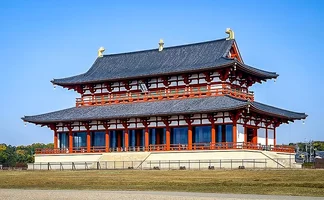
Reconstruction of the Daigokuden (Great Hall of State) at Heijō Palace in Nara, where the central institutions of the ritsuryō government conducted state ceremonies and administration.
The original legal texts themselves have not survived, but several official commentaries remain invaluable historical sources. Among the most important are the Sakutei Ritsuryō, completed in the late eighth and early ninth centuries, the Ryō no Gige (令義解) of 833, and the Ryō no Shūge (令集解), compiled around 877. These works preserve substantial portions of the earlier legislation and provide detailed explanations of how the laws were interpreted and applied in practice.
Unlike modern legal systems, which separate different branches of law, the ritsuryō codes covered almost every aspect of government. The criminal code defined offences and punishments, while the administrative code regulated the organisation of government, religious affairs, household registration, education, official appointments, the military, taxation, public works, medical services, markets, judicial procedures, funerary practices and many other areas of administration. Together, they provided the legal framework for governing the state.
Government and administration
The ritsuryō state was built around a highly centralised bureaucracy modelled on that of Tang China. It aimed to replace the loose network of powerful regional clans that had dominated earlier Japanese politics with a government directed from the imperial court. The court-appointed officials administered provinces in the emperor's name, and detailed laws regulated nearly every aspect of government. In theory, authority flowed from the emperor through a clearly defined hierarchy of offices. However, in practice, influential aristocratic families—most notably the Fujiwara—came to dominate many of the highest posts during the Heian period. The institutions of the ritsuryō state nevertheless remained the formal framework of government for centuries.At the head of the state stood the emperor (tennō), whose authority was regarded as both political and religious. The emperor was assisted by the Council of State, the Daijō-kan (太政官), which served as the highest administrative body and coordinated the work of the central government. Alongside it stood the Department of Divinities, the Jingi-kan (神祇官), responsible for Shintō rituals, state ceremonies and the worship of the kami. Although separate from the civil administration, it held equal ceremonial status, reflecting the close relationship between government and religion in the early Japanese state.
The Council of State was headed by the Chancellor of the Realm (Daijō-daijin), the emperor's chief adviser and the highest-ranking official in the government. Assisting him were the Minister of the Left (Sadaijin) and the Minister of the Right (Udaijin), followed by the Major Counsellors (Dainagon), who oversaw government business and could act on behalf of the senior ministers when required. During the late eighth century, the office of Middle Counsellor (Chūnagon) was added as the bureaucracy expanded. Beneath these senior officials worked numerous secretaries, administrators and clerks responsible for preparing documents, transmitting orders and managing the daily affairs of government. Most senior appointments were filled by members of established aristocratic families who possessed the required court rank or imperial lineage.
Much of the work of governing the country was carried out by the Eight Ministries (Hasshō). Each was responsible for a particular area of administration, together covering almost every aspect of public life. The Ministry of Central Affairs managed matters directly related to the emperor and the imperial palace, while the Ministry of Ceremonies supervised appointments, promotions, education, and examinations for civil officials. The Ministry of Civil Administration dealt with the affairs of the aristocracy, including inheritance, marriage, court ceremonies and the reception of foreign envoys. The Ministry of Popular Affairs maintained household registers, organised land distribution, conducted censuses, and assessed taxes, making it one of the most important departments in the state's operations.
Other ministries supervised military affairs, the administration of justice, taxation and the imperial household. The Ministry of War was responsible for military organisation, mobilisation and frontier defence. At the same time, the Ministry of Justice acted as the highest judicial authority for serious criminal cases and supervised prisons. The Ministry of the Treasury collected taxes, which were paid largely in rice, cloth and other goods rather than money, and oversaw official weights and measures. The Ministry of the Imperial Household managed the emperor's estates, palace administration and the supply of goods required by the court.
Several specialised offices outside the Eight Ministries also supported the bureaucracy. Among the most important was the Board of Censors (Danjō-dai), whose officials investigated misconduct, monitored the behaviour of government officials and exercised limited police and judicial powers in the capital and surrounding provinces. During the early ninth century, many of these duties gradually passed to the kebiishi (検非違使 ), a new police and judicial office established as the needs of government evolved. Separate administrative organisations managed the imperial women's quarters, the crown prince's household, and other sections of the palace, reflecting the highly structured nature of the ritsuryō administration.
Provincial administration
The ritsuryō system extended the authority of the imperial court across the entire country through a carefully organised provincial administration. Rather than leaving local government in the hands of independent clan leaders, the central government divided Japan into provinces (kuni), districts (gun or kōri) and villages (sato), each forming part of a uniform administrative hierarchy. This marked an important step in the creation of a centralised state.Provincial divisions of Japan following the introduction of the Taihō Code in 701. The ritsuryō government organised the country into provinces (kuni), districts (gun), and villages (sato), which were administered by officials appointed by the imperial court.
Each province was governed by a kokushi (国司), a governor appointed by the imperial court. Unlike earlier hereditary rulers, these officials represented the central government and were responsible for collecting taxes, administering justice, supervising public works and enforcing imperial law. Subordinate officials assisted them, while district administration was entrusted to gunji (郡司), who were usually recruited from influential local families. Although these local officials retained considerable authority within their districts, they served under appointments recognised by the court, illustrating the balance between central control and local administration that characterised the ritsuryō state.
The provinces themselves were classified into five categories—large, upper, middle, lower and small—according to their size and importance. Districts were similarly graded, largely based on the number of villages they contained. At the lowest level stood the sato, each normally comprising around fifty households under the supervision of a village headman. Smaller hamlets (mura) also existed but were not formally defined in the legal code.
Several strategically important areas were administered separately from the ordinary provincial structure. The capital itself was divided into eastern and western administrative districts, each responsible for maintaining population registers, organising labour service, collecting taxes and supervising public order. Dedicated officials administered the markets of the capital, while roads, bridges and other public facilities also fell under government oversight.
The regions around the ports of Naniwa (present-day Osaka) and Hakata (present-day Fukuoka) held a special position due to their economic and strategic importance. Naniwa served as a major gateway for domestic and overseas trade, while Hakata formed part of the Dazaifu (太宰府), the government's administrative and military headquarters in northern Kyūshū . In addition to overseeing diplomacy with the Asian mainland, Dazaifu supervised coastal defences, maintained fortifications, managed official warehouses and ports, and received foreign embassies arriving from China and the Korean Peninsula. It therefore combined the functions of a provincial government with those of a frontier command.
Throughout the country, government administration depended on detailed written records. Household registers and population censuses recorded the names, ages, family relationships, social status and obligations of the population. These documents formed the basis for taxation, military conscription and the allocation of farmland, allowing the central government to exercise a level of administrative control unprecedented in earlier Japanese history.
The provincial system remained largely intact throughout the Nara period and into the early Heian period. Over time, however, the growing influence of private landed estates (shōen) and the weakening of central authority gradually reduced the effectiveness of direct provincial administration. Even so, the basic provincial divisions established under the ritsuryō system continued to shape Japan's administrative geography for many centuries.
Society, land and taxation
The ritsuryō system sought to regulate society as carefully as it organised government. It relied on detailed population registers, a nationwide system of land allocation and a standardised tax structure, all intended to support the imperial court and its bureaucracy. In principle, every free household was recorded by the state, allowing officials to assess taxes, organise labour service and raise military forces when required.Household registration and land
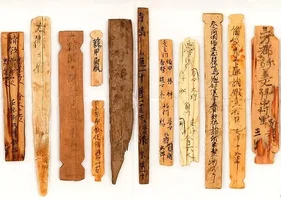
Wooden administrative tablets (木簡 mokkan) recorded taxes, deliveries, official correspondence and other routine government business under the ritsuryō administration.
Under the principle of kōchi kōmin (公地公民), all land was regarded as the property of the state. Rather than owning farmland outright, cultivators received allotments based largely on age and sex. Adult men received the largest allocations, while women were assigned somewhat smaller plots. Every six years, following a new census, fields were redistributed to reflect changes in the population. In return, cultivators were expected to pay taxes and fulfil labour obligations.
Although this equal-field system was inspired by Chinese practice, it proved increasingly difficult to maintain as the population grew and more land was brought under cultivation. Over time, exemptions and grants to officials, aristocrats, shrines and temples reduced the amount of land subject to redistribution, contributing to the gradual decline of the system during the Heian period.
Social status
The population was divided into legally defined social categories. Most people belonged either to the ryōmin (良民, "good people") or to the senmin (賤民, lower-status groups). The ryōmin included government officials, ordinary free citizens and various occupational groups serving the state. The senmin comprised several hereditary classes assigned to particular forms of labour, including servants attached to government offices or aristocratic households, as well as different categories of slaves (nuhi).These distinctions were recognised in law, although they were less rigid than the hereditary caste systems found elsewhere in Asia. Restrictions on marriage between different social groups gradually weakened, and some lower-status people eventually gained freedom. By the late eighth century, the legal status of children born to parents from different social classes had also become more favourable than it had been under the original code.
The tax system
The financial basis of the ritsuryō state was the soyōchō (租庸調) tax system, under which most adult men were liable for several different forms of taxation and labour service. Since coinage remained limited, taxes were paid mainly in rice, cloth and other agricultural products rather than money. The cost of transporting these goods to government storehouses fell on taxpayers, placing a particularly heavy burden on people living far from the capital.The principal taxes included a land tax (so), paid in rice according to the size of cultivated fields, a tribute tax (chō), usually paid in textiles or locally produced goods, and a labour tax (yō), which required taxpayers to perform corvée service for the state. In many cases, this labour obligation could instead be commuted for cloth or other goods. Additional levies supported government granaries, official salaries and provincial administration.
Not everyone paid the same taxes. Women, young children, elderly people, members of the imperial family within certain generations, high-ranking officials, soldiers on active service and enslaved people were generally exempt, while reduced rates applied to some other groups. Temporary tax exemptions were also granted after poor harvests, natural disasters, changes of era names, imperial accessions and other exceptional circumstances. New settlers in frontier regions, repatriated Japanese returning from abroad and freed slaves could likewise receive relief for several years.
Despite its detailed regulations, the system was difficult to enforce. False household registrations, bribery, concealment of land and migration to regions with lighter tax burdens became increasingly common. The government responded by strengthening household registration, introducing systems of mutual responsibility and imposing severe penalties for tax evasion. Even so, the equal-field system and its associated tax structure gradually became impractical. During the early Heian period, they were progressively replaced by new fiscal arrangements, culminating in the reforms embodied in the Engishiki (延喜式) in the tenth century.
Military organisation and justice
Military service formed an integral part of the ritsuryō state. Like taxation and land allocation, it was organised and regulated by law. Rather than maintaining a large permanent army, the government relied primarily on conscription, requiring eligible adult men to serve for fixed periods. Provincial military forces were intended not only to defend the country but also to reinforce the central government's authority over the regions.Military organisation
Responsibility for military affairs rested with the Ministry of War (Hyōbu-shō). At the same time, several elite guard units were stationed in the capital under the direct authority of the Council of State. These included palace guards, gate guards, armouries and cavalry units responsible for protecting the emperor, the imperial palace and major government buildings. Some units also accompanied the emperor during official journeys.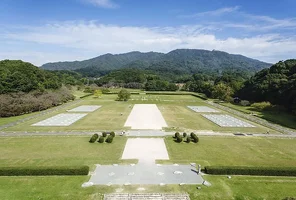
The ruins of the Dazaifu Government Office (大宰府政庁跡 Dazaifu Seichō Ato) in present-day Fukuoka Prefecture. Established under the ritsuryō system, Dazaifu served as the imperial court's administrative, military, and diplomatic headquarters for Kyūshū and oversaw Japan's relations with the Korean Peninsula and Tang China (Dazaifu City Japan Heritage Utilisation Council).
In theory, up to one-third of the able-bodied male population could be called up for service, although the actual proportion was usually much lower. Soldiers generally served for one year in the capital or for up to three years in frontier regions, where defence against the Emishi and other external threats remained an important concern. By the late eighth century, however, the conscription system had become increasingly difficult to sustain. In 790, it began to be replaced in the frontier provinces by the kondei (健児) militia, whose members were recruited mainly from families of the local landholding elite rather than from the general population. This change reflected the gradual decline of the original ritsuryō military system.
Law and punishment
The criminal code (ritsu) established a detailed legal system covering offences, judicial procedures and punishments. Provincial authorities normally handled criminal cases, while more serious matters could be referred to the Ministry of Justice and, in some instances, the Council of State. The legal code sought to define offences and penalties systematically, reflecting the influence of Chinese Legalist thought on early Japanese government.The most severe punishments included death, exile and terms of penal labour. Capital punishment could be carried out either by beheading or by strangulation, the latter being regarded as the more honourable method. Exile varied according to the distance from the capital, while forced labour was imposed for different lengths of time depending on the seriousness of the offence. Lesser crimes were generally punished by flogging.
In practice, the law was not always applied in its harshest form. Several emperors chose not to impose the death penalty, preferring exile instead. General amnesties were also proclaimed on occasions such as imperial accessions, favourable omens or other events considered worthy of celebration, reducing existing sentences or pardoning certain offenders altogether.
The legal code also contained separate provisions for Buddhist clergy and Shintō priests. Monks who violated religious regulations could be returned to lay status, sentenced to periods of compulsory labour within their monasteries or, in serious cases, handed over to the civil authorities. In practice, however, enforcement appears to have varied considerably, particularly outside the capital, and many religious regulations were only loosely observed by the early Heian period.
Officials holding sufficiently high court rank could, in certain cases, commute corporal punishment by paying a fine, illustrating that legal penalties were not applied equally across all levels of society. At the same time, records of offences remained part of an official's career evaluation, ensuring that punishment could affect advancement within the bureaucracy even when physical penalties were avoided.
Decline and legacy
By the beginning of the Heian period, many elements of the ritsuryō system were becoming increasingly difficult to maintain. The equal-field system gradually broke down, private landed estates (shōen) expanded, and aristocratic families accumulated growing political influence. Although the legal codes remained formally in force, the government increasingly relied on supplementary regulations (kyaku and shiki) to deal with changing circumstances. Over time, practical administration moved further away from the original ideals of the seventh- and eighth-century reforms.Even so, the ritsuryō system left a lasting mark on Japanese history. It established the country's first comprehensive legal code, created a central bureaucracy, standardised provincial administration and introduced nationwide systems of taxation, censuses and official record-keeping. Although many of its institutions were eventually replaced or transformed, the administrative framework developed under the ritsuryō codes continued to influence the Japanese government long after the system itself had ceased to function in its original form.
References:
- Bender, Ross (trans.), Ancient Japanese Historiography: The Nihon Shoki and the Ritsuryō State, Brill, 2014.
- Hall, John Whitney (ed.), The Cambridge History of Japan, Vol. 1: Ancient Japan, Cambridge University Press, 1988.
- Sansom, George, A History of Japan to 1334, Stanford University Press, 1958.
- Shively, Donald H. and McCullough, William H. (eds.), The Cambridge History of Japan, Vol. 2: Heian Japan, Cambridge University Press, 1999.
- Varley, H. Paul, Japanese Culture, 4th ed., University of Hawaiʻi Press, 2000.


