A han (藩), commonly translated as a "domain", was the territory and governing organisation of a daimyō during the Edo period (1603–1868). Although the term is now firmly established in Japanese historiography, it was not the official designation used by the Tokugawa shogunate itself. Instead, "han" became the standard administrative term only after the Meiji Restoration , when the new government adopted it to distinguish former daimyō territories from the lands administered directly by the shōgun .
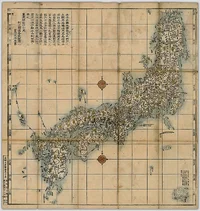
Map of Japan's domains (han) published in 1783 (Tenmei 3). Produced during the Tokugawa period, it depicts the distribution of daimyō domains and the shogunate's directly administered territories (tenryō), illustrating the complex patchwork of political authority that characterised the Bakuhan system.
During the Edo period, the domains formed the principal units of local government. Together with the Tokugawa shogunate (bakufu), they made up what historians call the Bakuhan system (幕藩体制 Bakuhan taisei), a dual political structure in which the shogunate exercised central authority while the daimyō governed their own domains with considerable autonomy. Japan's traditional provinces (kuni), meanwhile, continued to exist as geographical and administrative divisions, but by this time they had largely lost their political role.
A domain was more than a defined area of land. It comprised the ruling house, its governing institutions, the territory under its authority and the people who lived there. The domain lord, or hanshu, administered taxation, justice, military affairs and local government through his retainers, known today as hanshi. Large domains often functioned almost as self-contained states, maintaining their own bureaucracies, finances and military forces while remaining vassals of the Tokugawa shogun.
The word "han" itself originated in classical Chinese political thought. During the Zhou dynasty, it referred to feudal lords who protected the royal house, and later came to denote the territories granted to nobles. Japanese Confucian scholars adopted the term as a literary expression when describing the country's feudal order, drawing a parallel between Chinese feudal states and the territories ruled by Japanese daimyō. Throughout the Edo period, however, it remained largely a scholarly term rather than an official designation used by the Tokugawa government.
Origins
The political system that evolved into the han system developed over several centuries. During the eighth century, the imperial court organised Japan into provinces under the ritsuryō legal system. From the late Heian period onward, however, the expansion of private landed estates (shōen) steadily weakened central authority and allowed military landholders to establish increasingly independent bases of power.
Under the Ashikaga shogunate, provincial military governors known as shugo daimyō administered much of the country on behalf of the central government. As the Muromachi political order collapsed during the Sengoku period , many of these governors were displaced by ambitious warlords, the Sengoku daimyō, who consolidated territories through conquest, diplomacy and administrative reform. Several of these families, including the Shimazu of Satsuma , survived into the Tokugawa era.
Bird's-eye view of the Mito Domain's Koishikawa residence (Mito-han Koishikawa yashiki), published in 1863. One of the Edo residences of the Mito Tokugawa family, it occupied an extensive estate of official buildings, gardens and wooded grounds. Such urban residences served as the administrative and ceremonial headquarters of daimyō while they fulfilled their obligations in Edo under the sankin kōtai system.
The immediate foundations of the later domain system were laid by Toyotomi Hideyoshi (豊臣秀吉, 1537–1598). Through nationwide cadastral surveys and land assessments, Hideyoshi reorganised Japan's feudal structure and based a lord's status on the estimated agricultural productivity of his lands rather than their physical size. This assessment, known as kokudaka, became the defining measure of political and economic power. After Tokugawa Ieyasu (徳川家康, 1543–1616) established the Tokugawa shogunate in 1603, he retained this system. He developed it into the administrative framework that governed Japan for more than two and a half centuries.
Domains under the Tokugawa shogunate
Throughout the Edo period, the domains remained subordinate to the Tokugawa shogunate but exercised extensive authority over local affairs. Alongside the han existed the tenryō, territories governed directly by the shogunate, and the comparatively small estates of the hatamoto, the shogun's direct retainers.
The Tokugawa government carefully balanced domain autonomy with central control. Every daimyō derived his authority from the shogun, and succession required formal approval from Edo. If an heir was not recognised, the domain could revert to the shogunate. Land transfers, reductions and confiscations were used to reward loyalty or punish disobedience, particularly during the early decades of Tokugawa rule. Daimyō were also expected to undertake costly public works and other obligations imposed by the shogunate, limiting their ability to accumulate independent military power.
The domains themselves were not treated equally. The Tokugawa classified daimyō according to their relationship with the ruling house. The shinpan were relatives of the Tokugawa family, the fudai were hereditary vassals who had supported Tokugawa Ieyasu before the Battle of Sekigahara , and the tozama were "outside lords" who submitted only after Ieyasu's victory. Although many tozama domains, including Satsuma and Chōshū , were among the wealthiest in Japan, they were generally excluded from the highest offices within the shogunate. This careful distribution of political influence helped preserve Tokugawa authority for more than 250 years.
Large domains often resembled miniature states. They maintained castle towns (jōkamachi), employed substantial bureaucracies, collected taxes, administered justice, and, in some cases, even issued their own paper currency, known as hansatsu. The wealthiest was the Kaga Domain, ruled by the Maeda family , which stretched across the provinces of Kaga, Noto and Etchū and was assessed at more than one million koku. Its administrative centre at Kanazawa became one of the largest and most prosperous castle towns in Japan.
Kokudaka and domain finances
Unlike feudal territories in medieval Europe, a han was not defined primarily by its geographical extent. Instead, its status and value were determined by kokudaka (石高 ), an assessment of the land's projected annual rice production. Measured in koku—roughly the quantity of rice needed to feed one adult for a year—this figure formed the basis for taxation, political rank and military obligations. A daimyō required an assessed income of at least 10,000 koku to qualify as the ruler of a domain.
The kokudaka system reflected estimated agricultural productivity rather than actual harvests or the physical size of a territory. As a result, domains of similar area could differ greatly in assessed wealth, while geographically fragmented holdings might collectively constitute a single domain. The shogunate periodically revised these assessments through land surveys. It could increase or decrease a domain's official income depending on the loyalty and conduct of its lord, particularly during the early Tokugawa period.
The Tokugawa shogun controlled approximately five million koku directly through the tenryō, while the remaining agricultural output was distributed among the daimyō. Wealth was concentrated in relatively few domains: the thirty richest controlled roughly half of the rice income allocated outside the shogunate, whereas more than 200 smaller domains shared the remainder. A few exceptions also existed to the formal 10,000-koku requirement, including the Kitsuregawa family, descendants of the Ashikaga shoguns, who retained their special status despite an income of only about 5,000 koku.
Although rice assessments served as the official measure of wealth, domain governments gradually relied on a wider range of revenue sources. Commercial taxes, mining, forestry, fisheries and specialised local industries became important components of many domain economies, particularly during the eighteenth and nineteenth centuries. Nevertheless, kokudaka remained the standard by which political status and obligations were measured throughout the Edo period.
Administration and the Bakuhan System
The relationship between the shogunate and the domains was one of shared governance rather than complete centralisation. The Tokugawa government established overall political authority, foreign policy and military leadership, while individual domains managed their own internal affairs. This balance between central rule and local autonomy became known as the Bakuhan system.
Each domain maintained its own administrative apparatus, staffed by hereditary retainers who collected taxes, supervised villages, administered justice and oversaw public works. Samurai serving the domain generally resided in the castle town, while peasants remained in rural villages where they cultivated the land and paid taxes, usually in rice. This concentration of retainers around the domain's administrative centre strengthened political control and contributed to the growth of castle towns as regional centres of government, commerce and culture.
In practice, however, domains varied considerably. Some consisted of relatively compact territories centred on a castle town, while others possessed scattered enclaves separated by lands belonging to neighbouring domains or the shogunate. Several powerful western domains also preserved administrative arrangements inherited from the Sengoku period, allowing branches of the ruling family or senior retainers to govern substantial local territories with considerable independence.
Domain names and terminology
Modern historians commonly refer to domains by names such as "Satsuma Domain", "Chōshū Domain" or "Kaga Domain". These names, however, were standardised only after the Meiji Restoration. During the Edo period, the Tokugawa government generally referred to a daimyō's territory as his ryōbun (領分, domain or holding), while the lord's household and administration were collectively known as the kachū (家中). Official documents were normally addressed to the daimyō personally rather than to a named domain.
The names used for individual domains have also varied. Some are derived from the old province where the domain was principally located, such as the Kaga Domain. Others take their name from the castle town that served as the administrative centre, such as the Hagi Domain or the Hikone Domain. In contrast, still others are identified by the ruling family, for example, the Maeda Domain. Since a single domain could span several provinces, provinces could contain multiple domains, and ruling families occasionally changed, no single naming convention is universally applicable. For clarity, historians often combine geographical and dynastic references where necessary.
These varying conventions have also contributed to misconceptions. In some older Western publications, han was translated as "clan", leading to expressions such as "the Satsuma Clan". Strictly speaking, however, Satsuma was a province and later a domain ruled by the Shimazu family . The ruling lineage was the clan (shi or ke), whereas the han referred to the political territory and its governing organisation.
Branch domains
The history of many domains was further complicated by the existence of branch domains (shihan). These were typically created when a ruling family granted part of its holdings to younger sons or collateral relatives who would not inherit the main domain. The original territory was then regarded as the principal domain (honhan), while the newly established territory became a branch domain.
In practice, the distinction was not always clear. Some branch domains operated with considerable independence and were recognised by the shogunate as separate political entities. In contrast, others remained closely tied to the main domain and functioned more as administrative subdivisions or hereditary stipends than fully autonomous governments. This ambiguity is one reason why historians continue to debate the exact number of domains that existed during the Edo period.
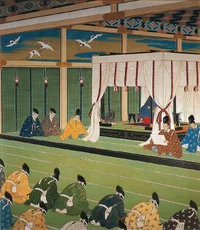
Kobori Tomoto (小堀鞆音, 1864–1931), Abolition of the Domains and Establishment of Prefectures (Haihan Chiken). Displayed in the Meiji Memorial Picture Gallery (Seitoku Kinen Kaigakan), the painting commemorates the imperial proclamation of 14 July 1871, abolishing the domains (han) and replacing them with prefectures, one of the defining reforms of the Meiji Restoration.
Abolition of the domains
The collapse of the Tokugawa shogunate in 1868 marked the beginning of the end for the han system. Following the Boshin War , lands formerly controlled directly by the shogunate and domains belonging to defeated daimyō were reorganised into prefectures under the authority of the new imperial government. In 1869, most remaining daimyō voluntarily surrendered their lands and population registers to the emperor in the hanseki hōkan (版籍奉還), or "return of the registers and lands". Although they remained in office for the time being, they now served as government-appointed governors rather than hereditary feudal rulers.
On 14 July 1871, the Meiji government formally abolished the domains in the haihan chiken (廃藩置県), replacing them with centrally administered prefectures. This reform dismantled the political autonomy of the daimyō and established a unified national administrative system under the authority of the imperial government in Tokyo.
One notable exception was the Ryūkyū Domain. Following Japan's formal incorporation of the Ryūkyū Kingdom in 1872, the Ryūkyū Kingdom continued to exist as a domain under the Ryukyuan monarchy until its abolition in 1879, when Okinawa Prefecture was established.
Legacy
Although the domains disappeared as administrative units in 1871, they continued to shape Japan long afterwards. Many modern prefectural boundaries differ from those of the former domains, yet regional identities often still reflect historical affiliations with places such as Satsuma, Chōshū, Aizu or Kaga. Former castle towns remain important cultural and economic centres, and the political, educational and economic reforms introduced by individual domains influenced Japan's modernisation during the late nineteenth century.
The concept of the han itself also remains the subject of historical discussion. Because the term was not an official designation during most of the Edo period, and because domains changed through mergers, transfers, extinctions and new creations, historians differ on precisely how many existed. Depending on the criteria used, modern studies identify between 500 and 540 domains across the early modern era. This uncertainty reflects not disagreement over historical facts but the evolving meaning of the word "han" itself.
Domains of Edo-period Japan
The following gazetteer lists the feudal domains (藩 han) that existed in Japan between the beginning of the Tokugawa period and the abolition of the domain system in 1871. It includes long-lived domains, short-lived territories, branch domains and domains created during the early Meiji period .
The entries are arranged according to Japan's historical provinces. English names are followed by their Japanese forms in parentheses. Establishment dates follow the Kojodan domain database, with the corresponding Japanese era given after the Gregorian year. Alternative names and branch-domain status are noted where they appear in the source.
Ezochi (蝦夷地)
Domain
Established
Notes
Matsumae Domain (松前藩)
1616 (Genna 2)
Also known as Fukuyama Domain (福山藩) and Tate Domain (館藩).
Mutsu Province (陸奥国)
Domain
Established
Notes
Aizu Domain (会津藩)
1601 (Keichō 6)
Asakawa Domain (浅川藩)
1662 (Kanbun 2)
Branch domain (支藩).
Ishikawa Domain (石川藩)
1662 (Kanbun 2)
Izumi Domain (泉藩)
1634 (Kan'ei 11)
Ichinoseki Domain (一関藩)
1660 (Manji 3)
Iwakitaira Domain (磐城平藩)
1601 (Keichō 6)
Also known as Taira Domain (平藩) and Iwaki Domain (磐城藩).
Iwase Domain (岩瀬藩)
1682 (Tenna 2)
Also known as Ōkubo Domain (大久保藩).
Iwanuma Domain (岩沼藩)
1660 (Manji 3)
Branch domain (支藩).
Kikuta Domain (菊多藩)
1622 (Genna 8)
Also known as Kubota Domain (窪田藩).
Kuroishi Domain (黒石藩)
1809 (Bunka 6)
Branch domain (支藩).
Koori Domain (桑折藩)
1688 (Genroku 1)
Shichinohe Domain (七戸藩)
1819 (Bunsei 2)
Branch domain (支藩); also known as Morioka-Shinden Domain (盛岡新田藩).
Shimotedo Domain (下手渡藩)
1806 (Bunka 3)
Shimomura Domain (下村藩)
1787 (Tenmei 7)
Shirakawa-Shinden Domain (白河新田藩)
1688 (Genroku 1)
Branch domain (支藩).
Shirakawa Domain (白河藩)
1627 (Kan'ei 4)
Shiroishi Domain (白石藩)
1868 (Meiji 1)
Sendai Domain (仙台藩)
1601 (Keichō 6)
Also known as Date Domain (伊達藩).
Tanagura Domain (棚倉藩)
1603 (Keichō 8)
Tonami Domain (斗南藩)
1869 (Meiji 2)
Nakatsuyama Domain (中津山藩)
1695 (Genroku 8)
Branch domain (支藩); also known as Mizusawa Domain (水沢藩) and Terasaki Domain (寺崎藩).
Nakamura Domain (中村藩)
1602 (Keichō 7)
Also known as Sōma Domain (相馬藩).
Nihonmatsu Domain (二本松藩)
1627 (Kan'ei 4)
Hachinohe Domain (八戸藩)
1664 (Kanbun 4)
Branch domain (支藩).
Hirosaki Domain (弘前藩)
1601 (Keichō 6)
Also known as Tsugaru Domain (津軽藩).
Fukushima Domain (福島藩)
1679 (Enpō 7)
Miharu Domain (三春藩)
1627 (Kan'ei 4)
Morioka Domain (盛岡藩)
1599 (Keichō 4)
Also known as Nanbu Domain (南部藩).
Moriyama Domain (守山藩)
1661 (Kanbun 1)
Branch domain (支藩).
Yanagawa Domain (梁川藩)
1683 (Tenna 3)
Yunagaya Domain (湯長谷藩)
1670 (Kanbun 10)
Branch domain (支藩).
Dewa Province (出羽国)
Domain
Established
Notes
Aterazawa Domain (左沢藩)
1622 (Genna 8)
Iwasaki Domain (岩崎藩)
1701 (Genroku 14)
Branch domain (支藩).
Ōyama Domain (大山藩)
1647 (Shōhō 4)
Branch domain (支藩).
Kaminoyama Domain (上山藩)
1622 (Genna 8)
Kameda Domain (亀田藩)
1623 (Genna 9)
Kubota-Shinden Domain (久保田新田藩)
1701 (Genroku 14)
Branch domain (支藩); also known as Akita-Shinden Domain (秋田新田藩).
Kubota Domain (久保田藩)
1602 (Keichō 7)
Also known as Akita Domain (秋田藩).
Shōnai Domain (庄内藩)
1622 (Genna 8)
Also known as Tsuruoka Domain (鶴岡藩) and Ōizumi Domain (大泉藩).
Shinjō Domain (新庄藩)
1622 (Genna 8)
Takahata Domain (高畠藩)
1767 (Meiwa 4)
Dewa-Maruoka Domain (出羽丸岡藩)
1632 (Kan'ei 9)
Tendō Domain (天童藩)
1830 (Tenpō 1)
Nagatoro Domain (長瀞藩)
1798 (Kansei 10)
Nikaho Domain (仁賀保藩)
1623 (Genna 9)
Honjō Domain (本荘藩)
1623 (Genna 9)
Matsuyama Domain (松山藩)
1647 (Shōhō 4)
Branch domain (支藩); later known as Matsumine Domain (松嶺藩).
Also known as Nagoya Domain (名古屋藩). One of the three Tokugawa branch houses (御三家 , Gosanke).
Kai Province (甲斐国)
Domain
Established
Notes
Kōfu Domain (甲府藩)
1600 (Keichō 5)
Tanaka Domain (田中藩)
1600 (Keichō 5)
Shinano Province (信濃国)
Domain
Established
Notes
Iida Domain (飯田藩)
1601 (Keichō 6)
Iiyama Domain (飯山藩)
1603 (Keichō 8)
Ueda Domain (上田藩)
1585 (Tenshō 13)
Komoro Domain (小諸藩)
1590 (Tenshō 18)
Sanada Domain (真田藩)
1863 (Bunkyū 3)
Suzaka Domain (須坂藩)
1600 (Keichō 5)
Takashima Domain (高島藩)
1601 (Keichō 6)
Takamori Domain (高森藩)
1868 (Keiō 4)
Meiji-era domain.
Matsushiro Domain (松代藩)
1622 (Genna 8)
Formerly Ueda Domain.
Matsumoto Domain (松本藩)
1590 (Tenshō 18)
Mino Province (美濃国)
Domain
Established
Notes
Akesaka Domain (明石藩)
1868 (Keiō 4)
Meiji-era domain.
Iwamura Domain (岩村藩)
1601 (Keichō 6)
Ōgaki Domain (大垣藩)
1600 (Keichō 5)
Kaizu Domain (海津藩)
1868 (Keiō 4)
Meiji-era domain.
Kasamatsu Domain (笠松藩)
1601 (Keichō 6)
Kanō Domain (加納藩)
1601 (Keichō 6)
Gujō Domain (郡上藩)
1600 (Keichō 5)
Takasu Domain (高須藩)
1700 (Genroku 13)
Branch domain (支藩).
Tajimi Domain (多治見藩)
1868 (Keiō 4)
Meiji-era domain.
Toki Domain (土岐藩)
1868 (Keiō 4)
Meiji-era domain.
Naegi Domain (苗木藩)
1600 (Keichō 5)
Hayashi Domain (林藩)
1868 (Keiō 4)
Meiji-era do
Hida Province (飛騨国)
Domain
Established
Notes
Takayama Domain (高山藩)
1585 (Tenshō 13)
Following the transfer of the Kanamori family in 1692, most of Hida Province became direct shogunal territory (天領, tenryō) administered from the Takayama Magistrate's Office (高山陣屋).
Echizen Province (越前国)
Domain
Established
Notes
Ashizaka Domain (足羽藩)
1868 (Keiō 4)
Meiji-era domain.
Ōno Domain (大野藩)
1624 (Kan'ei 1)
Katsuyama Domain (勝山藩)
1688 (Genroku 1)
Sabae Domain (鯖江藩)
1720 (Kyōhō 5)
Tsuruga Domain (敦賀藩)
1686 (Jōkyō 3)
Fukui Domain (福井藩)
1600 (Keichō 5)
Also known as Echizen Domain (越前藩).
Maruoka Domain (丸岡藩)
1624 (Kan'ei 1)
Wakasa Province (若狭国)
Domain
Established
Notes
Obama Domain (小浜藩)
1600 (Keichō 5)
Noto Province (能登国)
Domain
Established
Notes
Nanao Domain (七尾藩)
1600 (Keichō 5)
Etchū Province (越中国)
Domain
Established
Notes
Toyama Domain (富山藩)
1639 (Kan'ei 16)
Branch domain (支藩) of Kanazawa Domain (金沢藩).
Echigo Province (越後国)
Domain
Established
Notes
Arai Domain (新井藩)
1868 (Keiō 4)
Meiji-era domain.
Itoigawa Domain (糸魚川藩)
1692 (Genroku 5)
Izumozaki Domain (出雲崎藩)
1698 (Genroku 11)
Uramoto Domain (浦本藩)
1618 (Genna 4)
Kashiwazaki Domain (柏崎藩)
1617 (Genna 3)
Kurokawa Domain (黒川藩)
1598 (Keichō 3)
Sanjō Domain (三条藩)
1698 (Genroku 11)
Shibata Domain (新発田藩)
1598 (Keichō 3)
Takada Domain (高田藩)
1610 (Keichō 15)
Nagaoka Domain (長岡藩)
1616 (Genna 2)
Murakami Domain (村上藩)
1598 (Keichō 3)
Muramatsu Domain (村松藩)
1634 (Kan'ei 11)
Yoshida Domain (吉田藩)
1639 (Kan'ei 16)
Sado Province (佐渡国)
Domain
Established
Notes
Sawane Domain (沢根藩)
1603 (Keichō 8)
Yamashiro Province (山城国)
Domain
Established
Notes
Yodo Domain (淀藩)
1623 (Genna 9)
Yamato Province (大和国)
Domain
Established
Notes
Koriyama Domain (郡山藩)
1598 (Keichō 3)
Takatori Domain (高取藩)
1590 (Tenshō 18)
Tawaramoto Domain (田原本藩)
1679 (Enpō 7)
Branch domain (支藩).
Yanagimoto Domain (柳本藩)
1601 (Keichō 6)
Kii Province (紀伊国)
Domain
Established
Notes
Kii Domain (紀伊藩)
1600 (Keichō 5)
Also known as Wakayama Domain (和歌山藩). One of the three Tokugawa branch houses (御三家, Gosanke).
Shingū Domain (新宮藩)
1869 (Meiji 2)
Meiji-era domain.
Izumi Province (和泉国)
Domain
Established
Notes
Kishiwada Domain (岸和田藩)
1619 (Genna 5)
Hakata Domain (伯太藩)
1698 (Genroku 11)
Kawachi Province (河内国)
Domain
Established
Notes
Sayama Domain (狭山藩)
1619 (Genna 5)
Tannan Domain (丹南藩)
1626 (Kan'ei 3)
Settsu Province (摂津国)
Domain
Established
Notes
Amagasaki Domain (尼崎藩)
1615 (Genna 1)
Amada Domain (麻田藩)
1619 (Genna 5)
Itami Domain (伊丹藩)
1608 (Keichō 13)
Kawabe Domain (川辺藩)
1619 (Genna 5)
Kōriyama Domain (郡山藩)
1868 (Keiō 4)
Meiji-era domain.
Sanda Domain (三田藩)
1620 (Genna 6)
Takatsuki Domain (高槻藩)
1615 (Genna 1)
Harima Province (播磨国)
Domain
Established
Notes
Akashi Domain (明石藩)
1617 (Genna 3)
Akō Domain (赤穂藩)
1645 (Shōhō 2)
Aioi Domain (相生藩)
1868 (Keiō 4)
Meiji-era domain.
Awaji Domain (安志藩)
1622 (Genna 8)
Izushi Domain (出石藩)
1604 (Keichō 9)
Kakogawa Domain (加古川藩)
1631 (Kan'ei 8)
Kojima Domain (小島藩)
1868 (Keiō 4)
Meiji-era domain.
Miki Domain (三木藩)
1617 (Genna 3)
Yashiro Domain (社藩)
1868 (Keiō 4)
Meiji-era domain.
Tatsuno Domain (龍野藩)
1600 (Keichō 5)
Himeji Domain (姫路藩)
1600 (Keichō 5)
Tajima Province (但馬国)
Domain
Established
Notes
Izushi Domain (出石藩)
1604 (Keichō 9)
Toyooka Domain (豊岡藩)
1600 (Keichō 5)
Inaba Province (因幡国)
Domain
Established
Notes
Iwamino Domain (岩井藩)
1600 (Keichō 5)
Shikano Domain (鹿野藩)
1617 (Genna 3)
Tottori-Shinden Domain (鳥取新田藩)
1720 (Kyōhō 5)
Branch domain (支藩).
Tottori Domain (鳥取藩)
1600 (Keichō 5)
Hōki Province (伯耆国)
Domain
Established
Notes
Kurayoshi Domain (倉吉藩)
1600 (Keichō 5)
Yonago Domain (米子藩)
1600 (Keichō 5)
Izumo Province (出雲国)
Domain
Established
Notes
Hirose Domain (広瀬藩)
1666 (Kanbun 6)
Branch domain (支藩).
Matsue Domain (松江藩)
1600 (Keichō 5)
Iwami Province (石見国)
Domain
Established
Notes
Hamada Domain (浜田藩)
1619 (Genna 5)
Tsuwano Domain (津和野藩)
1600 (Keichō 5)
Oki Province (隠岐国)
Domain
Established
Notes
None
—
No feudal domain (han) was established in Oki Province during the Edo period. The province remained under direct Tokugawa shogunate administration (天領, tenryō) for most of the period.
Mimasaka Province (美作国)
Domain
Established
Notes
Katsuyama Domain (勝山藩)
1764 (Meiwa 1)
Kuse Domain (久世藩)
1817 (Bunka 14)
Tsuyama Domain (津山藩)
1603 (Keichō 8)
Bizen Province (備前国)
Domain
Established
Notes
Ashimori Domain (足守藩)
1600 (Keichō 5)
Okayama Domain (岡山藩)
1600 (Keichō 5)
Bitchū Province (備中国)
Domain
Established
Notes
Ikusaka Domain (生坂藩)
1868 (Keiō 4)
Meiji-era domain.
Kamogata Domain (鴨方藩)
1683 (Tenna 3)
Branch domain (支藩).
Kurahashi Domain (倉橋藩)
1863 (Bunkyū 3)
Shōnai Domain (松山藩)
1604 (Keichō 9)
Also known as Bitchū-Matsuyama Domain (備中松山藩).
Niimi Domain (新見藩)
1697 (Genroku 10)
Bingo Province (備後国)
Domain
Established
Notes
Kannabe Domain (神辺藩)
1619 (Genna 5)
Fukuyama Domain (福山藩)
1619 (Genna 5)
Mihara Domain (三原藩)
1619 (Genna 5)
Aki Province (安芸国)
Domain
Established
Notes
Hiroshima Domain (広島藩)
1600 (Keichō 5)
Hiro Domain (広藩)
1710 (Hōei 7)
Branch domain (支藩).
Suō Province (周防国)
Domain
Established
Notes
Iwakuni Domain (岩国藩)
1868 (Keiō 4)
Formerly the Iwakuni fief (岩国領); recognised as a domain during the Meiji Restoration.
Tokuyama Domain (徳山藩)
1650 (Keian 3)
Branch domain (支藩).
Kiyosue Domain (清末藩)
1640 (Kan'ei 17)
Branch domain (支藩).
Chōshū Domain (長州藩)
1600 (Keichō 5)
Also known as Hagi Domain (萩藩).
Nagato Province (長門国)
Domain
Established
Notes
Chōshū Domain (長州藩)
1600 (Keichō 5)
Also known as Hagi Domain (萩藩). Although centred in Nagato Province, the domain also encompassed most of Suō Province.
Kiyosue Domain (清末藩)
1640 (Kan'ei 17)
Branch domain (支藩).
Awaji Province (淡路国)
Domain
Established
Notes
Sumoto Domain (洲本藩)
1600 (Keichō 5)
Awa Province (阿波国)
Domain
Established
Notes
Tokushima Domain (徳島藩)
1600 (Keichō 5)
Also known as Awa Domain (阿波藩).
Sanuki Province (讃岐国)
Domain
Established
Notes
Takamatsu Domain (高松藩)
1642 (Kan'ei 19)
Marugame Domain (丸亀藩)
1641 (Kan'ei 18)
Tadotsu Domain (多度津藩)
1827 (Bunsei 10)
Branch domain (支藩).
Iyo Province (伊予国)
Domain
Established
Notes
Imabari Domain (今治藩)
1635 (Kan'ei 12)
Uwajima Domain (宇和島藩)
1608 (Keichō 13)
Ōzu Domain (大洲藩)
1617 (Genna 3)
Komatsu Domain (小松藩)
1636 (Kan'ei 13)
Branch domain (支藩).
Saijō Domain (西条藩)
1636 (Kan'ei 13)
Matsuyama Domain (松山藩)
1600 (Keichō 5)
Tosa Province (土佐国)
Domain
Established
Notes
Tosa Domain (土佐藩)
1600 (Keichō 5)
Also known as the Kōchi Domain (高知藩).
Chikuzen Province (筑前国)
Domain
Established
Notes
Akizuki Domain (秋月藩)
1623 (Genna 9)
Branch domain (支藩).
Fukuoka Domain (福岡藩)
1600 (Keichō 5)
Chikugo Province (筑後国)
Domain
Established
Notes
Kurume Domain (久留米藩)
1621 (Genna 7)
Miike Domain (三池藩)
1637 (Kan'ei 14)
Mii Domain (三潴藩)
1621 (Genna 7)
Branch domain (支藩).
Yanagawa Domain (柳河藩)
1623 (Genna 9)
Buzen Province (豊前国)
Domain
Established
Notes
Chikujō Domain (築城藩)
1868 (Keiō 4)
Meiji-era domain.
Nakatsu Domain (中津藩)
1600 (Keichō 5)
Kokura Domain (小倉藩)
1602 (Keichō 7)
Toyotsu Domain (豊津藩)
1870 (Meiji 3)
Meiji-era domain.
Bungo Province (豊後国)
Domain
Established
Notes
Usuki Domain (臼杵藩)
1600 (Keichō 5)
Oka Domain (岡藩)
1594 (Bunroku 3)
Kitsuki Domain (杵築藩)
1600 (Keichō 5)
Also known as the Kizuki Domain.
Saiki Domain (佐伯藩)
1606 (Keichō 11)
Shōnai Domain (庄内藩)
1868 (Keiō 4)
Meiji-era domain.
Taketa Domain (竹田藩)
1868 (Keiō 4)
Meiji-era domain.
Hiji Domain (日出藩)
1601 (Keichō 6)
Funai Domain (府内藩)
1600 (Keichō 5)
Also known as the Ōita Domain (大分藩).
Mori Domain (森藩)
1601 (Keichō 6)
Hizen Province (肥前国)
Domain
Established
Notes
Ureshino Domain (嬉野藩)
1868 (Keiō 4)
Meiji-era domain.
Ōmura Domain (大村藩)
1600 (Keichō 5)
Kashima Domain (鹿島藩)
1607 (Keichō 12)
Branch domain (支藩).
Karatsu Domain (唐津藩)
1602 (Keichō 7)
Kokura Domain (小城藩)
1649 (Keian 2)
Branch domain (支藩); commonly known as the Ogi Domain (小城藩).
Saga Domain (佐賀藩)
1607 (Keichō 12)
Also known as the Hizen Domain (肥前藩).
Shimabara Domain (島原藩)
1638 (Kan'ei 15)
Shimabara-Shinden Domain (島原新田藩)
1704 (Hōei 1)
Branch domain (支藩).
Hasunoike Domain (蓮池藩)
1649 (Keian 2)
Branch domain (支藩).
Hirado Domain (平戸藩)
1600 (Keichō 5)
Hyūga Province (日向国)
Domain
Established
Notes
Aya Domain (綾藩)
1868 (Keiō 4)
Meiji-era domain.
Obi Domain (飫肥藩)
1588 (Tenshō 16)
Sadowara Domain (佐土原藩)
1603 (Keichō 8)
Branch domain (支藩).
Shiiba Domain (椎葉藩)
1869 (Meiji 2)
Meiji-era domain.
Takanabe Domain (高鍋藩)
1601 (Keichō 6)
Nobeoka Domain (延岡藩)
1603 (Keichō 8)
Miyazaki Domain (宮崎藩)
1869 (Meiji 2)
Meiji-era domain.
Ōsumi Province (大隅国)
Domain
Established
Notes
Kanoya Domain (鹿屋藩)
1868 (Keiō 4)
Meiji-era domain.
Shibushi Domain (志布志藩)
1869 (Meiji 2)
Meiji-era domain.
Soo Domain (曽於藩)
1869 (Meiji 2)
Meiji-era domain.
Satsuma Province (薩摩国)
Domain
Established
Notes
Satsuma Domain (薩摩藩)
1602 (Keichō 7)
Also known as the Kagoshima Domain (鹿児島藩).
Higo Province (肥後国)
Domain
Established
Notes
Uto Domain (宇土藩)
1640 (Kan'ei 17)
Branch domain (支藩).
Kumamoto Domain (熊本藩)
1600 (Keichō 5)
Also known as the Higo Domain (肥後藩).
Hitoyoshi Domain (人吉藩)
1600 (Keichō 5)
Yatsushiro Domain (八代藩)
1868 (Keiō 4)
Meiji-era domain.
Iki Province (壱岐国)
Domain
Established
Notes
None
—
No feudal domain (han) was established in Iki Province during the Edo period. The island formed part of the Tsushima Domain (対馬藩) under the Sō clan.
Tsushima Province (対馬国)
Domain
Established
Notes
Tsushima-Fuchū Domain (対馬府中藩)
1601 (Keichō 6)
Also known as the Tsushima Domain (対馬藩) and the Izuhara Domain (厳原藩).
Ryūkyū Kingdom (琉球王国)
State
Established
Notes
Ryūkyū Kingdom (琉球王国)
1429
An independent kingdom that became a vassal of the Satsuma Domain (薩摩藩) after the invasion of Ryūkyū in 1609. Although it remained under the nominal suzerainty of Qing China while maintaining tributary relations, it was effectively controlled by the Shimazu family. The kingdom was abolished in 1879 with the establishment of Okinawa Prefecture (沖縄県).
With the abolition of the han system in 1871 (廃藩置県 haihan chiken), Japan's feudal domains were replaced by prefectures administered directly by the central government. The Ryūkyū Kingdom remained under the control of the former Satsuma Domain until its formal annexation by Japan in 1879, when Okinawa Prefecture was established.
References:
Beasley, W. G., The Japanese Experience: A Short History of Japan, University of California Press, 1999.
Hall, John Whitney (ed.), The Cambridge History of Japan, Vol. 4: Early Modern Japan, Cambridge University Press, 1991.
Jansen, Marius B., The Making of Modern Japan, Harvard University Press, 2000.
Kodansha, Kodansha Encyclopedia of Japan, 9 vols., Kodansha, 1983.
Totman, Conrad, Early Modern Japan, University of California Press, 1993.
Totman, Conrad, Politics in the Tokugawa Bakufu, 1600–1843, Harvard University Press, 1967.
This site uses cookies to help personalise content, tailor your experience and to keep you logged in if you register.
By continuing to use this site, you are consenting to our use of cookies.