


- 14 Mar 2002
- 21,056
- 18,911
Researchers have discovered fossils of a new genus and species of primitive ceratopsian dinosaur in Hyogo Prefecture, Japan. This plant-eating beaked dinosaur lived approximately 110 million years ago during the early Cretaceous Period. The dinosaur closely resembles its North American relatives, suggesting a possible migration from Asia to North America during this time. It is estimated to have been about 80 centimetres long and weighed around 10 kilograms. This dinosaur lacked a prominent horn or frill, unlike later ceratopsians like Triceratops. The fossils were unearthed in a geological formation in Tanbasasayama, Hyogo Prefecture, dating back to the early Cretaceous Period.
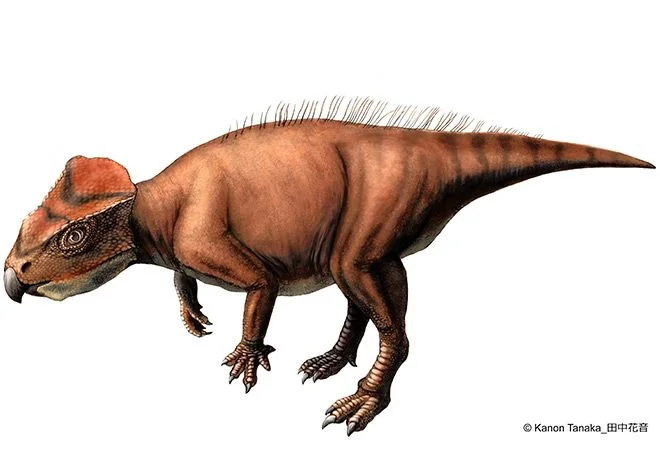
Photo credit: Tanaka Kanon via Asahi
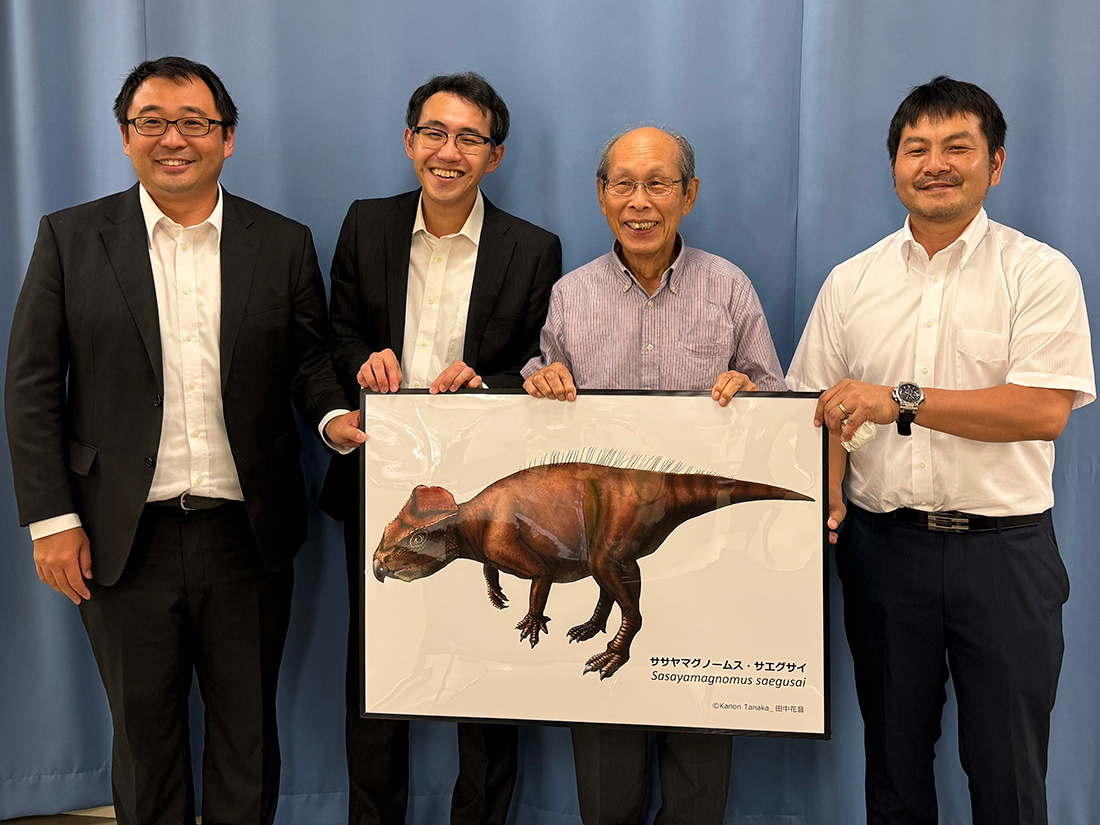
 www.ous.ac.jp
Photo credit: Tanaka Kanon via Asahi
The research team, whose members belong to the University of Hyogo, the Museum of Nature and Human Activities, Hyogo, and the Okayama University of Science, named the dinosaur "Sasayamagnomus samurai." "Gnomus" comes from a gnome, a legendary dwarf who guards buried treasure. "Saegusai" refers to Haruo Saegusa, a palaeontologist who oversaw excavations of dinosaur fossils in the Tanba area for many years. Part of the fossils were found in 2007 by Kiyoshi Adachi, a former high school teacher and amateur geologist. An excavation project started the following year. Adachi, 81, and others discovered fossils of Tambatitanis, one of the largest herbivorous dinosaurs ever found in Japan, from the Sasayama Group in 2006. Seventeen fossils, from the head, shoulder and leg of Sasayamagnomus saegusai, were unearthed by 2023. The researchers concluded that it is a new genus and species because the fossils' characteristics differed from those of other ceratopsians.
兵庫県で発見の角竜類の化石 新属新種と確認 | お知らせ・トピックス | 岡山理科大学
岡山理科大学の公式サイト。岡山県岡山市と愛媛県今治市の2キャンパスに8学部20学科1コース2研究科を構える大学です。学部・大学院、入試情報、学生生活等、岡山理科大学に関する情報を紹介しています。


