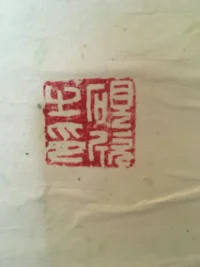
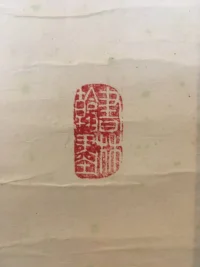
Need a word or phrase translated?

Hello everyone,
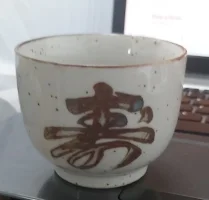
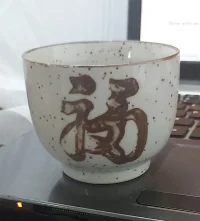
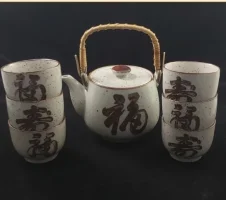
I need your help please, I have this set from Japan but i dont know whats the meaning of the words.
Thank you
Nina
 

Attachments

  • 20200819_094521.webp
    20200819_094521.webp
    53.1 KB · Views: 275
  • 20200819_094534.webp
    20200819_094534.webp
    62.2 KB · Views: 256
  • 20200819_094425.webp
    20200819_094425.webp
    19.2 KB · Views: 279
Hey, so in this thing I've been translating for a while now, there's this baddie (that looks like a weird mix of Dr Robotnik, Santa and an Animal Crossing villager all at once who then becomes a lizard with logs on his head) who keeps having these weird likes about children and crying, seemingly with no rhyme or reason to it. A freind speculated he could represent some sort of oni. Anyway, I've isolated one of these sentences. A friend translated it for me, but I don't understand his translation and he's gone no-contact ever since the pandemic hit. Could someone break this down grammatically for me? I really want to learn and improve.

ギッタロス様は泣く子も泣かすし 泣かない子も泣かせるんだぜぇ

I understand some of the grammatical elements (not all) but fail to get a grasp of how they relate to each other. Can you help me make sense of this please?
 
Hey, so in this thing I've been translating for a while now, there's this baddie (that looks like a weird mix of Dr Robotnik, Santa and an Animal Crossing villager all at once who then becomes a lizard with logs on his head) who keeps having these weird likes about children and crying, seemingly with no rhyme or reason to it. A freind speculated he could represent some sort of oni. Anyway, I've isolated one of these sentences. A friend translated it for me, but I don't understand his translation and he's gone no-contact ever since the pandemic hit. Could someone break this down grammatically for me? I really want to learn and improve.

ギッタロス様は泣く子も泣かすし 泣かない子も泣かせるんだぜぇ

I understand some of the grammatical elements (not all) but fail to get a grasp of how they relate to each other. Can you help me make sense of this please?
ギッタロス様 => Mr/Ms. Gitarosu
は => topic marker
泣く子 => children who cry
も => also
泣かす => make cry
し => and
泣かない子 => children who don't cry
も => also
泣かせる => make cry
ん => colloquial version of the explanatory の
だぜぇ => colloquial phrase adding emphasis like "I'm telling you"
 
Thanks a million! I definitely didn't know し meant "and" in than context. Thanks for making it clearer to me!
 
What is the difference between アルバイト and パート ?
 
There is no legal definition of, or distinction between パート and アルバイト.
パート usually refers to people who work part of each day on a semi-permanent basis. Usually has the nuance of an older person clocking in a few hours at a job that doesn't require a high level of technical skill.
アルバイト usually refers to a casual part-time job that someone has while engaged in some other endeavor (usually a student). Often has the nuance of a customer service job.
 
アルバイト

Come to think of it, when I would see someone working an アルバイト , it would usually be a college student. Also, at my English school in Tokyo, when a teacher would teach private English lessons on the side, they would always call it an アルバイト (although I don't know if this was a usage unique to only the teachers at my school).
 
Hi, me again. There's this sentence I struggle with, more specifically the parts in bold:

世界樹のありとあらゆるお宝を盗すんでるうちにむなしくなっちまったんだ。

I'm not 100% sure I got the meaning of uchi right (I lean more towards "inside", but it could also be "meanwhile" or even "house") either; and I don't understand at all what natchimatta is. I'm also curious about the nderu construction.

My current translation goes something like "after stealing all the treasures in the world, I felt empty/realized it was devoid of purpose". Please, help!
 
~うちに while, during, as (I was). House and inside would be impossible meanings in that sentence unless there was a significant rewrite.

なっちまった=なってしまいました
(became (with nuance of unintended negative effect or consequence).
 
Thanks for the insight! How does "As I was stealing all the treasures in the world, I started to feel empty." sounds?
 
Your translation sounds OK to me.
I just realized I didn't answer your question about んでる
なってしまいましたのです=なっちまったんだ
んだ is a contraction of のです
Is there a typo in your very first sentence? (世界). Should be 世界中 maybe?
 
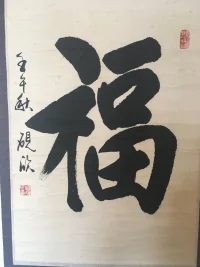
Hi, could you please tell me what this is about?
 

Attachments

  • 65BB2244-9526-4C36-B357-81FC0CC2079B.webp
    65BB2244-9526-4C36-B357-81FC0CC2079B.webp
    86.2 KB · Views: 277
  • 4ABDD24C-8DD0-4E5E-B080-50D860A50628.webp
    4ABDD24C-8DD0-4E5E-B080-50D860A50628.webp
    59.5 KB · Views: 265
  • 685DA54D-43B5-4A2B-9FA9-50462F1204B5.webp
    685DA54D-43B5-4A2B-9FA9-50462F1204B5.webp
    60 KB · Views: 270
Thank you. How disappointing though. Thought it was Japanese...
It's possible that it's Japanese. This character is used in Japan as well. I can't tell one way or another.
 
It's possible that it's Japanese. This character is used in Japan as well. I can't tell one way or another.

Thank you so much again. Two more questions:

1. Would it mean the same is Japanese?

2. The other characters on the side, can you tell what language they are in and discern any meaning?
 
Yes - it means "good luck" in both Japanese and Chinese.
The characters on the side are the date and the name of the person who did the calligraphy. I can't quite read the date except for the "year" and "autumn".
The read seals are the personal seals of the calligrapher.
書林翰墨 Shōrin Kanboku (guessing at the pronunciation. If Chinese it certainly pronounced differently). The name of a school/group.
硯?之印 Name of the calligrapher. Can't quite pick it out. Ken-something. There was a famous calligrapher named Kenzan (硯山) using the same character, but this signature is different.
 
Yes - it means "good luck" in both Japanese and Chinese.
The characters on the side are the date and the name of the person who did the calligraphy. I can't quite read the date except for the "year" and "autumn".
The read seals are the personal seals of the calligrapher.
書林翰墨 Shōrin Kanboku (guessing at the pronunciation. If Chinese it certainly pronounced differently). The name of a school/group.
硯?之印 Name of the calligrapher. Can't quite pick it out. Ken-something. There was a famous calligrapher named Kenzan (硯山) using the same character, but this signature is different.

Thank you!
 
What is the most common kanji for the Japanese boy's name Takeshi? Is it 武? 武士? 武石?
 
Although there are common kanji names like 健, 剛, 孟, 岳, 健司, 剛志, 孟史 or 岳士, there is not the most common one.
 
Back
Top Bottom