

Navigation
Install the app
How to install the app on iOS
Follow along with the video below to see how to install our site as a web app on your home screen.
Note: This feature may not be available in some browsers.
More options
Style variation
System
Light
Dark

You are using an out of date browser. It may not display this or other websites correctly.
You should upgrade or use an alternative browser.
You should upgrade or use an alternative browser.
Need a word or phrase translated?
- Thread starter Buntaro
- Start date



- 6 Mar 2003
- 9,348
- 9,509
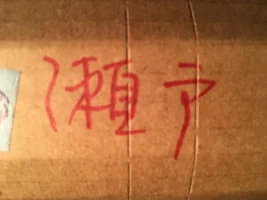
You took the picture with the correct orientation, good job. Does the package have any relation with Seto?on a package I got from Japan......embarrassed that I'm not sure which direction is correct
thanks again,
I think it might say 瀬戸 which is a city in Aichi, most famous for a big bridge.

bldrhouse
後輩
- 16 Apr 2020
- 116
- 66
Thank you for compliment on direction.
Contained some WWII "Last Ditch" Type 4 Ceramic grenades
FYI:
and this link contains this info: Kilns famous for the production of traditional Japanese pottery, such as Arita, Bizen and Seto were pressed into service to manufacture these relatively crude weapons.
Contained some WWII "Last Ditch" Type 4 Ceramic grenades
FYI:
and this link contains this info: Kilns famous for the production of traditional Japanese pottery, such as Arita, Bizen and Seto were pressed into service to manufacture these relatively crude weapons.

- 12 Oct 2004
- 1,613
- 1,356
Sorry, this is nitpicky and not really relevant to the topic at hand, but Seto in Aichi is most famous for its pottery (as alluded to in the response above).I think it might say 瀬戸 which is a city in Aichi, most famous for a big bridge.
The Great Seto Bridge (瀬戸大橋) connects Honshu with Shikoku over five islands and the Seto Inland Sea.
It's located in western Japan and is nowhere near the landlocked city of Seto, Aichi.

Sayuri Mai
Registered
- 18 Apr 2020
- 4
- 0
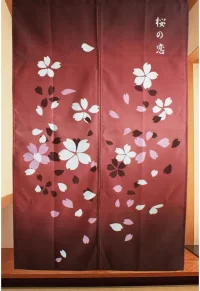
Can anyone tell me what this kanji says? It's from a noren with a Sakura pattern. Thanks!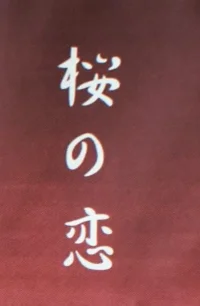
- 12 Oct 2004
- 1,613
- 1,356
It says "Sakura no koi" or "sakura love" (specifically in the context of romantic love, not just love as in "I love cherry blossoms! They're so beautiful!")
- 6 Mar 2003
- 9,348
- 9,509
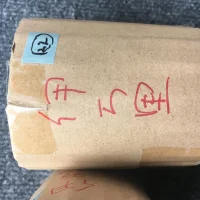
another Kanji from the Japanese ceramic grenade packaging
伊万里 (Imari) which is also famous for pottery.

Imari, Saga - Wikipedia
bldrhouse
後輩
- 16 Apr 2020
- 116
- 66
伊万里 (Imari) which is also famous for pottery.
Imari, Saga - Wikipedia
en.m.wikipedia.org
Thank you! Imari also famous for making the Last Ditch Ceramic Grenades at end of WWII
z
Sayuri Mai
Registered
- 18 Apr 2020
- 4
- 0
It says "Sakura no koi" or "sakura love" (specifically in the context of romantic love, not just love as in "I love cherry blossoms! They're so beautiful!")
Thanks! Though, I wonder if the maker intended it to be love of cherry blossoms instead of romantic love. Maybe they should have picked different kanji? I'm just a novice, so...

Last edited:
- 12 Oct 2004
- 1,613
- 1,356
I have no idea if the person who made it is even a native speaker, or what their intent was, so it's really impossible to say.
The phrase, as is, is an abstract/poetic/romantic phrase that conveys the general meaning "Romantic love of (i.e. related in some way to) cherry blossoms".
If they just wanted to mean a general "love" of cherry blossoms with no overtones of romance, they wouldn't have used the word 恋(こい), unless they're not a native speaker and they don't understand the nuance.
The phrase, as is, is an abstract/poetic/romantic phrase that conveys the general meaning "Romantic love of (i.e. related in some way to) cherry blossoms".
If they just wanted to mean a general "love" of cherry blossoms with no overtones of romance, they wouldn't have used the word 恋(こい), unless they're not a native speaker and they don't understand the nuance.
Sayuri Mai
Registered
- 18 Apr 2020
- 4
- 0
The noren is being sold by a Chinese seller, though I don't know if it was designed by a Chinese person. I've no skill in reading Mandarin, but what I can look up suggests that they still mean the same thing when using the Chinese reading. I'm not sure how much of a difference context might make between the two. Maybe it's meant to conjure imagery of a romantic date under the cherry blossoms. Works for me. Thanks again!I have no idea if the person who made it is even a native speaker, or what their intent was, so it's really impossible to say.
The phrase, as is, is an abstract/poetic/romantic phrase that conveys the general meaning "Romantic love of (i.e. related in some way to) cherry blossoms".
If they just wanted to mean a general "love" of cherry blossoms with no overtones of romance, they wouldn't have used the word 恋(こい), unless they're not a native speaker and they don't understand the nuance.
Attachments

- 27 Dec 2003
- 2,872
- 2,141
- Thread starter
- #15,415
...I've no skill in reading Mandarin...
Sayuri,
If you want info on Chinese, you may wish to head on over to my favorite Chinese forum:
There are plenty of people there who would be more than willing and able to help you out.
- 12 Oct 2004
- 1,613
- 1,356
Regardless of whether it was made by a Chinese person, the fact that it contains the hiragana character の means that the phrase, as written, is definitely intended to be Japanese. The kanji characters 桜 and 恋 could also exist in Chinese, but the phrase, as given, is not meant to be a Chinese language expression. If it were, it would not include the uniquely Japanese character の.I've no skill in reading Mandarin, but what I can look up suggests that they still mean the same thing when using the Chinese reading. I'm not sure how much of a difference context might make between the two.
This is one (perhaps the most likely) interpretation, though if it was produced by a non-native Japanese speaker, there's really no telling what they had in mind.Maybe it's meant to conjure imagery of a romantic date under the cherry blossoms. Works for me. Thanks again!

- 22 Feb 2008
- 18,266
- 4,926
As bentenmusume-san pointed out, even if the maker is Chinese, they used 桜の恋 as a Japanese phrase since there is hiragana の there, which is only used in Japanese. If they are Chinese, they could misunderstand the meaning and misuse the kanji.
It seems to be intended to be personification to my Japanese eyes; "cherry blossoms love something (season, atmosphere, etc)", for instance, cherry blossoms bloom because they love the season(spring).
It seems to be intended to be personification to my Japanese eyes; "cherry blossoms love something (season, atmosphere, etc)", for instance, cherry blossoms bloom because they love the season(spring).
Sayuri Mai
Registered
- 18 Apr 2020
- 4
- 0
I see. I didn't realize "no" (sorry, Japanese keyboard isn't working) was uniquely Japanese. So it's strictly a hiragana symbol then, that wasn't brought into the Japanese alphabet from Chinese Hanzi. I can more easily recognize Hiragana at this point, so maybe that will help me distinguish between Hanzi and Kanji readings more easily. Sheesh. Learning kanji can really drag you down a rabbit hole.Regardless of whether it was made by a Chinese person, the fact that it contains the hiragana character の means that the phrase, as written, is definitely intended to be Japanese. The kanji characters 桜 and 恋 could also exist in Chinese, but the phrase, as given, is not meant to be a Chinese language expression. If it were, it would not include the uniquely Japanese character の.
This is one (perhaps the most likely) interpretation, though if it was produced by a non-native Japanese speaker, there's really no telling what they had in mind.

- 27 Dec 2003
- 2,872
- 2,141
- Thread starter
- #15,419
sorry, Japanese keyboard isn't working
Sayuri,
If you cannot type the character の , you can just copy and paste it from another person's post. That is how I did it, for this post.
You are correct, the character の does not appear in Hanzi. In Chinese we use the character 的 (de) for that meaning.
- 6 Mar 2003
- 9,348
- 9,509
My first thought it was that maybe it was a Greek festival.
But I guess that's not it.
Maybe they are sponsored by OPA shopping center?

 www.mitojoshi.ed.jp
But I guess that's not it.
Maybe they are sponsored by OPA shopping center?
水戸OPA!|水戸女子高等学校
www.mitojoshi.ed.jp
- 22 Feb 2008
- 18,266
- 4,926
Probably that's correct. We can see オーパミュージックフェスタ OPA MUSIC FESTA in the hanging banner on the back wall. OPA seems like an abbreviation of Oriental Park Avenue.
What came to my mind initially was a book title オーパ written by 開高健 Kaikō Takeshi, which comes from a Portuguese word "opa", meaning "Wow!".
What came to my mind initially was a book title オーパ written by 開高健 Kaikō Takeshi, which comes from a Portuguese word "opa", meaning "Wow!".

rosava45
Registered
- 8 Aug 2020
- 13
- 4
Hi
I've been watching a Japanese drama, but I can't really get this phrase. It's a photographer who is saying this (audio attached).
English subs suggest the following translation:
I'd be grateful if someone would help with the correct transcription and translation.
I'm actually confused about this whole passage.
I've been watching a Japanese drama, but I can't really get this phrase. It's a photographer who is saying this (audio attached).
English subs suggest the following translation:
I'm not sure about 'that beautiful thing only lasts for a while.' part. I keep hearing きれいなものはも同じでWhen I notice something is beautiful, that beautiful thing only lasts for a while.
I want to take another shot of that beautiful moment.
I feel like I've always been looking for it...
I'd be grateful if someone would help with the correct transcription and translation.
I'm actually confused about this whole passage.
Attachments
Last edited:
- 22 Feb 2008
- 18,266
- 4,926
Judging from the context, he seems to be saying きれいなものはもうなくて "that beautiful thing has already been disappeared/lost".
Similar threads


- Replies
- 11
- Views
- 115K