- 14 Mar 2002
- 21,050
- 18,903
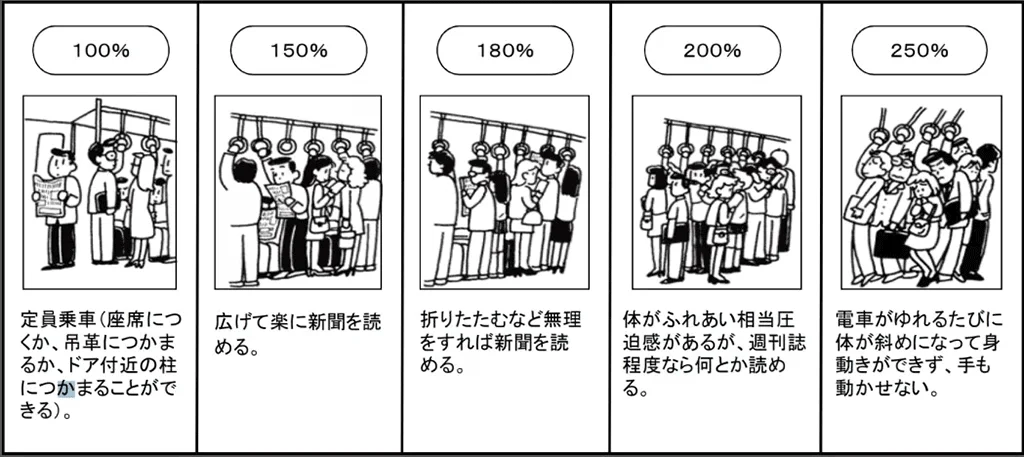
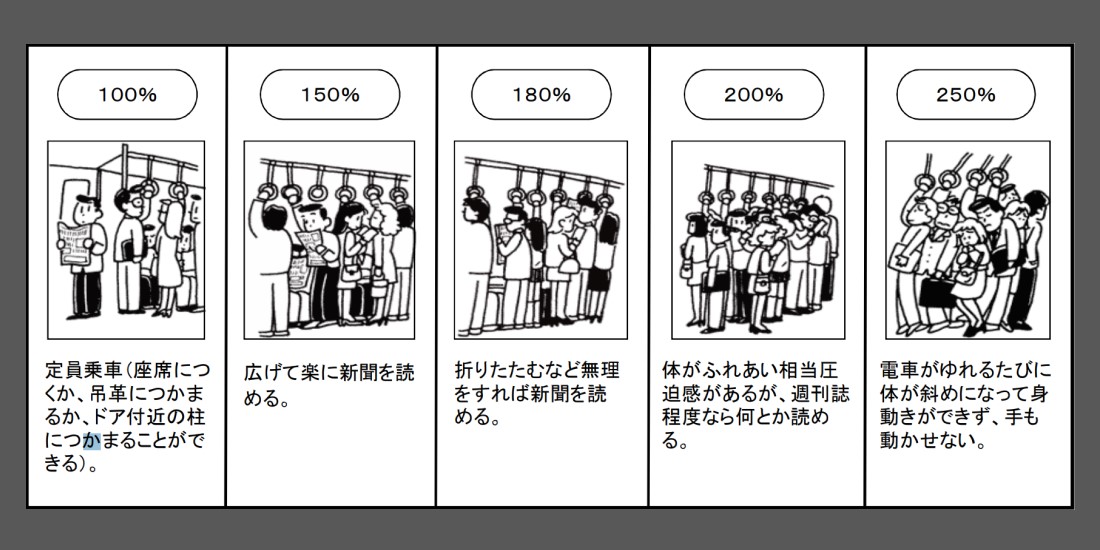
The Ministry of Land, Infrastructure, Transport and Tourism (MLIT) is revising its guidelines for measuring train congestion levels. The previous method, which relied on passengers' ability to read newspapers or magazines, no longer accurately reflects modern commuting habits. Since at least 2001, MLIT has used diagrams and text descriptions to illustrate different levels of train crowding. However, with the declining popularity of print media, the ministry has determined that these criteria are outdated. Previously, a 150% congestion rate was defined as having enough space to comfortably read a newspaper, while a 200% rate meant significant bodily contact but the ability to read a magazine. These standards are no longer applicable and will be replaced with more relevant indicators.

 mainichi.jp
 www.theregister.com
[...] with the widespread use of smartphones in recent years, much fewer people are reading paper editions of newspapers and magazines on trains. The new expressions describe a 150% congestion rate as "no shoulder-to-shoulder contact; increased crowding near doors," and 180% as "feel shoulder-to-shoulder contact with some pressure; crowding near the doors causes difficulty in changing body position." [...] The ministry aims to limit the average congestion rate during peak hours in the greater Tokyo area to 150%, as overcrowded trains in urban areas have become a social issue. The actual average congestion rate has continued to fall, from 221% in 1975 to 107% in 2020, during the onset of the coronavirus pandemic, and rose back to 136% in 2023.
Japan ministry stops referring to newspapers, magazines to show train congestion levels - The Mainichi
TOKYO -- Onboard congestion rates are no longer indicated by whether or not train passengers can read newspapers or weekly magazines, as less people n
Japan ends train crowding scale based on newspaper reading
The smartphone strikes again! And so might the Reg Standards Bureau, with your help