


- 14 Mar 2002
- 21,056
- 18,912
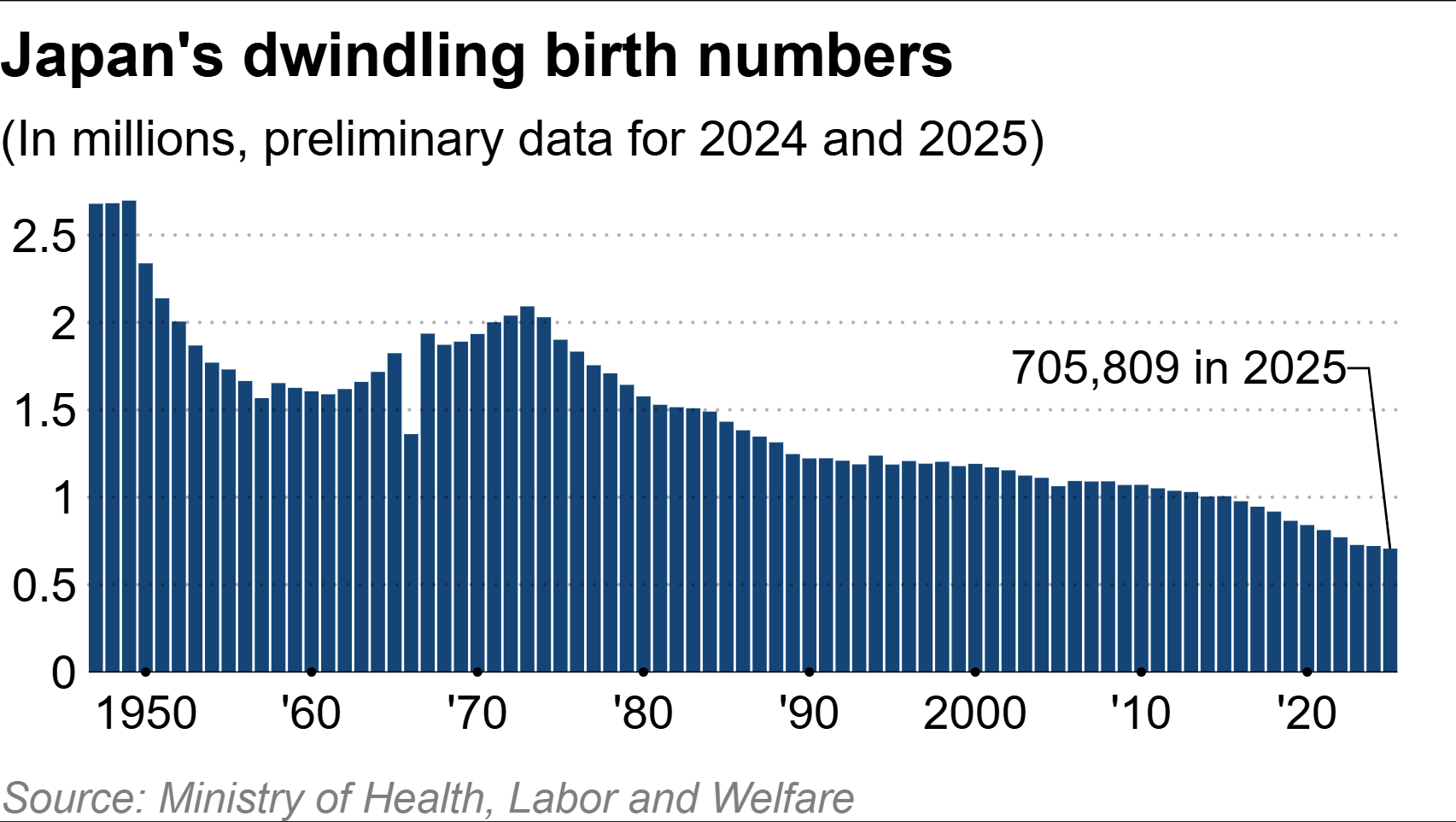
Japan recorded 705,809 births in 2025, down from a year earlier and the lowest figure since records began in 1899, health ministry data released Thursday showed. The total marks a record low for the 10th consecutive year. The figure, which includes foreign residents, fell 2.1% from 2024. The pace of decline slowed slightly from the previous year. Officials link the drop partly to Japan's rapidly ageing population and growing concern over the cost of raising children as inflation pushes up living expenses. Experts also point to later marriage, or decisions not to marry at all, as priorities shift among younger generations. Population decline continued to deepen. The natural decrease — births minus deaths — reached a record 899,845, according to preliminary data from the Ministry of Health, Labour and Welfare.

 mainichi.jp
Paywall alert:

 asia.nikkei.com
The National Institute of Population and Social Security Research had projected that the number of births, including those of foreign residents in the country, would not drop below 710,000 until 2042. In separate data released by the ministry in June last year, the number of babies born to Japanese nationals in 2024 fell to 680,000, dropping below 700,000 for the first time.
Births in Japan fall in 2025 to 706,000, record low for 10th straight year - The Mainichi
TOKYO (Kyodo) -- The number of children born in Japan in 2025 fell from a year earlier to 705,809, the fewest since data became available in 1899 and
The country's population decline accelerated. The natural decrease, which is the difference between births and deaths, reached 899,845 people, setting a record high for the 18th consecutive year. In Japan, rapid population aging and declining birth rates threaten to further distort its social security system, which relies on contributions by the current generation of workers. This is because future projections for pension finances and care costs are based on the IPSS's medium projection. The pension fiscal verification presented in 2024 by the Ministry of Health, Labor and Welfare also uses the medium projection. If Japan's economic conditions continue as they have over the past three decades, the income replacement rate -- the pension benefit amount relative to the average take-home pay of current workers -- would fall by 10 percentage points to 50.4% from current levels.
Paywall alert:
Japan's number of babies born marks record low for 10th straight year
Faster-than-projected decline in birth rate to force social insurance reform
asia.nikkei.com


