Politics Japan and Trump 2.0

Richard Katz explains what happened. This will not go down well in Japan.

Donald Trump has done it to Japan again. Tokyo believed it had negotiated a promise that Japan and the EU would get the same maximum tariff on virtually all items in Trump's country-wide "reciprocal tariffs." Tariffs below 15% would be raised to 15%. Tariffs that were above 15% before Trump took office would go no higher. Trump did keep his promise to the EU, but not Japan, when he issued his official Executive Order. When it comes to Japan and every other nation outside the EU, the Executive Order says that 15% is applied in addition to existing tariffs, a procedure called "stacking." For example, Japan's beef exports to the United States were subject to a 26.4% Most-Favoured-Nation tariff. Instead of staying at 26.4%, the tariff will go to 41.4%. On textiles, the tariff will go from 7.5% to 22.5%. This stacking only impacts a minority of Japan's exports. However, it occurs in politically sensitive sectors. More importantly, it is seen by Japan as a violation of trust. There have been so many such "violations" that the Japan Times reported, "Some analysts wonder if the agreement could collapse altogether.

How is it even possible that the issue of "stacking" has not been raised in the more than half a dozen meetings they have had??


Yomiuri suggested exactly what @Lothor mentioned above:

An editorial in Yomiuri, a conservative newspaper traditionally very supportive of the US-Japan relationship, stated, "It is necessary to devise a strategy to reduce dependence on the United States, expand sales channels to other countries and regions, and continue economic growth."

With "friends" such as these, you don't need enemies.
 
What Trump needs is to be regularly interviewed by people like Barbara Walters who will stand up to his assertions, present contrary evidence where it's available and call him out why he's lying.

She would have been "dealt with" if that was attempted these days.
 
She would have been "dealt with" if that was attempted these days.
"20/20 has been cancelled due to 'financial reasons,' and we are replacing it with 'Who wants to be an American,' where kidnapped foreign-born Americans will be pitted against each other in Bumfights-style UFC cage matches held in the recently paved-over White House Rose Garden. Who will be set free to restart their pursuit of happiness in an openly hostile country, and who will be sent back to a privately-run concentration camp in a swamp that cost YOU nearly half a billion dollars? Stay tuned to find out!"
 
Richard Katz explains what happened. This will not go down well in Japan.


How is it even possible that the issue of "stacking" has not been raised in the more than half a dozen meetings they have had??


Yomiuri suggested exactly what @Lothor mentioned above:


With such "friends", you don't need enemies.
It's not often I agree with Yomiuri Shimbun!
 
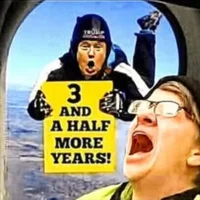
My prediction......Trump will step down (for health reasons?) before his term is up so Vance can step in for the last year. They will figure that Vance will win in the next election with him already an acting President. They made such a big deal out of Biden being unfit to fulfill his duties , it will make Trump look good for his stepping down.

haha3more.webp
 
My prediction......Trump will step down (for health reasons?) before his term is up so Vance can step in for the last year. They will figure that Vance will win in the next election with him already an acting President. They made such a big deal out of Biden being unfit to fulfill his duties , it will make Trump look good for his stepping down.
you actually think he'd ever willingly step down or relinquish the spotlight? That's quaint.
 
My prediction......Trump will step down (for health reasons?) before his term is up so Vance can step in for the last year. They will figure that Vance will win in the next election with him already an acting President. They made such a big deal out of Biden being unfit to fulfill his duties , it will make Trump look good for his stepping down.
He would never willingly step down. Why would he? Even if it was for the good of the party or his MAGA movement. He doesn't give a sh*t about any of that. He only cares about himself. It's not like he's actually governing or doing any real work.
 
Does anyone actually believe what comes out of Trump's mouth?

He goes into that meeting with Putrid in Alaska, saying he'd be unhappy if he didn't get 'a deal', and then he leaves after three hours having made no deal. However, at the post-string-pulling session (my master puppeteer, Putrid) press conference, Trump says they have made progress but the next steps have to be with Zelensky present which is exactly what Zelensky said from the beginning he wanted at this meeting and what the worlds political experts said was absolutely required.🙄

Trump really is a grifter, ineffective and delusional/charlatan, and this event is rock-solid proof of this as if his numerous bankruptcies weren't proof enough. I don't think he could negotiate with a cat wanting a treat after its dinner!

If his supporters can't see this then it's proof of their probable low IQ and belief and obsession with The Apprentice.
 
From my understanding of Trump's narcissism, I suspect he went into this thinking that if he could negotiate some sort pact he'd have a realistic stab at winning the Nobel Peace prize 🙄 Be prepared; in 10 years time you'll see a bloated Trump, giving interviews in his brief moments of lucidity to Fox News saying "I should've won it…the Nobel Prize…I should've won it. I was great…the greatest president in history…I should've won it."

I've just watched Putrid's post-manipulation press conference speech. He basically talked about everything but the matter at hand; the nearby Russian pilot cemetery, the international date line and being able to 'step from yesterday into tomorrow' [sic] (you can only step from today into tomorrow) and the need for the US to cooperate with Russia again. I have a feeling Putrid wants to see the Russian tricolor flying over the White House in the future.

I'm feeling better now…thank you everyone 🙏🏽
 
Does anyone actually believe what comes out of Trump's mouth?
I wonder about this all the time. Supporting him makes zero sense but people still do even now.
If his supporters can't see this then it's proof of their probable low IQ and belief and obsession with The Apprentice.
Most did not watch with the Apprentice. It was a minor show.

A number of political scientists, psychologists, and reputable institutions have offered well-supported explanations for why many people continue to support Donald Trump—even when his personal popularity, behavior, or rhetoric are seen as divisive or controversial. Some of the most widely recognized and empirically grounded explanations come from the following sources and thinkers:

  • Matthew MacWilliams (political scientist): He argues that the key predictor of Trump support is not race, income, or education, but authoritarianism. Trump appeals especially to those seeking a strong leader who promises to address perceived threats, support conformity, and punish outsiders. Authoritarian attitudes can be triggered by perceived threats to the group's norms and safety.politico+1
  • Pew Research Center & major polling organizations: Recent analyses and exit polls show Trump's coalition is primarily motivated by specific issues—notably, the economy, immigration, American values, and a belief that Trump will "change Washington for the better." For many, concerns about economic insecurity, jobs, and national identity are paramount. Trump also wins among voters who feel U.S. traditions and prosperity are "under threat." The "Make America Great Again" slogan addresses this psychological need for restoration and protection.pewresearch+2
  • Lilliana Mason and team (political psychologists): Rigorous longitudinal studies find that animus toward Democratic-linked minority groups (e.g., African Americans, Muslims) is a powerful, unique predictor of Trump support; this is not as true for generic Republican support or for animus among Democrats against whites or Christians. Trump's unique appeal is often to voters for whom grievances and resentment against perceived outsiders are central.npr
  • Political psychology research (Cambridge, Dr. Karen Stenner, Dr. Lee de-Wit): These psychologists emphasize the perception of threat as driving certain voters toward "authoritarian dynamics"—favoring strongman leaders, conformity, and punitive policies against norm-breakers. Trump's messaging activates these psychological processes, with supporters feeling uniquely anxious about America's future and values.cam
  • Sociological perspectives (e.g., American Sociological Review, Andrew Gumbel in The Guardian): Some research posits that Trump's perceived authenticity—even when he breaks norms or exaggerates—is valuable to voters who mistrust what they see as a corrupt, out-of-touch establishment. He is viewed as a "flagrant violator of established norms" who "tells it like it is," winning support for his "authentic" anti-elitism.wikipedia
  • Additional perspectives: Some scholars and commentators point to economic and cultural displacement, resentment toward elites, rejection of "political correctness," and an affinity for Trump's direct (sometimes combative) communication style as reasons for his enduring appeal. His campaign's focus on "American greatness" and economic security resonates with many non-college-educated, economically distressed voters who feel left behind by globalization.wmich+1
In summary, the most empirically supported and widely cited explanations for Trump's persisting support are:

  • Authoritarianism and the appeal of a strong leader,politico+1
  • Concerns about culture, values, economic and national security,abcnews.go+2
  • Perceived threats and the psychological need for restoration and order,cam+1
  • Resentment or animus toward out-groups or political opponents,npr
  • A skepticism of the establishment and preference for perceived authenticity and outsider status.wikipedia+1
Each of these explanations has been robustly defended in academic, polling, and journalistic sources and often overlap in practice.
  1. https://www.politico.com/magazine/story/2016/01/donald-trump-2016-authoritarian-213533
  2. Trump voters believe American values and prosperity are 'under threat'
  3. What Trump supporters believe and expect
  4. Why voters chose Trump
  5. https://www.npr.org/2021/07/11/1015120444/study-looks-at-what-motivates-trump-supporters
  6. https://en.wikipedia.org/wiki/Trumpism
  7. https://wmich.edu/arts-sciences/donald-trump
  8. https://vcresearch.berkeley.edu/new...-authoritarianism-trump-voters-stay-loyal-why
 
I wonder about this all the time. Supporting him makes zero sense but people still do even now.

Most did not watch with the Apprentice. It was a minor show.

A number of political scientists, psychologists, and reputable institutions have offered well-supported explanations for why many people continue to support Donald Trump—even when his personal popularity, behavior, or rhetoric are seen as divisive or controversial. Some of the most widely recognized and empirically grounded explanations come from the following sources and thinkers:

  • Matthew MacWilliams (political scientist): He argues that the key predictor of Trump support is not race, income, or education, but authoritarianism. Trump appeals especially to those seeking a strong leader who promises to address perceived threats, support conformity, and punish outsiders. Authoritarian attitudes can be triggered by perceived threats to the group's norms and safety.politico+1
  • Pew Research Center & major polling organizations: Recent analyses and exit polls show Trump's coalition is primarily motivated by specific issues—notably, the economy, immigration, American values, and a belief that Trump will "change Washington for the better." For many, concerns about economic insecurity, jobs, and national identity are paramount. Trump also wins among voters who feel U.S. traditions and prosperity are "under threat." The "Make America Great Again" slogan addresses this psychological need for restoration and protection.pewresearch+2
  • Lilliana Mason and team (political psychologists): Rigorous longitudinal studies find that animus toward Democratic-linked minority groups (e.g., African Americans, Muslims) is a powerful, unique predictor of Trump support; this is not as true for generic Republican support or for animus among Democrats against whites or Christians. Trump's unique appeal is often to voters for whom grievances and resentment against perceived outsiders are central.npr
  • Political psychology research (Cambridge, Dr. Karen Stenner, Dr. Lee de-Wit): These psychologists emphasize the perception of threat as driving certain voters toward "authoritarian dynamics"—favoring strongman leaders, conformity, and punitive policies against norm-breakers. Trump's messaging activates these psychological processes, with supporters feeling uniquely anxious about America's future and values.cam
  • Sociological perspectives (e.g., American Sociological Review, Andrew Gumbel in The Guardian): Some research posits that Trump's perceived authenticity—even when he breaks norms or exaggerates—is valuable to voters who mistrust what they see as a corrupt, out-of-touch establishment. He is viewed as a "flagrant violator of established norms" who "tells it like it is," winning support for his "authentic" anti-elitism.wikipedia
  • Additional perspectives: Some scholars and commentators point to economic and cultural displacement, resentment toward elites, rejection of "political correctness," and an affinity for Trump's direct (sometimes combative) communication style as reasons for his enduring appeal. His campaign's focus on "American greatness" and economic security resonates with many non-college-educated, economically distressed voters who feel left behind by globalization.wmich+1
In summary, the most empirically supported and widely cited explanations for Trump's persisting support are:

  • Authoritarianism and the appeal of a strong leader,politico+1
  • Concerns about culture, values, economic and national security,abcnews.go+2
  • Perceived threats and the psychological need for restoration and order,cam+1
  • Resentment or animus toward out-groups or political opponents,npr
  • A skepticism of the establishment and preference for perceived authenticity and outsider status.wikipedia+1
Each of these explanations has been robustly defended in academic, polling, and journalistic sources and often overlap in practice.
  1. https://www.politico.com/magazine/story/2016/01/donald-trump-2016-authoritarian-213533
  2. Trump voters believe American values and prosperity are 'under threat'
  3. What Trump supporters believe and expect
  4. Why voters chose Trump
  5. https://www.npr.org/2021/07/11/1015120444/study-looks-at-what-motivates-trump-supporters
  6. https://en.wikipedia.org/wiki/Trumpism
  7. https://wmich.edu/arts-sciences/donald-trump
  8. https://vcresearch.berkeley.edu/new...-authoritarianism-trump-voters-stay-loyal-why

But the point is these factors still need to be actively believed. Why do people believe things in the absence of any evidence (don't get me started on religion🙄)? Why do people favour his amateur ideas, that have bankrupted him several times, rather than those of highly educated experienced 'experts' in various field? Trump has repeatedly made claims on this and that, attempted to instigate those idea only for then to be, at best, a damp squib? Is it the 'snake oil vendor salesman' phenomenon? What you've posted doesn't address this primary issue and they don't fully convince me anyway.

The only explanations for his support are driven by low intelligence and poor/lack of education:

1) The gullibility to believe nonsense just because it's said repeatedly, often in the same sentence, by the very inarticulate Trump.
2) The inability to critically appraise facts/ideas.
3) The stubbornness to change their minds, in the face of new and compelling evidence, without feeling they've lost face.
4) Susceptibility to 'crowd behaviour', following what others do, even if it's clearly in error, because they can't/fear thinking for themselves.

I once saw an interview of a MAGA-type where he was asked why so many college students and degree holders voted Democrat. He said, "I dunno. What the hell are they teaching them in college?"
 
What you've posted doesn't address this primary issue and they don't fully convince me anyway.
Ok then. Maybe this will help convince you of what's going on here.

Your question goes deeper than simply what factors drive Trump support—you're asking why people choose to maintain beliefs that are demonstrably false or unsupported, and why "amateur" or dubious ideas so often triumph over expert knowledge. This is a major topic in political psychology and cognitive science, and the answer is much more nuanced than simply "low intelligence" or "poor education," though those can play a role.

Key Scientific Explanations

1. Cognitive Factors (Not Just Intelligence)

  • Research shows that confirmation bias is powerful: people are motivated to believe information that fits their pre-existing views and identity, even in the face of conflicting facts or expertise. This is not unique to Trump supporters—it's a universal human tendency, but certain psychological and social conditions can make it stronger or more consequential in politics.pmc.ncbi.nlm.nih+1
  • Intuitive thinking styles and poor cognitive reflection (preferring "gut instinct" over deliberative analysis) correlate with greater belief in misinformation and "simple" solutions, and these are more common among some conservative voters.today.ucsd+1

2. Motivated Reasoning & Identity

  • People often endorse ideas because those ideas signal belonging to a valued group or identity, not because of evidence. Supporting Trump—even when he is wrong—becomes a signifier of in-group loyalty or antagonism toward elites/out-groups, rather than an evaluation of policy substance.colorado+1
  • Research has repeatedly found that partisan and identity-motivated reasoning is a more powerful predictor of believing political falsehoods than raw intelligence or education alone.pmc.ncbi.nlm.nih+3

3. Conspiratorial Mentality

  • Multiple studies show that a disposition toward conspiracy thinking (a cognitive style, not just a lack of education) strongly predicts willingness to believe dubious claims, whether about Trump or other topics. Such individuals are more likely to see mainstream explanations as suspect and find compelling the rhetoric of outsiders or "truth-tellers" against the system.frontiersin+1

4. Distrust of Experts & Institutions

  • Support for Trump is associated with deep mistrust of traditional institutions and experts. Many are not "duped" in a straightforward way—they choose to disbelieve experts who, in their eyes, have failed them or are seen as biased against their worldview.sites.nd+1
  • People who feel alienated often prize non-traditional "truth-tellers" regardless of their objective record. As noted by interviewees, evidence presented by "the experts" is discounted as coming from the enemy.sites.nd

5. Simple Thinking & Cognitive Complexity

  • Psychological studies reveal that Trump supporters tend to use less cognitively complex language and favor simplistic explanations. This is linked to preferences for black-and-white narratives and distrust of ambiguity or "nuanced," technical explanations associated with experts.psmag+1
  • While education matters, cognitive ability (as measured by tests of reasoning or reflection) has been found to be an even stronger predictor than years of schooling.sciencedirect+1

6. Persistence of False Beliefs

  • Once people in a group have committed to a political figures' narrative, new evidence—especially when delivered by "outsiders"—often leads to attitude polarization rather than change. Admitting error can feel like a personal or group betrayal, and facts are often reframed to fit group identity.colorado+1

Not Just "Low Intelligence or Education"

  • While cognitive ability and education do predict susceptibility to political misinformation, studies also find highly educated people can be motivated reasoners when their identity is at stake.psmag+2
  • Overlapping but distinct phenomena of stubbornness, "face-saving", and crowd conformity (as you mention) are well-documented effects—but they are not unique to Trump supporters or those of "low intelligence;" they intensify in highly polarized, mistrustful environments.

"Snake Oil Salesman" Effect

  • Trump's style is often compared by political psychologists to a "snake oil" phenomenon: the promise of easy solutions, constant repetition, and emotional appeals over rational analysis. This appeals most powerfully to those who are under economic or social stress, alienated from the mainstream, or disposed to distrust complicated but accurate explanations.psypost+1

In Summary

  • The endurance of Trump support in the face of countervailing evidence is a mix of cognitive biases (especially motivated reasoning, simple or intuitive thinking, and conspiracy mindset), identity-driven loyalty, disaffection from institutions, and a preference for simple or dramatic narratives. Intelligence and education help insulate against some of these effects, but they do not fully explain the phenomenon.pmc.ncbi.nlm.nih+3
  • Crowd dynamics, face-saving, and communal signaling help explain why people "double down" on false beliefs: it's about community and self-concept as much as cognition.colorado
So, the scientific consensus is that it's not just low intelligence or lack of education, but a complex interplay of psychology, social identity, group loyalty, cognitive style, and societal context that drives such patterns of political belief.frontiersin+4
  1. Fake news: Why do we believe it? - PMC
  2. Facts ignored: The truth is flexible when falsehoods support political beliefs
  3. Ask a Psychologist: Why Do We Fall for Fake News?
  4. Processing political misinformation: comprehending the Trump phenomenon - PMC
  5. https://www.apa.org/topics/journalism-facts/misinformation-belief-action
  6. Frontiers | Social Psychological Predictors of Belief in Fake News in the Run-Up to the 2019 Hungarian Elections: The Importance of Conspiracy Mentality Supports the Notion of Ideological Symmetry in Fake News Belief
  7. Donald Trump voters: We like the president's lies – Truth and Politics
  8. Trump's Appeal to the Cognitively Challenged
  9. Trump supporters use less cognitively complex language and more simplistic modes of thinking than Biden supporters, study finds
  10. https://www.sciencedirect.com/science/article/abs/pii/S0191886916310911
  11. Neuroticism, deprivation and racial bias: Trump's unique authoritarian appeal
  12. Trump overwhelmingly leads rivals in support from less educated Americans
  13. The psychological drivers of misinformation belief and its resistance to correction - Nature Reviews Psychology
  14. Trump Knows Best: Donald Trump's Rejection of Expertise and the 2020 Presidential Election - PMC
  15. Why Voters Support Trump Despite His Alleged Misdeeds
  16. https://www.sciencedirect.com/science/article/pii/S1364661321000516
  17. https://link.motherjones.com/public/35444637
  18. Who knowingly shares false political information online? | HKS Misinformation Review
  19. https://en.wikipedia.org/wiki/False_or_misleading_statements_by_Donald_Trump
  20. What Trump supporters believe and expect
 
Ok then. Maybe this will help convince you of what's going on here.

Your question goes deeper than simply what factors drive Trump support—you're asking why people choose to maintain beliefs that are demonstrably false or unsupported, and why "amateur" or dubious ideas so often triumph over expert knowledge. This is a major topic in political psychology and cognitive science, and the answer is much more nuanced than simply "low intelligence" or "poor education," though those can play a role.

Key Scientific Explanations

1. Cognitive Factors (Not Just Intelligence)

  • Research shows that confirmation bias is powerful: people are motivated to believe information that fits their pre-existing views and identity, even in the face of conflicting facts or expertise. This is not unique to Trump supporters—it's a universal human tendency, but certain psychological and social conditions can make it stronger or more consequential in politics.pmc.ncbi.nlm.nih+1
Like I said above, The stubbornness to change their minds, in the face of new and compelling evidence, without feeling they've lost face.
  • Intuitive thinking styles and poor cognitive reflection (preferring "gut instinct" over deliberative analysis) correlate with greater belief in misinformation and "simple" solutions, and these are more common among some conservative voters.today.ucsd+1
Like I said above, The inability to critically appraise facts/ideas.

2. Motivated Reasoning & Identity

  • People often endorse ideas because those ideas signal belonging to a valued group or identity, not because of evidence. Supporting Trump—even when he is wrong—becomes a signifier of in-group loyalty or antagonism toward elites/out-groups, rather than an evaluation of policy substance.colorado+1
  • Research has repeatedly found that partisan and identity-motivated reasoning is a more powerful predictor of believing political falsehoods than raw intelligence or education alone.pmc.ncbi.nlm.nih+3
Like I said above, Susceptibility to 'crowd behaviour', following what others do, even if it's clearly in error, because they can't/fear thinking for themselves.

3. Conspiratorial Mentality

  • Multiple studies show that a disposition toward conspiracy thinking (a cognitive style, not just a lack of education) strongly predicts willingness to believe dubious claims, whether about Trump or other topics. Such individuals are more likely to see mainstream explanations as suspect and find compelling the rhetoric of outsiders or "truth-tellers" against the system.frontiersin+1
Like I said above, The inability to critically appraise facts/ideas.

4. Distrust of Experts & Institutions

  • Support for Trump is associated with deep mistrust of traditional institutions and experts. Many are not "duped" in a straightforward way—they choose to disbelieve experts who, in their eyes, have failed them or are seen as biased against their worldview.sites.nd+1
Like I said above, The inability to critically appraise facts/ideas.https://sites.nd.edu/truth-and-politics/donald-trump-voters-we-like-the-presidents-lies/
  • People who feel alienated often prize non-traditional "truth-tellers" regardless of their objective record. As noted by interviewees, evidence presented by "the experts" is discounted as coming from the enemy.sites.nd
I think this one has to be down to stupidity. When my car engine starts making a tapping noise, I think, 'I need to take this to a good mechanic, possibly even the dealership who have experts in my specific type of car.' I don't think, 'I'll take it to a shaman'!

5. Simple Thinking & Cognitive Complexity

  • Psychological studies reveal that Trump supporters tend to use less cognitively complex language and favor simplistic explanations. This is linked to preferences for black-and-white narratives and distrust of ambiguity or "nuanced," technical explanations associated with experts.psmag+1
Understanding nuanced argument does require the ability to critically appraise, often disparate information, but this can be accomplished by using a sort of algorithm of dichotomous key questions. But his requires effort to acquire and apply. Preferring to drink moonshine, shoot things and shout 'yeeee haaa' at joyful points of the day, suggest a lack of desire to do this.
  • While education matters, cognitive ability (as measured by tests of reasoning or reflection) has been found to be an even stronger predictor than years of schooling.sciencedirect+1
Cognitive ability = intellect, intelligence, mentality, mental power, reasoning, comprehension, understanding. 'Years of schooling' instill these abilities in people.

6. Persistence of False Beliefs

  • Once people in a group have committed to a political figures' narrative, new evidence—especially when delivered by "outsiders"—often leads to attitude polarization rather than change. Admitting error can feel like a personal or group betrayal, and facts are often reframed to fit group identity.colorado+1
Like I said above, without feeling they've lost face.

Not Just "Low Intelligence or Education"

  • While cognitive ability and education do predict susceptibility to political misinformation, studies also find highly educated people can be motivated reasoners when their identity is at stake.psmag+2
  • Overlapping but distinct phenomena of stubbornness, "face-saving", and crowd conformity (as you mention) are well-documented effects—but they are not unique to Trump supporters or those of "low intelligence;" they intensify in highly polarized, mistrustful environments.
The number one ability in the person is the courage to change one's mind in the face of new and compelling evidence.

For many years a certain cellular structure was thought to be an artifact of processing the cell for view under a microscope; not a real thing but an anomaly. This 'artifact interpretation' was evangelically pushed as being true by a certain, highly eminent cell biologist at Oxford, indeed it being the central theme of his academic career. One day, an American scientist (of all nationalities 🙄) went to Oxford to present new data about this 'artifact'. His research showed the artifact was in fact a vital cellular structure ('Golgi body') involved in secretion and intracellular transport. The room quietened as the eminent, old Oxford cell biologist, slowly stood up to respond to the new data. He said, " All these years I have been wrong and now I have been shown the truth." All those present in the lecture room stood and clapped their hands raw!

"Snake Oil Salesman" Effect

  • Trump's style is often compared by political psychologists to a "snake oil" phenomenon: the promise of easy solutions, constant repetition, and emotional appeals over rational analysis. This appeals most powerfully to those who are under economic or social stress, alienated from the mainstream, or disposed to distrust complicated but accurate explanations.psypost+1
It's the fourth oldest trick in the book. Putin does it; "We didn't Novichok him in your country. We didn't, we wouldn't, it wasn't us." even when the evidence is irrefutable. Once you know this technique, it's like taking the fabled 'red pill'; you can't unsee the technique. And yet MAGAs do.
So, the scientific consensus is that it's not just low intelligence or lack of education, but a complex interplay of psychology, social identity, group loyalty, cognitive style, and societal context that drives such patterns of political belief.frontiersin+4
I think this AI interpretation (it is, isn't it?) is in fact self-contradictory. It is fundamentally down to low intelligence and a lack of education allowing that complex interplay to develop.
 
It's interesting that all those high level European leaders are accompanying Zelensky to Washington to meet Trump. It shows that they know Putin has likely used the Jedi Mind Trick on Trump, into giving Zelensky a good kicking as he did the last time. They're there to prevent Putin doing this again via his proxy.
 
Anyway, it's hard for rational people to understand the irrational. Most of us can see through Trump and we can see what Putrid is up to. Trump either can't see what Putrid is up to (due to being as 'thick as two short planks'), doesn't want to acknowledge what Putrid is doing or is Putrid's plant into American politics 😬
 
The only explanations for his support are driven by low intelligence and poor/lack of education:
This thread includes a bunch of anecdotal reports of people in Academia supporting Trump.


Mathematicians or Neuroscientists aren't necessarily immune to groupthink or anti(insert other group) bias.
 
An empty vessel who stands for nothing longer than it takes to say... Could stand for anything you want them to. Trump supporters loves him because of his vibe. He pisses off the people they don't like, and sounds (to them) like the kind of hard man they think should be in power. When viewed with any degree of objectivity, Trump is a coward who tries to rule by fear, and exploits the fears of his followers to cement their support.

Most of them are just would-be fascists, addicted to the taste of boot whilst flying the "don't tread on me" flag.

 
This thread includes a bunch of anecdotal reports of people in Academia supporting Trump.


Mathematicians or Neuroscientists aren't necessarily immune to groupthink or anti(insert other group) bias.

There are always outliers…it's science! My brother's childhood friend is Professor of Biochemistry at a major American University, has written a popular science book on poisons and is an avid Trump supporter…avid! He is a fundamentalist Christian, though.

As Voltaire said, 'If you can believe in absurdities you can commit atrocities.'
 
At this stage of my life my vote goes to the side that doesn't hate guns and is not trying to outlaw them. Don't care if it's the devil incarnate , the progun candidate gets my vote.View attachment 131294 Since my wife usually votes the opposite of me , my vote gets cancelled anyway , LOL.
Yes, yes, so you keep saying, as if being elderly justifies everything. My parents are of a similar age to you. My father has just won an award for volunteering (he runs a small hydroelectric plant), and my mother is in and out of the local care home, befriending, giving Communion to, and advocating for the residents. Even if they weren't so active, they'd think about the effect of the government on their children and grandchildren and on wider society when voting.
 
Last edited:
Back
Top Bottom