


- 14 Mar 2002
- 21,050
- 18,903
Japan's annual government survey on train congestion has painted a stark picture of worsening rush-hour conditions in the country's three largest metropolitan areas—Tokyo, Osaka and Nagoya. The Ministry of Land, Infrastructure, Transport and Tourism reported that Tokyo commuters in particular endured the most suffocating rides in 2024, with the capital's most overcrowded line running at more than 70% above its designed capacity.
The worst case was on the Nippori–Toneri Liner in Tokyo's Arakawa Ward, which during the morning rush reached an average congestion rate of 177%. Between 7:30 and 8:30 a.m., trains travelling from Akado-Shōgakkōmae Station to Nishi-Nippori Station carried 8,664 passengers in carriages built to hold just 4,887—leaving them crammed in at 77% over capacity.
Not far behind was the Tokyo Metro's Hibiya Line, where trains between Minowa and Iriya stations in Taitō Ward reached 163% capacity during the morning peak. The very same level of crowding was recorded on the JR Saikyō Line between Itabashi and Ikebukuro stations in Toshima Ward, marking it as the most overcrowded section of the East Japan Railway network.
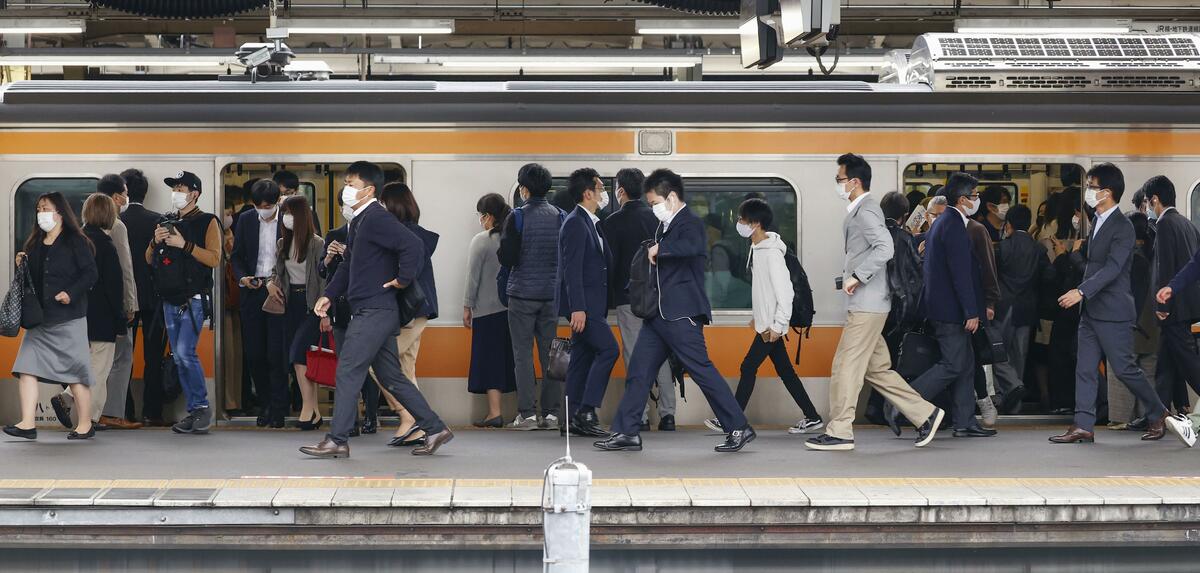
The ministry explained that at around 150% capacity, passengers are usually able to stand without brushing shoulders, though crowding builds up around the doors. Once trains reach 180%, however, shoulders are pressed together and the squeeze at the doors becomes distinctly uncomfortable, with passengers left feeling the weight of the crush. On average, Tokyo's trains were running at 139% capacity, compared with 116% in Osaka and 126% in Nagoya. The figures highlight the continuing strain of urban commuting in Japan's largest cities, where the rail network remains the essential lifeline for millions of daily travellers.
 english.kyodonews.net
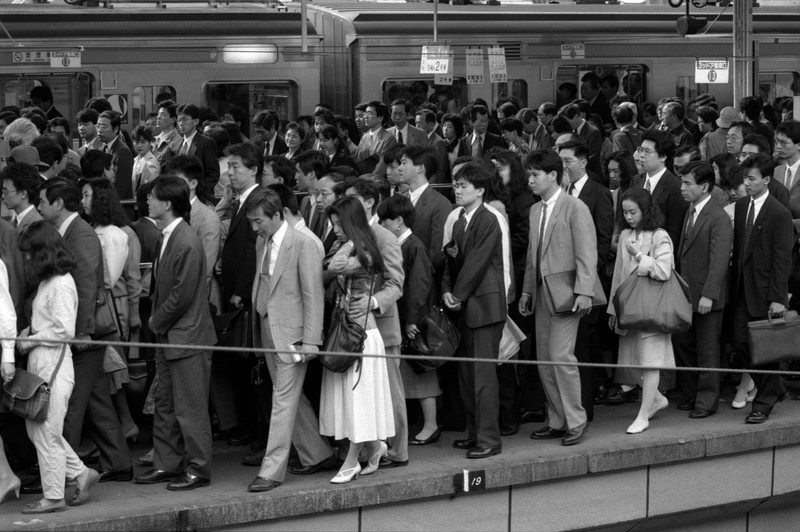
Photo taken on 18 May 1990 showing crowds of commuters packing the platform during rush hour at JR Ueno Station in Tokyo's Taitō Ward (Tanabe Kimiya via Mainichi).
The worst case was on the Nippori–Toneri Liner in Tokyo's Arakawa Ward, which during the morning rush reached an average congestion rate of 177%. Between 7:30 and 8:30 a.m., trains travelling from Akado-Shōgakkōmae Station to Nishi-Nippori Station carried 8,664 passengers in carriages built to hold just 4,887—leaving them crammed in at 77% over capacity.
Not far behind was the Tokyo Metro's Hibiya Line, where trains between Minowa and Iriya stations in Taitō Ward reached 163% capacity during the morning peak. The very same level of crowding was recorded on the JR Saikyō Line between Itabashi and Ikebukuro stations in Toshima Ward, marking it as the most overcrowded section of the East Japan Railway network.
The ministry explained that at around 150% capacity, passengers are usually able to stand without brushing shoulders, though crowding builds up around the doors. Once trains reach 180%, however, shoulders are pressed together and the squeeze at the doors becomes distinctly uncomfortable, with passengers left feeling the weight of the crush. On average, Tokyo's trains were running at 139% capacity, compared with 116% in Osaka and 126% in Nagoya. The figures highlight the continuing strain of urban commuting in Japan's largest cities, where the rail network remains the essential lifeline for millions of daily travellers.
Passengers feeling cramped on today's rush-hour trains might do well to think about conditions in the 1970s. Congestion rates in 1975, the earliest data available in the report, were around 200% in Japan's three major metropolitan areas, topping 220% in Tokyo. By today's ministry standards, that means passengers feeling considerably cramped with those near the doors unable to move.
Gov’t data reveals Japan’s most crowded rush-hour trains
TOKYO, Japan Wire - Japan’s urban commuters endured an increase in cramped rush-hour conditions on trains in 2024, with the most crowded train in Tokyo more than 70 percent over capacity, according to recent government data.


