Politics Japan First: Sanseito, Japan's new right-wing populist party

NBC called Mr Kamiya a "mini Trump" and explained once more why a right-wing populist party made significant strides in parliamentary elections in Japan.

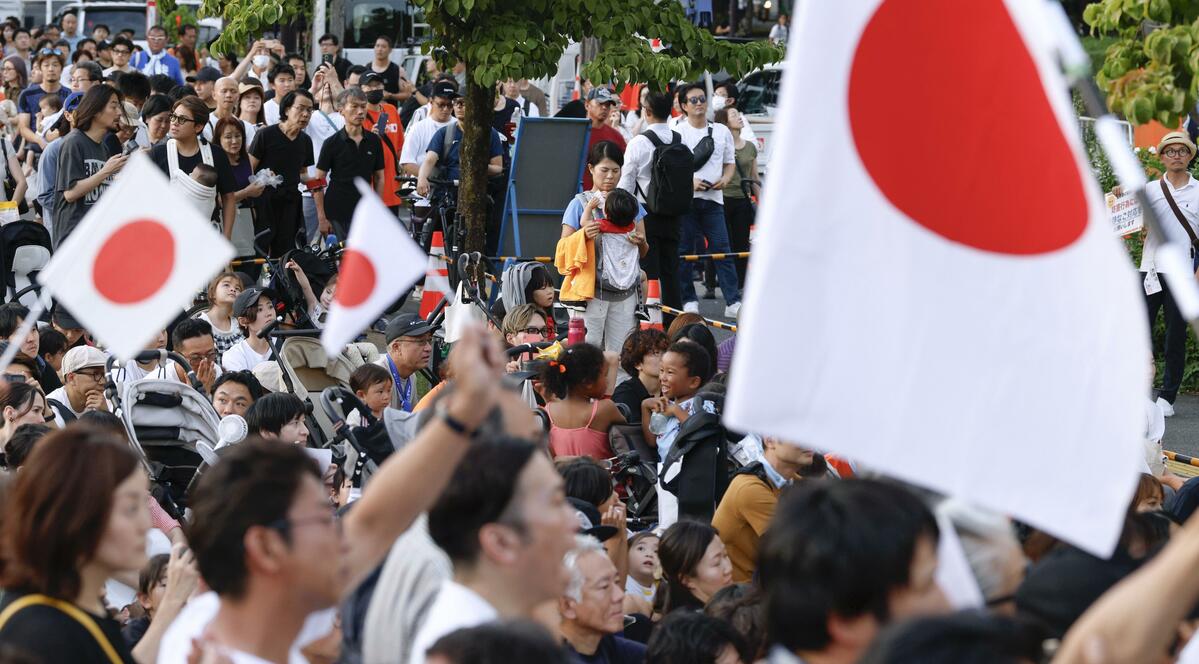
Though Japan has long had a complex relationship with foreigners and its cultural identity, experts say Sanseito's rise is another indication of the global shift to the right embodied and partly fueled by Trump, with populist figures gaining ground in Europe, Britain, Latin America and elsewhere. Kamiya "fancies himself a mini-Trump" and "is one of those who Trump has put wind in his sails," said Jeff Kingston, a professor of Asian studies and history at Temple University's Japan campus. Speaking at a rally on Saturday at Tokyo's Shiba Park, Kamiya said his calls for greater restrictions on foreign workers and investment were driven not by xenophobia but by "the workings of globalization." He criticized mainstream parties' support for boosting immigration in an effort to address the labor shortage facing Japan's aging and shrinking population. "Japan is still the fourth-largest economy in the world. We have 120 million people. Why do we have to rely on foreign capital?" Kamiya told an enthusiastic crowd.

 
Asahi polled voters on their thoughts about Sanseito's election success. I ran the results through AI:


Overall voter approval:
  • 52% of all voters said it was good that Sanseito gained many seats in the 20 July Upper House election.
  • 34% expressed concern over the result.

Support for Sanseito's "Japanese First" (日本第一) policy:
  • 48% overall support the policy.
  • 41% oppose it.

By gender:

Men:
  • 55% support "Japanese First"
  • 38% oppose it
  • 59% approve of Sanseito's gains
  • 30% disapprove
  • More than 70% of men in their 30s or younger welcome the party's gains.

Women:
  • 42% support "Japanese First"
  • 43% oppose it
  • 46% approve of the party's rise
  • 38% disapprove

By age group:

Ages 18–29:

  • 71% support "Japanese First"
  • 27% oppose it
Ages 50s and under (including 30s and 40s):
  • About 60% approve of Sanseito's gains
Ages 70 and older:
  • Only 29% support "Japanese First"
  • 53% oppose it
  • About 40% approve of the party's rise
  • Around 60% express unease or concern
Correlation between support for Sanseito and "Japanese First":
  • Among those who approve of Sanseito's gains, 72% support the "Japanese First" policy.
  • Among those who disapprove of the party's rise, 77% are uncomfortable with the policy.

Survey methodology:
  • Conducted via random-digit-dial telephone survey on 26–27 July.
  • Valid responses:

  • 497 from landlines (50% response rate)
  • 753 from mobile phones (40% response rate)

The data shows that Sanseito's rise is most warmly received among younger voters and men, with strong alignment between approval of the party's success and endorsement of its anti-immigration and nationalist agenda. Older voters, especially those aged 70 and above, are more sceptical of both the party's growth and its ideological platform.


Quite worrisome. The Instagram generation has no clue.
 
Here's an insightful wrap-up by the BBC. Probably nothing new to those who follow Japanese politics, but it's good to take a step back and view the broader context:

 
It's interesting that younger people are more supportive of Sanseito. Do older people remember the bad ol' days of a right wing government? Is it due to the despair felt by younger people and the prospect of a rubbish life ahead of them?

I have to admit, I'm a big fan of the colour orange…😑
 
Mr Kamiya met Tino Chrupalla, the joint leader of the AfD, a controversial German far-right party. Birds of a feather...

Kamiya Sohei

In a post on X dated 5 August, Kamiya Sohei shared that he had met with Tino Chrupalla, leader of Germany's Alternative for Germany (AfD) party, at his office in the Diet in Tokyo earlier that day, where they exchanged views for about an hour. "I outlined Sanseito's policies and stance, and received words of encouragement: 'I want you to stay firmly on that path,'" Kamiya wrote. He added that he hopes to visit Europe shortly. Sanseito, established in 2020, secured 14 seats in the Upper House election on 20 July, despite only having one seat up for re-election. The AfD, currently Germany's largest opposition party, has been gaining traction with its strong anti-immigration and anti-refugee stance.

 
In July, Mainichi conducted a survey, asking respondents about their hopes for and expectations of Sanseito.

Some 19% said they "have positive expectations" for Sanseito. This right-wing populist party made significant gains in the recent House of Councillors election. While 46% said the opposite, the figure was notably higher than Sanseito's support rate of 8%, suggesting it is attracting interest even from supporters of other parties.

What do voters hope for from Sanseito, and what are the reasons for scepticism?

  • 'Japanese First' policies: respondents with positive expectations for Sanseito most often cited the party's "Japanese First" and foreigner-related policies, heavily promoted during the upper house campaign. Supporters' comments focused on prioritising Japanese citizens and restricting foreign ownership of land, with many expressing concern over property sales to foreigners. Among upper house voters who viewed Sanseito positively, 76% said foreigner-related policies influenced their choice—more than double the rate among those without an optimistic view. The party's early emphasis on these issues drew support from people worried about foreign property purchases, price increases, and problems linked to the post-pandemic tourism boom.
  • Anti-espionage law: some voters also valued Sanseito's call for an anti-espionage statute, seeing it as a step toward greater economic security. Party leader Sohei Kamiya has promised to submit such a bill in the autumn extraordinary Diet session, reviving a debate last seen in 1985 when a similar LDP proposal was abandoned over fears it would curb constitutional rights and impose overly harsh penalties. Other supporters pointed to Sanseito's tax-cut proposals, lower social insurance premiums, and potential to challenge the long-dominant LDP—either by replacing what they see as a corrupt government or by acting as a credible conservative alternative.
  • Discrimination and exclusion worries: Many critics focused on Sanseito's "Japanese First" and foreigner-related policies, saying the stance risks discrimination and exclusion. They argued it was "incompatible with humanitarian values and economic needs in a country facing population decline." Others criticised the "unscientific or evidence-free claims," with fact-checkers noting it had more inaccuracies than any other party—undermining trust in its candidates. Other concerns were fears over conscription and nuclear armament, partly sparked by remarks from newly elected member Shioiri Sayaka, who has spoken favourably about both. While Sanseito's official platform avoids calling for a draft and frames nuclear weapons as a temporary deterrent toward eventual abolition, comments from party members and candidate survey responses suggesting support for atomic arms have intensified public unease.

 
Kyodo with a feature on foreign residents weighing in on the "Japanese First" slogan:

Shin Sugok is a third-generation Korean in Japan who works as a human resources development consultant and representative of an organization fighting hate speech. She's concerned about the Japanese First movement's potential to fuel discrimination, exclusion, and even mob violence. During the election campaign, she received numerous complaints from foreigners of Asian descent who said they were no longer able to walk the streets because they fear for their safety. Others are afraid of having their names called during hospital visits or when ordering something by phone. She says "Japanese First" is qualitatively different from past discrimination because it functions as a rallying cry that aims to create solidarity among the masses.

Sandra Haefelin, born in Munich, Germany, and living in Japan since 1998, says she is uneasy with the phrase "Japanese First" because the definition of Japanese is vague. [...] Those who promote the slogan argue that it refers to "people with Japanese nationality." However, people are often judged based on their appearance. "In such a context, 'Japanese First' can be used as a tool to promote discrimination," Haefelin says. What is perhaps more troubling, in Haefelin's view, is the discourse that seeks to divide foreigners into good and bad. "In Germany, for example, there is a movement to distinguish between 'serious immigrants' and 'troublesome immigrants.' But who decides the criteria for this, and how?" she asks.

Jeff Kingston, a professor at Temple University in Tokyo, considers Sanseito an "ultra-right-wing party" because of its advocacy of historical revisionism, rejection of the peace Constitution, and references to conscription and the introduction of nuclear weapons that clearly reveal its authoritarian intentions. Kamiya styles himself a "mini-Trump" who is trying to tap into the same grievances and anti-global sentiments that have powered the MAGA movement in the United States, he says. The former supermarket manager's populist, emotional appeal attracts support, especially among the younger generation, more than the policies themselves. "Many younger Japanese feel like outsiders, facing bleak prospects. Kamiya offers a message of hope mixed with grievance and glowering nationalism," Kingston says.

 
In the very early 70's in Fukuoka , there was a really sad looking slum area that seemed out of place. I was a bit shocked when my Japanese friend said that's where the Koreans live.
 
The FT interviewed Mr Kamiya. Not sure if this is pay-walled, I could read the entire article.

Sadly, I have to agree with his views on the ruling LDP.

Japan's Liberal Democratic Party is run by elderly men with outdated ideas and could collapse soon, according to the leader of a radical new political movement shaking up Japanese politics. Sohei Kamiya, the outspoken 47-year-old head of the ultraconservative Sanseito party, wrote off the bloc that's controlled Japan for nearly seven decades - just days after Prime Minister Shigeru Ishiba stepped down following his party's crushing parliamentary defeat. Ishiba's resignation triggered a leadership contest that will likely determine Japan's next prime minister, but Kamiya isn't impressed. "No matter who wins the LDP leadership race, it's still a party run by old men with old-fashioned thinking," he told the Financial Times. "Young Japanese people desperately need a proper vision for the future." The comments highlight growing frustration with Japan's political establishment as newer parties gain ground.

Japan's ruling party run by 'grandads', says leader of ultraconservative Sanseito
 
Sohei Kamiya, leader of the opposition Sanseito party, said his group had no plans to join a coalition with the "declining" Liberal Democratic Party or its partner Komeito following Sanae Takaichi's election as LDP president. Speaking during a street address on 5 October, a day after Takaichi defeated Agriculture Minister Shinjiro Koizumi in a runoff, he remarked that it would have been preferable if Takaichi had won rather than Koizumi, noting her campaign pledges, such as stricter controls on foreign nationals.

However, Kamiya, whose rising party champions a "Japanese First" agenda, rejected the idea of a potential coalition with the LDP and Komeito. "We formed our party because the LDP was failing," he said. "If we were to join forces just because someone with policies close to ours emerged, it would make no sense why we created (this party) in the first place."

 
Nothing can stop their rise: the Sanseito candidate for the Tokyo ward of Katsushika, Kanno Yuto, received the most votes, although LDP candidates dominated the overall results.

Kanno Yuto

Photo credit: Endo Kazuki via Asahi


At 29, Kanno won 7,667 votes after running on his party's trademark "Japanese First" platform, presenting himself as a voice for younger generations in politics. He argued that the mere presence of someone in their twenties in the assembly would bring change to Katsushika. In the election for 40 assembly seats, 10 candidates from the Liberal Democratic Party won, with their combined votes far exceeding those of Kanno, the only Sanseito representative in the race. Turnout stood at 40.35% among the 378,816 registered voters. Throughout his campaign, Kanno focused on issues such as unpaid national health insurance premiums owed by foreign residents and the importance of disaster preparedness—one of his concrete proposals was to distribute vouchers to help households purchase emergency gear and supplies.

Originally from Sendai, Kanno graduated from Hitotsubashi University in Tokyo and worked at a trust bank before entering the race. He cited the 2011 Great East Japan Earthquake as a turning point that motivated him to enter politics and serve the public. During the campaign, fellow Sanseito politicians joined his rallies, including Upper House member Mizuho Umemura. The party has been winning seats in local elections across Japan. Last month, the party's endorsed candidate placed second in the Miyagi gubernatorial race. Sanseito also achieved top finishes in municipal assembly elections in Nomi, Ishikawa Prefecture, and Ise, Mie Prefecture.

 
Sanseito is seeking to broaden its conservative support by urging the ruling Liberal Democratic Party to follow through on Prime Minister Sanae Takaichi's agenda, with a particular focus on more rigid immigration rules. Ahead of the 8 February Lower House election, the party plans to campaign on stricter immigration controls and tax cuts. The prime minister has already begun examining ways to tighten immigration policy and has signalled interest in speeding up discussions on freezing the food consumption tax for 2 years. Sanseito leader Sohei Kamiya has also indicated that his party may take on LDP lawmakers who do not align with Takaichi's conservative stance.

The party currently holds three Lower House seats and plans to field more than 150 candidates in the Feb. 8 election. Its goal is to win 30 to 40 seats. Sanseito's momentum appears to be holding, according to a Jan. 17-18 survey by The Asahi Shimbun. When asked which party they would choose in the proportional representation system if a Lower House election were held now, 7% of respondents picked Sanseito. The LDP was selected by 34%, followed by 10% each for coalition partner Nippon Ishin (Japan Innovation Party) and the opposition Democratic Party for the People.

 
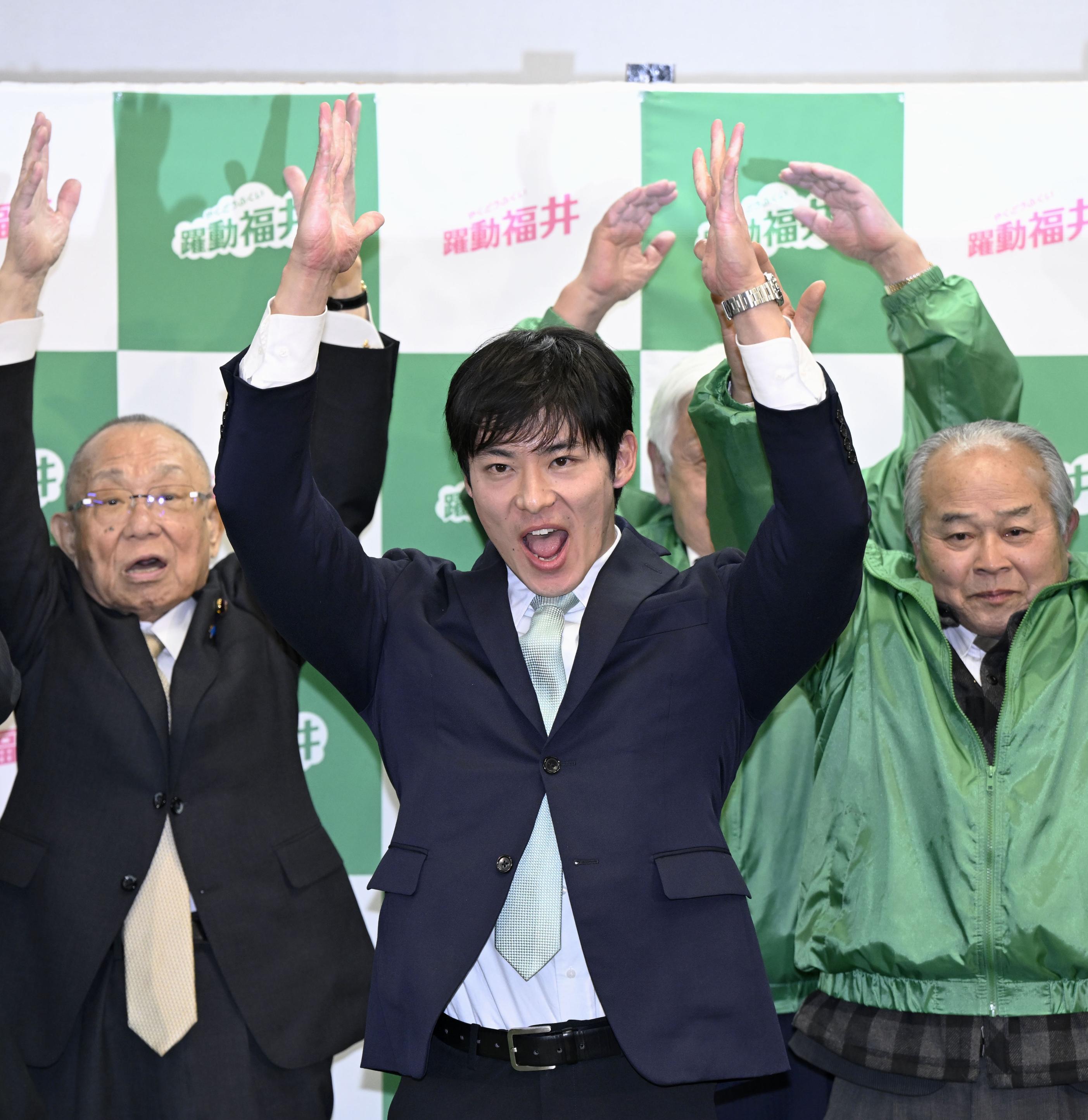
Fukui's newly elected governor, Ishida Takato (35), a bureaucrat from the Ministry of Foreign Affairs, has Sanseitō's backing.


The Fukui gubernatorial election, triggered by the incumbent's resignation over a sexual harassment scandal, was decided on the 25th, with Ishida Takato (35), an independent newcomer and former Foreign Ministry official, winning his first election. He defeated two other first-time candidates, including Yamada Kenichi (67), the former mayor of Echizen, who ran with the backing of the Liberal Democratic Party.

According to the National Governors' Association, Ishida became the youngest sitting governor in Japan. He prevailed in a fiercely contested race marked by a split within conservative ranks, overcoming Yamada, who ran an organisation-heavy campaign with support from the LDP and endorsements from multiple parties' prefectural chapters and a wide range of groups. Voter turnout stood at 46.29 per cent, down 4.79 points from the 2023 election. Although the race drew considerable attention, turnout may have been dampened by heavy snowfall.

Ishida was backed by LDP-affiliated Fukui City assembly members who opposed Yamada's candidacy. He campaigned on his youth and the promise of renewing prefectural governance. Kamiya Sohei, leader of the Sanseitō party, also visited Fukui in conjunction with a prefectural assembly by-election in which his party fielded a candidate, urging voters to support Ishida.

Yamada, who had LDP support, secured endorsements from the prefectural organisations of the Japan Innovation Party, the Democratic Party for the People, Komeito and the Constitutional Democratic Party, as well as backing from more than 700 groups, including Rengo Fukui. Senior LDP figures, among them Kobayashi Takaaki, joined his campaign. Despite a tight contest that went down to the final stages, Yamada fell short by a narrow margin.


Sanseito party leader Kamiya Sohei has called for what he describes as an end to "gender-free ideology," comparing it to communism while presenting ideas he believes could encourage more young people to marry and have children. :rolleyes:

Speaking during a street address in Kyoto on 5 February ahead of the upcoming Lower House election, Sohei Kamiya argued that ideas about eliminating gender differences were contributing to a waning interest in romance among young people. He said there was, in his view, a need to foster an environment in which men and women could value their masculinity and femininity and develop relationships accordingly. At the same time, Kamiya stated that he had no intention of discriminating against LGBT individuals. He nevertheless maintained that society becomes unsettled, as he sees it, when men and women do not live according to traditional gender roles.

 
Sanseito BS that usually doesn't make it into the mainstream news:

Sanseito party leader Kamiya Sohei suggested that foreigners shouldn't even be allowed to use Japanese roads for free.


It's not that the guy seriously believes this; it's an attempt to push the Overton window: although such discrimination would never be seriously considered, it makes it slightly easier for politicians to push less ridiculous discriminatory measures.
 
Hmmm, I looked into Sanseito, can't say I agree with everything. I'm pro-vaccine (sue me) because I understand that medicine without tradeoffs isn't medicine. I also can't agree with absolute loyalty to the Emperor. He isn't in charge of Japan anymore, swearing absolute loyalty to a symbolic figure seems like swearing absolute loyalty to a sword, like what they did back in ancient times as a form of worship to Ares. Completely useless. But who knows, maybe I'm wrong this time. I do not believe Japan should posses nuclear weapons. You simply cannot claim you will never go to war and simultaneously create a nuclear stockpile. If they are suggesting tax cuts because they feel like citizens shouldn't have to pay as much taxes, they're stupid. Is they're doing that to regulate government spending, that's smart. In true me fashion, I looked at their LGBTQ+ stances. I wont mention anything here except that I wholeheartedly agree with them. They also support the traditional Japanese family, which is nice, but it makes me wonder how mixed nationality/ethnicity couples might be treated. Overall, I rate them a sold 7.5/10
 
On a related topic, this evening I read these excellent words of wisdom from Ari Tamat, who is the president of the Indonesian Community in Japan.

Japan's Hate Machine
Manufactured outrage turns foreigners into clicks
By Ari Tamat
Racism in Japan is not new, but it mostly stayed in the basement.
I remember the early 2000s on the anonymous forum 2channel, when nationalist vitriol spouted by the 'Netouyo' far-right lived in the web's dark, damp corners. As a foreign resident, I could decide how close I wanted to get. I knew it existed, but it stayed where it was. It didn't show up in the rest of my day.
Today, the basement has no doors.
The pollution drifts into the feeds of ordinary Japanese citizens who never asked for it, and that steady exposure changes how people think. I see housewives and high school students — people who have probably never spoken with a foreigner — suddenly ranting about Kurds or spitting out diatribes against Chinese. Decent people typing indecent things under photos of foreign families.
Foreigner-bashing has become a fad, a meme, a shortcut to attention.
This shift was not organic. Hate speech is now being promoted by political parties chasing votes, accounts flaming for profit, and outside forces that benefit from a divided Japan. Targeting the foreign community is easy content: simple, emotional, fast-moving. The platforms tilt the playing field. The loudest voices rise because outrage keeps people scrolling, and scrolling keeps revenue flowing.
Hate is a business model now.
It works because it exploits how the brain shortcuts. When a father in Kyoto was arrested for the murder of his young son, the nation was rightfully shocked. No one concluded that every Kyoto resident is a criminal. It was treated as one man's act. But when false rumors spread claiming the suspect was a foreign national, suddenly the entire foreign community was under suspicion.
Psychologists call this out-group homogeneity bias: we see our own group as individuals while flattening others into a single type. It compounds with the availability heuristic — we judge what's common based on what we're shown most often. We like to think we're fair observers. We're not. We run on filters, and algorithms know exactly how to feed them.
It takes very little: a single incident, a short video clip. Shared ten thousand times, it stops being an exception and starts being the rule for all foreigners.
Japanese society is largely unequipped for this kind of manipulation. Too many people absorb hate-fueled narratives without ever having a normal conversation with the neighbors they're condemning. Voices calling for sanity get drowned out. The gap between real life and online life grows, and the internet starts to feel like the truth, even when it's stitched from rumors and selective clips.
For those of us who have spent years or decades here — working, paying taxes, raising families, holding up parts of the economy — this disconnect wears you down. The contrast between the civil society I move through in person and the rage I encounter online is genuinely hard to process. On bad days, I wonder whether everyday politeness is just a surface layer. A sustained wall of hostility, plus the feeling of being treated as a perpetual suspect, turns long-term commitment into something closer to raw anger. Some people retreat into cynicism. Others push back hard, because they are tired of being the punching bag.
I've done both. Neither felt good.
The constant toxicity is also driving people away. Some leave the platforms. Others decide Japan is no longer a place they can call home. Japan needs more visibility for the contributions of its foreign residents. But the current climate is silencing the very people who prove we belong.
Coexistence is not an abstraction for this country. It is a practical necessity. We — foreigners and Japanese alike — are building this society together, and we cannot do that while profit-seekers dictate how we see our neighbors.
 
While I'm deeply worried about the current direction of Japanese politics, I have neither personally encountered hostility in daily life nor yet felt treated as a perpetual suspect. Perhaps I'm just being obtuse. 🤷‍♂️

I try to avoid the toxicity and vitriol of social media by not engaging and by meticulously "sanitising" my feeds. Constant curation preserves sanity.

Anyhow, wise words by Mr Tamat. Thanks for sharing!
 
I'm pretty sure the bomb threat was placed by one of Mr Kamiya's underlings--no better publicity than that.


A bomb threat linked to a scheduled lecture by Sanseitō leader Sōhei Kamiya forced the University of Tokyo to halt its annual May Festival partway through the opening day on 16 May, with thousands of visitors asked to leave the campus. After a full safety inspection, the festival resumed on 17 May under tighter security measures.

The cancellation drew criticism from both the university and Sanseitō, which described the threat as an attack on free speech. Speaking at a press conference on 18 May, Kamiya said he had been shocked and angered by the incident. He also argued that using violent threats against people simply because they hold different opinions harms public debate.

Kamiya said a discussion with students was scheduled for the latter half of the lecture. The threat "deprived the students of the opportunity to ask questions, which is a very serious matter." The lecture was hosted by political student circle Ugonoshu (Japan Association for Strategy and Technology). Ugonoshu was established at the university in 2025 and its website states its mission is to correct the "'inclination without choice,' where students unconsciously become ideologically biased."

The May Festival continued the next day without further incidents.

 
I'm pretty sure the bomb threat was placed by one of Mr Kamiya's underlings--no better publicity than that.


A bomb threat linked to a scheduled lecture by Sanseitō leader Sōhei Kamiya forced the University of Tokyo to halt its annual May Festival partway through the opening day on 16 May, with thousands of visitors asked to leave the campus. After a full safety inspection, the festival resumed on 17 May under tighter security measures.

The cancellation drew criticism from both the university and Sanseitō, which described the threat as an attack on free speech. Speaking at a press conference on 18 May, Kamiya said he had been shocked and angered by the incident. He also argued that using violent threats against people simply because they hold different opinions harms public debate.


The May Festival continued the next day without further incidents.

Spawn of Lother One was one of the volunteers at that event!

It would be a high-risk strategy for one of Kamiya's henchmen to make such a false threat. I imagine the police will investigate this very thoroughly, and if it came out, the LDP would make a lot of political capital out of it, and a government-supporting media would prominently report it.
 
Last edited:
Back
Top Bottom