Politics Japan First: Sanseito, Japan's new right-wing populist party

thomas

Unswerving cyclist
Admin
Joined
14 Mar 2002
Messages
21,051
Reaction score
18,904
Here are a few results of the Tokyo Metropolitan Assembly election held on Sunday, 22 June 2025:

Voter turnout reached 47.59%, an increase of 5.2% from the previous poll. The regional party Tomin First no Kai, backed by Governor Yuriko Koike, emerged as the assembly's strongest party with 31 seats, up from 26.

In a historic low, the LDP secured only 21 seats, a decline of nine from its previous total, and, for the first time, fell to second place. This result is being widely interpreted as a clear sign of public discontent over rising living costs, stagnant wages and Prime Minister Ishiba's low approval ratings.

The LDP's coalition partner, Komeito, saw its representation reduced from 23 to 19 seats. In comparison, the Constitutional Democratic Party of Japan won 17 seats, a five-seat increase over its previous tally. The Democratic Party for the People entered the assembly for the first time with nine seats. In comparison, the right-wing populist Sanseito claimed three seats, marking its inaugural presence in the chamber. Analysts note that although the emergence of smaller parties and shifting voter sentiment reflect an increasingly fragmented political landscape, turnout and results in Tokyo, a region with 11.5 million voters, may not directly mirror national trends.


Tokyo Metropolitan Assembly Election Results (22 June 2025)

PartySeats
Tokyoites First都民ファーストの会Tomin Fāsuto no Kai31
Liberal Democratic Party自由民主党Jiyū-Minshutō21
Komeito公明党Kōmeitō19
Constitutional Democratic Party of Japan立憲民主党Rikken-Minshutō17
Japanese Communist Party日本共産党Nihon Kyōsantō14
Democratic Party for the People国民民主党Kokumin-Minshutō9
Sanseito参政党Sanseitō3
Tokyo Seikatsusha Network東京・生活者ネットワークTōkyō Seikatsusha Nettowāku1


The upstart conservative party Sanseito (参政党, Sanseitō) won its first seats in the Tokyo Metropolitan Assembly on 22 June, while the newly launched party Saisei no Michi (再生の道, The Path to Rebirth) failed to gain traction despite earlier hype.

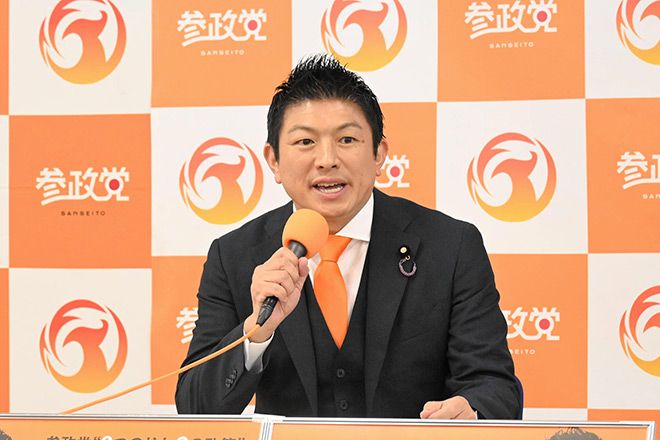
Sanseito leader Sohei Kamiya

Sanseito leader Sohei Kamiya (photo credit: Sugiyama Akari via Asahi)


Sanseito candidates Masanori Mochizuki (35) and Sanae Ezaki (39) were elected in the Setagaya and Nerima wards, respectively. The party had fielded four candidates and is known for its "Japanese First" platform, echoing the "America First" message of Donald Trump. During the campaign, Sanseito called for cutting residential taxes by half, placing subways and crematoriums under public ownership, and providing rice coupons to families with children or financial hardship. Sohei Kamiya, the party leader, explained their success in terms of their growing online visibility and policy initiatives, such as their draft constitution.

Founded in 2020, Sanseito has rapidly gained national support through social media and YouTube, appealing to voters disillusioned with mainstream parties. It recently made headlines when its first-time candidates won the most votes in local elections in Amagasaki, Nishio, and Awara earlier in June.

 
More on Sanseito:

"Rock once stood for rebellion—now, with words instead of guitars, politics is what truly rocks." That's the provocative pitch of Sanseito, a rising right-wing populist party in Japan that has gained attention for its opposition to immigration, COVID-19 measures, and calls to revise the postwar Constitution, which has long been considered a political third rail. Some of its supporters even express nostalgia for wartime imperial slogans.

Founded in 2020 as the pandemic took hold, Sanseito—translated in English as the "Party of Do it Yourself"—tapped into public anxiety and discontent. It won three seats in last October's lower house election, and party leader Sohei Kamiya, re-elected in May, now aims to secure six seats in this summer's upper house vote. Supporters, fuelled primarily by social media, express rising frustration over economic stagnation and a tourism boom they say is eroding Japanese culture. Many claim foreign visitors and residents receive preferential treatment and channel their dissatisfaction into a nationalist, crisis-driven political identity.

 
As if we needed another far-right populist party in this country, beating the xenophobic (and even anti-Semitic) drum.

Tobias Harris from Observing Japan on Sanseitō's growing political footprint:

While in absolute terms it remains a marginal player in Japan's politics, following the Tokyo metropolitan assembly elections – in which three of its four candidates won seats and in which the party received 117,389 votes – it is increasingly difficult to ignore the presence of Sanseitō (referred to in English as the Do It Yourself party). The party is rising in opinion polls ahead of the upper house elections, and is planning on fielding candidates in each of the thirty-two single-member constituencies, constituencies that it is highly unlikely to win but fielding candidates in these races could a) help drive up theparty's results in proportional representation voting and b) could influence the outcome in close races depending on whether Sanseitō can draw voters away from more mainstream parties.


The party is both a policy innovator and an organisational innovator. While in some ways its program has a lot in common with other and earlier right-wing movements – its emphasis on national security, the defense of traditional values, and patriotic education– and overlaps with the LDP right and the center-right Democratic Party for the People (DPFP) in calling for expansionary fiscal policy, the party is more unabashed in its xenophobia (it refers to the "silent invasion" of immigrants into Japan) and, in its opposition to "totalitarian globalism" taps into what has been called "conspiracism," a generalised view of the world that Thomas Milan Conda describes as "a mental framework, a belief system, a worldview that leads people to look for conspiracies, to anticipate them, to link them together into a grander overarching conspiracy." The party's program essentially stitches together conspiracism with more conventional policies and proposals, though, given the party's origins in opposition to masking and vaccination during the COVID-19 pandemic, conspiracism is at the heart of the party's identity.


The emergence of this party doesn't particularly surprise me. Many people have been marginalised by globalisation and poor economic management in Japan and understandably want someone to blame. As usual, the stock response is to blame the wrong people: immigrants/people who look a bit different.

Google AI reckons there are 2,000-2,500 Jewish people in Japan (I'm half of one!), making antisemitism a particularly dumb attitude to adopt by Japanese people.
 
I have renamed this thread to follow the escapades of Japan's newest right-wing populist party.

Apart from all the xenophobic noise before the Upper House elections on 20 July, Sanseitō made headlines with ageist rhetoric today, demanding that terminally ill patients bear all costs to prolong their lives:

The emerging opposition party Sanseitō proposed that terminally ill patients should bear the full cost of their life-prolonging medical treatments. Party leader Sohei Kamiya explained that the proposal aimed to emphasise the importance of financial preparedness for a dignified death.

Sanseitō's campaign pledges, released in June, linked spending on what it described as "excessive life-prolonging treatments" to the rising burden on Japan's healthcare system. The party stated that, as a general principle, it would avoid administering life-sustaining procedures such as gastrostomies or intravenous drips. According to Health Minister Fukuoka, the issue of end-of-life treatment falls within the domain of bioethics. It should be addressed through careful national debate, suggesting that Sanseitō's position lacked adequate consideration.


Interestingly, the party has an "About Us" page in English:

 
I have renamed this thread to follow the escapades of Japan's newest right-wing populist party.

Apart from all the xenophobic noise before the Upper House elections on 20 July, Sanseitō made headlines with ageist rhetoric today, demanding that terminally ill patients bear all costs to prolong their lives:

The emerging opposition party Sanseitō proposed that terminally ill patients should bear the full cost of their life-prolonging medical treatments. Party leader Sohei Kamiya explained that the proposal aimed to emphasise the importance of financial preparedness for a dignified death.

Sanseitō's campaign pledges, released in June, linked spending on what it described as "excessive life-prolonging treatments" to the rising burden on Japan's healthcare system. The party stated that, as a general principle, it would avoid administering life-sustaining procedures such as gastrostomies or intravenous drips. According to Health Minister Fukuoka, the issue of end-of-life treatment falls within the domain of bioethics. It should be addressed through careful national debate, suggesting that Sanseitō's position lacked adequate consideration.


Interestingly, the party has an "About Us" page in English:

Such willingness to have a policy that ends lives, not to mention regarding one section of the population as a waste of resources, is a very big red flag, and I hope many Japanese people will recognise it as one.
 
Such willingness to have a policy that ends lives, not to mention regarding one section of the population as a waste of resources, is a very big red flag, and I hope many Japanese people will recognise it as one.

This cruel and heartless attitude has also been reflected in the comments of certain far-right LDP reps: Sugita Mio called LGBT couples and childless women "unproductive", gaffe-prone Aso stated that elderly people should 'hurry up and die' to avoid the government having to pay their end-of-life care.
 
I saw on the news yesterday that an LDP politician resigned or maybe just got censured for saying something stupid. I guess he said something to the effect that the Noto Earthquake was fortunate in that it caused them to improve government bureaucracy somehow.
 
I saw on the news yesterday that an LDP politician resigned or maybe just got censured for saying something stupid. I guess he said something to the effect that the Noto Earthquake was fortunate in that it caused them to improve government bureaucracy somehow.

He apologised but in the same breath expressed his intention NOT to step down. :LOL:
 
According to Tobias Harris, Sanseitō has had more media exposure in the past three weeks than in the three years since its inception. There's also concern over foreign intervention, as Saya, its candidate in the Tokyo multi-member constituency, was interviewed on Sputnik, a Russian state-owned news agency. Kamiya said that a party staffer had been fired for authorising the interview without securing approval from higher-ups. Against this backdrop, both Ishiba government officials and LDP lawmakers have warned that foreign powers are intervening in Japan's democracy, using social media to stoke social divisions.

A lot of their claims relating to foreign residents and immigration have already been refuted:

Meanwhile, some of Sanseitō's claims about the conduct of Japan's foreign population, which have been widely shared on social media, have also been challenged. The Nikkei Shimbun examined claims about criminal activity by foreigners and found that, although Japan's foreign population is now significantly larger, there were substantially fewer criminal cases (15,541) in 2023 than in 2005, when they peaked at over 40,000. The paper found no increase in illegal migrants over the past fifteen years; found that the actual percentage of foreign households receiving public assistance was 2.9%, not more than one third as has been claimed; and noted that the total annual amount of unpaid national health insurance premiums – including Japanese and foreign nationals – is JPY 145.7bn, significantly less than the JPY 400bn that has been supposedly left unpaid by foreigners. The Ministry of Health, Labour, and Welfare has, in turn, also worked to counter misleading claims circulating on social media. The media has also examined some of the party's more extreme policy positions, including its draft constitution, which Mainichi notes omits many of the individual rights guaranteed in the postwar constitution and also includes language reminiscent of the prewar era in sections on the imperial household and education.

 
Sorry for the messy post. This was posted on Facebook by a British friend in Japan, which has lots of rebuttals to the untruths about foreigners being peddled. The Japanese is given below, which makes the post highly shareable if you can find it on social media.

It's good to know that a few academics in Japan have our back.

A message from Naoko Hashimoto (Associate Professor, International Christian University) regarding Japan's Upper House election and the immigration / foreigner question.
英訳の下に、原文の日本語が記載されています。

Misinformation about foreigners is rampant during the Upper House election. Since I've accumulated a lot of data through research and media appearances, I'll list it below along with sources. Please feel free to quote or share.

① Foreign entrants to Japan are increasing rapidly (excluding the COVID period).
Last year, over 40 million people entered Japan, about 37 million of whom were tourists. Measures to address overtourism are necessary.
As of the end of last year, there were about 3.77 million foreign residents in Japan on medium- to long-term stays (roughly 3% of the population), and this number is also generally increasing.
Source: Immigration Services Agency of Japan
[https://www.moj.go.jp/isa/publications/press/13_00051.html](https://www.moj.go.jp/.../publicat.../press/13_00051.html...)
[https://www.moj.go.jp/isa/publications/press/13_00052.html](https://www.moj.go.jp/.../publicat.../press/13_00052.html...)

② As of January 1 this year, there were 74,863 undocumented overstayers.
That's about one-fourth the peak in 1993.
Compared to other countries, this is an astonishingly low number — truly remarkable, and something Japan should maintain.
Also, there's no data showing undocumented people are more likely to commit crimes — the common view is actually the opposite, since they fear deportation.
Source: Immigration Services Agency
[本邦における不法残留者数について(令和7年1月1日現在) | 出入国在留管理庁](https://www.moj.go.jp/.../publicat.../press/13_00053.html...)

③ The claim that "foreign crime is surging" is false.
Even though both short-term visitors and long-term residents are increasing, foreign crime has remained mostly flat in recent years.
About 60% of crimes are theft, and serious crimes like murder and robbery are so rare they fall under "other" categories.
Also, the idea that "foreigners are rarely prosecuted" is false — in fact, foreigners are prosecuted at a higher rate than Japanese nationals.
(For offenses under special laws, deportation may be considered more "efficient" than prosecution.)
Source: Ministry of Justice, 2024 White Paper on Crime
[法務省:令和6年版犯罪白書](https://www.moj.go.jp/housouken/housouken03_00134.html...)

④ Claim: "Foreigners abuse Japan's national health insurance system"
As of FY2023, foreigners made up 4% of all insured persons, but only 1.39% of total medical expenses.
In other words, relatively young and healthy foreigners are helping support Japan's elderly healthcare system.
Banning foreigners from joining national insurance would backfire on Japanese society.
Source: Ministry of Health, Labour and Welfare
[全国高齢者医療主管課(部)長及び国民健康保険主管課(部)長並びに後期高齢者医療広域連合事務局長会議](https://l.facebook.com/l.php?u=https%3A%2F%2Fwww.mhlw.go.jp%2Fstf%2Fnewpage_54381.html%3Ffbclid%3DIwZXh0bgNhZW0CMTAAYnJpZBExTXZOOWdaelJBNUVtYUdtawEe10sRh5l6pr8XpuO9QTZLzJO6eGoCLhR_SlfCr0kHF5UH2jf9mRfR4kvZkPQ_aem_cxies_XfBfju0saOTX5REA&h=AT1_drLr2bemcgL4X_BcZ5_Obpxp5VZL0ZKQMpCQ44bvalf13_Rbl6jSc6x1tHJWtQsTDmKH2Rl88oNjIndC387hjjAZqdNiRe0b004fGNQ9wElrK_F5crDbpkWTFzk_Yf-bgMnaX-sc_A&__tn__=-UK-R&c[0]=AT3iEWvOCujF31ti1xnt5HPEiBoFCYbombXAvZwdtUHajYqF8CevDVBVBvH915ETXv10NYLytVucNn_kks5voyRki79BA4lbE3XpK4D_KkeGlOtdRGn3TOkCtD5zoRwxqZ_f)

⑤ Claim: "Foreigners abuse welfare benefits"
Only certain categories of foreigners are eligible for welfare: special permanent residents, permanent residents, spouses of Japanese nationals or permanent residents, long-term residents, and refugees.
Despite an increase in these populations, the number of welfare-receiving foreign households is stable at around 45,000, out of a total of 1.6 million.
Most of these are elderly Korean residents. They were excluded from Japan's social security system before it ratified the Refugee Convention in 1981, and due to discrimination, they had limited job opportunities and low pensions — hence the need for welfare.
This is actually a failure of past Japanese policy.
(For a detailed analysis, please refer to Chapter 5 of my book: "Foreigners, Including Refugees, and Welfare" )

⑥ Claim: "Foreigners are buying up all the land"
There is no comprehensive long-term data on this.
According to a 2023 Cabinet Office report, foreign individuals or entities accounted for only 0.75% of total land area acquired, and 2.2% of acquisition cases around sensitive facilities.
From a national security perspective, land ownership should be monitored regardless of nationality.
Source: Cabinet Office
[https://www.cao.go.jp/tochi-chosa/doc/kohyoR5.pdf](https://www.cao.go.jp/tochi-chosa/doc/kohyoR5.pdf...)

⑦ Claim: "Foreign students are treated preferentially"
As of May 2024, there were about 340,000 international students in Japan, the vast majority privately funded. As of May 2020 (latest detailed data), there were 8,761 government-funded students, mostly from Indonesia, China, Thailand, and Vietnam.
They are future elites expected to return and take up important positions, so this is actually a long-term benefit to Japan.
Sources: Ministry of Education, Culture, Sports, Science and Technology (MEXT)
[https://www.mext.go.jp/a_menu/koutou/ryugaku/1338568.htm](https://www.mext.go.jp/a_menu/koutou/ryugaku/1338568.htm...)
[https://www.mext.go.jp/.../koutou/ryugaku/1412692_00003.htm](https://www.mext.go.jp/.../ryugaku/1412692_00003.htm...)
[https://www.studyinjapan.go.jp/.../sch.../mext-scholarships/](https://www.studyinjapan.go.jp/.../mext-scholarships/...)

⑧ Claim: "Foreign workers lower Japanese wages"
This is outside my area of expertise, but other specialists have created a reference chart.
In short: no, foreign workers do not cause Japanese wages to fall.

⑨ That said, it's understandable to feel uneasy when more people arrive who aren't familiar with Japanese language or unspoken cultural norms.
The solution is to enhance language training and cultural orientation programs, while also offering clear incentives and, if needed, penalties.
More on that another time…

Even after laying all this out, it's likely that those who no longer care about facts, data, or evidence will simply reject anything that doesn't align with their feelings or impressions.
I get tangled up with people like that every day on X (Twitter)

参院選で、外国人に関するデマが横行してます。
今までの研究やメディア出演用に、集めてきた基礎データがありますので、以下に出典と共に列挙します。
どうぞご自由に引用・参照・シェアして下さい。
あと私のお友達には、細分化された分野の専門家が沢山いらっしゃいますから、もし間違っているとか、より最新データがあるとか、お気づきの点あったらご遠慮なくご指摘下さい。
みんなで「信頼できるデータ群」を作っていけたらと思います。
よろしくお願いします
=========================
① 外国人入国者数は(コロナ禍除いて)急増中。
昨年は4千万人越え、うち約3700万人はいわゆる観光客。オーバーツーリズム問題への対応は必要。
中長期に日本に在留する外国人は昨年末で約377万人(人口の約3%)。こちらも基本的に増加中。
出典:入管庁
[令和6年における外国人入国者数及び日本人出国者数等について | 出入国在留管理庁](https://www.moj.go.jp/.../publicat.../press/13_00051.html...)
[令和6年末現在における在留外国人数について | 出入国在留管理庁](https://www.moj.go.jp/.../publicat.../press/13_00052.html...)
➁ 今年1月1日時点での「不法滞在者」は74,863人。
ピーク時の1993年と比べて約1/4まで減少。
諸外国と比べても驚異的な少なさで、これは純粋にスゴイし維持すべき。
なお、不法滞在者が刑法犯をしやすいというデータはない(送還が怖いから逆というのが定説)。
出典:入管庁 [本邦における不法残留者数について(令和7年1月1日現在) | 出入国在留管理庁](https://www.moj.go.jp/.../publicat.../press/13_00053.html...)
③「外国人犯罪の急増」説について
短期入国者も中長期在留者も急増しているのに、外国人犯罪は近年ほぼ横ばい。
刑法犯のうち約6割は窃盗で、殺人や強盗などの凶悪犯は「その他」にしか入らないほど極少数。
あと「外国人ばかり起訴されない」というのもデマで、実際は日本人の起訴率より外国人の起訴率の方が高い。
(特別法犯の一部起訴率が低めなのは、恐らく起訴より送還した方が「効率的」という判断かと推察)
出典:法務省『令和6年度 犯罪白書』
[法務省:令和6年版犯罪白書](https://l.facebook.com/l.php?u=https%3A%2F%2Fwww.moj.go.jp%2Fhousouken%2Fhousouken03_00134.html%3Ffbclid%3DIwZXh0bgNhZW0CMTAAYnJpZBExdXcyWGRJQ3lrUjQ0c1MzbwEe6SdSfDJxh8bIn-9o9qp6hDok4EMhijlrdhT4hi6KIdxDmbCaWdohgULcf6M_aem_Eireyumzb5o1KxXK-ApKtQ&h=AT1ymI4FuTPecKweruh65E061Tu1c-Ug2_em3IkKnLIKFwI3ZPG4bljKNMIh6oYgdhVYB5dwWVapyJPbLT74bWihTNt0E2lmaITUDfti_R9CBMJRGi7k8GxHQ1Ycs1s2U8t1tkeGz1XqNA&__tn__=-UK-R&c[0]=AT3ynsjENyA1IgsYcRrMZQaAWM7veB8Td85yeGJoQgRI0vyYD4K-YqWnPGJ5PxsDW6ku0XzdPMn56FGJ7VVvYpYRvdoQo_hxihOF-7uGh8bGfmtqHGVvOP60WbkNPcrLkT_tVBQ7NzNc1PiHQw1UvvCOVIM)
④「外国人による国保濫用」説について
R5年度の被保険者総数に占める外国人率は4%
なのに総医療費に占める外国人率は1.39%
つまり、比較的若くて健康な外国人が、日本の高齢者医療を支えてくれている実態は明らか。
外国人の国保加入禁止なんて、日本人の自爆行為!
出典:厚生労働省 全国高齢者医療主管課(部)長及び国民健康保険主管課(部)長並びに後期高齢者医療広域連合事務局長会議
[全国高齢者医療主管課(部)長及び国民健康保険主管課(部)長並びに後期高齢者医療広域連合事務局長会議](https://l.facebook.com/l.php?u=https%3A%2F%2Fwww.mhlw.go.jp%2Fstf%2Fnewpage_54381.html%3Ffbclid%3DIwZXh0bgNhZW0CMTAAYnJpZBExdXcyWGRJQ3lrUjQ0c1MzbwEejuKx5Se1IBhpJz43nWPiIQLw64mujnV2_Kt6WzyPnEEO9YGi-R4OKzqD4Js_aem_hdo7dc58B5_H7INKR94MGg&h=AT0qMK1yAT8RKKJH718PvpRFisX8sLfTGaQ8KrhHWJlotEZBSCwaj49vOg1dQfeUijbtJGKm9GpCoiCmfw2VjD1PwIDCkqHTR3O85QmgwQbcuJe8LhqJCAQMeri6VyMsUEgSYHTRPTliYA&__tn__=-UK-R&c[0]=AT3ynsjENyA1IgsYcRrMZQaAWM7veB8Td85yeGJoQgRI0vyYD4K-YqWnPGJ5PxsDW6ku0XzdPMn56FGJ7VVvYpYRvdoQo_hxihOF-7uGh8bGfmtqHGVvOP60WbkNPcrLkT_tVBQ7NzNc1PiHQw1UvvCOVIM)
⑤ 「外国人による生活保護濫用」説について
そもそも生保を「援用・準用」できる外国人は、特別永住者、永住者、永住者の配偶者、定住者、日本人の配偶者か難民のみ。
これらの外国人は増えているのに、被保護外国籍世帯は約4万5千でほぼ横ばい(被保護世帯総数は約160万)。
被保護外国籍世帯の多くは韓国・朝鮮籍の高齢者。彼らは1981年に日本が難民条約に加入するまで社会保障に入れず、差別により就職も難しく、無・低年金だから生保が必要
☛むしろ日本政府の失策が所以
(すみませんが、この生保データ分析は、拙著の第5章「難民を含む外国人と生活保護」をご覧ください)
⑥ 「外国人による土地買い占め」説については、中長期の包括的データ無し。
内閣府発表によると2023年度の「重要施設周辺等における土地取得」のうち、外国人・外国系法人による土地取得面積は0.75%、件数は2.2%。
安全保障の観点から、国籍問わず調査は必要かと。
出典:[https://www.cao.go.jp/tochi-chosa/doc/kohyoR5.pdf](https://l.facebook.com/l.php?u=https%3A%2F%2Fwww.cao.go.jp%2Ftochi-chosa%2Fdoc%2FkohyoR5.pdf%3Ffbclid%3DIwZXh0bgNhZW0CMTAAYnJpZBExdXcyWGRJQ3lrUjQ0c1MzbwEejuKx5Se1IBhpJz43nWPiIQLw64mujnV2_Kt6WzyPnEEO9YGi-R4OKzqD4Js_aem_hdo7dc58B5_H7INKR94MGg&h=AT2nxMWlC3fa2KWK71A_fA9OplJxd0uapYfyK-TrxWkV5rX5E-WHbJhRfF9vuNwas4-J11Bia1bUAP5Gqn_5nSnNHE8q6O9ixz8KHgNhxlB4zdxqG9T5U1_FpikR_PbuVJDGGE899UB-2g&__tn__=-UK-R&c[0]=AT3ynsjENyA1IgsYcRrMZQaAWM7veB8Td85yeGJoQgRI0vyYD4K-YqWnPGJ5PxsDW6ku0XzdPMn56FGJ7VVvYpYRvdoQo_hxihOF-7uGh8bGfmtqHGVvOP60WbkNPcrLkT_tVBQ7NzNc1PiHQw1UvvCOVIM)
⑦「外国人留学生優遇」説について
R6年5月時点の外国人留学生数は約34万人で大多数は私費留学で、日本政府から奨学金をもらう国費留学生は9,304人のみ。
詳細データがあるR2年5月時点の国費留学生総数は8,761人。上から順にインドネシア、中国、タイ、ベトナム。
彼らは国に帰って要職に就くエリートの卵なので、むしろ日本にとって中長期的に得になる投資
出典:文部科学省
[https://www.mext.go.jp/a_menu/koutou/ryugaku/1338568.htm](https://l.facebook.com/l.php?u=https%3A%2F%2Fwww.mext.go.jp%2Fa_menu%2Fkoutou%2Fryugaku%2F1338568.htm%3Ffbclid%3DIwZXh0bgNhZW0CMTAAYnJpZBExdXcyWGRJQ3lrUjQ0c1MzbwEe5syZi3pRJMwM_BsuI_swbl8HhWT1Jp_DI2i0-FNy0gO3ELY_8HuVJRsm4Ik_aem_3he-CoygkjvrKz4MT622Eg&h=AT2H4AMkt8zuT3YpH4tou1m7pK3Ra_yJM6L4jbZtPOPIdyUGYtV56_N_-jznJw8yvz23Z2g13aBg5rlZGb0YJkHbf21WLY7ybcSFEb1FADgYNjC32Ti-0GnvymZw9YM3vDS819CcmzZy6Q&__tn__=-UK-R&c[0]=AT3ynsjENyA1IgsYcRrMZQaAWM7veB8Td85yeGJoQgRI0vyYD4K-YqWnPGJ5PxsDW6ku0XzdPMn56FGJ7VVvYpYRvdoQo_hxihOF-7uGh8bGfmtqHGVvOP60WbkNPcrLkT_tVBQ7NzNc1PiHQw1UvvCOVIM)
[https://www.mext.go.jp/.../koutou/ryugaku/1412692_00003.htm](https://l.facebook.com/l.php?u=https%3A%2F%2Fwww.mext.go.jp%2F...%2Fkoutou%2Fryugaku%2F1412692_00003.htm%3Ffbclid%3DIwZXh0bgNhZW0CMTAAYnJpZBExdXcyWGRJQ3lrUjQ0c1MzbwEe5syZi3pRJMwM_BsuI_swbl8HhWT1Jp_DI2i0-FNy0gO3ELY_8HuVJRsm4Ik_aem_3he-CoygkjvrKz4MT622Eg&h=AT22ULtUop1dddwsEovPUPZP7-93FOqgYQxvN7CXxBAX-tENqTR8jGx1kDS1BSDv7QxSbgT0DAkIjFz0nwqtepuqOkfZnzbCf1hehRL8Lu3xXzkIzM0ueXavCy5ODxB316daDCQv1MbIjQ&__tn__=-UK-R&c[0]=AT3ynsjENyA1IgsYcRrMZQaAWM7veB8Td85yeGJoQgRI0vyYD4K-YqWnPGJ5PxsDW6ku0XzdPMn56FGJ7VVvYpYRvdoQo_hxihOF-7uGh8bGfmtqHGVvOP60WbkNPcrLkT_tVBQ7NzNc1PiHQw1UvvCOVIM)
[https://www.studyinjapan.go.jp/.../sch.../mext-scholarships/](https://l.facebook.com/l.php?u=https%3A%2F%2Fwww.studyinjapan.go.jp%2F...%2Fsch...%2Fmext-scholarships%2F%3Ffbclid%3DIwZXh0bgNhZW0CMTAAYnJpZBExdXcyWGRJQ3lrUjQ0c1MzbwEe1DBFvMaSRP8IyY0LCTU1c8oM6HXWaVRJIjmZwwFkHcUoJG95P07spNGq5LA_aem_zKj0qldh6O_mGk5YKAGDOg&h=AT1iFAzvSkYK732UpZwQ3MlRpVtEvPnt_YLE8VK51MYjBcV-AUSj57s0Oi_T0iFt-LFNWaMkx0A15eZ1vbzNnkZkQ0c32Th1AhIFVvyg-LzpaBHkZEtf17wMFm_64oYFp5TRuYBTBJ6xMg&__tn__=-UK-R&c[0]=AT3ynsjENyA1IgsYcRrMZQaAWM7veB8Td85yeGJoQgRI0vyYD4K-YqWnPGJ5PxsDW6ku0XzdPMn56FGJ7VVvYpYRvdoQo_hxihOF-7uGh8bGfmtqHGVvOP60WbkNPcrLkT_tVBQ7NzNc1PiHQw1UvvCOVIM)
[外国人留学生在籍状況調査](https://l.facebook.com/l.php?u=https%3A%2F%2Fwww.studyinjapan.go.jp%2Fja%2Fstatistics%2Fenrollment%2F%3Ffbclid%3DIwZXh0bgNhZW0CMTAAYnJpZBExdXcyWGRJQ3lrUjQ0c1MzbwEephE7AsfjVbBtGA3D7N3zPHqn4x-zBAuktP5vQYVmYp5y4-_1u5cN_X3atvg_aem_00UX5BH80SsO9up_E641sQ&h=AT3hRkdZj5ErEyGsyvV9s6pSIi0qSRFjItCll9duTY5oAV9uVU_2_a0582OzrTlgyc2y9k6E2wf7cpP-4NYvrYM-aaSHrj77X_W0TVeKJ5uTrhoJp2HNqvuWr1JUc7ejPx9X-U0kFczsEw&__tn__=-UK-R&c[0]=AT3ynsjENyA1IgsYcRrMZQaAWM7veB8Td85yeGJoQgRI0vyYD4K-YqWnPGJ5PxsDW6ku0XzdPMn56FGJ7VVvYpYRvdoQo_hxihOF-7uGh8bGfmtqHGVvOP60WbkNPcrLkT_tVBQ7NzNc1PiHQw1UvvCOVIM)
⑧ 「外国人労働者受入れは日本人の賃金を下げる」説
これは私の専門外ですが、他の専門家の方が添付の一覧表を作って下さってます。
一言でいうと、外国人労働者が増えても日本人の賃金は下がりません。
⑨ その上で、日本語や日本の暗黙のルール・文化に通じていない外国人が増えると「何となく不安」という一般市民感情も分からないではない。
それは、日本語研修や生活文化オリエンテーションをもっと充実させて、具体的インセンティヴ(と場合によっては過料とか)を導入するのが有効でしょうね。
これについてはまた後日・・・
======================
と、ここまで書いても、恐らくもうファクトもデータもエビデンスも既にどーでも良くなった層は、自分の感情や印象に合わないデータは信じないから、全く響かないんでしょうね
Xでは日々そんな人達から絡まれてます
 
Even after laying all this out, it's likely that those who no longer care about facts, data, or evidence will simply reject anything that doesn't align with their feelings or impressions. I get tangled up with people like that every day on X (Twitter)

Who cares about the truth in a postfactual world? :(

While I believe that most Japanese will reject the wild claims of Sanseito et al., we might soon long for the days when the LDP was in power. Funny, isn't it?
 
Here are all the candidates running in our district:

upper-house-election-2025.webp


Below, with the smug grin and the raised fist, the Sanseito candidate, Hajikano Hiroki, right Tachibana of the NHK Party. In March, he was attacked with an axe and has loved to pose with a headbandage ever since. Both are overtly racist and anti-immigration.

sanseito.webp
nhk.webp
 
I didn't know where to post this, but I saw something in the Washington Post today I wasn't expecting.

Washington Post Columnist David Ignatius said:
For Japan's ruling Liberal Democratic Party, this inability to obtain relief from Washington is likely to be costly politically. Japan holds elections for half the seats in its upper house of parliament this weekend, and the LDP-led coalition is likely to lose its majority, a Japanese analyst told me. The LDP already lost control of the lower house in October. After this weekend's expected setback, Japanese analysts predict that Prime Minister Shigeru Ishiba could be replaced, perhaps by former prime minister Junichiro Koizumi.


Koizumi Junichiro???

The piece also mentions a Do It Yourself party. Is that Sanseito?

Same Article said:
A poll last month by the Yomiuri Shimbun newspaper showed that the percentage of Japanese who say they trust the United States has fallen drastically since November, down to 22 percent. Japan even has its own mildly MAGA party, known as the Do It Yourself party, which is likely to gain seats in this weekend's elections for its nationalist agenda.
 
He is still quite popular but 83 years old.
Is he still an MP? If so, he really has staying power, which strikes me as rather unique in Japanese politics. I remember him from over 20 years ago!


I wonder if Japan is simply going through the phase, say the UK went through in the early 60s? Back then, Britain was a culturally/racially homogenous country but there was a skills deficit (or rather British people were unwilling to do certain types of work) so it was decided by the government, that overseas workers (mainly from Commonwealth countries) should be encouraged to fill employment gaps over here and the influx of African-Caribbean and south Asians began. Indeed, my father was financially encouraged over to England in 1961 because there was a lack of medical doctors especially in unpopular areas of the country. But humans have are evolutionarily cautious of 'those that are different', especially if, through hard work, they become successful and resentment built with Enoch Powell's infamous 'Rivers of Blood' speech and the rise of the far-right blaming the 'foreigners' (I hate that word) for all the perceived ills of the nations lack of success.

I see parallels with what's going on in Japan now, with what happened in the UK during the 60s and 70s.
 
I cast my early vote last week, so all I have to do now is watch the election results tomorrow. I didn't vote for the Liberal Democratic Party (LDP), but since voter turnout has been declining year by year, it's possible the LDP might hold on. Even if the current ruling coalition loses its majority, I don't think the current opposition parties will be able to form a coalition government. In any case, I just hope for tax cuts and a more stable life.
 
This is quite an interesting video. It's interesting how the right-wingers avoid the discrimination issue as it pertains to the elderly (they can't have babies who can contribute to society), the disabled (for the same sorts of reasons) and those from overseas (who aren't used to four seasons in the year).

 
This cruel and heartless attitude has also been reflected in the comments of certain far-right LDP reps: Sugita Mio called LGBT couples and childless women "unproductive", gaffe-prone Aso stated that elderly people should 'hurry up and die' to avoid the government having to pay their end-of-life care.
I always think when I hear things like this will the speaker also hurry up and die? They do not. Just like in the US right wing who complain about poor being parasites are often getting the most texpayer money with questionable benefits making them perhaps being the biggest parasites of all.

Jews make no sense as a target at such low numbers and little power. They do not control Japanese banks or any other such things.

On disabled any of us including those in government could become that tomorrow. A bike accident, a car accident, or a stroke could come for anyone at any time. I have well above average health for my age today, maybe tonight I'll fall down the strairs and break my neck.
 
This behaviour sounds familiar, it's a first in Japan, however:

Sanseito barred a reporter from "The Kanagawa Shimbun"—who had previously written critically about one of its candidates—from attending its regular press conference at the Diet building on 22 July, according to sources. The following day, 23 July, the emerging opposition party confirmed the action to "The Asahi Shimbun," stating, "It is true that we denied the attendance."

Sanseito bars reporter

Photo credit: Iwashita Takeshi via Asahi


The Kanagawa Shimbun protested the same day, condemning the move as "an act that disregards the public's right to know" and calling it unacceptable. The reporter in question, Gaku Ishibashi, had already entered the venue and taken a seat when a party staff member asked him to leave, citing a requirement for "prior registration."

Before the news conference, Sanseito had sent an announcement to media outlets, including The Kanagawa Shimbun, saying that the party would "talk about the Upper House election, review the campaign's outcome and announce future goals." However, the party has withheld an explanation for refusing Ishibashi's entry, saying that it will "discuss it internally." Ishibashi had written critical articles about the remarks made by and actions of a Sanseito candidate who ran in the Upper House election on 20 July in the Kanagawa district. The Kanagawa Shimbun stated that the news conference notice did not mention any requirement for prior registration and confirmed that other reporters without such registration were also allowed entry at the venue.

 
Back
Top Bottom