


- 14 Mar 2002
- 21,053
- 18,905
New government data show that the number of births reached 686,061 in 2024, a decline of 5.7% from the previous year and the lowest since statistics were first recorded in 1899.
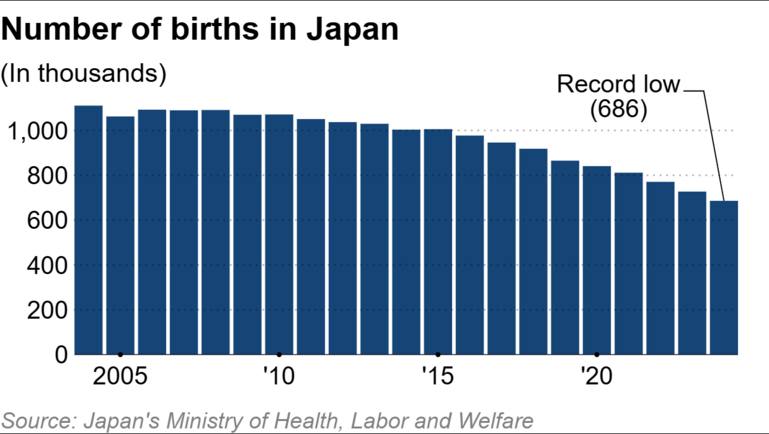
Japan's ongoing efforts to boost its declining birth rate have taken on new urgency following the release of government data revealing that the annual number of births fell below 700,000 in 2024—an unprecedented low since official records began in 1899.
According to figures published this week, only 686,061 births were registered in 2023, representing a 5.7% decrease from the previous year. This total does not include children born to non-Japanese residents. The country's fertility rate—the average number of children a woman is expected to have over her lifetime—also declined, dropping to an all-time low of 1.15 from the previous year's 1.20, according to the Ministry of Health, Labour and Welfare. This figure remains far below the replacement rate of 2.1 necessary to maintain a stable population.
In contrast, the number of deaths continued to rise, reaching 1.6 million in 2024, a 1.9% increase from the year before. Both the number of births and the fertility rate have now fallen for nine consecutive years. Despite this, there was a modest uptick in marriages, which are a critical factor in shaping birth trends in Japan, where births outside of marriage remain relatively uncommon. In 2024, the number of marriages rose to 485,063—an increase of 10,322 from the previous year, marking the first increase in two years since the figure dropped below half a million. However, this rise has not reversed the long-term decline in marriage rates that has persisted since the 1970s.

 www.theguardian.com
Paywall alert:

 asia.nikkei.com
Japan's ongoing efforts to boost its declining birth rate have taken on new urgency following the release of government data revealing that the annual number of births fell below 700,000 in 2024—an unprecedented low since official records began in 1899.
According to figures published this week, only 686,061 births were registered in 2023, representing a 5.7% decrease from the previous year. This total does not include children born to non-Japanese residents. The country's fertility rate—the average number of children a woman is expected to have over her lifetime—also declined, dropping to an all-time low of 1.15 from the previous year's 1.20, according to the Ministry of Health, Labour and Welfare. This figure remains far below the replacement rate of 2.1 necessary to maintain a stable population.
In contrast, the number of deaths continued to rise, reaching 1.6 million in 2024, a 1.9% increase from the year before. Both the number of births and the fertility rate have now fallen for nine consecutive years. Despite this, there was a modest uptick in marriages, which are a critical factor in shaping birth trends in Japan, where births outside of marriage remain relatively uncommon. In 2024, the number of marriages rose to 485,063—an increase of 10,322 from the previous year, marking the first increase in two years since the figure dropped below half a million. However, this rise has not reversed the long-term decline in marriage rates that has persisted since the 1970s.
Japan records lowest number of births in more than a century, as population fears grow
New government data shows the number of births reached 686,061 in 2024, a decline of 5.7% from the previous year and the lowest since statistics were first kept in 1899
Paywall alert:
Japan's number of births hits new low, falling by 5.7% in 2024
Fertility rate still dropping despite more marriages, straining the economy
asia.nikkei.com


