Japan and the war in Ukraine

He used Churchill with the Brits, but I hope he won't borrow the samurai armour his ambassador to Japan was wearing recently.
And the Berlin Wall with the Germans. Churchill also did an enormous amount of travelling around talking to leaders during the war and was an excellent orator, and I think Zelenskyy is doing the right thing trying to get support from leaders of major countries.
 
Russia has suspended peace talks with Japan over the South Kuril Islands/Northern territories as well as visa-free travel for former Japanese residents to visit the disputed islands. The Russian Foreign Ministry stated that Japan bears all responsibility for any damage arising from Moscow's measures because of its deliberate anti-Russian policy. PM Kishida called Russia's actions extremely unreasonable and totally unacceptable. Hopefully, Russia will not suspend its export of salmon and crabs to Japan though (see post above).

"The current situation is rooted exclusively on Russia's invasion of Ukraine," Kishida said at the March 22 session of the Upper House Budget Committee. "It is extremely inappropriate for Russia to try to pass that off onto the Japan-Russia relationship and absolutely cannot be accepted. Japan strongly protests" the move. Negotiations over the Northern Territories, four islands off Hokkaido seized by Soviet forces at the end of World War II, were going nowhere to begin with.


While Japan's government under Abe had avoided describing the four islands as an integral part of Japanese territory in an apparent effort not to impact the peace-treaty talks with Russia, Kishida used the phrase at a parliament debate on March 7 following the launch of Russia's invasion of Ukraine. Kishida has taken a stance of prioritizing the return of the four islands to Japan in peace-treaty talks with Russia, but negotiations have shown little progress.

 
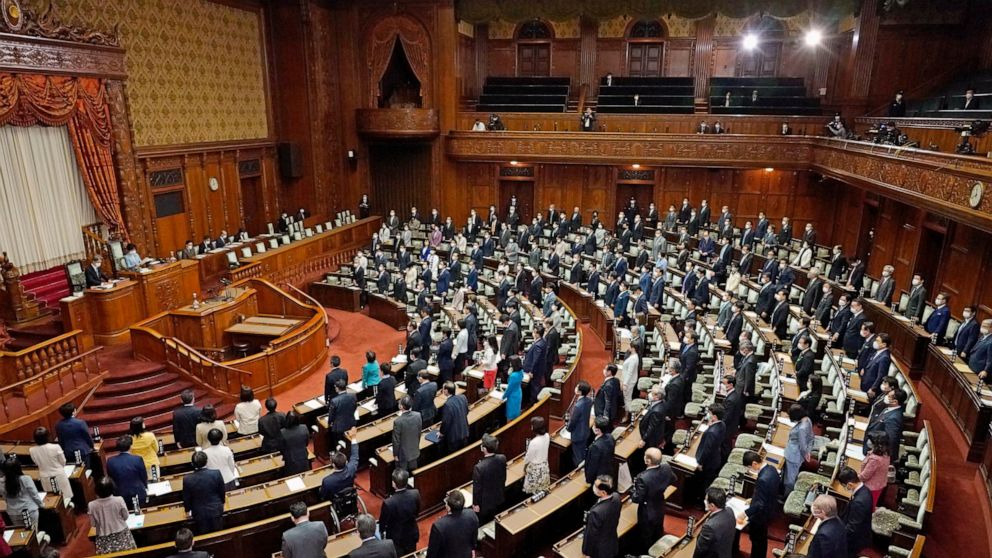
President Zelenskyy has addressed Japanese lawmakers this evening, raising the spectre of a nuclear disaster in his country while praising Japan as a "leader in Asia" for its response to the Russian invasion.

zelenskyy-nhk-23032022.png


"Japan was the first in Asia who really began to put pressure on Russia to restore peace, who supported sanctions against Russia, and I urge you to keep doing this," Zelenskyy told a packed audience via livestream. The charismatic Ukrainian leader also sought to appeal to his Japanese audience by alluding to key moments in the nation's modern history: atomic bombings at the end of World War II, the March 2011 Fukushima nuclear disaster and a chemical weapons attack in Tokyo. Russian President Vladimir Putin's nuclear saber-rattling has alarmed many, but it has especially struck a nerve Japan. As the only country ever to be attacked with nuclear weapons, the bombings of Hiroshima and Nagasaki are seared into the Japanese popular consciousness. Zelenskyy highlighted the threat, saying that the world was watching and wondering what would happen if Russia were to use nuclear weapons. The Ukrainian president also sounded an ominous note, echoing U.S. President Joe Biden's warnings that there have been "clear" signs that Russia is considering using chemical and biological weapons.


Japan is now accepting Ukrainian refugees without relatives in Japan. They will be treated as "evacuees" and receive special one-year visas. So far, 337 Ukrainians have reached the shores of Japan.


FM Hayashi will bring 20 Ukrainian refugees on his official flight from Poland.

 
So far, Japan has taken in 393 Ukrainians. Today, FM Hayashi returned with 20 refugees, some of which had no connection to Japan. The government said about 600 local governments and businesses had offered to help the evacuees by 1 April. Japan has condemned the Russian atrocities against civilians in Ukraine and will hopefully scale up its sanctions against Russia. Germany and France have expelled Russian diplomats, and several European countries declared that they would no longer import Russian oil and gas. Also, Japan decided to boost its defensive capabilities:

Japan's defense budget for the current fiscal year to March 2023 totaled 5.4 trillion yen ($44 billion), setting a record high for the eighth consecutive year and up 1.1% from the initial budget in the previous year. It increased for the 10th year in a row, and corresponds to about 1% of the country's gross domestic product. Germany made a policy shift to increase defense expenditures to 2% of its GDP, the target for each North Atlantic Treaty Organization member, following Moscow's aggression on Ukraine. "Our country must think (about a similar move) as well," Kishi said.

You got to love the Irish. :LOL:

 
Yesterday, it was reported that Japan would declare eight Russian diplomats personae non grata.

Following the lead of many European nations, the Foreign Ministry announced April 8 that it was expelling eight Russian diplomats and trade officials. Hikariko Ono, the ministry press secretary, held a hastily called news conference to announce the measure, but did not divulge names or how long the eight would be barred from Japan. Takeo Mori, the vice foreign minister, called Russian Ambassador Mikhail Galuzin to the ministry the same day and condemned the killing of innocent civilians in Ukraine, describing the act by the Russian military as "a grave violation of international humanitarian law."


However, Japan's tough stance comes at a price: according to Robert Kelly, the Northern Territories will be lost for a generation.

Previously, Japan's approach to Putin's growing aggression had been mild. Putin started his presidency trying to stabilize Russia after the chaotic 1990s. Almost all major states in the world welcomed this after the Wild West of the Soviet collapse. For Japan, the early Putin represented a realist who might negotiate on the Northern Territories in exchange for Japanese concessions such as major investment. [...] led Putin to invade Georgia in 2008 and then to snatch Crimea from Ukraine in 2014. The West imposed sanctions over the latter move. Importantly, Japan did not. Japan is far more skeptical of sanctions' utility than its American ally. And indeed, sanctions have not stopped North Korea's nuclearization or deposed Nicolas Maduro of Venezuela.

 
Yesterday, it was reported that Japan would declare eight Russian diplomats personae non grata.
I guess it's better than nothing. Personally I'd like to see them in a shallow ditch in Bucha.

However, Japan's tough stance comes at a price: according to Robert Kelly, the Northern Territories will be lost for a generation.
Did anybody really think they'd get those islands back in this generation? I'm sure the chances will be better in a post-Putin world.
 
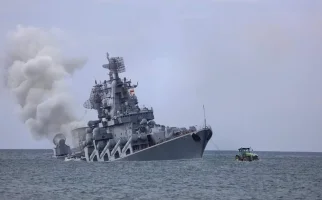
278395306_5423131424387121_8683830726993902874_n.jpgsunk.jpg

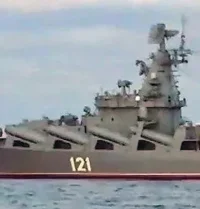
Hard to believe that a big ship can be taken out by a small missile. Russians say it was all from an accidental fire.
 
Hard to believe that a big ship can be taken out by a small missile. Russians say it was all from an accidental fire.

Yes, their flagship, to boot!

Meanwhile, the Russian navy keeps test-firing cruise missiles in the Sea of Japan:


Hard to believe that a big ship can be taken out by a small missile. Russians say it was all from an accidental fire.
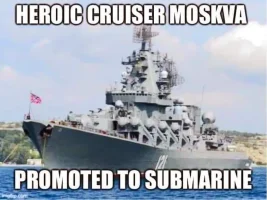
Right, so their claim was incompetence. Is that really a better story? But the fact that all the rest of their fleet moved farther offshore after this makes pretty clear what was the real story. In a bit of serendipity, the Ukrainian post office had just released a stamp commemorating the defiance of the Snake Island defenders against this ship at the start of the war. It will be a collector's item for sure.

1650032032553.webp
 
Although it's super top secret , there are hints now that subs can be tracked by satellite. Russia & China both are very busy making anti-satellite weapons to shoot down or just knock out other sats in case of war. Things like GPS are used by all militaries. From everything I see on military info sights, we have been able to track enemy subs in several ways. Even back in the early 70's I track subs when they used morse code to send out messages , we could place them within 100 yards. Sonar buoys have been used to track sub locations for many years and give super detailed info. We also have special subs called "hunters" that tail enemy subs and keep track of where they are. Subs now carry sub-to-sub missiles to take out enemy subs. With one sub capable of carrying 20 nukes , it's important to know where they are and what they are up to. Lately subs are being used to disrupt undersea cables and also to map their locations so they can be taken out in time of war. It's not uncommon for a specially designed sub to sit down over undersea cables and tap into them to eves drop on the traffic going through them.
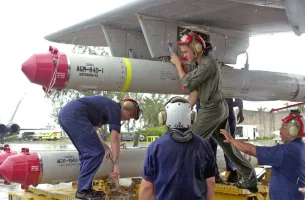
They say the Russian ship was taken out with just one "Neptune" missile fired from shore(Russians claim it took 2).harpoon.jpg
 
Last edited:
An interesting glance at how Japan's neighbour on the other side of the Sea of Japan is handling the Ukraine conflict: South Korea's outgoing Moon administration has always prioritised exports and showed only lukewarm support for Ukraine to the point where South Korean citizens pushed their government toward stricter action. So far, Moon has refused to provide the arms Pres. Zelenskiyy has asked for.

I never thought I'd say this, but I am glad to see Moon's "leftist" government leave the stage to the conservative and apparently more unequivocal Yoon administration.

When the war started, Seoul's response was hesitant and ambiguous, provoking a wave of international criticism that the government neither seemed to understand, nor knew how to respond to. The first response of South Korean President Moon Jae-In's administration was fear for South Korean exports to Russia. Lee Jae-myung, the leftist candidate in the recent presidential election at the time, blamed Ukrainian president Volodymyr Zelenskyy for provoking the invasion, which brought another wave of social media backlash. For days, it was not clear if Seoul would support the sanctions regime. South Korea only came around when the U.S. threatened a trade exemption its exporters need. South Korean civil society then began to protest their government's foot-dragging, and the war arguably helped hawkish, conservative candidate Yoon Seok-yeol win the presidential election. And just this week, when Zelenskyy addressed the South Korean Parliament, the turn-out of legislators to listen was embarrassingly low — only about 60 out of 300. The Korean Defense Ministry has also refused to send Ukraine weapons, claiming — rather implausibly given South Korea's enormous conventional advantage over North Korea — that arms transfers would reduce its security. This provoked yet another round of domestic criticism about South Korea dodging the responsibilities it should carry if it wishes to be a global pivotal state.

 
Neptune's design is based on the Soviet Kh-35 anti-ship missile, with substantially improved range and electronics.[2] The system is designed to defeat surface warships and transport vessels with a displacement of up to 5,000 tons, either in convoys or moving individually, though it has been able to destroy vessels up to 12,000 tons in displacement.[3]

warhead is 150kg
 
Last edited:
ml.jpg

One article I read that made sense said having the missile launch tubes on the outside of the ship was a bad design flaw. The explosive fuel in just one rocket catching fire would set off the nearby ones with fire almost impossible to get under control. Sounds plausible.
 
View attachment 86670

One article I read that made sense said having the missile launch tubes on the outside of the ship was a bad design flaw. The explosive fuel in just one rocket catching fire would set off the nearby ones with fire almost impossible to get under control. Sounds plausible.
My impression/guess is that it wasn't originally a missile cruiser. Designed in the 70s, christened in '83, refitted all thru the 90s. Pics of it in the 2000s show the tubes that way, but I can't find a reliable earlier pic. I think US boats launch vertically (from midship?). Maybe something about their missile design/launch at the time determined this layout.
 
Japan is tightening the screws: the government revoked Russia's most favoured nation status and expelled eight Russian diplomats.

sayounara.jpg


As Moscow's war against Ukraine continues, eight officials accused of spying on Japan left Tokyo's Haneda Airport with their families on a chartered plane arranged by the Russian government. Among the eight are diplomats and staffers who worked at the Russian Embassy in Tokyo, as well as officials from the Office of the Trade Representative of Russia in Japan. The ousted group is believed to be responsible for intelligence-gathering in Japan, and included several mid-ranked government officials that Japanese police had been watching. Ambassador Mikhail Garuzin was not among them. The expulsion of the group was announced on April 8 following reports of massacres by Russian soldiers near Kyiv and marks the first time Japan has expelled a group of diplomats at once since at least World War II.


According to the article linked below, Japan has fishing rights in the territorial waters held by Russia (within a range of 200 nautical miles of Japan). Yesterday, Russia and Japan reached a deal on this year's trout and salmon catch.

There were fears the negotiations might take a different course this year due to economic sanctions imposed by Japan against Russia over its invasion of Ukraine. But the Fisheries Agency announced April 23 that an agreement was reached the previous day. The deal will be formally signed on April 25. The amount that will be paid to Russia was also cut by 60 million yen ($467,000) over last year and set at between 200 million yen and 300.13 million yen, depending on the eventual tonnage of the catch. The talks determine the sum that Japan pays to Russia, as well as the size of fish catches, to allow Japanese fishing vessels to catch salmon and trout within 200 nautical miles of Japan. At the beginning of spring, salmon and trout migrate to these waters, but since they spawned in rivers in Russia, Moscow effectively owns the resource. This year's quota was set at 2,050 tons. In past years, the bilateral negotiations were held from late March until early April to allow for the start of the fishing season from April 10. But this year's talks did not begin until April 11, which meant Hokkaido fishermen were left in limbo.

 
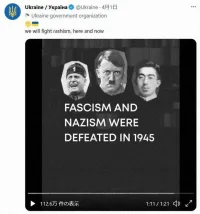
Japan feels snubbed over Ukraine's failure to mention it in a Twitter video thanking nations for their assistance. "We assume that the gratitude was shown in (thanking countries that provided) military assistance," Chief Cabinet Secretary Hirokazu Matsuno said. The list of countries providing humanitarian aid and defensive equipment is indeed more exhaustive, but it seems only offensive weaponry deserves gratitude.


This comes a day after the Ukrainian Foreign Ministry apologised to Japan for showing Emperor Hirohito's photo next to Hitler's in another Twitter video.

twitter-fascism-hirohito.jpg

In the 1-minute, 21-second footage that starts with the English subtitles, "Ideology of contemporary ruscim" (sic), Emperor Showa's photo had initially been shown alongside the portraits of Nazi Germany dictator Adolf Hitler and Italy's fascist leader Benito Mussolini. The video also shows Russian President Vladimir Putin's speech and condemns Russia's racism. In the previous version of the video, Emperor Showa's photo appeared 1 minute and 11 to 14 seconds after it started, where the subtitles read, "Fascism and Nazism were defeated in 1945," along with Hitler and Mussolini's images. The original video was posted on April 1 and had been going viral since April 23, drawing mounting criticism online and elsewhere. One person critical of the footage posted a comment saying, "It equated Emperor Showa with Hitler."

 
Intriguing account by a Japanese volunteer fighting in Ukraine. One of his comrades died in November.

A Japanese man who is determined to fight for Ukraine against Russia says he has accepted the harsh reality that he may never see his homeland again. "I'm single with no partner or children," the volunteer soldier in his 20s said in an online interview with The Asahi Shimbun. "I have nothing to lose. I came to Ukraine content with the idea that I might never return to Japan. I intend to keep fighting until Ukraine wins." He had answered Ukrainian President Volodymyr Zelenskyy's call in late February for foreign volunteers to help repel the Russian troops who invaded his country earlier that month. The volunteer was interviewed by The Asahi Shimbun before another Japanese volunteer soldier in his 20s was confirmed dead in a battle in Ukraine in November.

The man was a former construction worker with no previous military training or foreign language skills.

Before coming to Ukraine, the volunteer worked in the construction industry. He had no military experience, such as through the Self-Defense Forces, and did not know anyone in Ukraine. He left Japan alone without telling anyone, including family and friends, and arrived in Ukraine via a third country. The Ukrainian military initially declined his request to join because of his lack of combat experience and foreign language skills. He was eventually accepted with the help of another Japanese volunteer soldier he met online. Asked why he volunteered to fight for Ukraine, he said: "I've always been the type of person who acts before thinking. When I learned through media reports that many women and children were being killed, I thought I wanted to help Ukraine."

 
No training and even he admits to acting before thinking. Not really an ideal, or even good, candidate for such a situation.
 
No training and even he admits to acting before thinking. Not really an ideal, or even good, candidate for such a situation.
Luckily humankind has this ability to act before thinking. (Or even to act against self-preservation after thinking.) Otherwise no one would ever test the test limits and achieve the impossible.
200.gif
 
Back
Top Bottom