

Romaji (ローマ字 rōmaji) means "Roman letters" in Japanese and refers to the romanisation of the Japanese language, the application of Roman letters to write Japanese. Romaji is commonly employed in Japanese texts aimed at non-Japanese speakers who cannot read kanji or kana (in road and train signage, passports, dictionaries, etc.).
It is also used to transliterate Japanese terms in English or other texts based on the Roman alphabet relating to Japanese topics such as linguistics, literature, history, and culture. Also, rōmaji is the most common way to input Japanese into word processors and computers and may also be used to display Japanese on devices that do not support the display of Japanese characters.
Since 1945 rōmaji have been taught at Japanese elementary schools, thus almost all Japanese can read and write Japanese using rōmaji.
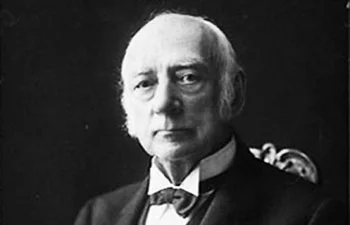
James Curtis Hepburn (1815-1911)
By the 20th century, however, there were the following Romanisation methods in use:
Long vowels
The most common Romanisation variant is omitting the macrons or circumflexes to indicate a long vowel. For example, Japan's capital city, correctly written Tōkyō in Romanised Japanese, is universally written as Tokyo.
Also, the following three "non-Hepburn rōmaji" (非ヘボン式ローマ字 hi-hebon-shiki rōmaji) methods of representing long vowels are authorised by the Japanese Foreign Ministry for use in passports.
Differences between the romanisation systems
It is also used to transliterate Japanese terms in English or other texts based on the Roman alphabet relating to Japanese topics such as linguistics, literature, history, and culture. Also, rōmaji is the most common way to input Japanese into word processors and computers and may also be used to display Japanese on devices that do not support the display of Japanese characters.
Since 1945 rōmaji have been taught at Japanese elementary schools, thus almost all Japanese can read and write Japanese using rōmaji.
James Curtis Hepburn (1815-1911)
Romanization systems
Portuguese priests undertook the earliest attempts at transliterating Japanese in Roman letters in the 16th century. The Jesuits printed the Bible and Catholic books to use in their services and to teach converts. Their romanisation efforts resulted in the Nippo jisho, a Japanese-Portuguese dictionary published in 1603. Due to Japan's isolation during the Tokugawa period, the usage of rōmaji was very limited until the 19th century.By the 20th century, however, there were the following Romanisation methods in use:
- Hepburn system (ヘボン式ローマ字, Hebon-shiki rōmaji)
The Hepburn system was devised by James Curtis Hepburn (1815-1911), an American missionary from Philadelphia who arrived in Japan in 1859 and compiled the first modern Japanese-English dictionary about a decade later. The Hepburn system is the most commonly used Romanisation system, especially in the English-speaking world. - Nihon system (日本式ローマ字 nihon-shiki rōmaji)
Invented by physicist Aikitsu Tanakadate (田中館 愛橘) in 1885 it followed but did not replace, the Hepburn system. It was meant to replace the traditional completely kanji and kana system of writing Japanese with a romanised system, which Tanakadate felt would make it easier for Japanese people to compete with Western countries. Since the system was intended for Japanese people to use to write their language, it is much more regular than Hepburn romanisation, and, unlike Hepburn's system, it makes no effort to make itself easier to pronounce for English speakers. - Kunrei system (訓令式ローマ字 kunrei-shiki rōmaji)
The Kunrei system is also called "Monbushō system" or "Cabinet Ordinance system" and is based on the nihon-shiki. The Japanese cabinet promulgated it in 1937 and 1954 but has never gained widespread acceptance in or outside Japan because it is mainly employed by native speakers of Japanese and linguists studying Japanese. While it can better illustrate Japanese grammar, it can cause non-native speakers to mispronounce words.
The Kunrei-Shiki has been standardised by the Japanese Government and the International Organisation for Standardisation as ISO 3602. It is taught to Japanese elementary school students in their fourth year of education. - Revised Hepburn system
The revised Hebon-shiki uses a macron (a diacritic placed above a vowel, for instance, "ō") to indicate long vowels and an apostrophe to note the separation of easily confused phonemes. This system is widely used in Japan and among international students and academics.
Examples
Below are a few examples of non-standardised transliterations of long vowels and a comparison chart of a few selected words.Long vowels
The most common Romanisation variant is omitting the macrons or circumflexes to indicate a long vowel. For example, Japan's capital city, correctly written Tōkyō in Romanised Japanese, is universally written as Tokyo.
Also, the following three "non-Hepburn rōmaji" (非ヘボン式ローマ字 hi-hebon-shiki rōmaji) methods of representing long vowels are authorised by the Japanese Foreign Ministry for use in passports.
- Oh for おお or おう (Hepburn ō)
- Oo for おお or おう. This is a valid JSL and modified Hepburn
- Ou for おう. This is also an example of wāpuro rōmaji
| - | - | - | Revised Hepburn | Kunrei-shiki | Nihon-shiki |
|---|---|---|---|---|---|
| English | Japanese | Kana spelling | Romanization | - | - |
| Roman characters | ローマ字 | ローマじ | rōmaji | rômazi | rômazi |
| Mount Fuji | 富士山 | ふじさん | Fujisan | Huzisan | Huzisan |
| tea | お茶 | おちゃ | ocha | otya | otya |
| governor | 知事 | ちじ | chiji | tizi | tizi |
| to shrink | 縮む | ちぢむ | chijimu | tizimu | tidimu |
| to continue | 続く | つづく | tsuzuku | tuzuku | tuduku |
Differences between the romanisation systems
| Kana | Revised Hepburn | Nihon-shiki | Kunrei-shiki |
|---|---|---|---|
| うう | ū | û | - |
| おう, おお | ō | ô | - |
| し | shi | si | - |
| しゃ | sha | sya | - |
| しゅ | shu | syu | - |
| しょ | sho | syo | - |
| じ | ji | zi | - |
| じゃ | ja | zya | - |
| じゅ | ju | zyu | - |
| じょ | jo | zyo | - |
| ち | chi | ti | - |
| つ | tsu | tu | - |
| ちゃ | cha | tya | - |
| ちゅ | chu | tyu | - |
| ちょ | cho | tyo | - |
| ぢ | ji | di | zi |
| づ | zu | du | zu |
| ぢゃ | ja | dya | zya |
| ぢゅ | ju | dyu | zyu |
| ぢょ | jo | dyo | zyo |
| ふ | fu | hu | - |
| ゐ | i | wi | i |
| ゑ | e | we | e |
| を | o | wo | o |
| ん | n-n'(-m) | n-n' | - |
Links:
- Japanese Rōmaji (Roman letters)
- ローマ字相談室 (Rōmaji sōdan shitsu): a comprehensive collection of materials relating to rōmaji, including standard documents and HTML versions of Hepburn's original dictionaries
- James Curtis Hepburn: A Biography (via Wayback Machine)
- James Curtis Hepburn: The founder of Meiji Gakuin University
- Japan to revise official romanization rules for first time in 70 years (Japan Times, 2 March 2024)


