

Navigation
Install the app
How to install the app on iOS
Follow along with the video below to see how to install our site as a web app on your home screen.
Note: This feature may not be available in some browsers.
More options
Style variation
System
Light
Dark

You are using an out of date browser. It may not display this or other websites correctly.
You should upgrade or use an alternative browser.
You should upgrade or use an alternative browser.
The Kanji Appreciation Thread
- Thread starter leonmarino
- Start date

Glenn
一切皆苦
- 8 Jan 2004
- 7,842
- 200
Sorry, it was my understanding that comments in this thread were based on the assumption of the existence of a Chinese language, and any language that used Chinese characters in written form was somehow a dialect of that Chinese language. My comment was meant to show that just because Chinese characters are used to write the language, it doesn't mean that that language is a diaclect of the Chinese language (which I believe doesn't actually exist). Sorry I didn't make that clear.
OK, just to clarify:
The written Chinese language is more or less constant everywhere, except that there two systems of characters: traditional (used in Hong Kong and Taiwan) and simplified (China, Malaysia and Singapore).
The spoken Chinese language however has many variations. The major 'dialect languages' are:
Mandarin (the official spoken language),
Cantonese (Hong Kong and southern China),
Shanghainese (Shanghai),
Hakka (some parts of southern China),
Taiwanese (Taiwan),
Hokkien (Fujian)
and Teochew (Chaoshan region).
In essence, spoken Chinese has many 'dialect languages', since they are not 'dialects' as we understand the term in, for example, English. The differences are so vast across the spoken medium that they qualify as separate languages, which they are. Comparing 'dialect languages' would be like comparing spoken English to spoken French (with the exception of the last three, which can be similar), so two speakers of different 'dialect languages' would not understand each other at all. Structure-wise, they are also very distinct; Cantonese is Subject-Verb-Object like English, whereas Shanghainese is Subject-Object-Verb like Japanese. These 'dialect languages' are not merely pronunciations of the written language, character by character (except Mandarin); they are learnt separately and do not correpond to the text completely.
Thus, there is one written Chinese language and many different spoken Chinese languages.
The written Chinese language is more or less constant everywhere, except that there two systems of characters: traditional (used in Hong Kong and Taiwan) and simplified (China, Malaysia and Singapore).
The spoken Chinese language however has many variations. The major 'dialect languages' are:
Mandarin (the official spoken language),
Cantonese (Hong Kong and southern China),
Shanghainese (Shanghai),
Hakka (some parts of southern China),
Taiwanese (Taiwan),
Hokkien (Fujian)
and Teochew (Chaoshan region).
In essence, spoken Chinese has many 'dialect languages', since they are not 'dialects' as we understand the term in, for example, English. The differences are so vast across the spoken medium that they qualify as separate languages, which they are. Comparing 'dialect languages' would be like comparing spoken English to spoken French (with the exception of the last three, which can be similar), so two speakers of different 'dialect languages' would not understand each other at all. Structure-wise, they are also very distinct; Cantonese is Subject-Verb-Object like English, whereas Shanghainese is Subject-Object-Verb like Japanese. These 'dialect languages' are not merely pronunciations of the written language, character by character (except Mandarin); they are learnt separately and do not correpond to the text completely.
Thus, there is one written Chinese language and many different spoken Chinese languages.

leonmarino
Back
- 19 May 2006
- 1,258
- 64
- Thread starter
- #82
Interesting posts.. Thank you guys!! 
I have a question similar to Glenn's: in the Mandarin language "thank you" is Xie4Xie4, right? So that's written like 謝謝 if I'm not mistaken. But in Cantonese it is apparently:
m'koy - when someone does a deed for you
to-che - when you're given a present
(Sorry if I misspelled it, but I have no clue how to write it)
Now, I have no idea how to write these words in Kanji, but it in any case I can assume that they're not two of the same like in XieXie right? So it does seem indeed that also the written language is different in some aspects..
(I hope nobody minds that this is all a bit off-topic, I'm enjoying it actually!)
I have a question similar to Glenn's: in the Mandarin language "thank you" is Xie4Xie4, right? So that's written like 謝謝 if I'm not mistaken. But in Cantonese it is apparently:
m'koy - when someone does a deed for you
to-che - when you're given a present
(Sorry if I misspelled it, but I have no clue how to write it)
Now, I have no idea how to write these words in Kanji, but it in any case I can assume that they're not two of the same like in XieXie right? So it does seem indeed that also the written language is different in some aspects..
(I hope nobody minds that this is all a bit off-topic, I'm enjoying it actually!)
To address some of the above points:
Yes, Cantonese can be written down in the way it is spoken, which have specially created characters as they don't exist in the written language - there are over a thousand of these and counting.
However, the use of such Cantonese characters is restricted to informal and colloquial writing like in various magazines, adverts, forums, online messenging and so on, so you wouldn't find these in, say, a broadsheet newspaper for professionals. (An exception in formal writing would be in transcriptions, for example in witness statements, where the exact spoken words need to be recorded down.)
冇 - mou (没有 in standard writing) was invented by an advert company, where the two strokes inside 有 ('to have') were taken out to signify 'not have'. And 'thank you' (謝謝 in standard writing) would be 唔該 - mm goi (when someone assists you) and 多謝 - dor ze (when someone gives you a gift), which reflects the spoken practice in Cantonese.
Yes, Cantonese can be written down in the way it is spoken, which have specially created characters as they don't exist in the written language - there are over a thousand of these and counting.
However, the use of such Cantonese characters is restricted to informal and colloquial writing like in various magazines, adverts, forums, online messenging and so on, so you wouldn't find these in, say, a broadsheet newspaper for professionals. (An exception in formal writing would be in transcriptions, for example in witness statements, where the exact spoken words need to be recorded down.)
冇 - mou (没有 in standard writing) was invented by an advert company, where the two strokes inside 有 ('to have') were taken out to signify 'not have'. And 'thank you' (謝謝 in standard writing) would be 唔該 - mm goi (when someone assists you) and 多謝 - dor ze (when someone gives you a gift), which reflects the spoken practice in Cantonese.
twinklestar
Kouhai
- 15 Nov 2006
- 64
- 2
Hakka (some parts of southern China)
Taiwanese (Taiwan) ?
Hokkien (Fujian)
Thus, there is one written Chinese language and many different spoken Chinese languages.
Hakka also spoken in scattered parts of northern provinces of Hebei and Hubei, Hakka-Chinese were originally northern Han Chinese.
Taiwan island has 2 major spoken Chinese dialects, Hokkien ( Taiyu, it's local city dialect of Xiamen in Fujian province across the Taiwan Straits ) and Hakka plus Mandarin as official Chinese language.
Loanwords in any language is the result of cultural exchange, NOT necessary of foreign rule or domination. Japanese has many European loanwords, there are some English transliterations of Chinese like kowtow and long-time-no-see and Mandarin ( Man=Manchu/darin=great one ) are 3 common examples.
Correct, there is ONE written Chinese script called Kanji.
Cantonese character 冇, right? As far as I know that was created for the Cantonese word mou (don't know the tone) which has the meaning 没有 in Mandarin. Is my information mistaken ?
This is a Cantonized-Kanji,we pronounce it moe ( with e silent ).It literally means don't have or nothing,you're correct on the formal characters use in Mandarin.
leonmarino
Back
- 19 May 2006
- 1,258
- 64
- Thread starter
- #86
Now I would like to get away from the Chinese dialect issue and get back to some Japan Kanji stuff.. 
Does anyone know what the difference is between 怖 and 恐? They both mean "scary" and my electronic dictionary doesn't really say what the difference is, but I'm sure there are some differences..
Also, the word 恐怖 is a combo of the two, and I read somewhere that these kind of double-Kanji's are a Japanese invention.. It was in some post here on JREF, but I can't find it anymore it seems. 幸福 was I think another example. Do you know any more of these combo's?
Does anyone know what the difference is between 怖 and 恐? They both mean "scary" and my electronic dictionary doesn't really say what the difference is, but I'm sure there are some differences..
Also, the word 恐怖 is a combo of the two, and I read somewhere that these kind of double-Kanji's are a Japanese invention.. It was in some post here on JREF, but I can't find it anymore it seems. 幸福 was I think another example. Do you know any more of these combo's?

JimmySeal
Tubthumper
- 5 Mar 2006
- 1,516
- 78
Combining two kanji with a similar meaning to create a new word with that meaning is very much a Chinese invention. 恐怖 exists in the Chinese language and is pronounced kong3bu4. 幸福 is pronounced xing4fu2.
Apparently, the upper half of 恐 signifies the act of punching a hole in something so this character represents the hollow feeling of having a hole through one's heart.
Supposedly the character 怖 is somehow related to the character 迫 and represents the fright of being threatened by something.
So maybe 怖 is the fright of imminent danger and 恐 is the fright of a present horror.
Apparently, the upper half of 恐 signifies the act of punching a hole in something so this character represents the hollow feeling of having a hole through one's heart.
Supposedly the character 怖 is somehow related to the character 迫 and represents the fright of being threatened by something.
So maybe 怖 is the fright of imminent danger and 恐 is the fright of a present horror.

undrentide
Japa'n vagyok
- 18 Jan 2006
- 3,652
- 310
I'm not so sure about these kanji themselves, but when used as adjective, 怖い sounds more colloquial and subjective than 恐ろしい.Now I would like to get away from the Chinese dialect issue and get back to some Japan Kanji stuff..
Does anyone know what the difference is between 怖 and 恐? They both mean "scary" and my electronic dictionary doesn't really say what the difference is, but I'm sure there are some differences..
恐ろしい話を聞いて、みんな「怖いよ~!」と言いまし た。
leonmarino
Back
- 19 May 2006
- 1,258
- 64
- Thread starter
- #89
That's true! 恐ろしい sounds more like "horrible" than "scary" too isn't it? "They heard a horrible story, and said 'that's scary!'", right?I'm not so sure about these kanji themselves, but when used as an adjective, 怖い sounds more colloquial and subjective than 恐ろしい.
恐ろしい話を聞いて、みんな「怖いよ~!」と言いまし た。
But what about 恐い and 怖い?
JimmySeal
Tubthumper
- 5 Mar 2006
- 1,516
- 78
I would think each one represents the flavor of each kanji.But what about 恐い and 怖い?
Here are some more of those paired synonym compounds:
清潔
身体
岩石
絵画
救助
均等
破損
永遠
採取
道路
Compound Kanji have been part of Chinese script since ancient times,2 examples I can provide are " pirate " and " butterfly ".
Learn Chinese Characters
is one good Chinese language website can answer some of your inquiries in English on Kanji.
Japanese have also created a few, one word I can think of at this moment is bladder has two Chinese characters.
Learn Chinese Characters
is one good Chinese language website can answer some of your inquiries in English on Kanji.
Japanese have also created a few, one word I can think of at this moment is bladder has two Chinese characters.
leonmarino
Back
- 19 May 2006
- 1,258
- 64
- Thread starter
- #92
Hello peoples!!
I have another query for you.. I recently bought 漢検DS (kanken DS) and loving every minute of it, but... What's the difference between these two "Rei"?
I think the left one looks better in some way, but I remember I learned it like the one on the right. Is the left one something new?
I have another query for you.. I recently bought 漢検DS (kanken DS) and loving every minute of it, but... What's the difference between these two "Rei"?
I think the left one looks better in some way, but I remember I learned it like the one on the right. Is the left one something new?
undrentide
Japa'n vagyok
- 18 Jan 2006
- 3,652
- 310
Interesting topic, Leon!
When writing with a pen, I always write the one on the left because I think I was taught it when I learnt this kanji, but I know there're people who write the right one, too. But I never paid much attention to this kanji...
(I would like to hear which one other members use for their hand-writing!)
My display shows the right one, and as far as I checked with my IME and 漢和辞典, I cannot find any difference - it is not on the 異字体 list, either.
So could it be just a matter of 書体/style?
I found many different fonts for Japanese characters, and it seems only
教科書体
行書体
楷書体
shows the left ones.
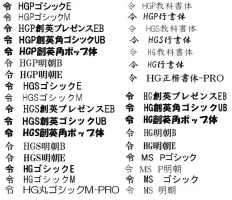
When writing with a pen, I always write the one on the left because I think I was taught it when I learnt this kanji, but I know there're people who write the right one, too. But I never paid much attention to this kanji...
(I would like to hear which one other members use for their hand-writing!)
My display shows the right one, and as far as I checked with my IME and 漢和辞典, I cannot find any difference - it is not on the 異字体 list, either.
So could it be just a matter of 書体/style?
I found many different fonts for Japanese characters, and it seems only
教科書体
行書体
楷書体
shows the left ones.

- 17 Sep 2005
- 6,017
- 1,970
I was taught that that one on the left is for typeface, whereas the the one on the right is what is used for writing.
JimmySeal
Tubthumper
- 5 Mar 2006
- 1,516
- 78
The one on the right (in leonmarino's post) is the one I see almost all the time in print, but I think the one on the left is typical for handwriting. My Japanese teacher corrected me when I wrote it to look like the one on the right.
Wish I had a DS and that software. It sounds awesome.
Wish I had a DS and that software. It sounds awesome.

leonmarino
Back
- 19 May 2006
- 1,258
- 64
- Thread starter
- #97
Hm!! So to summarize all your replies:

And JimmySeal, why don't you get out and get it!? I had to order it etc., but you can go out and buy it in your local store right?
- Nobody knows for sure
- The left one is often "taught"
- And the right one is more often used when typing?
- Or the left one!?
And JimmySeal, why don't you get out and get it!? I had to order it etc., but you can go out and buy it in your local store right?
- 17 Sep 2005
- 6,017
- 1,970
I'm sorry. I meant to say the opposite of what I actually wrote.I was taught that that one on the left is for typeface, whereas the the one on the right is what is used for writing.
leonmarino
Back
- 19 May 2006
- 1,258
- 64
- Thread starter
- #100
Good!! I love it.BTW, how's 漢検DS like?
There are two games as I might have mentioned previously: 漢検DS and 200万人の漢検. Both are official products of the 漢字能力検定協会 (Kanji proficiency test association). I find 漢検DS to be more polished and complete than 200万人の漢検, because it has more diverse questions, mini-games and better (more difficult!) examinations. However, I like using とことん漢字能 for repeatedly practicing Kanji, because of its different interface.
I'm kind of stuck at level 6 right now (5th grade of elementary school level) but I'll get there!! I'm practicing as often as I can and I must say it's helping. Wish I had more time so I could practice Kanji 24/7 hehehe.


