


- 14 Mar 2002
- 21,053
- 18,908
The BBC followed Morinaga Riko, a recent high school graduate from Tokyo, who, along with other volunteers, tries to put Japan's food waste dilemma in numbers.
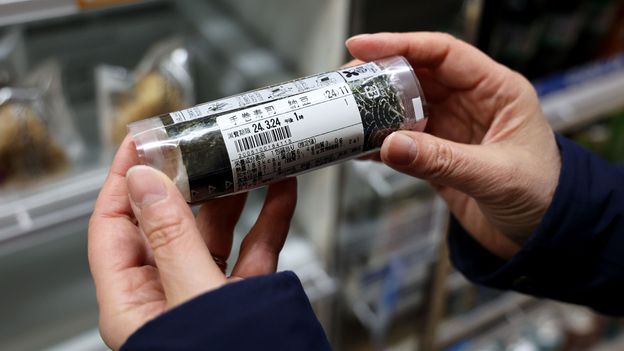
They found out, for instance, that hundreds of thousands of these rolls wind up in the garbage on Setsubun, known, among other things, for a holiday sushi roll called ehomaki. "Shops always provide what customers want, which means their shelves must always be stocked," Morinaga says. "This contributes to the food loss problem."
Last, Setsubun, Morinaga, and a dozen other volunteers visited 101 convenience stores across Japan to record the number of ehomaki rolls left on shelves after 21:00. The amounts were staggering. When Morinaga stopped by a FamilyMart near Shibuya train station at 21:06, she counted 72 rolls. At a 7-Eleven at 21:18, she found 93 rolls. Based on the data Morinaga and others gathered, Rumi Ide, an independent researcher, activist and journalist who coordinated the survey, extrapolated that Japan's 55,657 convenience stores threw out 947,121 ehomaki rolls worth 700-800m JPY (USD 4.5-5m; GBP 3.6-4.1m). Ide published these results on the news website Yahoo Japan to raise awareness about this hidden problem.
The BBC has contacted several convenience store chains for comments. Representatives from 7-Eleven Japan and Lawson, two major chains, said they do not disclose the amount of food waste their stores generate. Representatives from FamilyMart, another major chain, did not respond to interview requests; however, the company indicates on its website that its stores generate 56,367 tonnes of food waste daily! Daily, as in every day.
Read about the price Japan pays for its convenience:
 www.bbc.com
They found out, for instance, that hundreds of thousands of these rolls wind up in the garbage on Setsubun, known, among other things, for a holiday sushi roll called ehomaki. "Shops always provide what customers want, which means their shelves must always be stocked," Morinaga says. "This contributes to the food loss problem."
Last, Setsubun, Morinaga, and a dozen other volunteers visited 101 convenience stores across Japan to record the number of ehomaki rolls left on shelves after 21:00. The amounts were staggering. When Morinaga stopped by a FamilyMart near Shibuya train station at 21:06, she counted 72 rolls. At a 7-Eleven at 21:18, she found 93 rolls. Based on the data Morinaga and others gathered, Rumi Ide, an independent researcher, activist and journalist who coordinated the survey, extrapolated that Japan's 55,657 convenience stores threw out 947,121 ehomaki rolls worth 700-800m JPY (USD 4.5-5m; GBP 3.6-4.1m). Ide published these results on the news website Yahoo Japan to raise awareness about this hidden problem.
The BBC has contacted several convenience store chains for comments. Representatives from 7-Eleven Japan and Lawson, two major chains, said they do not disclose the amount of food waste their stores generate. Representatives from FamilyMart, another major chain, did not respond to interview requests; however, the company indicates on its website that its stores generate 56,367 tonnes of food waste daily! Daily, as in every day.
Read about the price Japan pays for its convenience:
Japan has an excess sushi problem. These food waste activists put it in numbers
The country's ubiquitous convenience stores throw out huge amounts of edible food. In Tokyo, Rachel Nuwer meets the campaigners trying to change that.
www.bbc.com


