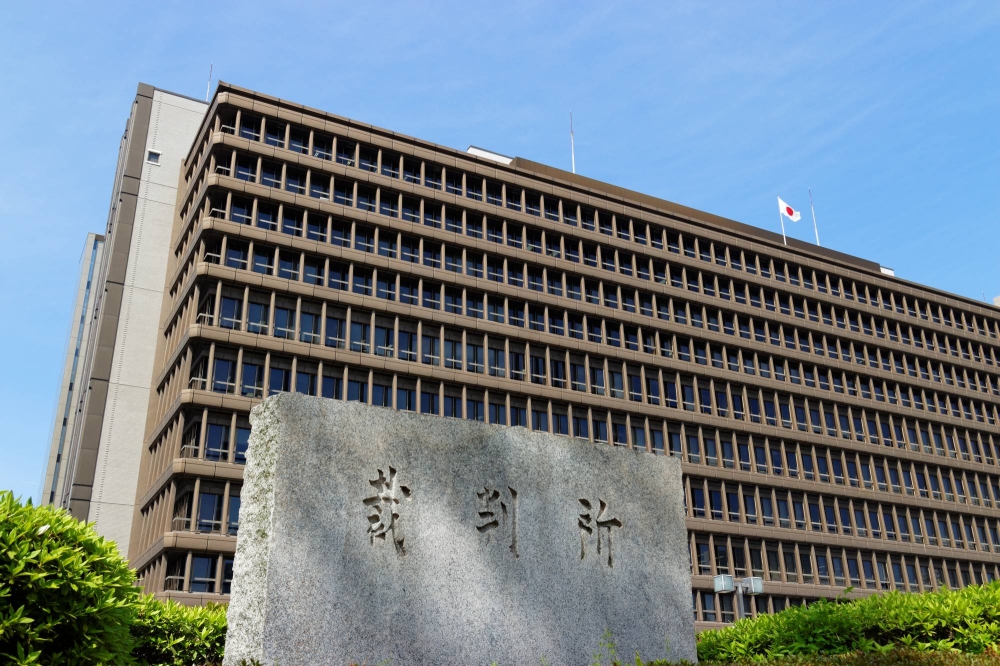
Legal Death penalty in Japan

My only real problem is when the death penalty gets an audience. They are always the families of the victim, who are usually just as Morbid as said Murderer or rapist, as they want to see his death. What I say is let these idiots get exactly what they want. Use the wet sponge, lose the black sack. The audience wants to see death, let them see everything. If they were dumb enough to bring children (say, siblings of the victim) then let the children get traumatized. It what the parents want after all.
Just give them EXACTLY what they want...
he. he. he...:devilish:

As you can tell, I have a very low tolerance for people who don't think decisions through, such as watching a death. This will at least fix them, as they will see how the guards feel, having to see a lot of this. Hell, the guards have probably seen botched executions too.
BTW: I got all I know from watching the Green Mile, so my opinion may not be informed. But I like to think I have a point about this type of behaviour.
 
I would like to apologise for the former post. I have had a chance to sleep on it, and I truly regret it.

I may have come across too harsh about the children, but in my experience, they have always been evil to me, and always started it, as I am a very friendly person. As a result of their evil, I am a very jaded person, as it tends get very frustrating not being allowed to take my anger out on a deserving target just because they have rubbish parents who are deluded into thinking that their kids have social skills just because they made friends with each other.

On the other points, I don't known how accurate the green mile was, but if there were audiences allowed, I just can't understand the idiocy of that decision.

<sarcasm>
"Oh, sure Mrs O'Reilly (example name only), you can come and watch death's beauty! I'm sure you'll love it!"
"Can I bring *victim's name*'s brother?"
The two year old? Sure! No one's too young to see death!!"

*She leaves*

"(aside)Daft cow"
</sarcasm>

See? In what situation could that work out?

I hope this was a sufficient explanation and apology. If not...


GOMEN NASAI
 
Death penalty and life sentences are simply worthless. The penal system shouldn't be focused on retribution but on rehabilitation.
 
Neko Shiroi said:
...I have a very low tolerance for people who don't think decisions through...

I would like to apologise for the former post. I have had a chance to sleep on it, and I truly regret it.

Priceless.

padpadpadpadpadpad
 
For arguments sake here and to see how people will react I would like to throw this out here for discussion.....

Back a few hundred years ago darn near every crime committed was punishable by by death, usually hanging. There was very little crime, when society deemed that the punishment no longer fit the crime and did away with the practice of death crime exploded.

Now then hideaway made this post with the comment that

Death penalty and life sentences are simply worthless. The penal system shouldn't be focused on retribution but on rehabilitation.

Ok, then, what does society do with serial killers or rapists? What do we do, or what protections do we have from them if they are released after a period of rehabilitation back into society and kill or rape again? How do you protect society from people like this? What rehabilitation will work?

People like this exist, so it is not a hypothetical question.

How do you rehabilitate a person that doesn't want to be rehabilitated?

I may have come across as too harsh about the children, but in my experience, they have always been evil to me,

Who has been harsh to you? Children? Children have been evil to you? Wow, care to share their misdeeds with us?

I am very much against the death penalty simply because we humans don't have the right to take away life. This is just very barbaric...eye for an eye....

I have the same question for you as I posted to Hideaway. Once again, I'm playing devil's advocate here, leaving personal beliefs and feelings aside.

How would you respond if, by chance, heaven forbid, it ever happened to you or anyone for that matter, and for argument's sake only, your mother was raped and murdered by someone for no reason whatsoever? What justice would satisfy you? Would you want that person to go free and be allowed the opportunity to repeat the same crime?

Mother's around the world are raped and murdered daily, it's sad but true. Where do you draw the line in meeting justice to those who commit crimes so heinous that they go beyond comprehension?

Anyone could do a google and come up with unspeakable instances of crimes committed against children, do the people that committed these crimes have a right to live? What if it was your kid?
 
People like this exist, so it is not a hypothetical question.
How do you rehabilitate a person that doesn't want to be rehabilitated?

Everybody here knows that such people exist. The question is if one is willing to lump together. I'm not. Once again this is a discussion of principles, Obeika. Personally, I don't believe in Good or Bad, in Black or White or whatever. Committing capital crimes is pathologic.

Once again playing devil's advocate here, personal beliefs and feelings aside as well.
...
you mother was raped and murdered by someone for no reason what so ever? What justice would satisfy you?
...
What if it was your kid?

You contradict Yourself this time.
 
Last edited by a moderator:
Now then hideaway made this post with the comment that
Ok then what does society do with serial killer's or rapist's? What do we do, or what protections do we have from them if they are released after a period of rehabilitation back into society and kill or rape again? How do you protect society from people like this? What rehabilitation will work?
People like this exist, so it is not a hypothetical question.
If one is concluded to be rehabilitated, you have as much protection from them as you have from everybody else. There are already experts on these matters, I'm sure you already heard of the parole commission. And if they aren't rehabilitated, they shouldn't get out at all no matter how much time they are in prison.
How do you rehabilitate a person that doesn't want to be rehabilitated?
You don't.
 
Everybody here knows that such people exist. The question is if one is willing to lump them together. I'm not. Once again this is a discussion of principles, Obeika.

Sure I know it is a discussion of principles, but people's principles change often when they are forced or put in a situation that goes against what they previously believed. So you don't choose to lump "them" together, fine for you.

Committing capital crimes is pathologic.

There are those that will disagree with that as well. There are people that would say that people who commit capital crimes are mentally ill, therefore should not be judged as a sane person and should be committed to the proper facilities until they are deemed to be "cured".

You contradict Yourself this time.

How am I contradicting myself? I was asking the question to the people that posted comments against capital punishment. I want to know how they feel if they were the victims of such a crime. How would they respond, would they still feel that they were against capital punishment? I gave specifically difficult situations to see how they will answer if heaven forbid, faced with such a situation. Has nothing to do with how I feel about the subject at all.


I was not directing the questions towards you, however you choose to answer for them, I want to hear what they have to say. Thanks for your reply as well. 🙂

If one is concluded to be rehabilitated, you have as much protection from them as you have from everybody else. There are already experts on these matters, I'm sure you already heard of the parole commission. And if they aren't rehabilitated, they shouldn't get out at all no matter how much time they are in prison.
You don't.

Then doesn't rehabilitation become retribution?

Doesn't society also have a right to expect retribution towards those that commit crimes that the laws of society have deemed to be henious enough to merit either incarceration or even in extreme cases death?

How does a crimminal pay his or her debts to society for not only the crime but the physcological damage that their crime caused to happen?

What about the victims? Don't they have any rights at all?
 
Last edited:
Well, I answered because the quotes mirror pretty much my opinion.

And if we're talking in legislative context, emotions and personal experience MUST NOT influence punishment.

Thanks for your reply as well.

You're welcome! :p

By the way, sorry for my grammar, may I quote Your own signature:

The world's worst speler and typist, please read what I wrote and not how I wrote it.
 
Since you seem to love to reply with questions, I'll answer them all. :-)
Then doesn't rehabilitation become retribution?
I don't quite follow your thinking. Can you explain it?
Doesn't society also have a right to expect retribution towards those that commit crimes that the laws of society have deemed to be henious enough to merit either incarceration or even in extreme cases death?
No, it doesn't. By society you are refering to who exactly? Angry mobs don't have rights.
How does a crimminal pay his or her debts to society for not only the crime but the physcological damage that their crime caused to happen?
Fees and community services seem a pretty good way to me.
What about the victims? Don't they have any rights at all?
Actually no, they don't have the right to kill/emprision someone else based on their feelings. That's not how a human life should be measured.

And before you ask, no, I wouldn't say the samething if someone killed my family, I would probably want the murderer's head. It is only human to want revenge, but that doesn't mean it is the right thing to do.
 
That is why riots and angry mobs shold be shot on sight.
Water cannons are for wussies.
 
That is why riots and angry mobs shold be shot on sight.
Water cannons are for wussies.

So, are you saying that the establishment should automatically shoot the angry mob? Is that what you prefer?
 
Yes. Angry mobs and riots are a threat to the security of the citizens and should be dealt accordingly.

Besides, we can always try to rehabilitate the survivers. :D
 
First thanks for taking time to reply, it helps me understand a bit better your stance about this subject.

I don't quite follow your thinking. Can you explain it?

When forced rehabilitation does not work, merely keeping a convicted crimminal in rehab becomes retribution. I don't believe you can force a person to rehabilitate themselves no matter the crime. The person that committed the crime must first realize that what they did was against the norms of society, and no one can force that one to them.

No, it doesn't. By society you are refering to who exactly? Angry mobs don't have rights

No I am not talking about mobs but everyone living in a community in general. As a community people created laws that must be followed otherwise anarchy would reign. Society has a right to expect that everyone must follow the laws created by that society. When laws are broken, justice should be served, and people have a right top expect that the people that broke the laws should be punished for their crimes. If there is no penalty then crimminals would rule. I believe that punishment or the expectation of punishiment is a very huge deterrent for the majority of people in a community. If I choose to break the law than I should rightfully expect that I will be punished for my actions. If I unwantonly kill another human being then I should expect the same to be served on to me for my actions.

Fees and community services seem a pretty good way to me.

Fees? Who is going to pay a murderer to work for them? What price do you put on a persons life? You end up putting a value on a persons life, and that is something I can not aggree with. Who is to say that I am more valuable than you or vice versa? Community service for murder or rape? I wholeheartedly disagree with this.

Actually no, they don't have the right to kill/emprision someone else based on their feelings. That's not how a human life should be measured.

Society has a right to expect safety in their communities, and yes they have the right to imprison people that choose for whatever reason not to follow the laws of that society. It is not based on their feelings, it is based on rule of law, for each crime there are guidlines that society has agreed upon as being fair and just regarding the incarceration of convicted crimminal's.

However like it or not to some extent feelings are going to dictate how people react to individual crimes there is no way around that, it's called human nature, you can't get around it.


And before you ask, no, I wouldn't say the samething if someone killed my family, I would probably want the murderer's head. It is only human to want revenge, but that doesn't mean it is the right thing to do.
If you read my previous post you will see I did already ask this...thank you for your honesty. :-)
 
My unshakeable philosophy is simply that it's wrong to unnecessarily take a human life.

(The prison system is another matter and discussion to be had, though of course it's related.)

There are of course, and always will be (for whatever reason), miscarriages of justice. You cannot end someone's punishment after they've been wrongly executed!

A classic case in Britain was that of Derek Bentley, hanged in 1953 for a murder committed by his friend (he had already been arrested fifteen minutes earlier!) After a 45 year campaign that consumed the life of his sister, he was finally pardoned:

Derek Bentley case - Wikipedia


And lyrics to a song by Elvis Costello:


' Let Him Dangle
Bentley said to Craig "Let him have it Chris"
They still don't know today just what he meant
by this
Craig fired the pistol, but was too young to swing
So the police took Bentley and the very next thing
Let him dangle
Let him dangle

Bentley had surrendered, he was under arrest,
when he gave Chris Craig that fatal request
Craig shot Sidney Miles, he took Bentley's word
The prosecution claimed as they charged them
with murder
Let him dangle
Let him dangle

They say Derek Bentley was easily led
Well what's that to the woman that Sidney
Miles wed
Though guilty was the verdict, and Craig had
shot him dead
The gallows were for Bentley and still she
never said
Let him dangle
Let him dangle

Well it's hard to imagine it's the times that
have changed
When there's a murder in the kitchen that is
brutal and strange
If killing anybody is a terrible crime
Why does this bloodthirsty chorus come round
from time to time
Let him dangle

Not many people thought that Bentley would
hang
But the word never came, the phone never rang
Outside Wandsworth Prison there was horror
and hate
As the hangman shook Bentley's hand to
calculate his weight
Let him dangle

>From a welfare state to society murder
Bring "back the noose" is always heard
Whenever those swine are under attack
But it won't make you even
It won't bring him back

Let him dangle
Let him dangle (String him up) '
 
Yesterday, Kofu District Court, Yamanashi , sentenced a 21-year-old man to death for the 2021 murder of two and arson, in the first case of capital punishment being given to an offender who was a minor at the time of the crime but whose name has been revealed under a 2022 revision of the Juveniles Law. The defendant, Yuki Endo, was 19 at the time of the attack in Kofu, Yamanashi Prefecture. The law change in April 2022 allows media to reveal the identities of 18- and 19-year-old offenders once indicted. Endo fatally stabbed the 55-year-old man and his 50-year-old wife at their home in Kofu on Oct 12, 2021, according to the ruling. He then set the house on fire.

The couple had two daughters. One of them told police she had come downstairs after hearing a loud argument and had seen a man quarrelling with her father. The man punched her. Her older sister called the police to report an intruder in the house. The two sisters fled as the house was set on fire. The media was previously prohibited from reporting names, ages, occupations, residences and appearances or publishing photographs of minors under 20.


Endo Yuki, murder and arson, Kofu, Yamanashi


After his arrest, Endo was initially sent to the Kofu Family Court because he was a minor when the crime was committed. But the family court sent him back to prosecutors. He underwent a psychiatric evaluation and was deemed mentally competent to stand trial. Under Japan's Penal Code, arson of a dwelling in which a person is present can also be punished by death. In the trial, Endo said he committed the crimes as the elder daughter, who attended the same high school, refused to go on a date with him, which made him feel "desperate and angry." He also said he was discontent with his relationship with his parents. Throughout the trial, he offered no apologies for his acts and denied any intention to appeal the ruling, saying he did not want to return to normal life. Prosecutors had sought the death penalty, saying the defendant was fully accountable in light of his deliberateness and planning of the criminal acts. They said the girl and her younger sister suffer from post-traumatic stress disorder.


On 15 April, the Osaka District Court rejected a lawsuit brought by two inmates on death row against the government. The inmates argued that the practice of informing prisoners of their execution on the day it is to be carried out violates Japan's Constitution.

The pair were seeking affirmation that they were not obliged to comply with their executions, arguing that the current procedure was unconstitutional. They also demanded compensation from the government of 22 million JPY (approximately USD142,000). They contended that the sudden notification deprives them of the chance to appeal and infringes upon Article 31 of the Constitution, which stipulates that no criminal punishment can be imposed without due process.


There are no legal regulations regarding when a prisoner is told about the timing of their execution, and the notifications are delivered in accordance with Ministry of Justice practices. Until the 1970s, the notifications were apparently delivered the day before the sentence was carried out. However, the government revealed that it had switched to a same-day system following the suicide of an inmate who had been told they would be executed the next day. Based on this, Presiding Judge Noriko Yokota stated that informing inmates on the day of their execution "has a certain rationality in order to stabilize the sentiments of death row inmates and to ensure a smooth execution," as well as maintenance of order in penal institutions. She did not make a constitutional judgment. The ruling first noted that any claim that there is no obligation to submit to execution with on-the-day notice should be dealt with in a criminal trial, which assumes current execution practices. As for the two death row inmates, the judge ruled that "they are obligated to accept the executions under the current system." And in light of Article 31 of the Constitution and other provisions, the ruling stated that the court cannot conclude that the plaintiffs have a position or benefit such that they can avoid accepting execution.


I believe that informing convicts of their impending execution on the same day is ultimate cruelty, depriving them of preparing themselves mentally or seeing their families.

Presiding Judge Noriko Yokota stated that informing inmates on the day of their execution "has a certain rationality to stabilize the sentiments of death row inmates and to ensure a smooth execution," as well as maintenance of order in penal institutions.

Yes, how rational and inhumane.


Do they at least wait until all appeals are completed?
 
I think, you do the crime you pay the time (or capital punishment). If you take someone's life in violence and are caught, you give up your rights to be treated well. So often I see in Australia repeat offenders of violence let out over and over again (some up to 50 times), just to commit more crimes because they know the justice system is weak. They become a drain on the system and society, jail is not for reform, it's for punishment. I feel sorry for the victims, not the perpetrators myself.

Edit: Might add, I'm talking about violent crimes here.
 
Whether you support capital punishment or not (I don't), I would argue that the humane treatment of convicts on death row is a precondition for any civilised society. After all, they are going to pay the ultimate price.

Do they at least wait until all appeals are completed?

I would think so.

Says Wikipedia:

According to Article 475 of the Japanese Code of Criminal Procedure, the death penalty must be executed within six months after the failure of the prisoner's final appeal upon an order from the Minister of Justice. However, the period requesting retrial or pardon is exempt from this regulation. Therefore, in practice, the typical stay on death row is between five and seven years; a quarter of the prisoners have been on death row for over ten years. For several, the stay has been over 30 years (Sadamichi Hirasawa died of natural causes at the age of 95 after awaiting execution for 32 years).

And:

In Japan, until the 1970s, the date of execution was announced to the condemned prisoner before the execution. However, because there were cases of death row inmates committing suicide before the execution, the method was changed to one or two hours before the execution to ensure the emotional stability of the inmate.
 
Japan has suspended executions for over two years, marking a significant departure from its previous practice of carrying out hangings at regular intervals under the LDP. This shift is believed to be influenced by the dismissal of a justice minister in 2022 following controversial remarks about capital punishment, as well as the ongoing retrial of a high-profile death row inmate. The last execution in Japan occurred on 26 July 2022, when Kato Tomohiro was hanged for a deadly rampage in Tokyo's Akihabara district.


Furukawa stepped down the following month and was succeeded by Yasuhiro Hanashi, who was sacked three months later by Prime Minister Fumio Kishida over remarks widely seen as making light of his role in authorizing executions of death row inmates. The justice minister is a "low-key" position and it becomes "a top story in daytime news programs only when stamping a seal on documents of execution," Hanashi told a political gathering in November 2022, days before his dismissal. [...] Japan's system of capital punishment has drawn international criticism for its lack of transparency regarding the timing of executions, with death row inmates typically notified just hours before. But only 9.0 percent of respondents said the death penalty "should be abolished" in an opinion poll conducted by the Japanese government in 2019, while 80.8 percent said its existence "could not be helped." The death sentences of 108 inmates had been finalized as of the end of June, according to the Justice Ministry.


The Japanese government has rejected calls to abolish the death penalty, stating that it is necessary for those who commit grave crimes. This decision comes despite recommendations from a panel of legal experts who suggested forming a body to discuss the future of capital punishment. The panel cited concerns about the potential for wrongful convictions and the global trend towards abolishing the death penalty.

Citing the case of Iwao Hakamata, an 88-year-old man who spent nearly half a century on death row before being acquitted in a recent retrial over a 1966 quadruple murder, the panel's report said, "Once a mistake occurs, it takes a very long time to correct it." The panel, set up in February with the Japan Federation of Bar Associations serving as its secretariat, also said abolishing the death penalty system is an international trend. Japan and the United States are the only Group of Seven industrialized nations still handing down capital sentences. The European Union, which bars countries with the death penalty from joining, has been vocal in calling on Japan to review its stance. At the end of 2023, 144 countries had abolished the death penalty in law or practice, according to the human rights organization Amnesty International, which has also urged Japan to end the system.


Japan will conclude 2024 with no executions for the second year in a row, following the acquittal of Iwao Hakamada, whose high-profile case has sparked debate about the country's death penalty system. Due to legal restrictions on execution dates, it's certain that no executions will take place this year. While the law mandates that executions must be carried out within six months of a final death sentence, the Minister of Justice ultimately decides the timing.


Executions were suspended for about three years and four months from November 1989, following four cases where death row inmates were acquitted in retrials. After resuming in 1993, executions were carried out almost every year, with only 2011, 2020 and 2023 having none. The most recent execution was on July 26, 2022, after then Justice Minister Yoshihisa Furukawa ordered the execution of then 39-year-old Tomohiro Kato, who had been involved in a massacre in Tokyo's Akihabara district. However, Yasuhiro Hanashi, who succeeded Furukawa as justice minister, was dismissed in November 2022 due to inappropriate remarks about the death penalty. His gaffe, along with its aftermath, led to his successors, Ken Saito, Ryuji Koizumi and Hideki Makihara, not ordering any executions. Current Justice Minister Keisuke Suzuki only took office in November 2024.

One possible reason for the continued lack of executions is the case of now 88-year-old Iwao Hakamada, who was once sentenced to death for the June 1966 murder of four family members in Shimizu (now part of the city of Shizuoka) but was later acquitted in a retrial. According to the Justice Ministry, there are 106 death row inmates, with about 50 requesting retrials. In 2024, while two death sentences were finalized, two inmates died in prison, and Hakamada was released from death row after 44 years.

 
Public support for the death penalty in Japan has remained above 80% for the fifth consecutive time, according to a Cabinet Office survey conducted every five years. This highlights continued strong approval of the system. The results of the 2024 survey, released on 21 February, show that 83.1% of respondents view capital punishment as unavoidable, reflecting a 2.3 percentage point increase from the previous poll.

The survey was conducted between October and December 2024 targeting 3,000 people aged 18 and over, and valid responses were received from 1,815 people, or 60.5%. The polling method was changed from interviews in previous surveys to mailed questionnaires. Although the questions remained the same, the Cabinet Office noted that they cannot make a simple comparison with previous results. According to the results, the most common reason for supporting capital punishment, with multiple answers allowed, was "the feelings of crime victims and their families cannot be appeased" at 62.2%. This was followed by "heinous crimes should be paid for with one's life" at 55.5% and "abolishing the death penalty would lead to an increase in atrocious crimes" at 53.4%.

Public perceptions of the death penalty were influenced by the acquittal of former death row inmate Hakamada Iwao, who was exonerated in September 2024 after almost five decades on death row. While overall support for capital punishment remained unchanged, the percentage of respondents advocating its abolition rose by 7.5 points to 16.5%.

The primary concern among those favouring abolition was the irreversibility of wrongful convictions, cited by 71.0%, an increase of 20.3 points. Also, 34.4% of those who viewed the death penalty as necessary acknowledged that it could be abolished under changing circumstances. When asked about the potential introduction of life imprisonment without parole, 61.8% of respondents still opposed abolishing the death penalty, while 37.5% supported its abolition.

 
Back
Top Bottom