


- 14 Mar 2002
- 21,050
- 18,903
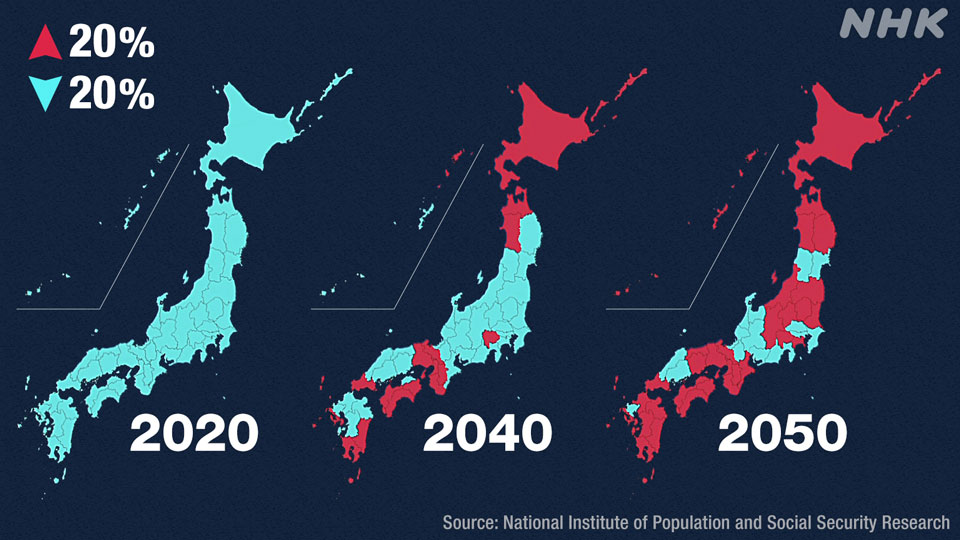
Japan, a country already facing the challenges of an ageing population, is now grappling with a new demographic trend: a significant increase in elderly individuals living alone. While the population is ageing, the number of elderly Japanese living without family or support is expected to rise dramatically in the coming decades. In 2020, approximately 20% of Japanese households comprised a single elderly person. This figure is projected to increase in the next two decades, with 16 out of Japan's 47 prefectures expecting over 20% of their elderly population to live alone by 2040.

 www3.nhk.or.jp
Japan predicts sharp rise in single elderly households | NHK WORLD-JAPAN News
Many countries are grappling with the demographic time bomb of aging populations, and Japan is at the global forefront of this challenge. It's not only that society is graying. New statistics warn of a major spike in the number of elderly Japanese living alone, with almost no one to support them.
www3.nhk.or.jp
The number of households is expected to decline in Tokyo and all prefectures from around 2045 to 2050. It is estimated the total number of households will drop by 5.6 percent from 2020's total to 52.61 million in 2050. Of those 52.61 million households, single-person homes will make up the largest share at 44.3 per cent. Couples with children will account for 21.5 per cent, and married couples without children will comprise 18.9 per cent. The number of 65-year-olds and up single-person households in this breakdown is expected to see a 46.9 per cent surge to 10.84 million in 2050. This increase will be particularly noticeable in urban areas with large concentrations of homes. In the Tokyo metropolitan area, this number is expected to rise at a pace nearing 70 per cent compared to 2020, significantly surpassing the national average of 46.9 per cent.


