Tech Electric chopsticks to reduce Japan’s salt-heavy diet

News stories related to technology and innovation.

thomas

Unswerving cyclist
Admin
Joined
14 Mar 2002
Messages
21,050
Reaction score
18,903
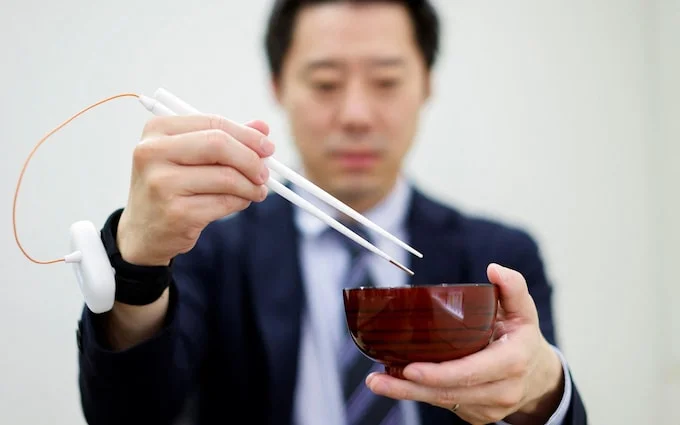
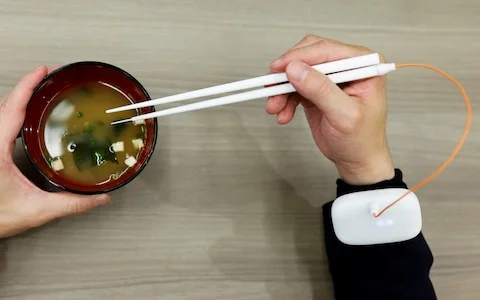
The utensils, developed by scientists at Meiji University, trick a diner's taste buds into thinking their meal is salty.
711F1264-6F60-425C-B701-603F7DCA3D6F.jpeg


18713C30-DD3B-4898-8E9F-2CEFAD0245C7.jpeg

Photo credit: Kato Issei / Reuters

Researchers in Japan have developed a set of electric chopsticks they claim enhance the taste of salt. The device is attached to a wristband computer. It uses electrical stimulation to transmit sodium ions from food to the eater's mouth, according to Meiji University professor Homei Miyashita, who developed the chopsticks with food and drink maker Kirin. Miyashita is also the person behind the lickable TV that was announced a few months ago. Japan was also where I first saw a similarly specced-out electric fork, using the same theories, but with the Western implement. It's an unusual sensation: like air-fried food compared to actually fried food, it was a different, almost salty, kind of experience.
 

Attachments

  • 42E7AFDB-20C6-4F4D-8B1C-E026B1070EBD.webp
    42E7AFDB-20C6-4F4D-8B1C-E026B1070EBD.webp
    16 KB · Views: 154
  • 9B830142-9E53-4900-8D48-CDC24C698F34.webp
    9B830142-9E53-4900-8D48-CDC24C698F34.webp
    13.6 KB · Views: 159
The electrified chopsticks that change the taste of food extended the winning streak of Japanese researchers for a satiric Ig Nobel Prize to 17 straight years. Last year, Miyashita Homei, a professor at Meiji University, and Kirin Holdings Co. developed a spoon and bowl that enhance the saltiness of food through electricity.

Hiromi Nakamura, a project associate professor at the University of Tokyo, and Homei Miyashita, a professor at Meiji University, won the Ig Nobel Prize in Nutrition for their research on augmented gustation using electricity on Sept. 14. The Ig Nobels honor "research that makes people laugh and then think." [...] In a trial run, Nakamura put a piece of agar on her tongue and charged it with a small amount of electricity. The taste changed instantly when she turned the switch on and off. Although the result was expected, Nakamura said she was surprised because the shift in taste was so palpable. Nakamura attached positive and negative electrodes to chopsticks and drinking straws because she thought the technology, once commercialized, would be used at dining tables. She ate cheese with chopsticks and consumed sport drinks with a straw, among other samples, and confirmed changes in their tastes. When she adjusted the layouts of electrodes and the directions of electrical currents, the intensity of ingredients' acidity and bitterness fluctuated.


80d14584a372fe650763ae0eb73569ca.webp


Ig Nobel Prize website:
 
Back
Top Bottom