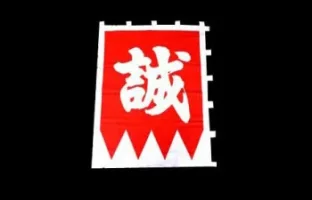
The shogunate's last unit standing
The Shinsengumi (新選組, also written 新撰組) was an armed corps of rōnin organised by the Tokugawa shogunate during the final years of the Edo period , in the turbulent era known as the Bakumatsu. It is generally regarded as the last prominent samurai militia to operate in Kyōto in defence of the shogunate.
Its roots lie in the political turmoil that followed the forced opening of Japan in the 1850s, which began with Commodore Matthew Perry 's arrival. The strain this placed on the Tokugawa regime deeply divided society. Some groups aimed to maintain the shogunate while finding ways to deal with the Western powers. Others gathered around the slogan of "sonnō jōi" and called for loyalty to the emperor and the expulsion of foreigners. These opposing positions led to the formation of armed groups and repeated outbreaks of violence, especially in Kyōto, where imperial authority and shogunal control coexisted.
In February 1863, as Shōgun Tokugawa Iemochi (徳川家茂, 1846–1866) prepared to travel to Kyōto for the first time in 230 years, the shogunate recruited a force of 248 swordsmen under the banner of "loyalty and patriotism". The Rōshigumi (浪士組) was formed to maintain order and protect the shōgun from militant samurai from domains such as Chōshū (today's Yamaguchi Prefecture), Tosa (modern-day Kōchi Prefecture), and later Satsuma (Yamaguchi Prefecture), mainly of rōnin, whose loyalties were often unclear. Although the group was formally established in the service of the Tokugawa, a considerable number of its recruits were inclined toward the imperial cause.
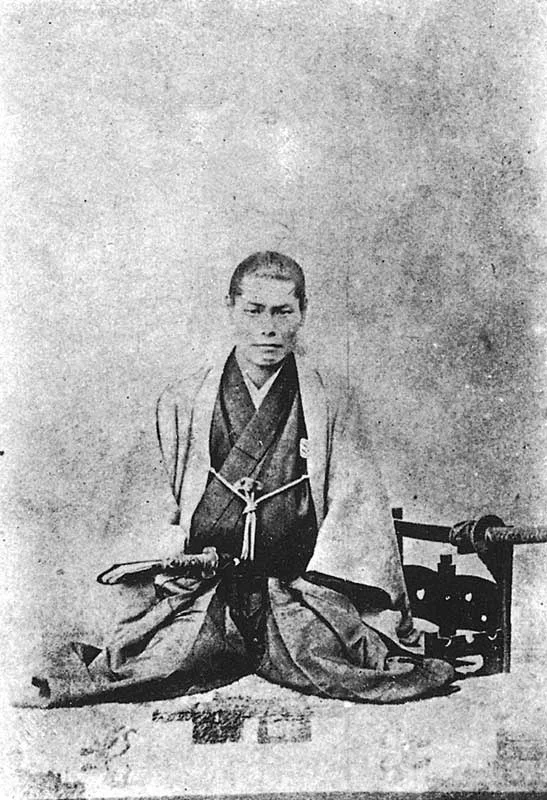
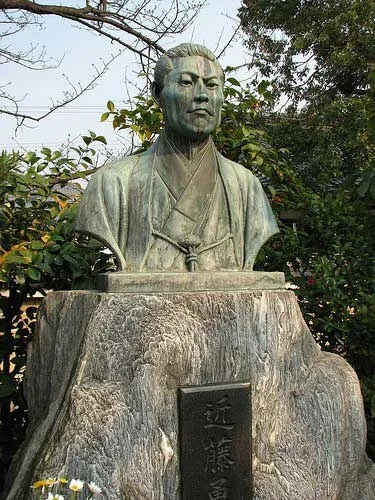
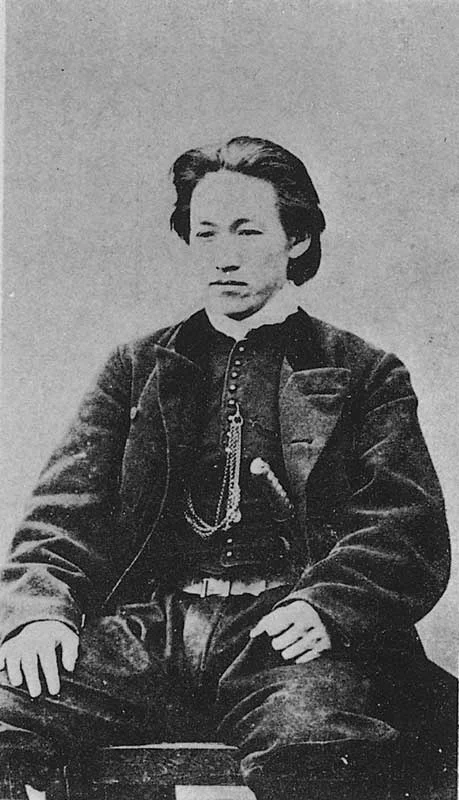
The Rōshigumi was organised by Kiyokawa Hachirō (清河八郎, 1830–1863), who publicly claimed loyalty to the shogunate but privately sought to gather supporters of the imperial cause. Among those who joined were Kondō Isami (近藤勇, 1834–1868) and Hijikata Toshizō (土方歳三, 1835–1869), both associated with the Shieikan dōjō in the Tama district near Edo, where the Tennen Rishin Ryū sword tradition was practised. Other notable figures connected to this circle included Okita Sōji (沖田総司, 1842–1868), Inoue Genzaburō (井上源三郎, 1829–1868), Yamanami Keisuke (山南敬助, 1833–1865), Harada Sanosuke (原田左之助, 1840–1868), and Nagakura Shinpachi (永倉新八, 1839–1915).

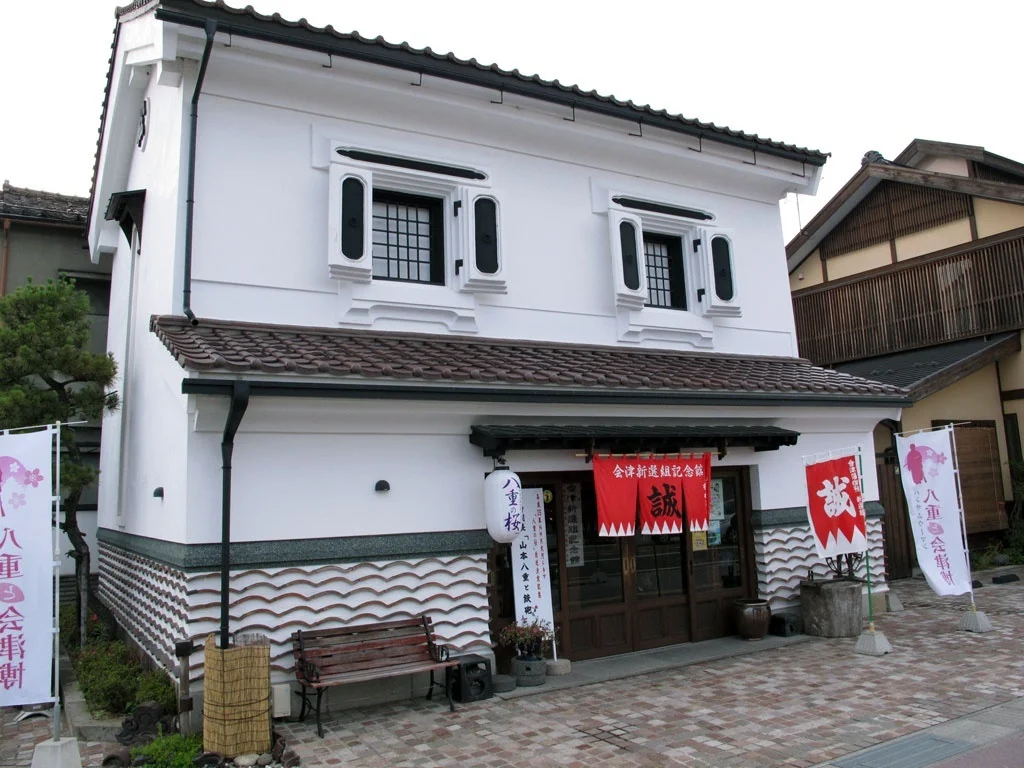
Shinsengumi flag bearing the character 誠 (makoto), meaning "sincerity" or "fidelity," and finished with a serrated lower edge that echoed the distinctive white mountain stripes of their uniforms.
Their request was accepted, and the remaining rōnin were reorganised as a policing unit under Aizu supervision. They were initially known as the Mibu Rōshigumi (壬生浪士組), after the Kyōto district where they were stationed, and were also nicknamed the "Wolves of Mibu" (壬生狼). This was a play on words that reflected both their base in Mibu and their fearsome reputation. Their banner bore the character 誠 (makoto), meaning sincerity. Initially, Serizawa Kamo, Kondō Isami, and Niimi Nishiki (新見錦) shared leadership, but tensions emerged soon. Serizawa, who hailed from an established samurai family, had a reputation for violent, unruly behaviour, while Kondō, from a farming background, pushed for stricter discipline and a more organised structure.
Serizawa's behaviour caused repeated problems, including brawls, property damage, and abuses of authority, all of which harmed the group's reputation. Under pressure from the Aizu authorities, Niimi was forced to commit seppuku , and on 18 September 1863, Serizawa was assassinated by Kondō's supporters with official approval. After this, Kondō took command of the group, with Hijikata as his deputy. In recognition of its service, Matsudaira Katamori formally renamed the unit the Shinsengumi.
The Shinsengumi enforced strict discipline, widely attributed to Hijikata Toshizō. The internal regulations forbade deviation from the samurai code (bushidō), desertion, private financial dealings, involvement in external disputes, and unauthorised combat. Violations were punished by seppuku. Other rules required members to fight to the death if their commander was killed and banned retreat or failure to kill an enemy. These severe measures created fear and strict discipline, which helped make the group effective but also gave it a reputation for brutality.
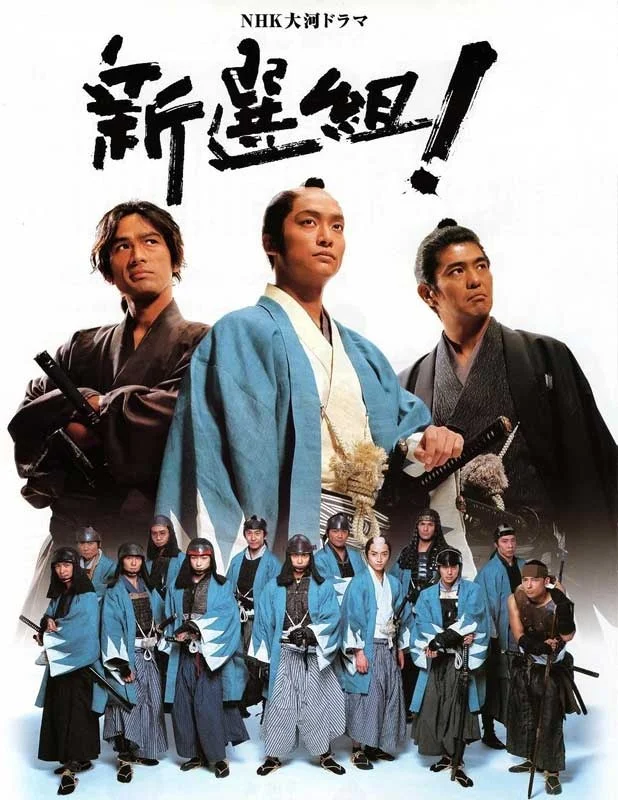
In Kyōto, the Shinsengumi gained a reputation for harsh policing. Rōnin were required to prove their ties to a domain or a master, and those who could not were treated as suspects, often facing the use of force. Their light blue haori with white zigzag trim, worn over kimono and hakama, made them instantly recognisable and functioned both as a clear badge of authority and as a means of intimidation.
Ikedaya Incident
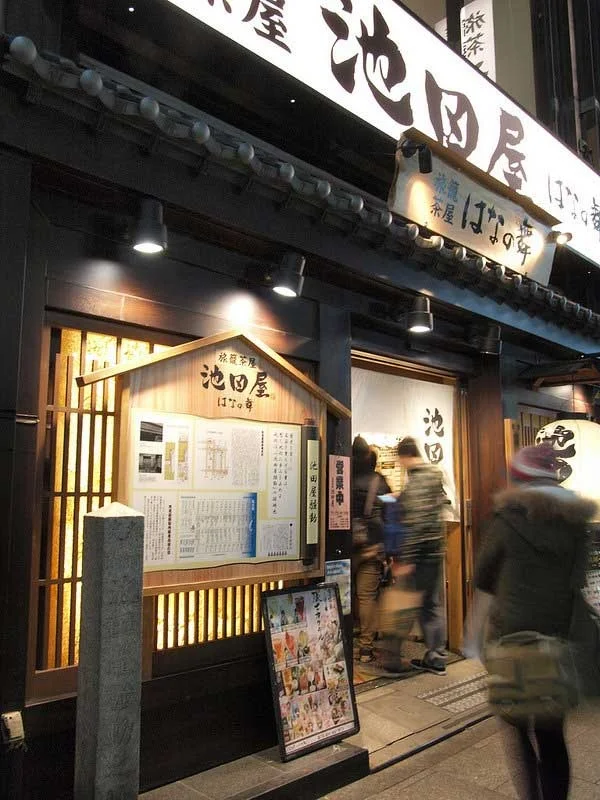
The Ikedaya Incident (池田屋事件 Ikedaya jiken) took place on the night of 8 July 1864 and was one of the Shinsengumi's most decisive engagements. It marked a clear turning point in the violent politics of Kyōto during the late bakumatsu period.In the months before the incident, the political balance in the capital shifted rapidly. Radical Chōshū forces had earlier attempted to force their way into the imperial palace to overturn the existing order, but were expelled from Kyōto. Power then shifted to more moderate leaders from the Satsuma and Aizu domains, who promoted a cautious policy of cooperation between the imperial court and the shogunate. This fragile arrangement sidelined hard-line Chōshū activists, who were being driven underground. To recover influence, they sought to create unrest in the capital, including plans to assassinate senior Tokugawa officials and court nobles aligned with the shogunate.
Central to uncovering these plans was the arrest of Furutaka Shuntarō (古高俊太郎, 1830–1864), whose interrogation revealed a conspiracy centred on the Ikedaya Inn, located on the outskirts of Kyōto. According to intelligence gathered by the Shinsengumi, members of the so-called Ishin Shishi were meeting there with the intention of setting fires across the city, assassinating Matsudaira Katamori (松平容保, 1836–1893), the Aizu domain lord responsible for Kyōto's security, and Prince Asahiko (朝彦親王, 1824–1891), a prominent imperial prince supportive of the shogunate, and even attempting to seize the emperor himself.
Acting swiftly on this information, the Shinsengumi commander Kondō Isami (近藤勇, 1834–1868) personally led a nighttime raid on the Ikedaya Inn. What followed was a brutal, close-quarters fight inside the building. Eight of the activists were killed during the clash, and four were seriously wounded. More than twenty anti-shogunate figures were arrested, many of them linked to Chōshū. The Shinsengumi themselves suffered casualties, losing three men in the fighting. The inn was destroyed in the course of the battle.
The immediate consequences were significant. The arrests dealt a severe blow to radical anti-shogunate networks operating in Kyōto and temporarily stabilised the city. The Shinsengumi were publicly praised for their actions and quickly rose to prominence, becoming seen as an effective—if feared—arm of shogunal authority. Some observers at the time, as well as later historians, have suggested that the incident slowed the collapse of Tokugawa rule by blocking a coordinated uprising in the capital at a crucial moment.
Today, a memorial stone and plaque mark the site of the Ikedaya Inn, standing as a reminder of the tension, violence, and uncertainty that defined Japan's final years under shogunal rule.
In the following years, the Shinsengumi took part in major clashes, including the Kinmon Incident (蛤御門の変), investigations involving the Chōshū domain, and security sweeps across western Japan. At their peak, their ranks reached around 200 members in 1865. Despite this growth, internal divisions continued. In 1867, Itō Kashitarō (伊東甲子太郎, 1835–1867) broke away to form the Kōdai-ji group, which was later wiped out after Itō was assassinated.
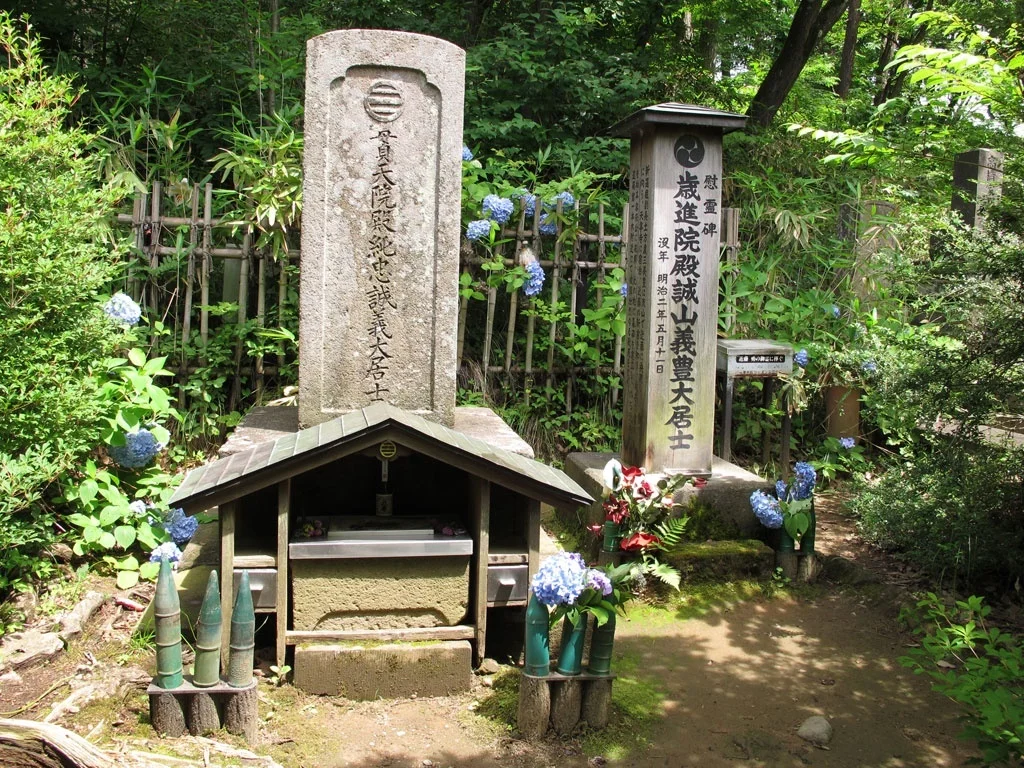
The final phase came with the outbreak of the Boshin War . At the Battle of Toba–Fukashi on 3 January 1868, the Shinsengumi, commanded in the field by Hijikata, was defeated alongside shogunate forces. The survivors retreated to Edo and reorganised as the Kōyō Chinbutai on 1 March, with Kondō as commander. After defeat at Katsunuma, Kondō was captured in Nagareyama and executed by beheading at Itabashi on 25 April 1868. Hijikata continued to fight, moving through Utsunomiya and Aizu-Wakamatsu before fleeing north with Enomoto Takeaki (榎本武揚, 1836–1908) to Hokkaidō , where they proclaimed the short-lived Republic of Ezo. Hijikata was killed in action at Hakodate on 11 May 1869. His death is generally taken to mark the end of the Shinsengumi. A small number of former members, including Nagakura Shinpachi and Saitō Hajime (斎藤一, 1844–1915), survived into the Meiji period .
Despite its violent history, the Shinsengumi has remained a powerful presence in modern Japanese culture. Its image has been shaped above all by the historical fiction of Shiba Ryōtarō (司馬遼太郎, 1923–1996), particularly Shinsengumi Keppūroku (新選組血風録) and Moeyo Ken (燃えよ剣). These works went on to inspire films, television dramas, and manga, including Nagisa Ōshima's' Tabu (1999), which examined same-sex desire among samurai, NHK's long-running 2004 television series Shinsengumi!, and later adaptations such as Mibu Gishiden (2003). Through these retellings, the Shinsengumi has come to symbolise both the discipline and the contradictions of the samurai at the moment of their historical eclipse.
Links:
- SHINSENGUMI 新選組
- Shinsengumi in Kanto
- Truth about Japan's last samurai awaits fans in hometown of Hino
References:
- Hillsborough, Romulus. Shinsengumi: The Shogun's Last Samurai Corps. Tuttle Publishing, 2005.
- Mason, R. H. P., Caiger J. G.; A History of Japan, Tuttle, rev. edition 1997.
- Nussbaum, Louis-Frédéric. Japan Encyclopedia. Harvard University Press, 2005.
- Papinot, Edmond. Historical and Geographical Dictionary of Japan. Tuttle, third printing 1988.
- Shiba, Ryōtarō. The Last Shogun: The Life of Tokugawa Yoshinobu. Kodansha USA, 2022.
- Totman, Conrad. A History of Japan. Wiley-Blackwell; second edition 2005.