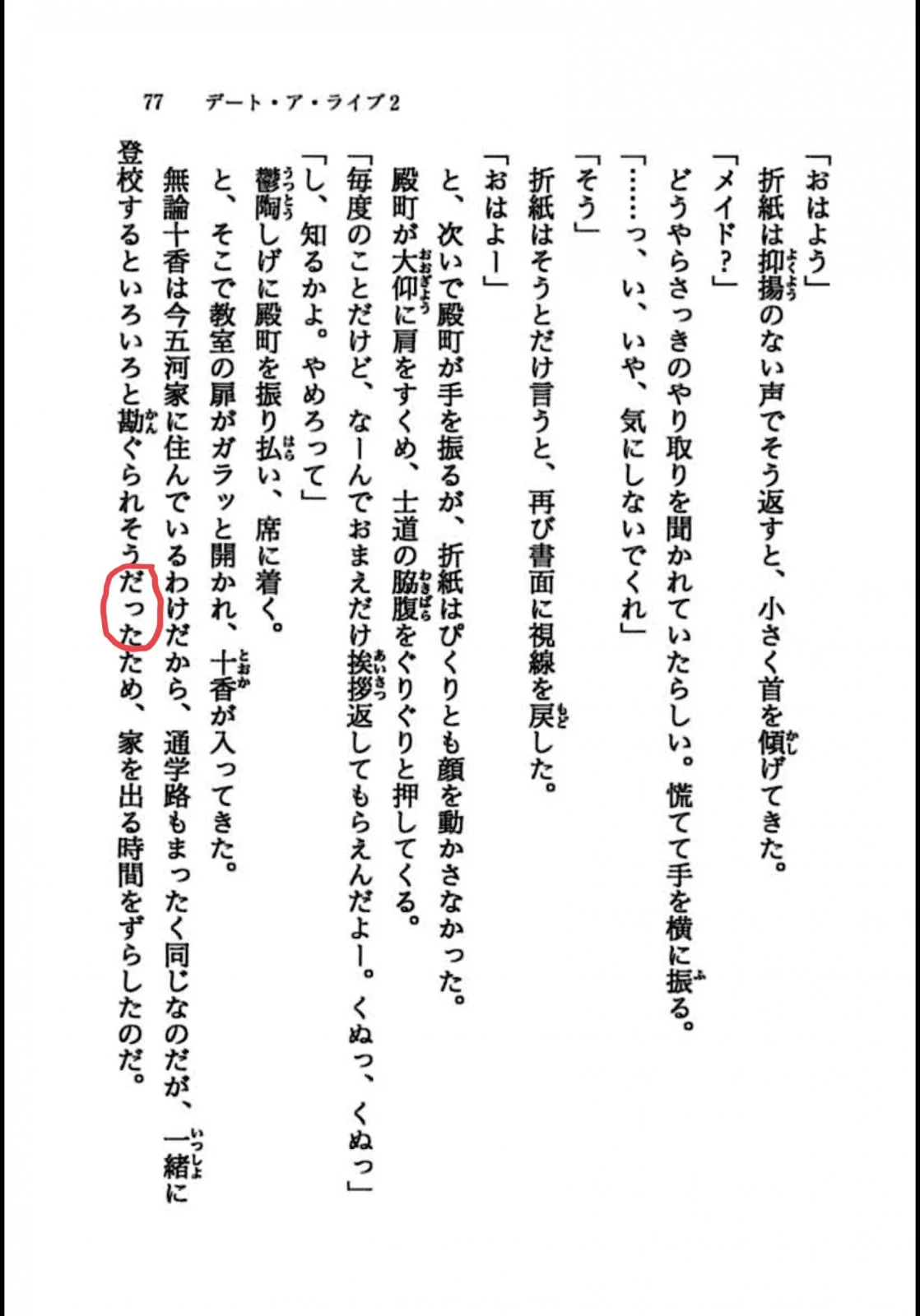
I'm not entirely sure what you're suggesting here. It's the simple "as a natural course of X, Y would happen" meaning of the と conditional. If they left at the same time, people would naturally get suspicious (about why they're living together, what their relationship is, etc. etc.). There is no actual "rule" that could be changed or unchanged (unless you're using this word figuratively?)
Still, it's not odd or unusual because whether or not people would still be suspicious now or not isn't the point. The ~そうだったため doesn't suggest or imply that people would no longer be suspicious now. It's simply that the person in question (十香?) had that feeling before, and based upon that reason took the action described afterwards.