I did have the sort of feeling but the translation threw me when it says "someone" so I presume the favour is done for someone other than the speaker.
Yes, the given translation "Teacher let
(someone) ask lots of questions." is also wrong even if in the correct wording 先生が質問をたくさんさせてくれた。. The recipient of the favor is always the speaker or their in-group member(s) for くれる, so "someone" is not an appropriate translation, as you would already realized.
If you don't say this in this context the sentence might not make sense to me. Now I try to translate this to justify its usage. I suppose this is how Japanese people express their gratitude.
Is my translation literally correct?
But I already want to receive a favour of letting me go home.
It suggests one might overstay their welcome.
You can think that ~(さ)せてもらいたい is a humble expression of ~たい in most cases since this is a form to ask the listener to do a favor for the speaker. (食べさせてもらいたい is an exception since 食べさせる can mean "to feed" other than "to make/let someone eat/allow someone to eat".)
e.g.
行かせてもらいたい(= 行きたい)
入らせてもらいたい(= 入りたい)
勉強させてもらいたい(= 勉強したい)
Thus, 帰らせてもらいたい is a humble expression of 帰りたい (the speaker is asking the listener to do a favor of letting him/her go home for him/her). Thus, もう、帰らせてもらいたいんですけど means "I want to go home already." This is often used in a context "I want to leave here right now." or even "I don't want to stay here any longer."
EDIT:
The original verb of 帰
させてもらいたい is a transitive verb 帰
す, meaning "to let/make someone go home", "to send someone home/back". Thus, 帰させてもらいたい is a humble way of saying 帰したい "I want to let someone go home/I want to send someone home/back". This sentence is used in a context, for instance, where a section chief is asking their boss (e.g., CEO) to let their subordinates go home, so this is not saying about the speaker's going home.
This expression 帰させてもらいたい is rarely used, by the way. Other ways of saying such like 帰らせてあげたい, 帰してあげたい or 帰してやってほしい are usually used for this meaning.
I did query this with some Japanese native people before and they said 聞く would often go with the particle から when it means to hear from some person while the particle に can go both ways.
You already got what "both ways" refers to?
As to 質問を聞く, are you saying it is okay for the meaning if 質問を訊く is written for the intended meaning though it is not appropriate if it is expressed verbally since they both are pronounced the same and 質問をする is preferred for clarity.
Not really. 質問をきく can't mean "to ask a question" whether in spoken or written language, i.e., it's wrong in any kanji.
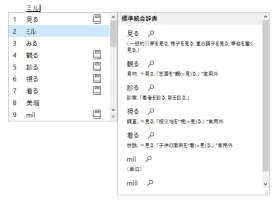
I have found quite a few textbooks using the same 聞く and 見る for everything even though there are 聞く 聴く 訊く and 見る 観る 視る respectively for different meanings.
The point is that the kanji 訊 or the reading みる for 観る, 視る or 看る are out of
常用漢字. Roughly speaking, it's not wrong to use the kanji 聞く or 見る for all the meanings.
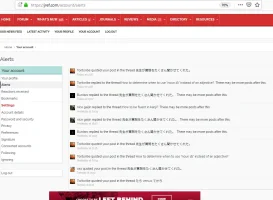
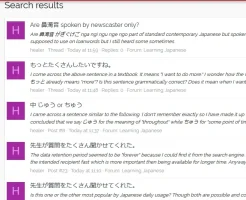
By the way, where can I access all the alerts? Sometimes I try to re-visit some past threads to refresh my memory. When I click on "Show all", it shows the latest six threads at the most. What happens to the rest? It says SHOW ALL. I have to do a search for keywords in order to find what I want.
Hmm, I can get a page for the alerts that contains at least the latest 14 alerts by clicking "Show all".