Do you remember

prediction is different with prophecy.

Myanmar experienced this quack due to two reasons. One is declarable and one is not (I just point to this fact that a few years ago, Myanmar Buddhists attacked the faultless Myanmar Muslims, killed thousands of them brutally, looted their properties, burned their houses and farms, and drove them out from Myanmar in the most horrific conditions. After that felony, mass killing and tyrannical expelling, I always was waiting for this disaster in Myanmar " you can consider it as revenge of nature and I interpret it otherwise" ).

.

n82660240-71860399_pm0o.jpg

.

thumbs_b_c_cc3ae20b2f44f985d03f524942ff5624_wd6x.jpg

.

1396061715183787911874284_dhs.jpg

.

3559320_eili.jpg

.

1080x608_cmsv2_8e8cdfda-0bb8-5857-b221-0b1e3d847819-4404480_a3gs.jpg

.

Of course, my general prediction was based on some public information of the geological changes underground from Australia, Japan, Indonesia, Philippines to Myanmar that I expressed in my earlier posts and don't remember now.
 
I warned about an earthquake two years ago that Myanmar was one of the areas I mentioned? Sadly I could not find my topic.

Powerful earthquake kills more than 140 in Myanmar, death toll likely to rise
Maybe this one
 
Thank you, senior mdchachi for reminding :)

I think, I mentioned Myanmar in that topic, or maybe it was somewhere else. Let me to visit the thread
 
That's right, I talked about Myanmar in one of my posts in the same topic:

Of course this is not the last and this belt is unquiet yet. In my last visual research I estimated this belt is divided into two branch which one reach Japan and another goes to Myanmar. Most likely Myanmar and south of other countries in the path are the target of the nature phenomena. I mostly am suspicious about Myanmar, because I think the pressure of the undersea grounds will be discharged there.
 
There are many Muslims in Burma. They were in Friday prayers when the earthquake struck and many were killed in collapsing mosques.It seems the deity is an 'equal opportunities murderer'.
 
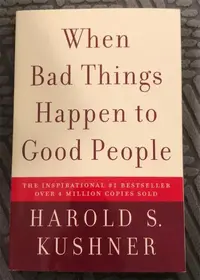
why.webp In my 40's , I got deep into studying all religions I could find books on. I often wondered why God allowed so many bad things to happen to innocent people. I vaguely remember this book having a good answer. I think I'll pull it out to read again.
 
Let us know it's conclusion.

The best answer I have is they are random events occurring without any all-controlling hand. How else can you explain the 21 year old who my wife diagnosed with severe leukaemia yesterday and is unlikely to see out the year, those dying unnecessarily in Ukraine/Gaza/Israel, mass school shootings in the US, three little girls at a Taylor Swift dance class being stabbed to death by a mad man, my sweet niece dying of oesophageal cancer at age 17.

Occam's razor suggest the simplest explanation is usually the correct one.
 
Let us know it's conclusion.

The best answer I have is they are random events occurring without any all-controlling hand. How else can you explain the 21 year old who my wife diagnosed with severe leukaemia yesterday and is unlikely to see out the year, those dying unnecessarily in Ukraine/Gaza/Israel, mass school shootings in the US, three little girls at a Taylor Swift dance class being stabbed to death by a mad man, my sweet niece dying of oesophageal cancer at age 17.

Occam's razor suggest the simplest explanation is usually the correct one.
Summary of When Bad Things Happen to Good People

Harold S. Kushner's 1981 book, When Bad Things Happen to Good People, addresses the age-old question of why suffering occurs, particularly to those who seem undeserving of it. The book was inspired by Kushner's personal tragedy—the death of his son Aaron from progeria, a rare disease causing premature aging. This loss led Kushner, a rabbi, to re-examine his faith and theological understanding.

Key Themes and Ideas:
  1. Rejecting Simplistic Explanations for Suffering
    Kushner critiques traditional religious explanations for suffering, such as the notion that it is punishment for sin or part of a divine plan. He argues these views are inadequate and often harmful13.
  2. God's Nature: Benevolent but Limited
    Kushner proposes that while God is good and compassionate, He is not omnipotent. God does not control all events or prevent suffering because He respects the laws of nature and human free will34. This idea aligns with "theistic finitism," suggesting a finite God who cannot intervene in every tragedy.
  3. Randomness and Natural Law
    Some suffering results from randomness or natural laws, which operate without moral judgment. For example, natural disasters or diseases occur not as divine punishment but as part of an orderly universe that God does not interfere with16.
  4. The Role of Religion
    Religion, according to Kushner, should provide comfort and help people cope with suffering rather than offer explanations for it. Prayer and faith are tools for finding strength and support rather than means to change external circumstances56.
  5. Response to Tragedy
    Instead of asking "Why did this happen?" Kushner encourages readers to focus on "What can I do about it?" This shift helps individuals find meaning and purpose in the aftermath of loss69.
  6. Reinterpretation of Job's Story
    Kushner reinterprets the biblical story of Job, emphasizing that Job's suffering was not a test or punishment but a reflection of life's inherent unpredictability. He concludes that God's role is not to prevent suffering but to provide comfort and moral order12.
Conclusion:
Kushner's central message is that life's tragedies often lack reason or fairness, but individuals can find solace in faith, community, and resilience. By accepting the limitations of divine power and focusing on human responses to adversity, the book offers a compassionate framework for navigating grief and loss.

Answer from Perplexity: pplx.ai/share
 
There are many Muslims in Burma. They were in Friday prayers when the earthquake struck and many were killed in collapsing mosques.It seems the deity is an 'equal opportunities murderer'.
Yes, I read it on an Persian web. I think they were about 80 to 100. In such disasters everybody may damage based on his position.

Those victims were Muslim and I wonder, why the other Muslim citizens in Myanmar didn't help or support that poor shelterless and oppressed Muslim population at that time (legally, financially or in a similar way)?

If you mean, why those Muslims died in the earthquake too, it has a religious interpretation that is not declarable because of the different beliefs here. I only say, sometimes it comes (death due to such events) from an earlier written fate and sometimes due to the public oppression and sins. There is no difference between Muslims and non-Muslims in this case, but the significant thing is the reason.

Some people in the world die or survive in the accidents, whereas their death or survival is not always relevant to the sort of their beliefs. But in the public fatal disasters the reason goes back to the majority of a society.
 
Last edited:
I only say, sometime it comes (death due to such events) from an earlier written fate and sometimes due to the public sins. There is no difference between Muslims and non-Muslims in this case, but the significant thing is the reason.

Some people in the world die or survive in the accidents, whereas their death or survival is not always relevant to the sort of their belief. But in the public fatal disasters the reason goes back to the majority of the society.
There is no such "reason." It's human nature to ascribe such meaning as divine punishment to such events but it doesn't make any sense.

What do you believe was the reason behind the Bam earthquake in Iran? It killed more than 30,000 people and destroyed 80% of the city.
 
Or even the tragic quake in Turkish!

The general story is the same I pointed out. Even drought sometimes is due to the second reason
 
If you are not sensitive to divine subjects (I usually avoid posing these matters), let me extend one of them that is fate, which includes all humans and other beings in the world.

Aside from the earthquakes and other natural disasters or the non-public deadly events that happen across the world, fate is a mysterious and unknown matter for humans. Nevertheless, fate is divided into two types: definitely fate and changeable fate.

For example, "death" and "mortality" are definite fates that include humans and all other beings and things in the universe, but at different times. It is not changeable and will happen at its specified time, but the "time of death" and some other fates can be changed (for humans), though it has been determined before. For instance, helping poor people, and nourishing starving people can change the fate of the helper certainly (there is no doubt about this reward and it is not relative to any religion).

Conversely, doing oppression or evil to people or even other creatures changes the fate of the doer into a bad fate as a punishment that may be shortening lifetime. Let me tell you a real story:

One day a Jew who collected pieces of wood from the deserts and sold them in the city was passing from the opposite side of the prophet of Islam and some of his attendances in an alley to go to the desert. When he reached Mohammad, he apparently hailed but used a similar word maliciously that meant "death for you" in Arabic. The prophet of God, Mohammad noticed his word and purpose (and because it is obligatory to return the greeting in Islam) he replied calmly, "for you".

When the Jew walked away, Mohammad said, " he will come not back alive, because he wished my death with hostility, and I returned the answer to him".

At sunset, the Jew backed to the city! One of the audience who observed the Jew ran toward Muhammad's house and announced to him, " O Mohammad, the Jew came back"!

He ordered somebodies, " go and bring him here".

When they brought the Jew to the house, the prophet said to him, "Empty your bag"!
When he emptied his bag a black snake appeared between the pieces of wood.

Mohammad said to him, "This snake was assigned to kill you, tell me what good did you do in the desert that God saved you from the definite death"?

The Jew said, "When I wanted to eat lunch at noon, I saw a passerby in the distance. I guessed he was hungry, so I called him to come and have lunch with me. He came, and we ate the food together".

That charity returned the certain death that the Jew himself was its cause.

Probably, I will continue this post.
 
Last edited:
Back
Top Bottom