

Hōjō Masako (北条政子, 1157-1225), the eldest daughter of Hōjō Tokimasa (北条時政, 1138-1215), was the wife of Minamoto no Yoritomo (源頼朝, 1147-1199), founder of the Kamakura shogunate (鎌倉幕府, 1192-1333), and mother to his sons and successors, Minamoto no Yoriie (源頼家, 1182-1204) and Minamoto no Sanetomo (源実朝, 1192-1219). In 1177, defying her father's will, she married Yoritomo during his exile in Izu Province (伊豆国, now part of Shizuoka Prefecture). Following Yoritomo's death in 1199, Masako took Buddhist vows, yet rather than retreating from political life, she emerged as one of the most powerful and influential figures in the early shogunate. This role earned her the enduring epithet of "nun shōgun " (尼将軍 ama shōgun).
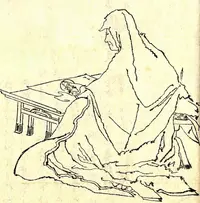
Hōjō Masako (北条政子,1156-1225), drawing by Kikuchi Yosai (菊池容斎)
Her actions during this period helped lay the groundwork for the shikken (執権, regency) system, through which the Hōjō clan would govern as military regents while appointing figurehead shōguns from noble families. In 1219, after the assassination of Sanetomo, who left no heir, Masako travelled to Kyōto to secure the appointment of Kujō Yoritsune (九条頼経, 1218-1256), a young aristocrat of Fujiwara descent, as shōgun-designate. This politically shrewd move maintained the legitimacy of the military government while ensuring its complete subordination to Hōjō control.
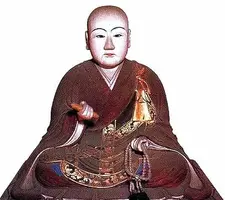
Statue of Hōjō Masako at An'yō-in temple in Kamakura
Although Masako had taken Buddhist vows, her active political role was extraordinary in a society where women were excluded from public power. Her title, ama shōgun, reflected both religious withdrawal and political command. Her influence went beyond family politics and succession; she was instrumental in shaping the structure of the early Kamakura polity. Her authority within the councils of the shogunate remained formidable until she died in 1225. By then, the Hōjō regency had become the defining power of the era. As a woman who wielded real and enduring authority in the formative years of Japan's first warrior government, she is one of the most significant female political figures in premodern Japan.
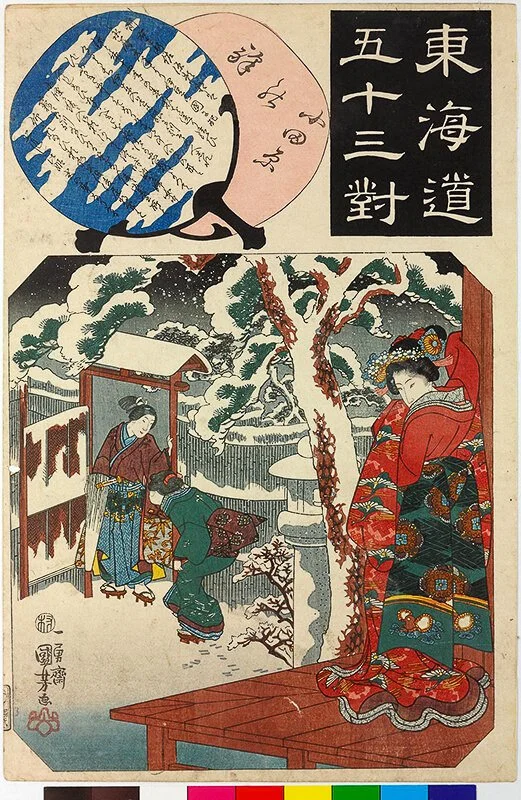
Utagawa Kuniyoshi (歌川国芳, 1798-1861), Minamoto no Yoritomo being admitted to the house
of Masako, daughter of Hojo Tokimasa, woodblock print , oban tate-e, 1845.
References:
- Baldessari, Francesco. Kamakura: A Historical Guide, 2016.
- Mutsu, Iso. Kamakura: Fact and Legend. Tuttle 2012.
- Nussbaum, Louis-Frédéric. Japan Encyclopedia. Harvard University Press, 2005.
- Papinot, Edmond. Historical and Geographical Dictionary of Japan. Tuttle, third printing 1988.
- Sansom, George. History of Japan to 1334. Stanford University Press, 1965.
- Sansom, George. A History of Japan 1334-1615. Stanford University Press, 1961.
- Sato, Hiroaki. Legends of the Samurai . Overlook Duckworth, 1995.
- Totman, Conrad. A History of Japan. Wiley-Blackwell; second edition 2005.

