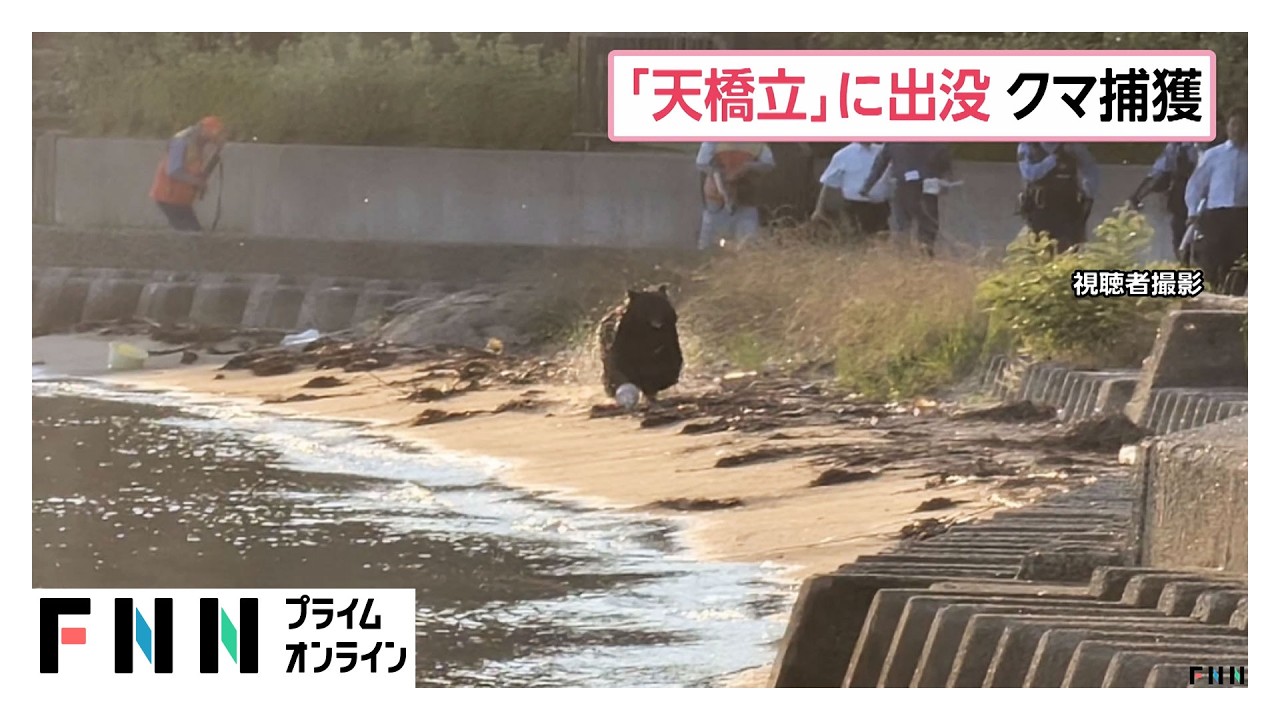
Nature The Japanese brown and black bear thread

In Fukushima Prefecture , NTT Docomo Business has begun using drones to help track and deter wild bears, working with the village of Shōwa. The machines are fitted with high-performance cameras that include thermal imaging, which makes them useful at dawn and after dark, the hours when bears are usually on the move. They operate on the LTE network, the same standard used for ordinary mobile phones.

Drones used to locate and drive away bears in Fukushima village

Photo credit: Jiji Press


The company, part of the wider NTT group, intends to offer the system to other municipalities as bear incidents continue to rise nationwide. The drones are sent to areas where sightings have been reported, supporting local hunters in their culling operations, and the heat-sensing cameras allow them to detect animals that have retreated into the undergrowth.

The Shōwa village government has conducted drone patrols regularly since October. Based on the gathered data, the village has set up box traps along routes believed to be used by bears and has used speakers mounted on drones to shoo them away. [...] The company has previously used high-performance drones for infrastructure inspections and disaster response. This summer, the village of Shōwa began utilising drones in earnest to search for people who went missing in mountainous areas. NTT Docomo Business plans to further improve its drones for dealing with wild animals, such as enabling remote operation and equipping them with an automatic detection function powered by artificial intelligence.

 
CNN on the fightback against bears: Japan's bear population has skyrocketed, while the number of licensed hunters has plummeted.

There are several factors driving the surge in encounters. One is simply numbers. The population of the Hokkaido brown bear, one of two bear species in Japan, has more than doubled in the last 30 years, with nearly 12,000 of the animals now roaming the country's northernmost prefecture. The stocky cousins of the grizzly can stand nearly seven feet tall and are found only in Hokkaido.The other species, the Asiatic black bear, is smaller, reaching about five-and-a-half feet. But it's responsible for fatal attacks as well, particularly in northern prefectures such as Akita and Iwate. Experts say climate change is another factor. Poor harvests of nuts and fruit are pushing bears to seek food elsewhere.

However, the article also echoes voices that warn against blanket killing: a nonprofit called Picchio uses dogs to deter bears, and tags bears to track their movements. Picchio also advocates planting bear food trees outside residential areas, so they have access to natural resources farther from towns. While repeat offenders may still be culled, these measures reduce unnecessary deaths.

 
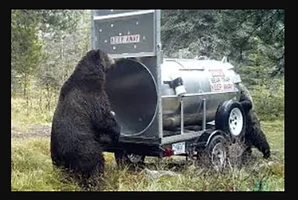
beartrap.webp For many years Maine has used bear traps mounted on a trailer. When the bear goes in to eat , it drops the strong door to keep him in. Then the game wardens take them to a very remote area away from people and release them.
 
This is heartbreaking to read. :(

A smartwatch recovered from a hiker killed by a bear in Hokkaidō (the report is linked above) has given investigators a rough picture of what happened in his last moments, even hinting that the animal may have come back to the body the following day. The watch was found after the 14 August attack, and its data, which logs both route and heart rate, showed a sudden change just before midday. Instead of following the usual hiking track, the man veered sharply off and went down a wooded slope. Once inside thick brush, his movements appeared to double back repeatedly over the same patch of ground, something investigators read as a sign of a struggle. The heart-rate readings stopped entirely about a hundred to a hundred and thirty metres away from the trail, which led police to believe that he died there.

The watch remained in the same spot all night but moved again at around 9 a.m. the next morning, traveling several hundred meters through the brush. This suggests the brown bear came back and dragged the man's body away, the Asahi said. Three days later, on 15 August, a bear with two cubs was spotted dragging his body in its mouth. All three animals were killed. A mound of earth made by the bear was found nearby and traces of the man — who was engaged to be married — were discovered, the report added. The victim's parents were asked to identify the body, but police asked them only to look at his face because of the extent of injuries.

 
Japan's large robotic "wolf," introduced several years ago to scare off bears and protect farmland, is now being joined by a much smaller and outwardly softer counterpart that is nonetheless designed to be just as noisy as the original.


The developer, Hokkaido -based Ohta Seiki, is preparing a product called the Monster Wolf Mini, a device about 20 centimetres long that resembles a stuffed toy at first glance. Its appearance is deliberately disarming. With a remote switch, however, the plush figure's eyes light up red, and it emits electronically generated sounds reaching around 80 decibels, roughly comparable to heavy city traffic or the grinding noise of a household garbage disposal.

Beyond the usual growls and howls, the miniature version can also deliver short verbal threats, including phrases that sound like warnings of imminent harm. The company expects the unit to reach the market in fiscal 2026.

Ohta Seiki released the original Monster Wolf in 2018, primarily as a deterrent against bears entering residential areas. However, it has also been used to drive away deer and other animals that damage crops. The larger model relies on motion sensors: when an approaching animal is detected, its LED eyes flare red, and it plays a randomly selected sound from a library of more than 50 effects at approximately 90 decibels. More than 300 units have since been installed by farms, municipalities, and other customers, suggesting modest but sustained demand for mechanical guardians that rely on noise and spectacle rather than force.

Monster Wolf Mini

However, the Monster Wolf weighs 20 kilograms and serves mainly as a stationary device. Ohta Seiki has seen increased demand for a smaller, portable version from construction firms, surveyors working in the mountains, and camping enthusiasts. Development of a plush version began last fall. Just like the original, the Monster Wolf Mini can generate over 50 different sounds, including gunshots and human speech. The Monster Wolf Mini is battery-powered, and the wireless remote can be used from 10 to 20 meters away. The plush body will be made by a company in Bibai, a city in Hokkaido, while production of the internal electronics will be outsourced. The price of the Monster Wolf Mini has yet to be determined, though Ohta Seiki aims to sell it for under 10,000 yen ($65), said company President Yuji Ohta.

Paywall alert:
 
Usually, Japanese bears hibernate in February. Yet, bears have already been sighted across Japan, raising concerns of another wave of deadly encounters.

[Video deleted]​

A bear believed to be an Asian black bear was spotted walking across a snow-covered mountain in Hakusan, Ishikawa Prefecture, on 12 February, a time when the animals are usually still hibernating. Footage released by a local nature conservation centre showed the animal moving through deep snow. Bear sightings in the area typically begin around mid-March, suggesting the bears appeared a month earlier than usual.

Another bear was reported the following day, 13 February, in Hanamaki, Iwate Prefecture. A member of a local hunting association was injured after the animal attacked during efforts to drive it away using fireworks. Farther north, a bear was also seen on 24 February at Shunkunitai in Nemuro, Hokkaido . At around 8 a.m., photographers gathered to observe wild birds when they noticed a single bear walking near a lakeshore in the distance.

Why are sightings occurring so frequently despite the hibernation season? Takanori Yamauchi, associate professor at the Faculty of Agriculture at Iwate University, said: "This is normally a period when bears are hibernating, so sightings at this time are extremely rare. It is an abnormal situation not seen in typical years. The end of hibernation is said to be strongly influenced by rising temperatures and snowmelt. If spring arrives earlier, bears may awaken sooner than we expect." Yamauchi added that nuts and other food sources in the mountains have not yet fully developed, raising the possibility that bears may descend into residential areas in search of food, and he urged the public to remain cautious.

 
The "Oriental Paperbush and Fringed Iris Forest" (ミツマタとシャガの群生地 Mitsumata to shaga no gunseichi) in Oitomi (老富), Ayabe City, Kyōto Prefecture, a popular sightseeing spot, will remain closed this year amid the threat of bear attacks. Pre-emptively.

Oriental Paperbush and Fringed Iris Forest (ミツマタとシャガの群生地)

While there have been no bear sightings at the Oriental Paperbush and Fringed Iris Forest in Ayabe, the residents' group "Suigen no Sato Oitomi," which manages the site, decided to prioritise safety. Explaining the reason for the closure this year, group head Shogo Sakai said, "Bear sightings have not subsided nationwide. We're elderly and wouldn't be able to respond if something happened. And we can't implement countermeasures." The local community centre's toilets and rest area will also be shut.

 
A good harvest of beech nuts this year promises more food sources for Japanese bears and fewer unwanted encounters with humans:

The Tohoku Regional Forest Office of Japan's Forestry Agency, based in this city, said beech trees flowered heavily this spring, pointing to a strong nut crop, an important food source for bears. Forestry officials checked flowering conditions along roadsides in a national forest in Akita using binoculars and released the findings on 21 April. The outlook suggests nut production this year is likely to exceed last year's, when the region suffered a severe crop failure.

Japanese beech nuts

Beech nuts are a favoured food for bears, and poor harvests are thought to increase the chances of bears moving into residential areas and even towns. A better crop could ease some of that pressure. At least that is the expectation. The survey is being carried out at 145 sites across five prefectures in the Tohoku region — Aomori Prefecture, Iwate Prefecture, Miyagi Prefecture, Akita Prefecture and Yamagata Prefecture — all within the office's jurisdiction. In Akita alone, 55 sites are being monitored. The office said it will check actual nut production again in autumn. Flowering is one indicator, but the real test comes later.

 
I know they are dangerous, but this indiscriminate catching and culling (as explained in the video below) depresses me. :(


A bear was confirmed in Hachioji, Tokyo, last April. While technically Tokyo, it is actually quite a rural area. Shiroyama and its water reservoir are popular cycling destinations.

Hachioji municipal government confirmed on Tuesday that a bear had been sighted in the city last month. The sighting occurred near an elementary school and a residential area. The city government urged caution and set up a trap to catch the bear. According to the city, a resident, who checked a sensor camera set up near the trap at the forest south of Hachioji Shiroyama elementary school, said it captured an image of the bear roaming around the trap on April 29. Experts confirmed that it was an adult bear over 1 meter long.

 
The wolf robots, mentioned several times in this thread, are proving to be in high demand.

robot-wolf.webp


A Japanese company behind the fierce-looking "Monster Wolf" robot scarecrow says orders have surged after last year's record number of fatal bear attacks on people. The animatronic wolf, made by a company in Hokkaido , has flashing red eyes and lets out loud howls and growls to frighten off wild animals. Manufacturer Ohta Seiki has already received around 50 orders in 2026, more than it would normally expect over an entire year.

Company president Yuji Ohta told AFP the devices were made by hand and production could not keep up with demand. Customers were now being asked to wait two to three months, he said. Ohta also said awareness of bear safety had grown, along with concern over wildlife damage to crops. More people were recognising that the robot wolves were effective against bears, he added.

For prices starting from around $4,000 or higher, the system comes with a battery, solar panels, sensors, speakers and other apparatus. It broadcasts more than 50 kinds of recorded sounds, including human voices and electronic noises, audible up to one kilometer away.The device turns its head from side to side, flashes red LED eyes, while its tail is equipped with blue LEDs. Ohta introduced the product in 2016 to prevent damage to agricultural products by deer, boars and bears, and it was initially derided as a gimmick. The company is now upgrading the device by putting it on wheels to chase animals or patrol specific paths.


The bears are taking over Western Tokyo. Means no more hikes or dog walks in that area.

A Russian man in his 30s was seriously injured after reportedly being attacked by a bear while hiking on Mount Mutsuishi in Okutama, western Tokyo, at around 12:10 p.m. on 17 May.


[Video deleted]​


The man sustained injuries to his arms and head and was airlifted to hospital by a fire department helicopter. Authorities said his injuries are serious. The bear fled the scene following the attack, and its size and other characteristics remain unknown. Okutama Town has installed traps to capture bears and is continuing patrols in cooperation with police. Authorities are urging hikers to carry bear bells or radios while climbing in the area.
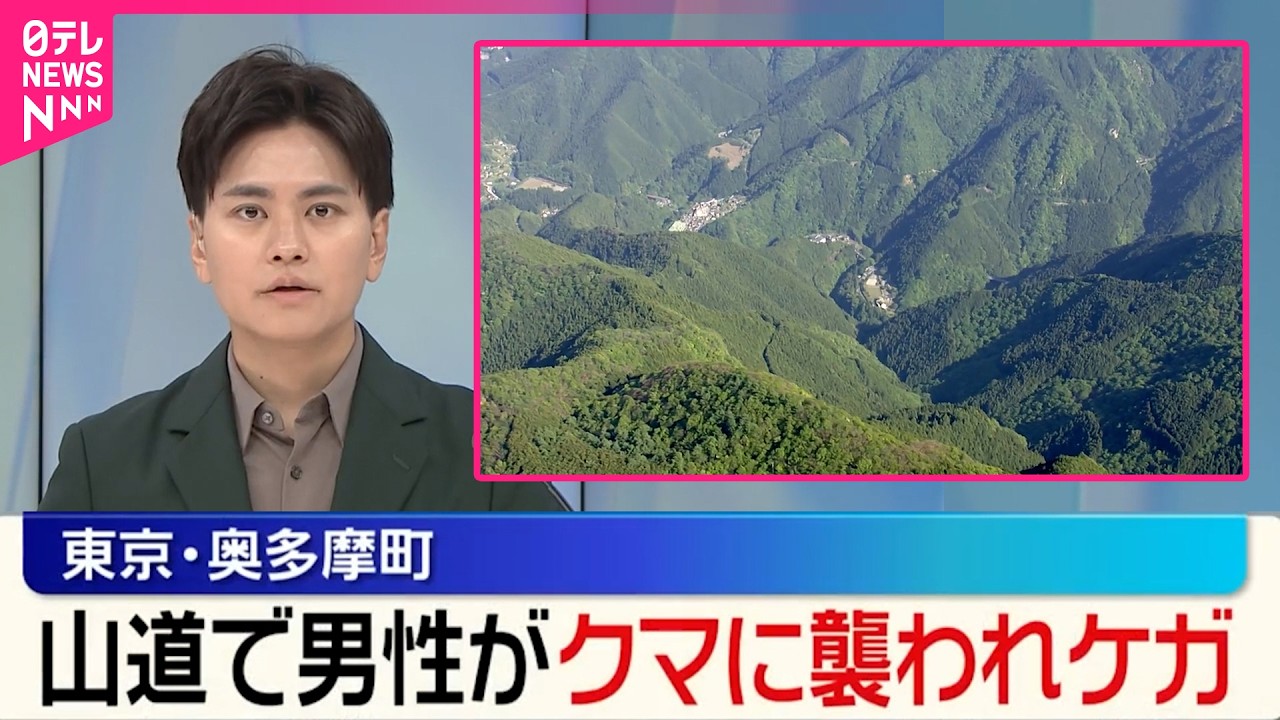
 
If bears keep encroaching the way they are now, hiking, even in the mountains of western Tokyo, might become too dangerous:

A body missing its upper half was found in the mountains of western Tokyo on Tuesday, with what appeared to be tracks left by a large animal discovered nearby, police said. The Ōme branch of the Metropolitan Police Department is trying to identify the victim, whose age and gender remain unknown. Investigators are also examining the possibility that a bear or another wild animal attacked the person.

The body was first spotted last Thursday by an off-duty police officer hiking in the Nippara area of Okutama. Tokyo police and the local hunters' association searched the area and found it around 100 meters from the hiking trail, around 1 p.m. Tuesday. A backpack and trekking poles were found some distance away.

 
This specimen of black bear really upped the ante. After attacking four people at a factory in Fukushima City, it evaded all the traps set for it, appeared completely unfazed by a tranquilliser dart, then apparently opened a window and slipped away into the night. Quite the intelligent escape artist. 🐻


A bear trapped inside a factory in Fukushima after attacking four people managed to escape overnight after unlatching a window and slipping away, city officials said. The animal, which officials described as "vicious and extremely wary", had also survived an earlier attempt to tranquilise it with a dart gun.

[Video removed]​

The bear had entered the Oki Sympho-Tech factory, located around 3 kilometres west of JR Fukushima Station. A city-led capture operation had been underway before the animal escaped during the night. Its disappearance has put local authorities on alert, and several nearby schools have switched to online classes due to safety concerns. The city's handling of the situation also drew criticism online. Some social media users complained that official communication about the bear and the risks to residents had been too slow.

The saga began on the morning of June 2, when the bear mauled four people ranging in age from their 20s to 80s in the city's Sasakino district. It entered the factory and was cornered there for over 24 hours. Around 10:50 p.m. on June 3, police officers spotted the animal climbing over the factory's west gate. Another sighting was reported nearby just before 11 p.m. According to the city, the bear fled after officials turned off the lights in the room in an attempt to lure it to a trap. The animal is believed to have opened a window in the factory to escape, one of a number of instances underscoring the bear's intelligence. During the standoff, for example, the bear was seen turning on a water faucet to drink. A tranquilizer dart that hit the bear on June 2 failed to take effect. Officials later found the dart in a factory room with its anesthetic still inside. This suggests the equipment malfunctioned or the bear had quickly dislodged it.


Yogi Bear's 'smarter than the average bear' comes to mind!

Looks like this one beat even Yogi Bear.


FamilyMart began testing a new bear deterrent on 24 June at a store in a mountainous part of Kiryu, Gunma Prefecture, marking the first time the device has been deployed at a convenience store. The device, known as Monster Wolf, was installed next to the outlet to deter bears and other wildlife. It detects approaching animals and attempts to scare them away using a combination of sounds, flashing lights and other warning signals.


Bear sightings have continued in the Kiryu area, with another sighting reported just a week before the trial began. Monster Wolf is designed to prevent animals from becoming accustomed to it. The system uses more than 50 different sounds, which are played at random to maintain their deterrent effect.

FamilyMart official Ehashi Tomoaki said the company had not previously had a way to keep bears from approaching stores. "The key point is to install the device so bears do not come near," Ehashi said. A person working nearby said the store is an important part of daily life in the mountain area. "It is important that people can go shopping there with peace of mind," the person said. The trial will run for seven months.

 
More bears seem to be outwitting humans, and their cubs are learning from them. 🐻

They avoid traps and dig holes to pass under electric fences.


Footage shows a large brown bear approaching a box trap and showing interest in bait inside. The bear gently touches the trap with a front paw, then quickly pulls away, making movements that clearly suggest caution, almost as if it understands the danger. The footage of the bear, believed to weigh more than 200 kilograms, was filmed around autumn 2025 in Nishiokoppe, a village in northern Hokkaido. Shinichi Nakahara, head of the Nishiokoppe branch of the local hunters' association, said the animals are cunning and highly intelligent. "They are crafty, or rather, smart. They learn, so if they have had an experience before, they are not likely to go into a trap," Nakahara said. In the summer of the same year, another bear, believed to be a different individual, appeared in a field of feed corn. After approaching an electric fence, the bear began digging a hole. It then used the hole to quickly pass under the fence, suggesting it may have learned how the electric barrier works.

 
That's rather cute! The bear decoy, that is.


Noboribetsu in Hokkaido held a drill to practise culling a brown bear under Japan's emergency gun-hunting procedures, using a scenario in which a bear appeared in a park close to schools and residential neighbourhoods.

Local hunters took part as bear sightings continue to rise across the country. Officials rehearsed the steps needed before an "emergency gun hunt" can be authorised, a system that allows municipalities to order the shooting of bears in urban areas at their own discretion. The exercise also covered the evacuation of nearby residents and the introduction of traffic restrictions. Emergency gun hunting has been carried out three times in Hokkaido so far. The prefecture has recorded 1,266 reports of bear sightings and related incidents in 2026.

 
Last week saw an increase in home invasions by bears.


One bear "came inside, right where my father happened to be sleeping," Yuta Matsubara told a Japanese news outlet. "He noticed the bear, turned around, and shouted loudly, causing it to go back outside." The bear came back later to try again, which was captured on video. In other instances, bears entered three homes in the prefecture and in some cases raided fridges and pantries for food, according to the local daily newspaper Kahoku Shimpo.

Although nobody was hurt in the sightings over the last week or so, encounters between humans and bears in Iwate are the latest examples of a nationwide surge that is testing Japan's traditional belief in harmonious coexistence with nature. Bear encounters are on the rise in Japan. They have been spotted in northern ski towns and southern villages, and on the outskirts of cities like Tokyo and Kyoto. The United States, Canada and the United Kingdom have issued warnings to travellers about bears in Japan.


Back
Top Bottom