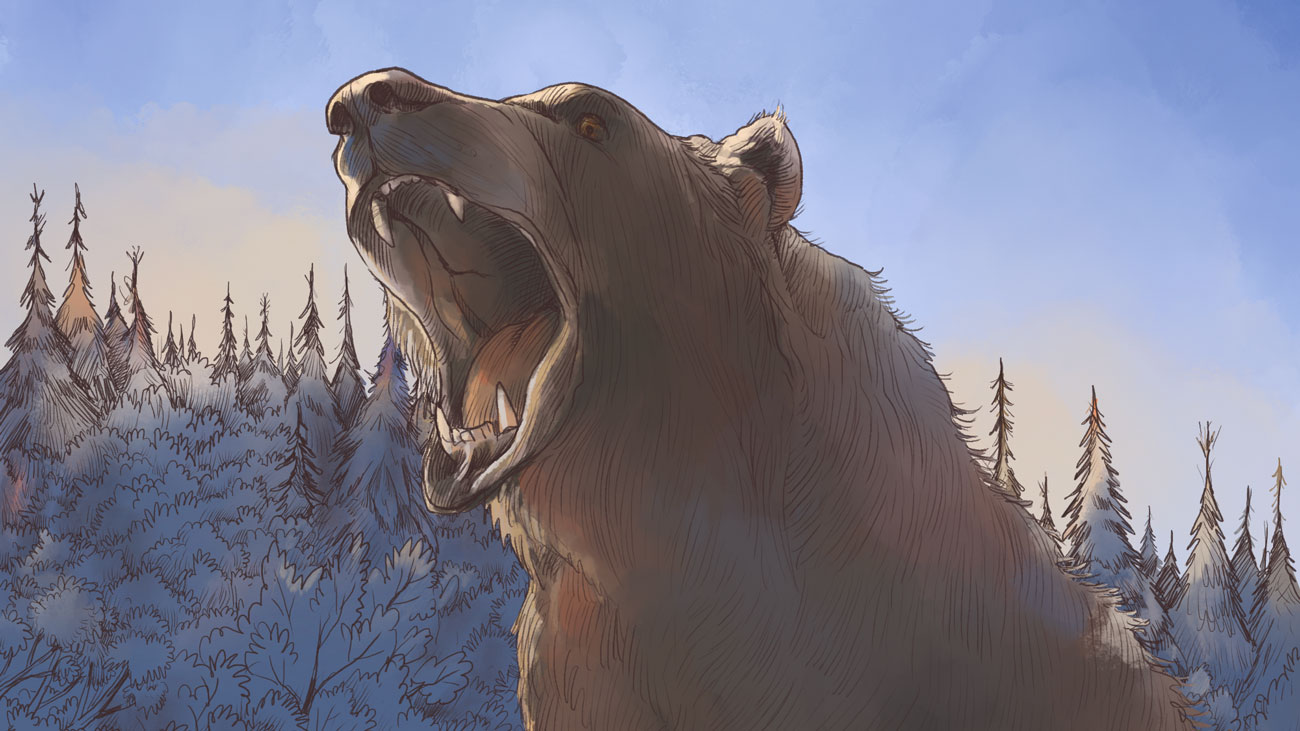
Nature The Japanese brown and black bear thread

200.gif


OH CRAP ! Now we're going to be on YouTube.
 
Some Japanese municipalities have resorted to installing "Monster Wolf", a "wildlife repellent device".


This solar-powered device sells for JPY 605,000 and is effective against bears, boars, deer, and monkeys. According to the website, the device can also be rented monthly. The frequency of the flashes and the sounds can be altered so that wildlife does not get used to them too fast.

 
I need one of these for the deer that keep eating our hostas and lillies. Plus it has bonus feature that you can set up to scare the bejesus out of little ones during Halloween.
 
It has few rewards of the hunter to become the problem by the extermination of the bear.


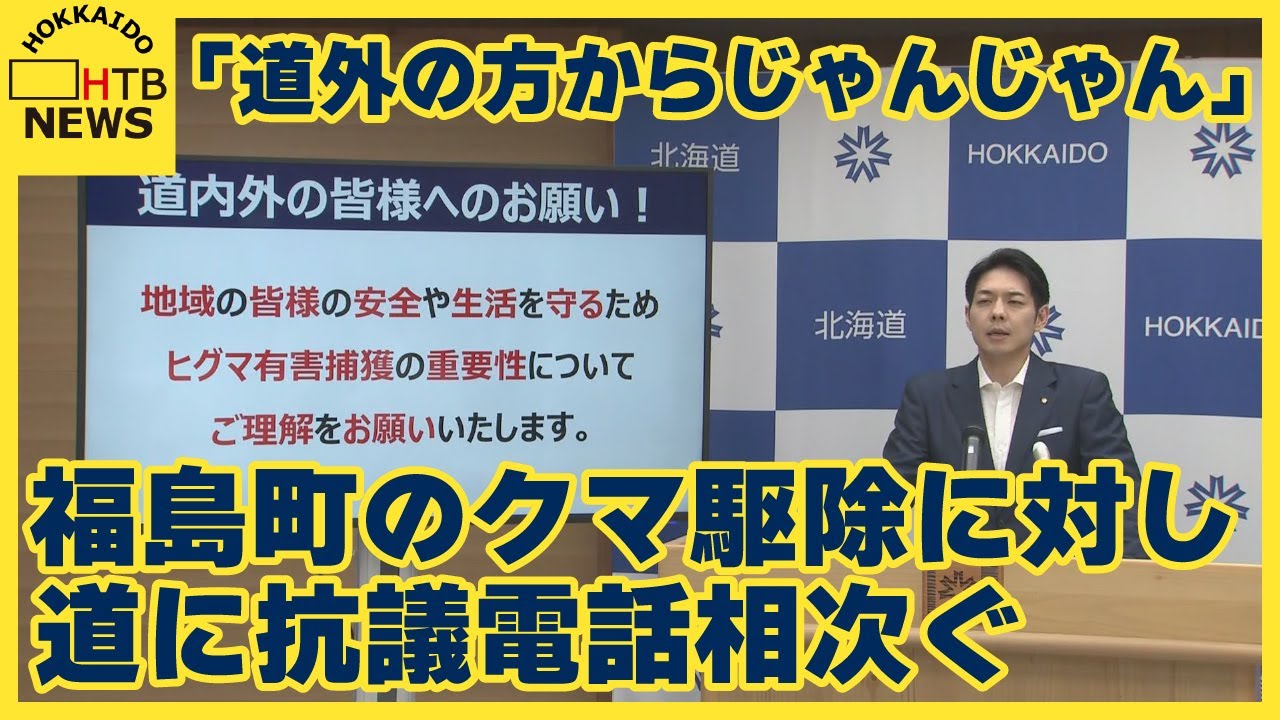
By the problem that it was said that a hunting club did not participate in the extermination of the bear by the reason of a reward being low in Naie-cho, Hokkaido , the Governor Suzuki showed a thought to request a bailout to the country.
The Naie section of the Hokkaido hunting club Sunakawa Branch introduces that lack and the reward of the hunter do not participate in the extermination or the patrol of the bear as insufficiency into Naie-cho. The municipalities and a hunting club discuss the amount of reward individually and decide it, and "the difference of the reward" occurs by the municipalities.
Governor Naomichi Suzuki: About "setting of the appropriate unit price on being dispatched, I want to request it in the country while doing handing down about the local fact while cooperating with the municipalities".
The Governor Suzuki shows a thought to demand support for the securing of staff and resources for the extermination of the bear of the country by a regular news conference of 24th.
 
Japan wants to make it easier to shoot the animals in residential areas, but hunters say it is too risky.

Under the current laws, licensed hunters can fire their guns only after the approval of a police officer. The government plans to revise the law at its next parliamentary session to allow hunters to use weapons more freely. Hunters will be allowed to shoot if there is a risk of human injury, such as when a bear enters a building. But hunters are wary. Satoshi Saito, the executive director of the Hokkaido Hunters' Association, mentioned that encountering a bear can be frightening and dangerous. He noted that there is no guarantee of killing a bear by shooting it, as missing the vital point could result in the bear running away and potentially attacking others. He also questioned who would be held responsible if the bear subsequently attacked someone.

Hokkaido has come to exemplify Japan's growing bear problem. The country's northernmost major island is sparsely populated - but its bear population has more than doubled since 1990, according to government data. It now has around 12,000 brown bears, which are known to be more aggressive than black bears, of which there are around 10,000 in Japan by experts' estimates. Local governments have tried different strategies to keep bears away. Some have turned to odd guardians - robot wolves, complete with red eyes and spooky howls, while elsewhere in the country they are testing an artificial intelligence warning system. The town of Naie in Hokkaido has been trying to hire hunters for 10,300 yen ($64; £50) a day to patrol the streets, lay traps and kill the animals if necessary. But there are few takers - it's a high-risk job, the pay is not attractive enough and many of the hunters are elderly. "It is not worth the trouble because confronting a bear will put our lives on the line," a 72-year-old hunter from the area told The Asahi Shimbun newspaper, likening an encounter with a brown bear to "fighting a US military commando".

Bear sightings and incidents typically occur in April when bears emerge from hibernation to find food and again in September and October as they prepare for winter by storing fat. However, their movements have become less predictable due to declining acorn yields, their primary food source, which is affected by climate change.

Mr. Tanaka mentioned that the amendment to the law is necessary but only a temporary solution for emergencies. He emphasized that capturing and killing bears is not a sustainable approach. Instead, the government should focus on protecting bear habitats to prevent them from straying too far.

In the long term, Mr. Tanaka suggested that national policies improve forest environments to enhance biodiversity. He also pointed out the need for clear responsibility regarding bears entering residential areas, whether local officials or hunters should manage it. Ideally, he noted, there should be trained government hunters to handle such emergencies, but currently, no such positions exist in Japan.


The Hokkaido Hunters' Association is considering refusing requests to exterminate brown bears. Governor Suzuki stated that they will work together with the national government to create a system that allows hunters to capture bears safely.

Hokkaido Hunters' Association Considers Refusing to Bear Extermination Requests; Governor Suzuki Responds

Amidst a surge in bear sightings, the Hokkaido Hunters' Association is considering instructing its branches to refuse bear extermination requests from local governments. This move is in response to the case of Ikenoji Haruo, a hunter from Sunakawa City who had his firearm possession permit revoked.

Ikenoji had carried out a municipal request to exterminate a bear. Still, the Hokkaido Public Safety Commission revoked his permit due to the possibility of a bullet hitting a nearby building during the operation. Although Ikenoji appealed the decision, the Sapporo High Court dismissed the lawsuit in October. As a result, the Hunters' Association is planning to notify its 71 branches across Hokkaido after discussing the matter at board meetings.

On November 14, the Hunters' Association posted a comment on its website stating, "We are committed to responding sincerely to extermination requests, and there has been no change in this policy at present." However, given that some branches have good relationships with administrative bodies, each branch will decide whether to deploy hunters.

In response, Governor Suzuki stated, "It is important for us to work with the national government to create a system where those involved in capturing bears can carry out their duties without feeling anxious."

The Hokkaido Hunters' Association is considering refusing requests to exterminate bears due to concerns about the potential consequences for hunters, as highlighted by the case of Ikenoji Haruo. The association is worried that hunters may be hesitant to participate in extermination activities if they risk losing their firearm permits. Governor Suzuki has expressed support for the hunters and plans to request that the national government make changes to alleviate these concerns.

This situation highlights the complex interplay between wildlife conservation, human safety, and hunting regulations in Hokkaido.


As for now when a bear invasion man employee is bitten with a head in the supermarket in a shop.
Akita-shi [super J channel] (November 30, 2024)

An employee was attacked in a supermarket in Akita-shi by a bear and was hurt. The bear is staying now in a shop.

■A male employee head is chewed

It is a supermarket "all Tsuchizaki that there is and shop" in the city area of Akita-shi that a bear invaded it.

The police officer with the shield goes into the supermarket.

A box trap to capture a bear at around 11:00 a.m. on 30th in a shop. The man of the local hunting club with the hunting gun rushes, too.

What would happen in the shop of the supermarket?

According to the police, a male employee in the 40s who prepared for opening at around 6:20 a.m. was attacked by the bear which invaded a shop.

There are 21 employees including the victim in the shop, and the employee who came out of the backyard discovers a man crouching down in those days. It is considered that the man was bitten by a bear with a head, and it is said that I accused it, "I have a pain have a pain".

Of the man 2 meters ahead a bear measuring about 1 meter in length.

The employee moved the man who was bleeding from a head in the backyard and sheltered afterwards outside a shop.

The man suffered a slight wound for approximately one week for recovery.

It has the sea near in the city area where houses crowd that there is the supermarket where a bear stays in. The forests where bears inhabit are at least about 5 kilos distant.

Visitor of the Roadside Station nearby
"It is not thought that I come to such a place. Be surprised. I will think that it is tough in future. I feel the fear that such a thing happens in the city"

■In the supermarket as for bear invasion now in a shop

As for the case which a child bear invaded in commercial facilities of Iwate in this January.

Why will a bear inhabiting the mountain get into the commercial facilities and supermarket with many people?

Associate Professor Iwate University department of agriculture Takayoshi Yamauchi
"A considerably practiced individual hangs around a town to a person. I walked about night after night and I was at a loss about this supermarket and, looking for bait (bait), was crowded and I was surprised at a person, a car, a dog and it was super and may have entered. As the bear has the action that is going to protect own body, it is revealed that it becomes very aggressive"

It means that the bear has not hung over the box trap yet.

A bear that broke into a supermarket in Akita City was captured with a box trap. Police confirm (December 2, 2024)

A bear has been confirmed to be inside a box trap at a supermarket in Akita City where a bear entered on the 30th of last month.

On the 30th, a male employee at a supermarket in Tsuchizakiminato-nishi, Akita City, was preparing to open when he was attacked by a bear measuring about one meter in length that entered the store, suffering minor head injuries.

Police confirmed the bear in the back yard at around 5:30 pm on the 1st of this month.

Akita City then moved the box trap that had been set at the entrance to the sales floor to a back yard at the back of the store in an attempt to capture the bear.

Then, at around 4 am on the 2nd, Akita Prefecture contacted the police to report that the trap had been activated.

Police confirmed that the bear was inside the trap just after 8 am.

The prefecture and city plan to consider methods of removing the bear from the store.
 
Reuters highlighting Japan's growing bear issue in a fantastic multimedia presentation:

A grisly job: Bear attacks are increasing in Japan. A dwindling band of ageing hunters is on the front line.


I cannot help feeling sorry for the trapped bear shown in the article.

The score in 2024 so far:

Human fatalities: 6
Bears: ~9,000
 
Not the news I had hoped for:


A record 219 serious incidents, including six deaths, were reported in Japan in the year to March, while more than 9,000 black and brown bears were trapped and culled over that period, according to the Environment Ministry. Experts attribute the rise in attacks to a scarcity of acorns and other staples of the ursine diet – a problem some experts have attributed to the climate crisis. They have also been encouraged to travel further afield due to depopulation in rural communities and increased abandoned farmland. Japan's bear population is growing, with an estimate by the Yomiuri Shimbun newspaper putting the number of Asiatic black bears at 44,000, compared with 15,000 estimated in 2012. The estimate does not include Hokkaido, thought to be home to just under 12,000 Ussuri brown bears – a threefold increase since 2012.
 
How is this handled elsewhere?

Japan enacts bill allowing urban bears to be shot
Japan enacted a revised law on Friday permitting local governments to authorise "emergency shootings" by hunters when dangerous animals, such as bears or wild boars, enter residential areas—an effort to address the growing number of bear attacks.

The amendment to the Wildlife Protection and Management Law allows for swifter, more proactive measures than the previous rules, which only permitted lethal action if there was an immediate threat to human life. The government intends to implement the revised law by autumn, when bear activity typically increases. Under the new ordinance, brown bears, Asian black bears, and wild boars will be classified as dangerous animals eligible for emergency culling.


We have a lot of bears in northern Maine. People learn not to leave any type of food that attracts them , which helps. Because there is a hunting season on them here for part of the year , they learn to fear humans and usually avoid them . Game wardens here have tranquilizer guns instead of a regular gun they shoot them with and special small trailers they can transport them in. They take the sleeping bear deep into the woods and release them.

200.gif
 
I live in the foothills of the rocky mountains so we also have bears. Trash is a huge deal. We also use tranquilizer guns and try to relocate them.
 
Sadly, deer-vehicle collisions aren't that uncommon. This is the first time I've heard of a bear-vehicle collision in Japan.

Surprisingly, the bear was still able to escape after being hit.


Hokkaido police have released video footage of an accident in Kushiro Town, Hokkaido, where a bear suddenly ran into the path of a car. The bear, about 1.5 meters long, leapt over a guardrail and dashed in front of the car before the driver had time to react at around 10:00 PM on June 17th. The collision was so intense that the car's hood was severely deformed and no longer drivable. The driver, a woman in her 20s, was unharmed in the incident, but the vehicle was left inoperable due to the significant damage. The bear, after being thrown from the impact, ran off in the direction it had come from.

 
A black bear wandering onto the runway at Yamagata Airport in northern Japan led to multiple flight cancellations and forced authorities to close the facility to passengers for the entire day.

The bear, which had already caused disruption earlier, reappeared on Thursday, prompting airport staff to delay flights and shut down the runway once more temporarily. Attempts were made to drive the animal away using a vehicle, but it continued to linger near the airport grounds. "There's simply no way we can accommodate incoming flights under these circumstances," said airport official Akira Nagai in a statement to AFP. The second runway closure resulted in the cancellation of 12 flights. In response, hunters have placed traps in the area while police have been deployed around the perimeter to prevent the bear from escaping. "We're essentially at a standoff," Nagai added.

Japan is currently experiencing a surge in bear encounters, with a record 219 attacks recorded nationwide as of April 2024, six of which were fatal, according to government statistics. Researchers say a combination of environmental and societal changes likely drives the rise in bear encounters. Climate change is disrupting the bears' natural food sources and altering their hibernation patterns, while depopulation in rural areas—linked to Japan's ageing population—is reducing human presence in mountain regions. As a result, bears are increasingly venturing into towns and villages in search of food.

 
More tragic bear news: The Tōhoku Shinkansen line was temporarily suspended on Saturday afternoon after a bullet train struck a bear while passing through Miyagi Prefecture.

JR East reported that the train involved in the collision was Hayabusa No. 25, travelling from Tokyo to Shin-Hakodate-Hokuto, coupled with Komachi No. 25, bound for Akita. While operating between Sendai and Furukawa stations, the train detected an unusual noise at 16:02. Following a safety inspection, services on the Tōhoku Shinkansen were halted for 37 minutes between Sendai and Morioka. JR East described the incident as highly unusual, noting that it remains unclear how the bear ended up on the railway tracks. A crew member had spotted the animal ahead of the train just before the collision and later discovered its body near the tracks after the train came to a stop.

 
"When I opened the front door, a bear was on top of a person…" Newspaper delivery worker (52) killed by bear attack in Fukushima Town, Hokkaido — Bear not yet found
July 12, 2025 – HTB Hokkaido News


In the early hours of July 12, a 52-year-old newspaper delivery worker was attacked and killed by a bear in a residential area of Fukushima Town in southern Hokkaido .


Reporter Aina Maeda:
"The man was attacked within a residential property. After the attack, he was reportedly dragged away by the bear."


Around 3 a.m. on the 12th, a resident in the Mitake area of Fukushima Town called police, reporting: "A newspaper delivery worker was attacked by a bear and dragged into the bushes."


The victim was identified as 52-year-old Kenki Sato, a newspaper delivery worker. When police and hunters arrived, they found him lying in the nearby bushes, bleeding. He was confirmed dead at the scene.


Eyewitness:
"When I opened the front door, I saw a bear on top of a person."


Person who reported the incident:
"He was being dragged away, and the victim was calling for help. The bear was about 1.5 meters tall even hunched over — really large."


Police and hunters searched the area but were unable to locate the bear. Authorities have stepped up patrols in the area as a precaution.
 
Tense Moment: Gunshots Echo in Residential Area — Bear Killed in Fukushima Town After Fatal Attack on Man on July 12


Around 3:30 a.m. on July 18th, a bear was killed in Fukushima Town, located in southern Hokkaido .
In Fukushima Town, a man had been fatally attacked by a bear on July 12th. Since then, police and hunters had been on alert to prevent further incidents.
[Images] Hunter Fires — One Bear Killed in Fukushima Town Following Fatal Bear Attack on Newspaper Deliveryman
(Reporter Yamamoto)
"Hunters are now gathered here, increasing their vigilance."
At around 2:00 a.m., a bear was sighted in a residential area in Tsukizaki, Fukushima Town. Hunters and police were dispatched.
Then, around 3:30 a.m.—
(Reporter Yamamoto)
"A loud gunshot just echoed. Gunfire is ringing through the residential area. It is now 3:38 a.m., and the bear is being carried away."
About ten minutes later, the killed bear was removed from the scene.
(Reporter Yamamoto)
"A large bear is lying on its side. Hunters and police are working together to load the bear onto the bed of a light truck."
According to the Hokkaido Research Organization, at least two bears have been sighted in the area. Police and local authorities continue to urge residents to stay alert.
 
A forensic team confirmed the identity of the "man-killer."

[ Video deleted ]​


A bear culled on July 18th in the southern Hokkaido town of Fukushima has been confirmed through DNA testing to match hair found on the clothing of a man who died on July 12th. The male bear was killed in a residential area of Fukushima, where officials collected hair samples. According to researchers, the DNA from the bear matches that found on the clothes of a newspaper deliveryman who was fatally attacked, as well as other hair samples taken near the scene. DNA analysis also revealed that the same bear was responsible for the death of a woman in her 70s in the town four years ago. "I feel a bit safer knowing that this bear is no longer around, but we still need to stay cautious in our daily lives," said a local resident. Following the bear's extermination, Hokkaido authorities downgraded the "brown bear warning" to a lower-level "advisory."
 
Tokio Marine & Nichido Fire Insurance Co. has introduced a new insurance product tailored for local governments, designed to cover property damage, such as to buildings or vehicles, caused by stray bullets during operations to cull dangerous wildlife, including bears, particularly in urban and residential areas.

This response addresses upcoming changes to the Wildlife Protection, Control, and Hunting Management Act, aiming to alleviate the legal and financial burdens on municipalities and individuals involved in wildlife management. Previously, the use of hunting rifles in populated areas was tightly restricted, permitted only in limited circumstances and typically under police authorisation as outlined in the Police Execution of Duties Act. However, amid a rise in bear-related incidents, legislative revisions set to take effect in September will allow local governments to authorise their use more broadly. Under the new rules, both municipal staff and registered hunters will be permitted to use firearms when there is a demonstrable threat to human safety. The Ministry of the Environment has now officially designated bears and wild boars as "dangerous wild animals" under the revised framework.

 
Bear Attacks Live Deer in Front of Drivers on National Highway – Bites Neck Viciously; Cub Also Spotted Nearby – Rausu, Hokkaido

On July 27th, in the town of Rausu on the Shiretoko Peninsula in Hokkaido , a bear was seen attacking a live deer on a national highway.

The bear attacked the live deer right on the highway, where cars were passing by.

It dragged the crying deer onto the sidewalk and bit fiercely around its neck.

The footage was taken around 10:30 a.m. on the 27th, on National Route 335 in Rebun-cho, Rausu Town.

Many people witnessed the scene from inside their cars.

Eyewitness:
"It looked dangerous. Later, when I checked again, I saw there was also a bear cub."

According to authorities, the bear was later killed by a hunter.

The bear was about one meter long. There were also reports of a cub nearby, and police are urging residents to remain alert.

Updated at 6:27 p.m. on Sunday, July 27, 2025
 
Back
Top Bottom