


Russian Bear
後輩
- 7 Jul 2025
- 43
- 41
Germany attacks and conquers European countries:
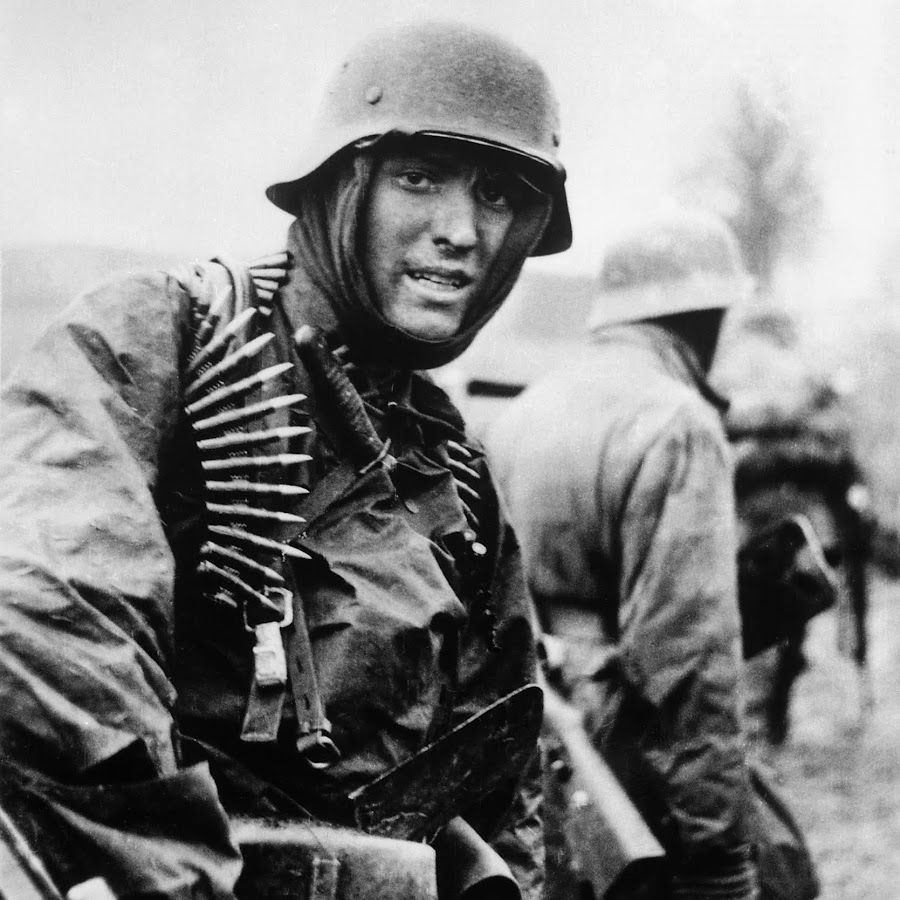
German soldier:
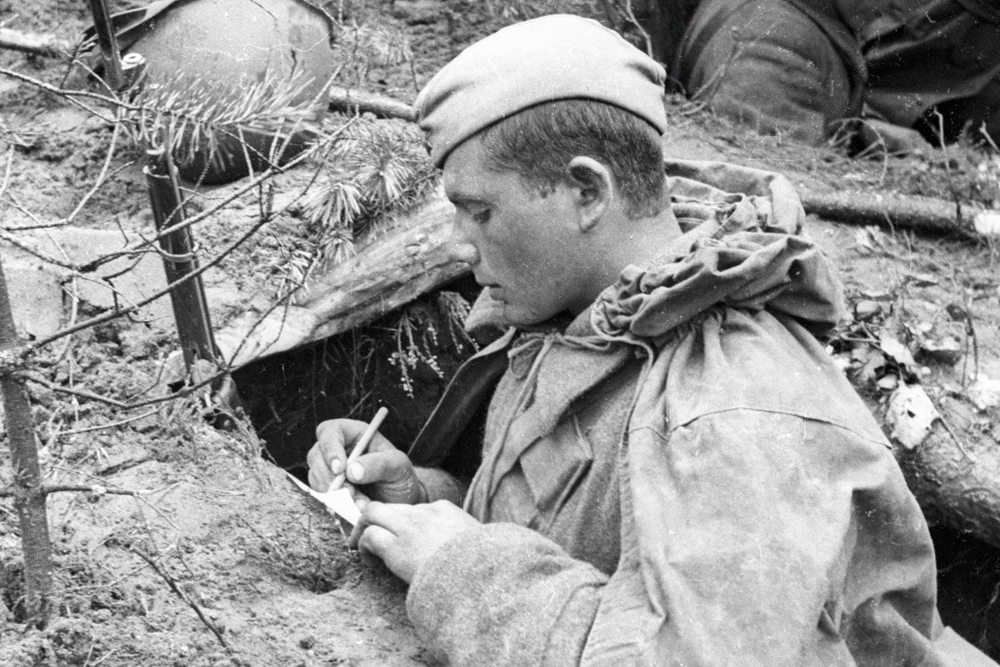
Soviet soldier:
The USSR liberates all of Europe and takes Berlin in Germany:

Great Patriotic War of the Soviet Union 1941-45 A just, liberation war of the Soviet people for the freedom and independence of the socialist Motherland against fascist Germany and its allies (Italy, Hungary, Romania, Finland, and in 1945 Japan). The war against the USSR was unleashed by German fascism - the dictatorship of the most reactionary and aggressive forces of imperialism, which sought to destroy the world's first socialist state. Was the most important and decisive component of the Second World War 1939-45
View attachment 54811
Type: historical reenactment
Genre: docudrama
Year of production: 2011
Number of episodes: 18
Episode 1-18 with English voiceover, this story is removed to YouTube and banned from showing in many countries. Because now Russia is being erased from all history books and history books are being rewritten, distorting history: Soviet Storm: WW2 in the East (2011) | WatchDocumentaries.com
When the whole world saw that the USSR would win the war on its own, the Allies decided to open the 2nd front in 1944. Of course, we are grateful to England and the USA for their help. But opening the 2nd front at least in 1941, the help would have been much better when we asked for it.
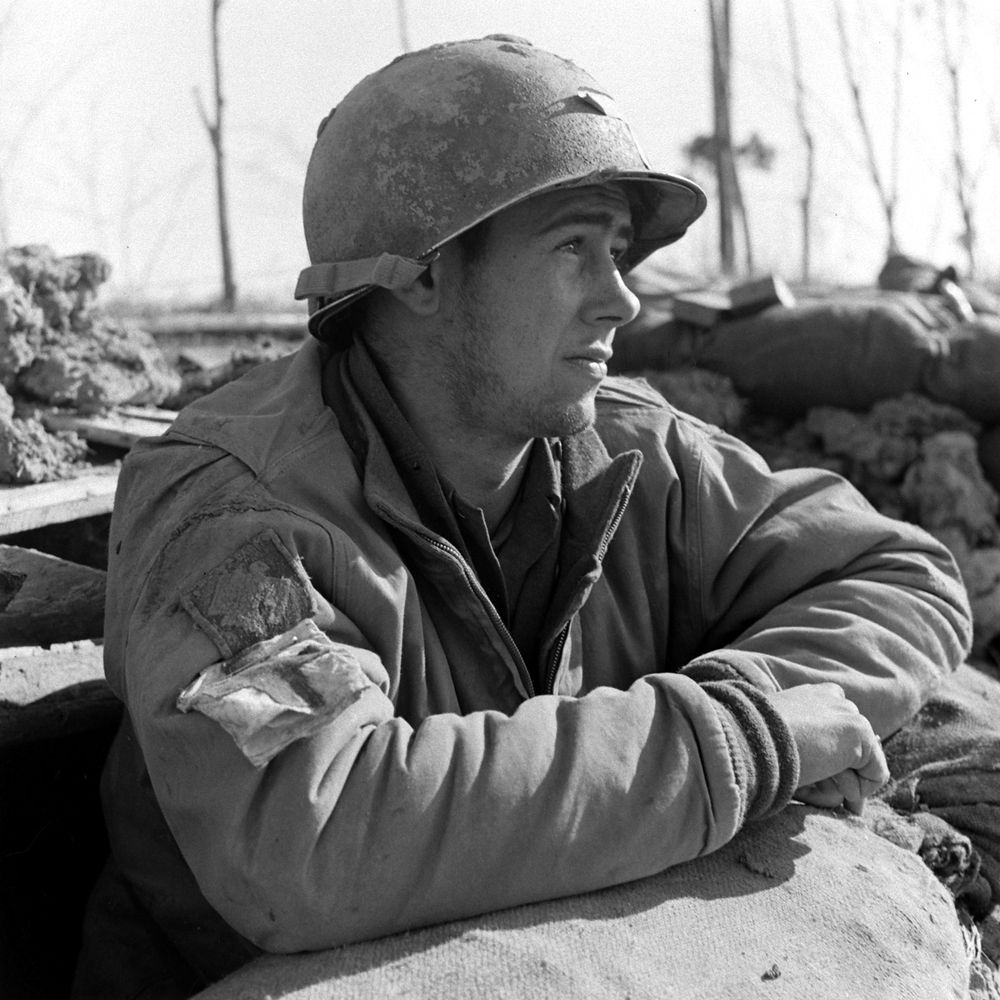
American soldier:
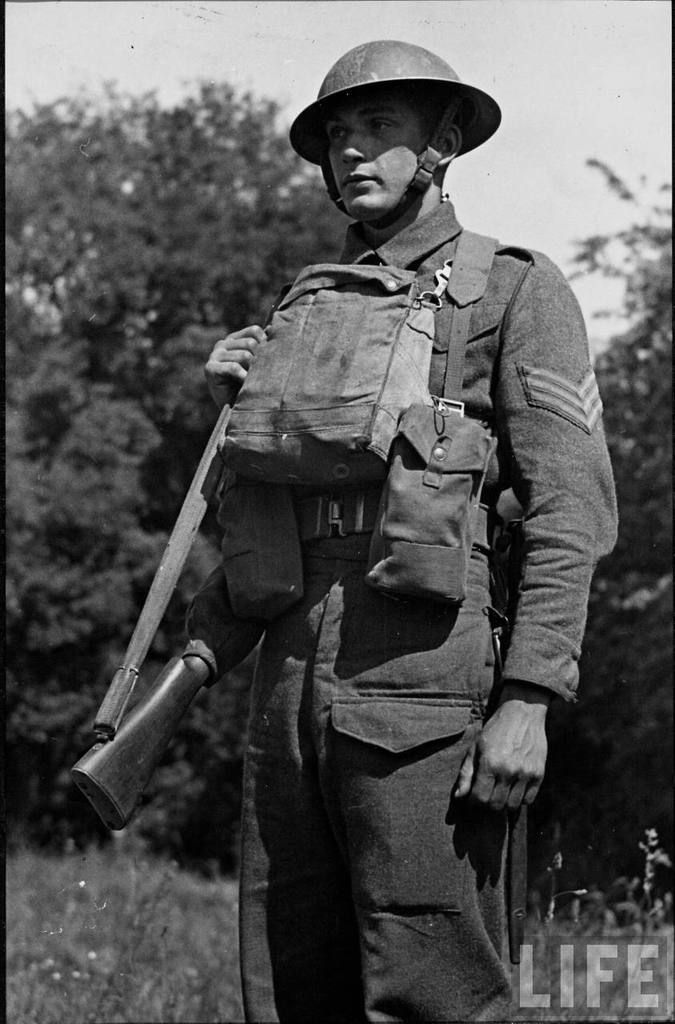
English soldier:
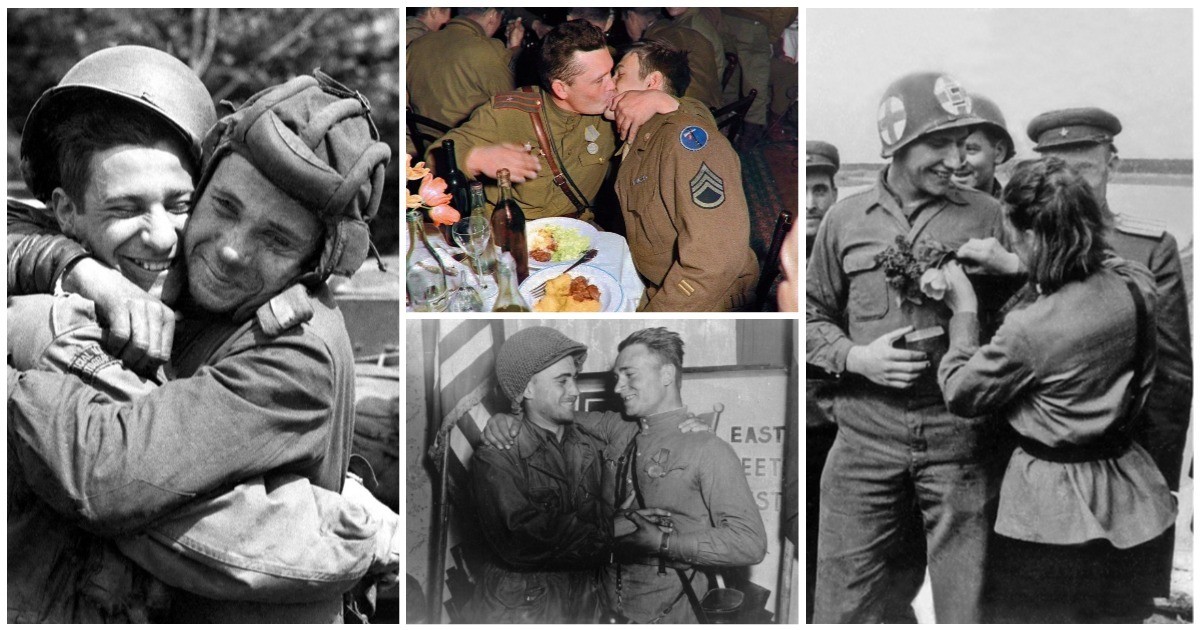
Soviet soldiers and allied soldiers in a friendly atmosphere.
The Great Patriotic War lasted 4 years - from 22 June 1941 to 9 May 1945. During this time, more than 27 million Soviet citizens did not return home, including not only dead soldiers, but also civilians who died during the war or were taken to other territories.
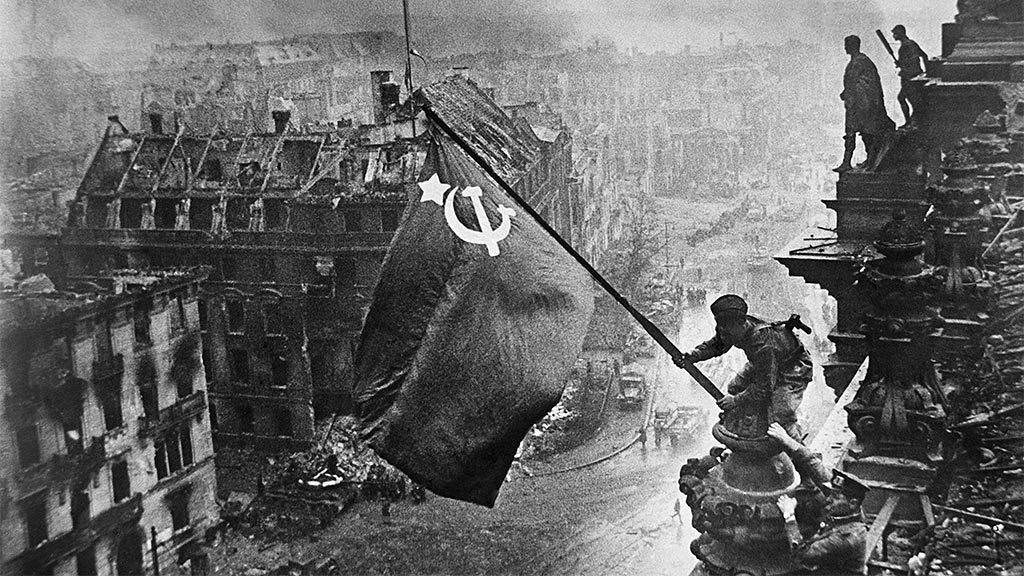
World War II is the bloodiest catastrophe in human history. Over six years (1939–1945), the world lost between 70 and 85 million people. But these numbers hide the fates of entire nations, cities, and families. Let's go through the countries and remember how the war changed them forever.
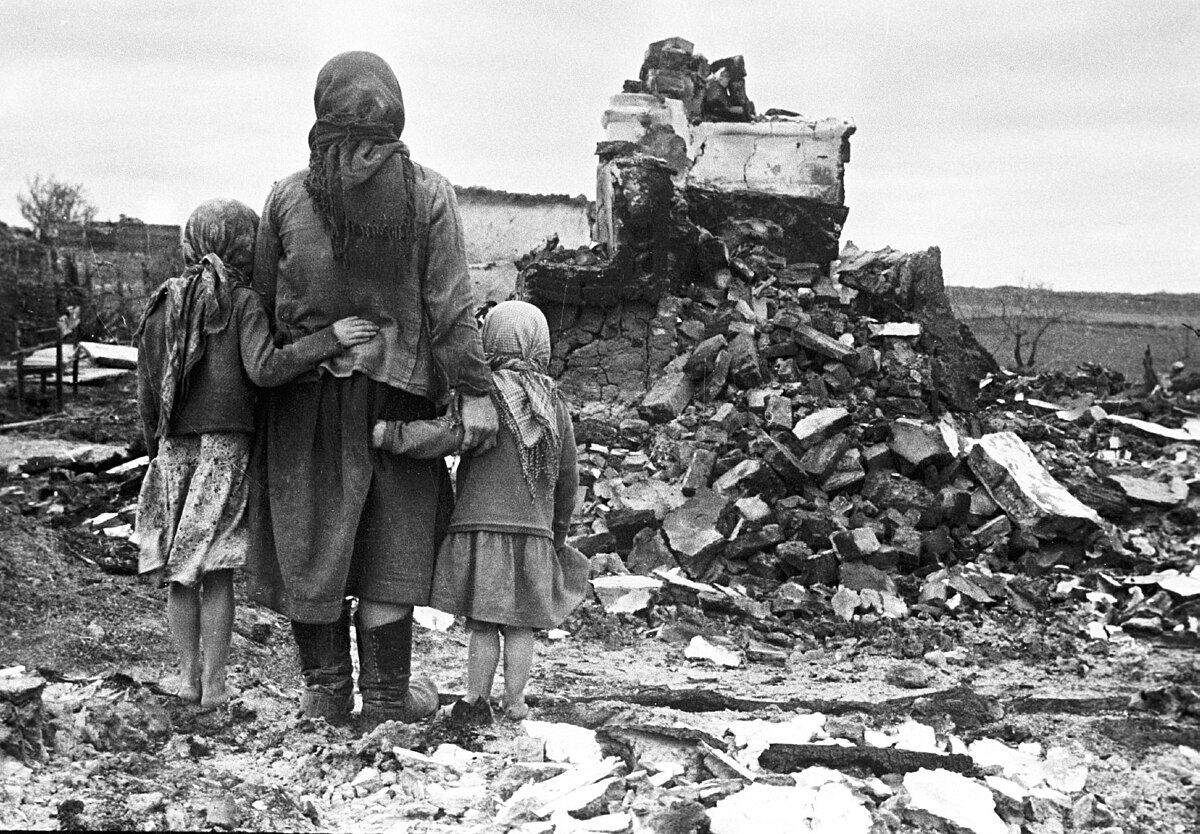
Soviet Union: More than 27 million dead
The USSR suffered the heaviest losses. Every fourth soldier and every seventh citizen of the country died. The siege of Leningrad, mass shootings, burned villages — about 13–15 million civilians died in the occupied territories. Stalingrad, the Kursk Bulge, the Battle of Berlin — each operation took hundreds of thousands of lives. These are not just numbers — these are empty houses, broken families, unlearned lessons for children.
---
Germany: 6-7 million
The Third Reich, which started the war, lost up to 5.3 million soldiers and about 1.5 million civilians. Allied bombings razed Hamburg and Dresden to the ground, and millions of refugees died during the retreat. But even these losses pale in comparison to the crimes of Nazism: 6 million Jews fell victim to the Holocaust, and many of them were citizens of Poland, the USSR, and France.
---
Poland: 6 million (including 3 million Jews)
During the years of occupation, 17% of the population died - more than in any other country. The Warsaw Ghetto, death camps (Auschwitz, Treblinka), executions of the intelligentsia - the war became a genocide for the Polish people.
---
China: 15–20 million
The Japanese occupation (1937–45) turned China into a field of mass atrocities: the Nanjing Massacre, biological experiments, famine. The exact numbers are unknown — many died from disease and repression. The war lasted longer here, and its wounds have not yet healed.
--
Japan: 2.5–3 million
After the attacks on Pearl Harbor, the war came to the Japanese islands. The firestorm in Tokyo (100,000 victims per night), the atomic bombs of Hiroshima and Nagasaki (up to 250,000 dead) — the civilian population paid a terrible price for the government's militarism.
--
USA and Great Britain: "lesser" losses against the backdrop of tragedy
- USA: 420,000 dead (military operations in Europe and the Pacific).
- Great Britain: 450,000 (bombing of London, fighting in Africa and Asia).
These countries were tested by the war, but their territories saw almost no ground combat, which explains the lower numbers.
---
Other countries: whose losses are forgotten?
- Yugoslavia: 1–1.7 million (guerrilla warfare and ethnic cleansing).
- France: 600,000 (resistance, bombing, deportations).
- Italy: 450,000 (civil war after the overthrow of Mussolini).
---
Why do the numbers differ?
Historians still argue about the exact data. For example:
- Should we count the deaths from the famine in Bengal (2-3 million), caused by British policy?
- How to count the victims of blockades and epidemics?
- How many people died in the Gulag camps or from repression in the occupied countries?
--
Memory instead of statistics
Behind each number is a person with a name, dreams and fears. The war took children who did not become adults, scientists who did not make discoveries, lovers who did not start families. Today, looking at these numbers, it is important to remember: war does not resolve disputes - it erases the future.
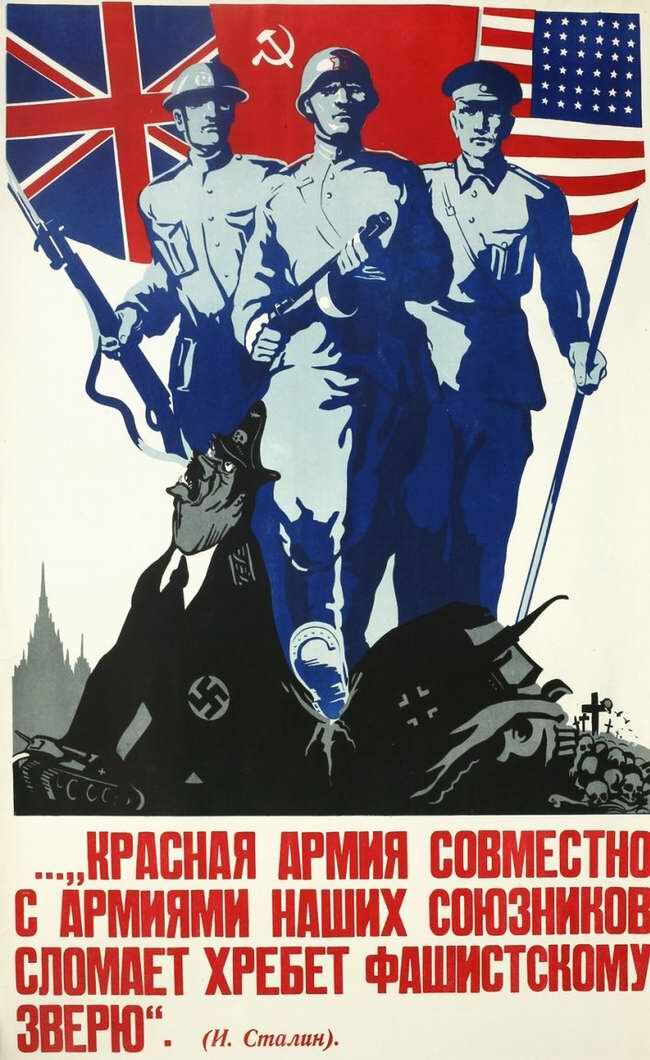
It is widely known that back in 1941, Stalin wrote to Churchill about the need to create a full-fledged "Second Front" in Europe. And in November 1941, Joseph Vissarionovich publicly pointed out the absence of a Second Front in Europe as one of the factors in the difficult situation of the Soviet Union. Like, we are fighting here with all our might, and you are sitting overseas...
In our country, the opening of the Second Front is usually called the landing of Anglo-American troops in Normandy. This was June 1944. Stalingrad and the Kursk Bulge had already happened, and the Battle of Berlin was less than a year away.
On the other hand, the Americans were solving their problems with the Japanese during this same period. The British were fighting in North Africa, at sea. Then there was Italy. Of course, the scale of the forces involved in these operations is difficult to compare with the scale of the "Eastern Front".
And there are several points of view on this situation with the delay in opening the "large land" Second Front, and all of them are quite justified. In short:
1. Fear of further strengthening of the USSR's position on the world stage, especially in regions "interesting" for the allies. The "spectre of communism" frightened many representatives of the Western elite, and will frighten them for a long time.
2. Quite logical state interests of the USA and Great Britain. For example. Winston Churchill had a very clear goal: preserving the colonial British Empire. Of course, the USSR can be supported, but not too much, so as not to overexert ourselves in the process. Here is a good quote:
"The fact that the Russians are suffering does not mean that we should suffer too. We must make our enemy suffer..." (c) V.M. Falin. The Second Front. The Anti-Hitler Coalition: Conflict of Interests.
That is why Churchill, throughout almost the entire Second World War, was a supporter of the gradual weakening of the Third Reich, with minimal losses for his Britain. And he was sharply against the immediate opening of the Second Front or even the strengthening of the "Soviet" front: they say, we will only waste our resources there in vain.
3. One more point can be deduced from point number two. It consists in the fact that the Anti-Hitler Coalition was a temporary and rather shaky alliance of very different states against a common enemy, its importance should not be overestimated. To be honest, I am sometimes surprised myself, how they did not "fight" in the process. I think that the leaders played an important role here - Churchill, Roosevelt, and Stalin.
4. But if the leaders of the great powers still somehow agreed among themselves, then part of the British and American elites could be less friendly. Therefore, many American companies continued to trade with Hitler "in a roundabout way" or talk about "isolationism".
The US and UK government systems assumed that the different interests of different influential groups should be taken into account. By 1943, the point of view that it was worth creating a bloc with the "new Germany" (in which the conspirators had overthrown Hitler) had become popular.
Then the USSR would not have received Eastern Europe in its sphere of influence. There was a plan that assumed landing troops without any resistance from German troops. To rake in the heat with someone else's hands? Why not?
"The British and the Americans, who were close to them in sentiment, believed that it would be enough if Russia emerged from the war not as a Soviet one and with limited opportunities to influence the political climate in Europe and Asia. There is no need to even talk about other continents..." (c) V.M. Falin. The Second Front. The Anti-Hitler Coalition: Conflict of Interests.
5. There was also a purely military reason, which also cannot be discounted, it is significant. The fact is that the British were constantly suffering defeats from the Germans (Norway, Dunkirk, Crete, Dieppe), and in general, their land army was small and inexperienced. A couple more high-profile defeats could have changed the political climate in Great Britain itself.
I can't call the American army experienced either, it was strong, first of all, in industry, weapons and supplies. In addition, the Yankees spent a lot of resources on lend-lease and on the naval war with the Japanese. Although Roosevelt personally was much more supportive of the idea of the Second Front than Churchill, he promoted this idea "slowly". Why? Because he didn't want to risk and set part of the "political and economic vertical" against himself. Plus, a large-scale operation required large-scale preparation.
6. And one more thing. As we know, for the USSR, this war with the Nazis was literally a war of extermination. And for the Americans, for the British? What did they lose in case of defeat? Part of the colonial empire and some spheres of influence? There was virtually no fighting on American soil. They also had to explain to their soldiers what they were fighting for in continental Europe.
Therefore, there is a whole complex of reasons that together led to such a late opening of the Second Front in France. Which of these reasons was decisive? I will not judge, because in this case the question moves from the historical to the political plane. Let everyone decide for themselves.
Source of the article: Яндекс
German soldier:
Soviet soldier:
The USSR liberates all of Europe and takes Berlin in Germany:
Great Patriotic War of the Soviet Union 1941-45 A just, liberation war of the Soviet people for the freedom and independence of the socialist Motherland against fascist Germany and its allies (Italy, Hungary, Romania, Finland, and in 1945 Japan). The war against the USSR was unleashed by German fascism - the dictatorship of the most reactionary and aggressive forces of imperialism, which sought to destroy the world's first socialist state. Was the most important and decisive component of the Second World War 1939-45
View attachment 54811
Type: historical reenactment
Genre: docudrama
Year of production: 2011
Number of episodes: 18
Episode 1-18 with English voiceover, this story is removed to YouTube and banned from showing in many countries. Because now Russia is being erased from all history books and history books are being rewritten, distorting history: Soviet Storm: WW2 in the East (2011) | WatchDocumentaries.com
When the whole world saw that the USSR would win the war on its own, the Allies decided to open the 2nd front in 1944. Of course, we are grateful to England and the USA for their help. But opening the 2nd front at least in 1941, the help would have been much better when we asked for it.
American soldier:
English soldier:
Soviet soldiers and allied soldiers in a friendly atmosphere.
The War That Took Millions: How Many Lives Did World War II Take by Country
The Great Patriotic War lasted 4 years - from 22 June 1941 to 9 May 1945. During this time, more than 27 million Soviet citizens did not return home, including not only dead soldiers, but also civilians who died during the war or were taken to other territories.
World War II is the bloodiest catastrophe in human history. Over six years (1939–1945), the world lost between 70 and 85 million people. But these numbers hide the fates of entire nations, cities, and families. Let's go through the countries and remember how the war changed them forever.
Soviet Union: More than 27 million dead
The USSR suffered the heaviest losses. Every fourth soldier and every seventh citizen of the country died. The siege of Leningrad, mass shootings, burned villages — about 13–15 million civilians died in the occupied territories. Stalingrad, the Kursk Bulge, the Battle of Berlin — each operation took hundreds of thousands of lives. These are not just numbers — these are empty houses, broken families, unlearned lessons for children.
---
Germany: 6-7 million
The Third Reich, which started the war, lost up to 5.3 million soldiers and about 1.5 million civilians. Allied bombings razed Hamburg and Dresden to the ground, and millions of refugees died during the retreat. But even these losses pale in comparison to the crimes of Nazism: 6 million Jews fell victim to the Holocaust, and many of them were citizens of Poland, the USSR, and France.
---
Poland: 6 million (including 3 million Jews)
During the years of occupation, 17% of the population died - more than in any other country. The Warsaw Ghetto, death camps (Auschwitz, Treblinka), executions of the intelligentsia - the war became a genocide for the Polish people.
---
China: 15–20 million
The Japanese occupation (1937–45) turned China into a field of mass atrocities: the Nanjing Massacre, biological experiments, famine. The exact numbers are unknown — many died from disease and repression. The war lasted longer here, and its wounds have not yet healed.
--
Japan: 2.5–3 million
After the attacks on Pearl Harbor, the war came to the Japanese islands. The firestorm in Tokyo (100,000 victims per night), the atomic bombs of Hiroshima and Nagasaki (up to 250,000 dead) — the civilian population paid a terrible price for the government's militarism.
--
USA and Great Britain: "lesser" losses against the backdrop of tragedy
- USA: 420,000 dead (military operations in Europe and the Pacific).
- Great Britain: 450,000 (bombing of London, fighting in Africa and Asia).
These countries were tested by the war, but their territories saw almost no ground combat, which explains the lower numbers.
---
Other countries: whose losses are forgotten?
- Yugoslavia: 1–1.7 million (guerrilla warfare and ethnic cleansing).
- France: 600,000 (resistance, bombing, deportations).
- Italy: 450,000 (civil war after the overthrow of Mussolini).
---
Why do the numbers differ?
Historians still argue about the exact data. For example:
- Should we count the deaths from the famine in Bengal (2-3 million), caused by British policy?
- How to count the victims of blockades and epidemics?
- How many people died in the Gulag camps or from repression in the occupied countries?
--
Memory instead of statistics
Behind each number is a person with a name, dreams and fears. The war took children who did not become adults, scientists who did not make discoveries, lovers who did not start families. Today, looking at these numbers, it is important to remember: war does not resolve disputes - it erases the future.
Why were the US and Great Britain in no hurry to open the Second Front?
It is widely known that back in 1941, Stalin wrote to Churchill about the need to create a full-fledged "Second Front" in Europe. And in November 1941, Joseph Vissarionovich publicly pointed out the absence of a Second Front in Europe as one of the factors in the difficult situation of the Soviet Union. Like, we are fighting here with all our might, and you are sitting overseas...
In our country, the opening of the Second Front is usually called the landing of Anglo-American troops in Normandy. This was June 1944. Stalingrad and the Kursk Bulge had already happened, and the Battle of Berlin was less than a year away.
On the other hand, the Americans were solving their problems with the Japanese during this same period. The British were fighting in North Africa, at sea. Then there was Italy. Of course, the scale of the forces involved in these operations is difficult to compare with the scale of the "Eastern Front".
And there are several points of view on this situation with the delay in opening the "large land" Second Front, and all of them are quite justified. In short:
1. Fear of further strengthening of the USSR's position on the world stage, especially in regions "interesting" for the allies. The "spectre of communism" frightened many representatives of the Western elite, and will frighten them for a long time.
2. Quite logical state interests of the USA and Great Britain. For example. Winston Churchill had a very clear goal: preserving the colonial British Empire. Of course, the USSR can be supported, but not too much, so as not to overexert ourselves in the process. Here is a good quote:
"The fact that the Russians are suffering does not mean that we should suffer too. We must make our enemy suffer..." (c) V.M. Falin. The Second Front. The Anti-Hitler Coalition: Conflict of Interests.
That is why Churchill, throughout almost the entire Second World War, was a supporter of the gradual weakening of the Third Reich, with minimal losses for his Britain. And he was sharply against the immediate opening of the Second Front or even the strengthening of the "Soviet" front: they say, we will only waste our resources there in vain.
3. One more point can be deduced from point number two. It consists in the fact that the Anti-Hitler Coalition was a temporary and rather shaky alliance of very different states against a common enemy, its importance should not be overestimated. To be honest, I am sometimes surprised myself, how they did not "fight" in the process. I think that the leaders played an important role here - Churchill, Roosevelt, and Stalin.
4. But if the leaders of the great powers still somehow agreed among themselves, then part of the British and American elites could be less friendly. Therefore, many American companies continued to trade with Hitler "in a roundabout way" or talk about "isolationism".
The US and UK government systems assumed that the different interests of different influential groups should be taken into account. By 1943, the point of view that it was worth creating a bloc with the "new Germany" (in which the conspirators had overthrown Hitler) had become popular.
Then the USSR would not have received Eastern Europe in its sphere of influence. There was a plan that assumed landing troops without any resistance from German troops. To rake in the heat with someone else's hands? Why not?
"The British and the Americans, who were close to them in sentiment, believed that it would be enough if Russia emerged from the war not as a Soviet one and with limited opportunities to influence the political climate in Europe and Asia. There is no need to even talk about other continents..." (c) V.M. Falin. The Second Front. The Anti-Hitler Coalition: Conflict of Interests.
5. There was also a purely military reason, which also cannot be discounted, it is significant. The fact is that the British were constantly suffering defeats from the Germans (Norway, Dunkirk, Crete, Dieppe), and in general, their land army was small and inexperienced. A couple more high-profile defeats could have changed the political climate in Great Britain itself.
I can't call the American army experienced either, it was strong, first of all, in industry, weapons and supplies. In addition, the Yankees spent a lot of resources on lend-lease and on the naval war with the Japanese. Although Roosevelt personally was much more supportive of the idea of the Second Front than Churchill, he promoted this idea "slowly". Why? Because he didn't want to risk and set part of the "political and economic vertical" against himself. Plus, a large-scale operation required large-scale preparation.
6. And one more thing. As we know, for the USSR, this war with the Nazis was literally a war of extermination. And for the Americans, for the British? What did they lose in case of defeat? Part of the colonial empire and some spheres of influence? There was virtually no fighting on American soil. They also had to explain to their soldiers what they were fighting for in continental Europe.
Therefore, there is a whole complex of reasons that together led to such a late opening of the Second Front in France. Which of these reasons was decisive? I will not judge, because in this case the question moves from the historical to the political plane. Let everyone decide for themselves.
Source of the article: Яндекс


