Soviet Storm. World War 2 in the East, Russian History (documentary video)

Russian Bear

後輩
Joined
7 Jul 2025
Messages
43
Reaction score
41
Germany attacks and conquers European countries:
German soldier:
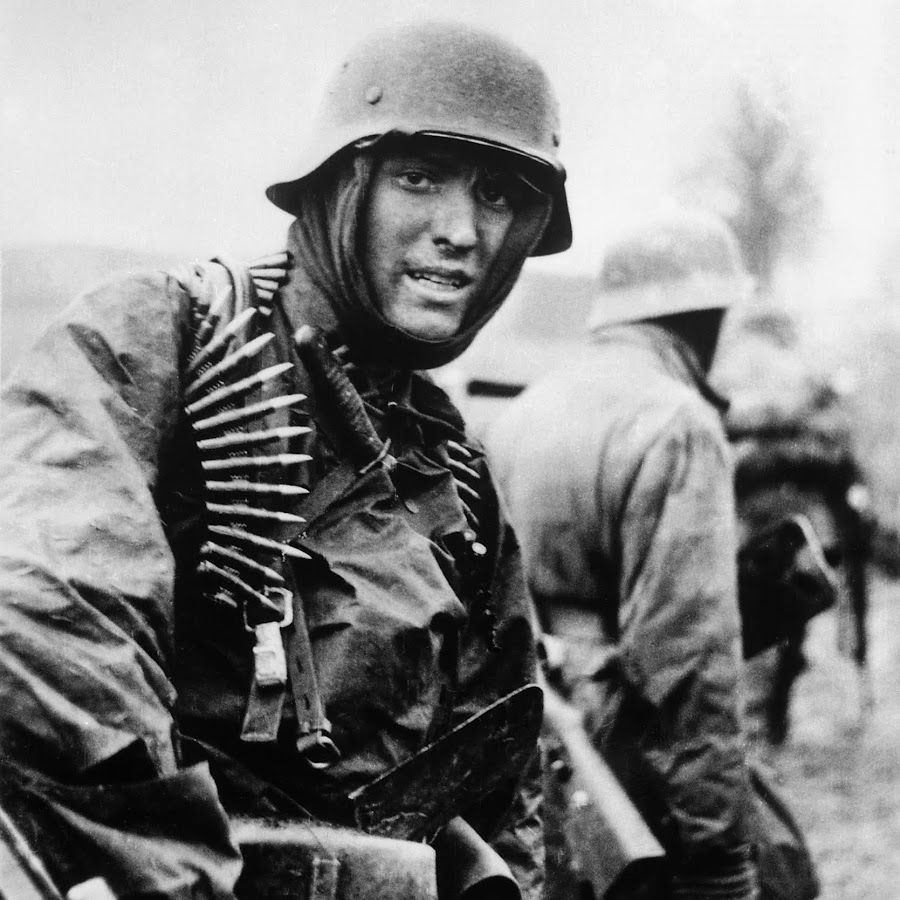
AIdro_l0rKBEHAvgERRhqkXVBckAveRDzMYD02RQsCtth1EEgiw=s900-c-k-c0x00ffffff-no-rj.jpeg


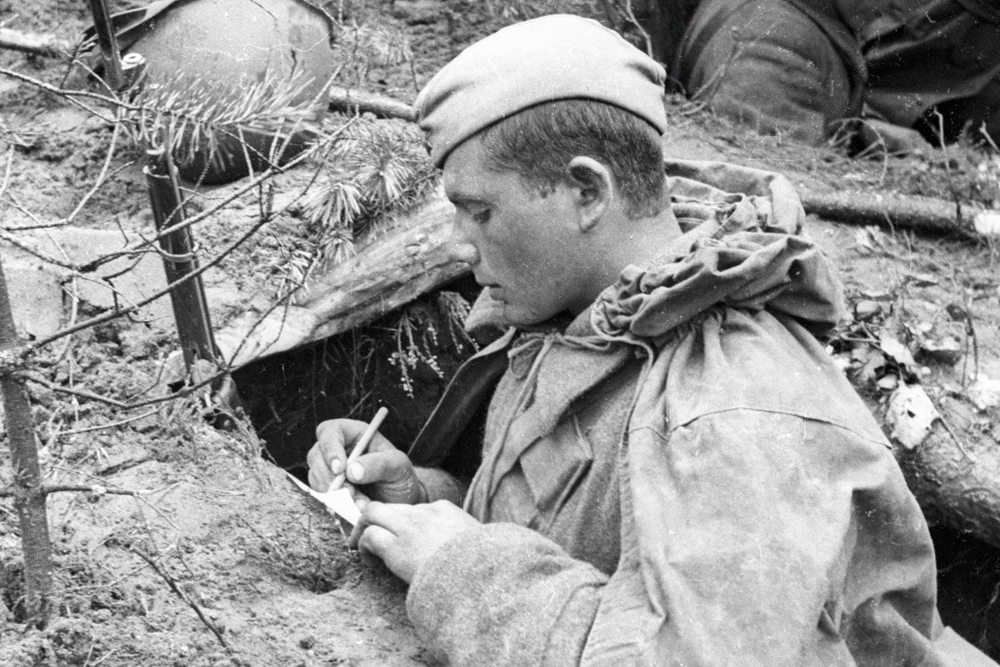
Soviet soldier:

boec1.jpg


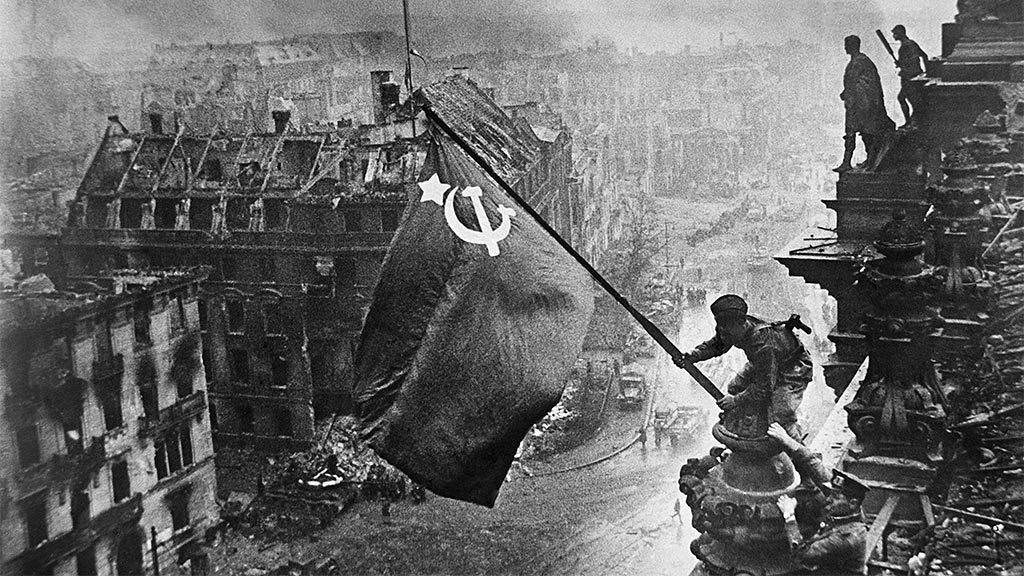
The USSR liberates all of Europe and takes Berlin in Germany:

attachment.php


Great Patriotic War of the Soviet Union 1941-45 A just, liberation war of the Soviet people for the freedom and independence of the socialist Motherland against fascist Germany and its allies (Italy, Hungary, Romania, Finland, and in 1945 Japan). The war against the USSR was unleashed by German fascism - the dictatorship of the most reactionary and aggressive forces of imperialism, which sought to destroy the world's first socialist state. Was the most important and decisive component of the Second World War 1939-45

View attachment 54811
Type: historical reenactment
Genre: docudrama
Year of production: 2011
Number of episodes: 18

Episode 1-18 with English voiceover, this story is removed to YouTube and banned from showing in many countries. Because now Russia is being erased from all history books and history books are being rewritten, distorting history: Soviet Storm: WW2 in the East (2011) | WatchDocumentaries.com


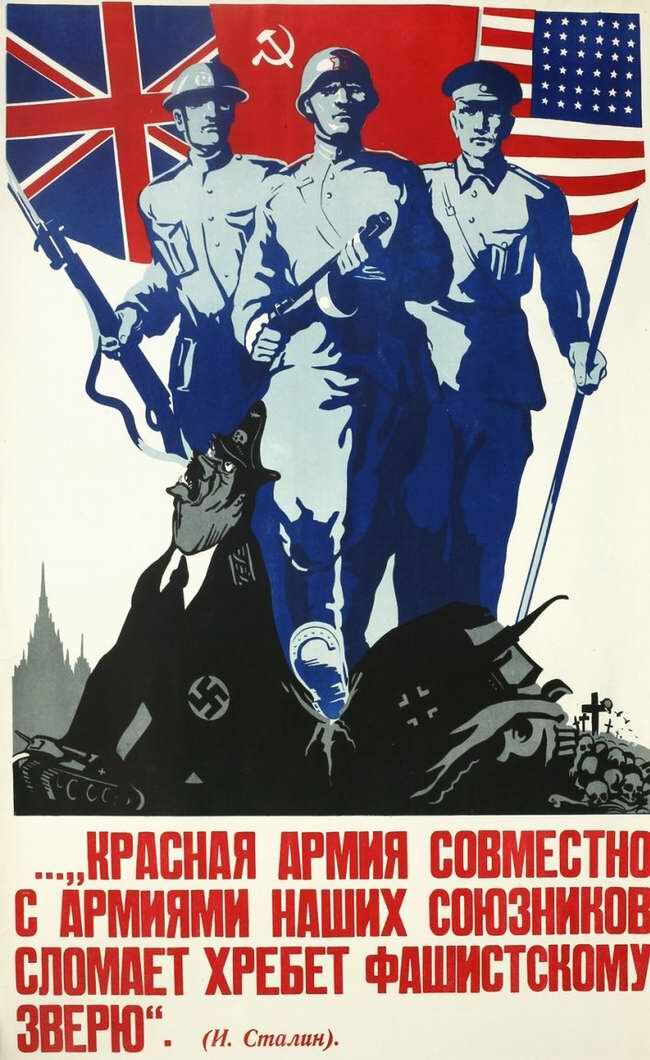
When the whole world saw that the USSR would win the war on its own, the Allies decided to open the 2nd front in 1944. Of course, we are grateful to England and the USA for their help. But opening the 2nd front at least in 1941, the help would have been much better when we asked for it.


American soldier:
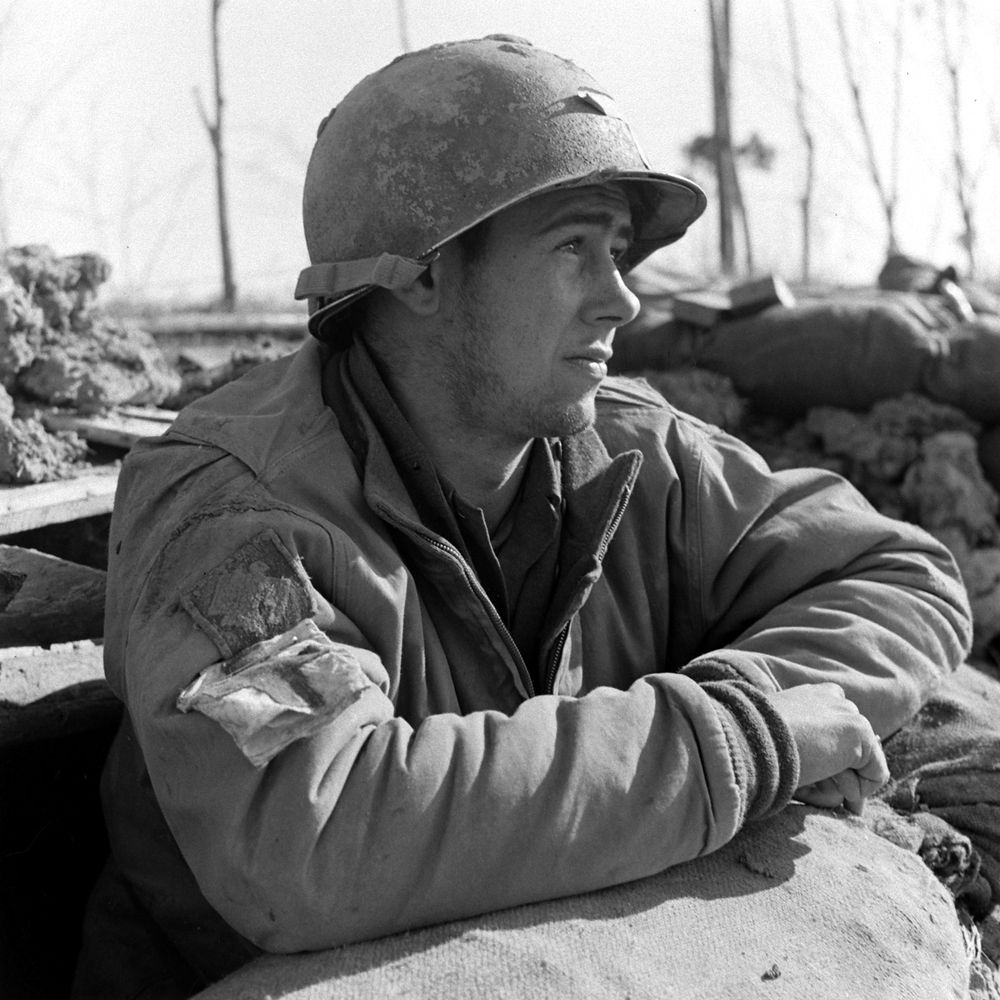
406b6a94f6a5a29021d297bed3842e93.jpg


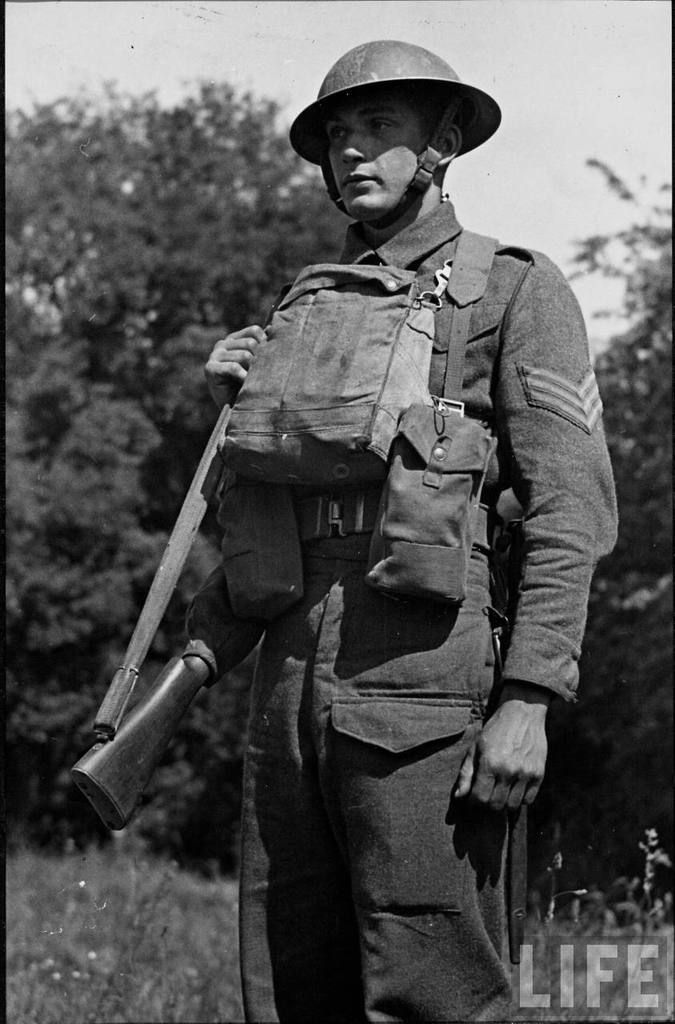
English soldier:

a0540e1a6d5c10ec49d12cc0568f8325.jpg


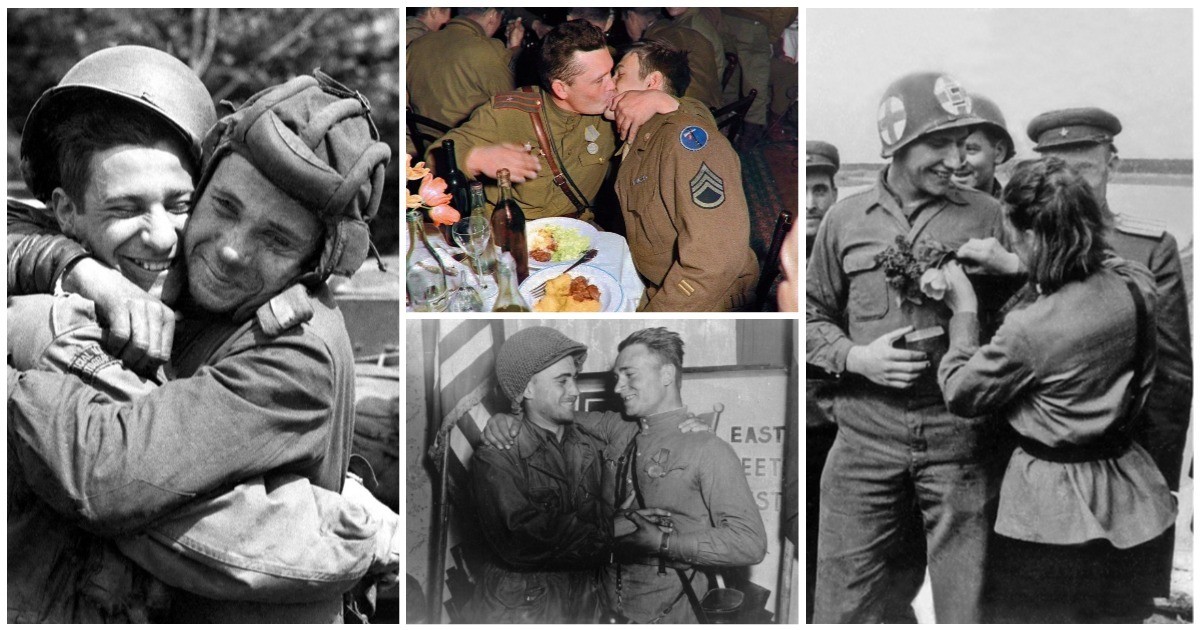
bezymjannyj-kollazh-3.jpg


Soviet soldiers and allied soldiers in a friendly atmosphere.


The War That Took Millions: How Many Lives Did World War II Take by Country

The Great Patriotic War lasted 4 years - from 22 June 1941 to 9 May 1945. During this time, more than 27 million Soviet citizens did not return home, including not only dead soldiers, but also civilians who died during the war or were taken to other territories.

scale_1200.jpeg


World War II is the bloodiest catastrophe in human history. Over six years (1939–1945), the world lost between 70 and 85 million people. But these numbers hide the fates of entire nations, cities, and families. Let's go through the countries and remember how the war changed them forever.
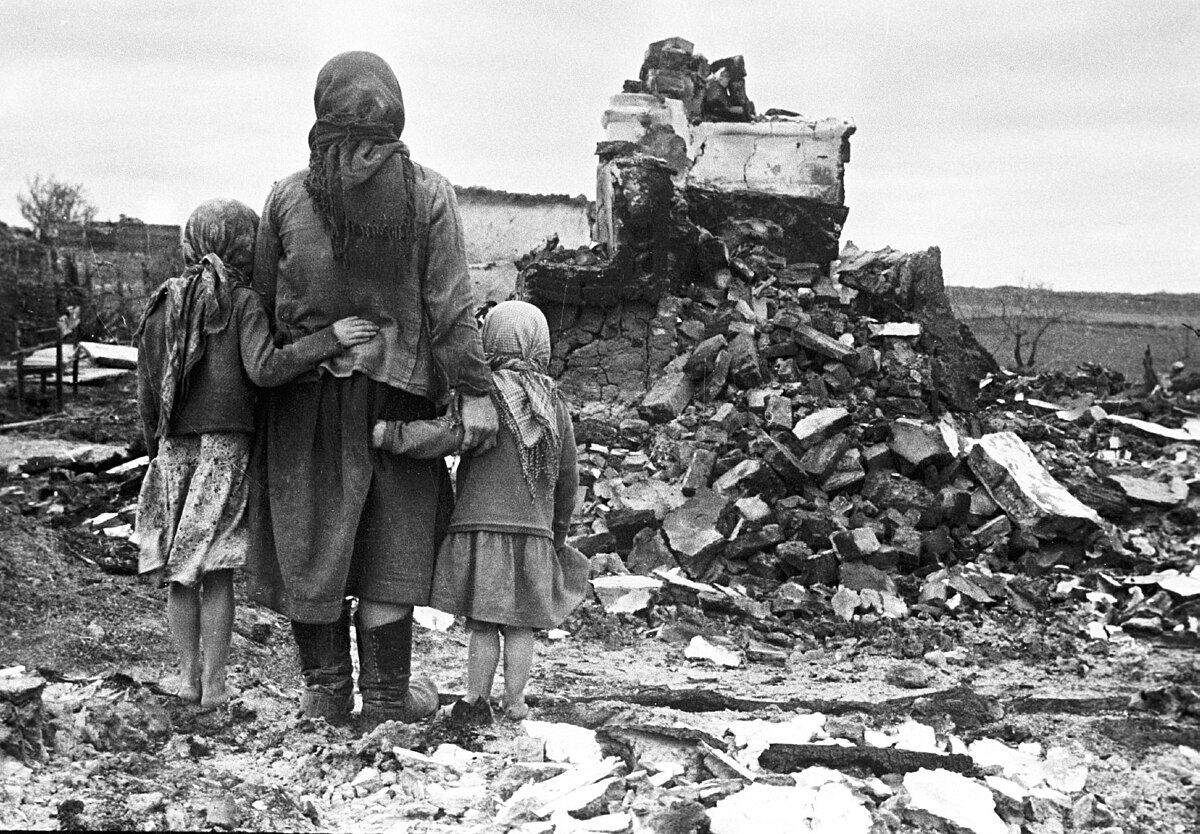
1200px-RIAN_archive_982_Ruins_of_a_house.jpg


Soviet Union: More than 27 million dead

The USSR suffered the heaviest losses. Every fourth soldier and every seventh citizen of the country died. The siege of Leningrad, mass shootings, burned villages — about 13–15 million civilians died in the occupied territories. Stalingrad, the Kursk Bulge, the Battle of Berlin — each operation took hundreds of thousands of lives. These are not just numbers — these are empty houses, broken families, unlearned lessons for children.

---

Germany: 6-7 million

The Third Reich, which started the war, lost up to 5.3 million soldiers and about 1.5 million civilians. Allied bombings razed Hamburg and Dresden to the ground, and millions of refugees died during the retreat. But even these losses pale in comparison to the crimes of Nazism: 6 million Jews fell victim to the Holocaust, and many of them were citizens of Poland, the USSR, and France.

---

Poland: 6 million (including 3 million Jews)

During the years of occupation, 17% of the population died - more than in any other country. The Warsaw Ghetto, death camps (Auschwitz, Treblinka), executions of the intelligentsia - the war became a genocide for the Polish people.

---

China: 15–20 million

The Japanese occupation (1937–45) turned China into a field of mass atrocities: the Nanjing Massacre, biological experiments, famine. The exact numbers are unknown — many died from disease and repression. The war lasted longer here, and its wounds have not yet healed.

--

Japan: 2.5–3 million

After the attacks on Pearl Harbor, the war came to the Japanese islands. The firestorm in Tokyo (100,000 victims per night), the atomic bombs of Hiroshima and Nagasaki (up to 250,000 dead) — the civilian population paid a terrible price for the government's militarism.

--

USA and Great Britain: "lesser" losses against the backdrop of tragedy

- USA: 420,000 dead (military operations in Europe and the Pacific).

- Great Britain: 450,000 (bombing of London, fighting in Africa and Asia).


These countries were tested by the war, but their territories saw almost no ground combat, which explains the lower numbers.

---

Other countries: whose losses are forgotten?

- Yugoslavia: 1–1.7 million (guerrilla warfare and ethnic cleansing).

- France: 600,000 (resistance, bombing, deportations).

- Italy: 450,000 (civil war after the overthrow of Mussolini).


---

Why do the numbers differ?

Historians still argue about the exact data. For example:

- Should we count the deaths from the famine in Bengal (2-3 million), caused by British policy?

- How to count the victims of blockades and epidemics?

- How many people died in the Gulag camps or from repression in the occupied countries?

--

Memory instead of statistics

Behind each number is a person with a name, dreams and fears. The war took children who did not become adults, scientists who did not make discoveries, lovers who did not start families. Today, looking at these numbers, it is important to remember: war does not resolve disputes - it erases the future.
scale_1200.jpeg


Why were the US and Great Britain in no hurry to open the Second Front?

It is widely known that back in 1941, Stalin wrote to Churchill about the need to create a full-fledged "Second Front" in Europe. And in November 1941, Joseph Vissarionovich publicly pointed out the absence of a Second Front in Europe as one of the factors in the difficult situation of the Soviet Union. Like, we are fighting here with all our might, and you are sitting overseas...

In our country, the opening of the Second Front is usually called the landing of Anglo-American troops in Normandy. This was June 1944. Stalingrad and the Kursk Bulge had already happened, and the Battle of Berlin was less than a year away.

On the other hand, the Americans were solving their problems with the Japanese during this same period. The British were fighting in North Africa, at sea. Then there was Italy. Of course, the scale of the forces involved in these operations is difficult to compare with the scale of the "Eastern Front".

And there are several points of view on this situation with the delay in opening the "large land" Second Front, and all of them are quite justified. In short:

1. Fear of further strengthening of the USSR's position on the world stage, especially in regions "interesting" for the allies. The "spectre of communism" frightened many representatives of the Western elite, and will frighten them for a long time.

2. Quite logical state interests of the USA and Great Britain. For example. Winston Churchill had a very clear goal: preserving the colonial British Empire. Of course, the USSR can be supported, but not too much, so as not to overexert ourselves in the process. Here is a good quote:

"The fact that the Russians are suffering does not mean that we should suffer too. We must make our enemy suffer..." (c) V.M. Falin. The Second Front. The Anti-Hitler Coalition: Conflict of Interests.

That is why Churchill, throughout almost the entire Second World War, was a supporter of the gradual weakening of the Third Reich, with minimal losses for his Britain. And he was sharply against the immediate opening of the Second Front or even the strengthening of the "Soviet" front: they say, we will only waste our resources there in vain.

3. One more point can be deduced from point number two. It consists in the fact that the Anti-Hitler Coalition was a temporary and rather shaky alliance of very different states against a common enemy, its importance should not be overestimated. To be honest, I am sometimes surprised myself, how they did not "fight" in the process. I think that the leaders played an important role here - Churchill, Roosevelt, and Stalin.

4. But if the leaders of the great powers still somehow agreed among themselves, then part of the British and American elites could be less friendly. Therefore, many American companies continued to trade with Hitler "in a roundabout way" or talk about "isolationism".

The US and UK government systems assumed that the different interests of different influential groups should be taken into account. By 1943, the point of view that it was worth creating a bloc with the "new Germany" (in which the conspirators had overthrown Hitler) had become popular.

Then the USSR would not have received Eastern Europe in its sphere of influence. There was a plan that assumed landing troops without any resistance from German troops. To rake in the heat with someone else's hands? Why not?

"The British and the Americans, who were close to them in sentiment, believed that it would be enough if Russia emerged from the war not as a Soviet one and with limited opportunities to influence the political climate in Europe and Asia. There is no need to even talk about other continents..." (c) V.M. Falin. The Second Front. The Anti-Hitler Coalition: Conflict of Interests.

5. There was also a purely military reason, which also cannot be discounted, it is significant. The fact is that the British were constantly suffering defeats from the Germans (Norway, Dunkirk, Crete, Dieppe), and in general, their land army was small and inexperienced. A couple more high-profile defeats could have changed the political climate in Great Britain itself.

I can't call the American army experienced either, it was strong, first of all, in industry, weapons and supplies. In addition, the Yankees spent a lot of resources on lend-lease and on the naval war with the Japanese. Although Roosevelt personally was much more supportive of the idea of the Second Front than Churchill, he promoted this idea "slowly". Why? Because he didn't want to risk and set part of the "political and economic vertical" against himself. Plus, a large-scale operation required large-scale preparation.

6. And one more thing. As we know, for the USSR, this war with the Nazis was literally a war of extermination. And for the Americans, for the British? What did they lose in case of defeat? Part of the colonial empire and some spheres of influence? There was virtually no fighting on American soil. They also had to explain to their soldiers what they were fighting for in continental Europe.

Therefore, there is a whole complex of reasons that together led to such a late opening of the Second Front in France. Which of these reasons was decisive? I will not judge, because in this case the question moves from the historical to the political plane. Let everyone decide for themselves.

Source of the article: Яндекс
 
Molotov-Ribbentrop Pact. Historical background
The non-aggression treaty between the USSR and Germany, better known as the Molotov-Ribbentrop Pact, was signed in Moscow on August 23, 1939. According to some historians, this document largely contributed to the outbreak of World War II, while others believe that it helped to delay its outbreak. In addition, the pact largely determined the fate of Latvians, Estonians, Lithuanians, as well as Western Ukrainians, Belarusians, and Moldovans: as a result of the pact, these peoples, many of whom united for the first time in their history as part of a single state, almost completely merged into the Soviet Union. Despite the adjustments made to the fates of these peoples by the collapse of the USSR in 1991, the Molotov-Ribbentrop Pact still determines many geopolitical realities in modern Europe.

According to the non-aggression pact, the Soviet Union and Germany pledged to "refrain from any violence, any aggressive action and any attack against each other, both individually and jointly with other powers." Moreover, both parties promised not to support coalitions of other countries whose actions could be against the parties to the agreement. Thus, the idea of "collective security" in Europe was buried. It became impossible to restrain the actions of the aggressor (and Nazi Germany was preparing to become one) by joint efforts of peace-loving countries. The pact was signed by the Minister of Foreign Affairs of the Soviet Union Vyacheslav Molotov and the Minister of Foreign Affairs of Germany Joachim von Ribbentrop. A secret additional protocol was attached to the treaty, which determined the delimitation of the Soviet and German spheres of influence in Eastern Europe in the event of "territorial reorganization." The treaty was ratified by the Supreme Soviet of the USSR a week after its signing, and the existence of the "secret additional protocol", which was never ratified, was hidden from the deputies. And the very next day after the ratification of the treaty, on September 1, 1939, Germany attacked Poland.

In full accordance with the secret protocol, the original of which was found in the archives of the Politburo of the CPSU Central Committee only in the mid-1990s, German troops in 1939 did not enter the eastern regions of Poland, populated mainly by Belarusians and Ukrainians, or the territory of Latvia, Lithuania and Estonia. Soviet troops subsequently entered all of these territories. On September 17, 1939, Soviet troops entered the territory of the eastern regions of Poland. In 1939-1940, relying on the left-wing political forces in these countries, the Stalinist leadership established control over Latvia, Lithuania and Estonia, and as a result of the military conflict with Finland, also attributed to the sphere of interests of the USSR by the secret protocol, it tore away from this country part of Karelia and the territories adjacent to Leningrad (now the city of St. Petersburg).

As Winston Churchill, Prime Minister of Great Britain (1940-1945), wrote in his memoirs, the fact that such an agreement between Berlin and Moscow was possible meant the failure of English and French diplomacy: they failed to direct Nazi aggression against the USSR, nor to make the Soviet Union their ally before the start of World War II. Nevertheless, the USSR cannot be called an unambiguous winner from the pact, although the country received an additional two years of peacetime and significant additional territories near its western borders.

As a result of the pact, Germany avoided a war on two fronts in 1939-1944, having successively defeated Poland, France and small European countries and having received an army with two years of combat experience for the attack on the USSR in 1941. Thus, according to many historians, Nazi Germany can be considered the main winner from the pact. ("Soviet Historiography", published by the Russian State University for the Humanities, 1992).

Political assessment of the pact
The main text of the non-aggression pact, although it signified a sharp turn in the ideology of the USSR, which had previously sharply condemned fascism, did not go beyond the framework of the international relations practice accepted before the Second World War. For example, Poland concluded a similar pact with Nazi Germany in 1934, and other countries also concluded or attempted to conclude such treaties. However, the secret protocol attached to the pact certainly ran counter to international law.

On August 28, 1939, an explanation was signed to the "secret additional protocol", which delimited spheres of influence "in the event of a territorial and political reorganization of the regions that are part of the Polish State". The USSR's zone of influence included the territory of Poland to the east of the line of the Pissa, Narew, Bug, Vistula, and San rivers. This line roughly corresponded to the so-called "Curzon Line", along which it was proposed to establish the eastern border of Poland after the First World War. In addition to Western Ukraine and Western Belarus, the Soviet negotiators also declared their interest in Bessarabia, lost in 1919, and received a satisfactory response from the German side, which declared its "complete political disinterest" in these areas. Subsequently, this territory became part of the Moldavian SSR within the USSR. (For more details, see the book "1939: Lessons of History", Institute of General History of the USSR Academy of Sciences, 1990, p. 452.)

Since the provisions of the secret protocol, developed by Stalin's leadership together with Hitler's confidants, were clearly illegal, both Stalin and Hitler preferred to hide this document from the international community and from their own peoples and authorities, with the exception of an extremely narrow circle of people. The existence of this protocol in the Soviet Union was hidden until 1989, when a special Commission for the Political and Legal Assessment of the Pact, formed by the Congress of People's Deputies of the USSR, presented the Congress with evidence of the existence of this document. Having received this evidence, the Congress of People's Deputies of the USSR condemned the secret protocol in a resolution of December 24, 1989, emphasizing that this protocol, along with other Soviet-German agreements, "lost force at the moment of Germany's attack on the USSR, that is, on June 22, 1941."

While recognizing the immorality of the secret agreement between Stalin and Hitler, the pact and its protocols cannot be considered outside the context of the military-political situation that had developed in Europe at the time. According to Stalin's plans, the Soviet-German pact was to be a response to the policy of "appeasement" of Hitler that Great Britain and France had been pursuing for several years, which was aimed at causing a quarrel between the two totalitarian regimes and turning Hitler's aggression primarily against the USSR.

By 1939, Germany had reclaimed and militarized the Rhineland, completely rearmed its army in violation of the Treaty of Versailles, annexed Austria, and established control over Czechoslovakia. Following Hitler, Hungary and Poland made claims to Czechoslovakian territories, and they also received pieces of that country's territory.

In many ways, the policy of the Western powers also led to this sad result - on September 29, 1938, the heads of government of Great Britain, France, Germany and Italy signed an agreement in Munich on the dismemberment of Czechoslovakia, which went down in Russian history as the "Munich Conspiracy".

On March 22, 1939, Wehrmacht troops occupied the Lithuanian port of Klaipeda (German name - Memel), and soon Hitler approved a plan to occupy Poland. Therefore, the often heard today assertions that the "trigger" of World War II was allegedly only the Molotov-Ribbentrop Pact, do not correspond to reality. Sooner or later, Hitler would have started a war against Poland even without the pact with the USSR, and most European countries at one time or another in the period 1933-1941 tried to come to an agreement with Nazi Germany, thereby only encouraging Hitler to new conquests. Up until August 23, 1939, all the great European powers - Great Britain, France, and the USSR - negotiated with Hitler and with each other. (For details on the negotiations in Moscow in the summer of 1939, see "1939: Lessons of History," pp. 298-308.)

By mid-August, the multilateral negotiations entered a decisive phase. Each side pursued its own goals. By August 19, the Anglo-French-Soviet negotiations had reached a dead end. The Soviet government agreed to the visit of German Foreign Minister Ribbentrop to Moscow on August 26-27. Hitler in a personal message to Stalin asked for consent for Ribbentrop to come to Moscow on August 22, or at the latest on August 23. Moscow responded with consent, and 14 hours after Ribbentrop's arrival, a non-aggression pact was signed between Germany and the Soviet Union.

Moral assessment of the pact
Immediately after its signing, the pact was criticized by many participants in the international communist movement and by representatives of other left-wing forces. Even without knowing about the existence of secret protocols, these people saw in the pact an inconceivable for adherents of leftist ideology collusion with the darkest imperialist reaction - Nazism. Many researchers even consider the pact to be the beginning of the crisis of the international communist movement, since it deepened Stalin's mistrust of foreign communist parties and contributed to the dissolution of the Communist International by Stalin in 1943. After the war, realizing that the pact was tarnishing his reputation as the main anti-fascist on the planet, Stalin made every effort to justify the pact in Soviet and world historiography. The task was complicated by the fact that German documents fell into the hands of the Americans, who occupied the western part of Germany, allowing one to assume the existence of secret protocols to the pact. Therefore, in 1948, with the participation of Stalin (as many researchers believe, by him personally), a "historical report" was prepared under the title "Falsifiers of History". The provisions of this report formed the basis of the official Soviet interpretation of the events of 1939-1941, which remained unchanged until the end of the eighties. The essence of the "reference" was that the pact was a "brilliant" move by the Soviet leadership, which allowed the use of "inter-imperialist contradictions" between the Western bourgeois democracies and Nazi Germany. Without the conclusion of the pact, the USSR would allegedly have inevitably become a victim of the "crusade" of the capitalist countries against the first socialist state. The provisions of the "historical report" in the Soviet Union could not be disputed even after Stalin's death, it's just that in school and university textbooks under Khrushchev and Brezhnev, his name was more often replaced by words like "the country's leadership" or "Soviet diplomacy". (Source: "Soviet Historiography", published by the Russian State University for the Humanities, 1992.) This continued until the Gorbachev reforms of the late 1980s, when the participants of the first Congress of People's Deputies of the USSR demanded that the circumstances of the conclusion of the pact, which in many ways contributed to the annexation of a number of its territories to the Soviet Union, be clarified.

On December 24, 1989, the Congress of People's Deputies of the USSR, at that time the highest authority in the Soviet Union, adopted a resolution "On the political and legal assessment of the Soviet-German non-aggression pact of 1939", officially condemning the secret protocols as "an act of personal power" that in no way reflected "the will of the Soviet people, who bear no responsibility for this conspiracy". It was emphasized that "negotiations with Germany on the secret protocols were conducted by Stalin and Molotov in secret from the Soviet people, the Central Committee of the All-Union Communist Party (Bolsheviks) and the entire party, the Supreme Soviet and the Government of the USSR".

The consequences of this "conspiracy" are felt to this day, poisoning relations between Russia and the peoples affected by the Stalin-Hitler protocol. In the Baltic states, these events are proclaimed as a prelude to the "annexation" of Latvia, Lithuania and Estonia. On this basis, far-reaching conclusions are drawn about relations with today's Russia and the status of ethnic Russians in these countries, who are presented as "occupiers" or "colonists". In Poland, memories of the secret protocols to the pact become a justification for equating Nazi Germany and Stalin's USSR in moral terms, the resulting denigration of the memory of Soviet soldiers, or even for regretting the lack of a coalition between Poland and Nazi Germany for a joint attack on the USSR. The moral unacceptability of such an interpretation of the events of those years, according to Russian historians, follows at least from the fact that none of the approximately 600 thousand Soviet soldiers who died liberating Poland from the Nazis knew anything about the secret protocol to the Molotov-Ribbentrop Pact.

The material was prepared on the basis of information from open sources


Soviet-Finnish War 1939-1940
The Soviet–Finnish War of 1939–1940 (the Soviet–Finnish War, known in Finland as the Winter War) was an armed conflict between the USSR and Finland from November 30, 1939 to March 12, 1940.
The war was the result of the extreme aggravation of interstate relations, caused by the entire course of development of the European military-political situation, which resulted in the beginning of World War II.
The Finnish leadership, which considered the Soviet Union the only potential enemy posing a threat to the country's independence, tried to oppose it in every way. In addition, nationalist sentiments were strong in the country, which aimed to expand the state's borders to the east. It was believed that at least the Kola Peninsula and Karelia should be annexed to Finland.

For the USSR, Finland was a neighbor whose territory could be used to deploy troops of more serious opponents. In the late 1930s, the Soviet leadership saw Germany and Poland, with whom Finland had close contacts, as its main potential opponents.
In the face of the threat of German aggression, the Soviet Union sought to strengthen the security of the northwestern borders of the USSR and improve its military-strategic position. According to the Tartu Peace Treaty of October 14, 1920, concluded between the RSFSR and Finland, the Soviet-Finnish border on the Karelian Isthmus ran 32 kilometers from Leningrad (now St. Petersburg). The northern shore of the Gulf of Finland opposite Kronstadt was Finnish territory, and the islands in the Gulf of Finland that belonged to Finland made it difficult for the Soviet fleet to enter the Baltic Sea. Thus, the border line gave rise to the problem of ensuring mutual security. In an attempt to achieve its goals peacefully, in 1939 the Soviet leadership asked Finland to lease the Hanko Peninsula and several islands in the Gulf of Finland in exchange for a larger Soviet territory in Karelia, with the subsequent conclusion of a mutual assistance treaty. Finland, where pro-German sentiments were strong in government and military circles, refused. It agreed only to slightly move the border north of Leningrad. The Finnish government believed that accepting the Soviet demands would weaken the country's strategic position, lead to Finland losing its neutrality and becoming subordinate to the USSR. The Soviet leadership, in turn, did not want to give up its demands, which, in its opinion, were necessary to ensure the security of Leningrad. After the breakdown of negotiations, the Finnish government avoided considering new Soviet proposals and put its troops on combat alert. The Finnish military group had more than 300 thousand people, 768 guns, 26 tanks, 114 aircraft and 14 warships. The Finnish command concentrated its main forces on the Karelian Isthmus, deploying the Isthmus Army there. The remaining troops covered separate directions from the Barents Sea to Lake Ladoga.

On the Karelian Isthmus, the Finns created a powerful, for that time, long-term defense line – the "Mannerheim Line", which ran from Lake Ladoga to the Gulf of Finland, 32 kilometers from Leningrad. Its total length was 135 kilometers, and its depth was up to 95 kilometers. It included a forward (obstacle zone), main, second and rear (Vyborg) defense lines, two intermediate lines and cut-off positions. It had several echeloned lines of obstacles (forest blockages, wire nets, granite obstacles, anti-tank ditches, minefields, etc.) and strong points with long-term (pillbox) and wood-and-earth (dzot) firing points, which covered the main roads and inter-lake defiles (passages). In total, there were 220 kilometers of barbed wire, 200 kilometers of forest blockages, and 80 kilometers of antitank obstacles. In addition, the "Mannerheim Line" was based on numerous natural obstacles (sharply rugged terrain, impassable forests, numerous lakes, channels, and swamps).
The Soviet leadership, realizing that it would not be possible to reach an agreement, decided to intensify preparations for a military operation. Like other states bordering the USSR, Finland was considered a potential enemy in Moscow, and the General Staff of the Workers' and Peasants' Red Army (RKKA) prepared a plan for military operations against Finland and Estonia in the spring of 1939 in the context of the USSR's war with Germany and its ally Poland. The plan was to defeat the Finnish armed forces, followed by the establishment of a regime friendly to the USSR. By the end of November 1939, a Soviet group of 425,000 men, about 1,600 guns, 1,478 tanks, and almost 1,200 aircraft had been concentrated near the border with Finland. It was supported by about 500 aircraft and more than 200 ships from the Northern and Baltic fleets. 40% of the Soviet forces were deployed on the Karelian Isthmus.

The war was triggered by artillery shelling of Soviet troops near the border in the area of the village of Mainila on November 26, 1939, for which the Soviet government blamed the Finnish side. It was reported that four Soviet soldiers were killed and nine wounded as a result of the shelling.
During the "perestroika" period, several versions of the Mainila incident became known. According to one of them, the shelling of the positions of Soviet soldiers was carried out by a secret NKVD unit. According to another, there was no shooting at all, and on November 26, no Soviet soldiers were killed or wounded. There were also other versions that did not receive documentary confirmation.
The exchange of notes with mutual demands for the withdrawal of troops from the border that began after the incident led to the Soviet side announcing the non-aggression pact on November 28. On November 29, the Finnish envoy to Moscow was handed a note about the severance of diplomatic relations between the USSR and Finland. On November 30, 1939, after a thirty-minute artillery barrage, Soviet troops crossed the border with Finland and began an offensive on the front from the Barents Sea to the Gulf of Finland. That same day, Finnish President Kyesti Kallio declared war on the USSR.
The fighting took place in a lake-forested area in harsh winter conditions (40-45°C below zero) and deep snow, which made it impossible to move off-road. The heaviest battles took place on the Karelian Isthmus. In 10-13 days, Soviet troops in certain areas overcame the operational barrier zone and reached the main strip of the "Mannerheim Line", but were unable to break through it.
By this time, the Baltic Fleet had successfully carried out landing operations to capture a number of islands in the Gulf of Finland and blockaded the coast of the Gulf of Bothnia and the Gulf of Finland. In the Barents Sea area, Soviet troops occupied Petsamo (now Pechenga), and then the Rybachy and Sredny peninsulas.
Further actions of the Red Army units in the area from the Barents Sea to Lake Ladoga were reduced mainly to unsuccessful attempts to resume the offensive and unblock the encircled forces.
At the end of December, the Soviet command decided to stop further offensive and begin preparing for a breakthrough. In early 1940, the troops were reinforced. On the Karelian Isthmus (the main direction), they were united into the Northwestern Front (Commander 1st Rank Semyon Timoshenko).
In total, the Soviet troops deployed against Finland had 1.3 million people, 3.5 thousand guns, 1.5 thousand tanks, and over 2.7 thousand aircraft. By this time, the Finnish side had 600 thousand people, 600 guns, and 350 aircraft. Finland received a significant portion of weapons and ammunition from Great Britain, Sweden and other countries. Up to 12 thousand foreign volunteers arrived to the Finnish army.

On February 11, 1940, hostilities resumed - the troops of the Northwestern Front, after a 2-3-hour artillery preparation, went on the offensive. They began to storm the fortifications on the Karelian Isthmus. Having broken through two lines of defense, Soviet troops reached the third line on the approaches to Vyborg on February 28. Developing the offensive, they surrounded the Vyborg group of Finnish troops from the northeast, captured most of Vyborg, forced the Vyborg Bay, bypassed the Vyborg fortified area from the northwest, and cut the highway to Helsinki. The fall of the Mannerheim Line and the defeat of the main group of Finnish troops put the enemy in a difficult position. Under these conditions, Finland, despite the opposition of Great Britain, the USA and France, turned to the Soviet government with a request for peace. The negotiations, which began in Moscow on March 7, 1940, ended on March 12 with the signing of a peace treaty, according to which hostilities ceased at 12:00 on March 13.
In accordance with the treaty, the border on the Karelian Isthmus was moved 120-130 kilometers away from Leningrad. The Soviet Union received the entire Karelian Isthmus with Vyborg, the Vyborg Bay with its islands, the western and northern shores of Lake Ladoga, a number of islands in the Gulf of Finland, and part of the Rybachy and Sredny Peninsulas. The Hanko Peninsula and the sea territory around it were leased to the USSR for 30 years. This improved the position of the Baltic Fleet.
Soviet troops were withdrawn from the Petsamo (Pechenga) region, voluntarily ceded by Finland to the USSR, according to the 1920 peace treaty.
The Soviet Union and its citizens were granted the right of free transit through the Petsamo region to Norway and back. The Finnish government granted the USSR the right to transit goods between the USSR and Sweden.
Finland also pledged not to establish military ports on the northern coast and not to maintain military vessels in these waters, except for small units; not to enter into any alliances and not to participate in coalitions directed against one of the contracting parties.
The losses of the Soviet troops in the war were: irretrievable - about 130 thousand people, sanitary - about 265 thousand people. There were also large losses in military equipment, especially in tanks, armored vehicles and aircraft. Irretrievable losses of the Finnish troops amounted to about 23 thousand people, sanitary - over 43 thousand people.
As a result of the Soviet-Finnish War, the main strategic goal pursued by the Soviet leadership was achieved - to secure the northwestern border. However, the international position of the Soviet Union worsened: it was expelled from the League of Nations, relations with England and France worsened, an anti-Soviet campaign unfolded in the West. Finland's entry into the war against the USSR on the side of Nazi Germany in 1941 led to the termination of the 1940 treaty.
(Additional source: Military Encyclopedia. Voenizdat. Moscow. In 8 volumes. 2004)

The material was prepared on the basis of information from open sources

I translated historical links from Russian to English:
1) Советско-финляндская война 1939-1940 годов
2) Пакт Молотова-Риббентропа. Историческая справка
 
What would the world be like if the Red Army had not liberated Europe from the Nazis
slide-28.jpg

Liberation of Eastern Europe 1944-1945

After the complete liberation of the USSR from the Germans in 1944, the Red Army began its liberation mission in Europe.

We live in a time when many values are being re-evaluated. I do not want to say that everything new is bad. But new problems arise, new events occur that prompt us to look into history and reconsider it. Liberals ask themselves: "Why did the Red Army go to Europe? It was aggression! It was necessary to liberate our Motherland and protect the borders. It was not worth interfering in the affairs of Europeans." This is often said so convincingly that you want to believe it. My opinion: you should not believe it. Let's start from the plans hatched by the war criminal Adolf Hitler.


What fate awaited Europe
The basis of the Nazi foreign policy program in Germany was the plans to establish complete domination over the European continent. In his article "Europe in the Conquest Plans of German Fascism", Doctor of Historical Sciences, Professor V.I. Dashichev says that in order to establish world power, the Germans had to assert their dominion over Europe. Gaushofer's theory stated that whoever controls Eastern Europe from the Elbe to the Volga controls the entire central continent. Whoever controls the continent also controls the continents of Europe, Africa and Asia and, ultimately, the entire world. In 1939, K. Schmitt expressed the idea of the dominance of a superior race that would form an empire of "alien forces" from the USA and England. The Soviet Union was viewed as an enemy, from whose lands large parts should be torn off for the "great space" of the Germans. Ribbentrop put forward the doctrine of "Europe for the Germans", similar to the American Monroe Doctrine - "America for the Americans". Germany's power over Europe was to become undivided. V.I. Dashichev writes that the documents and statements of Nazi Germany outline the general plan of the Hitlerite expansion program. First, the countries of Western Europe were to be conquered, then a campaign against the USSR, its defeat and the seizure of its wealth. Second, the establishment of dominance over the USA and the assertion of world hegemony. According to the Nazis' plans, France and England were to be transformed into third-rate states with complete dependence on Germany. France was to be dismembered, Brittany and Burgundy were to be populated with South Tyroleans. England was to be brought to its knees, and its colonies were to be conquered by Germany. The introduction of German criminal law, concentration camps and executions were envisaged for the English. The population of Central and Eastern Europe was to be reduced to slavery, with subsequent gradual extermination and resettlement. The inhabitants of Norway, Holland, Sweden and Denmark were to be assimilated and subjected to Germanization, depriving them of their own culture and national characteristics. Hitler considered methods of depopulating nations, considering himself entitled to destroy millions of people of the "inferior race" without the slightest regret. The Slavs were planned to be exterminated by murder, deliberate famine, birth rate reduction, elimination of medical care and extermination of the intelligentsia. According to the general plan "Ost", the Nazis wanted to resettle 50% of the Czechs to Siberia, and Germanize the rest. The inhabitants of Poland were destined to become cheap slaves, and the state itself was to be destroyed - its territories would be included in the Reich. After the end of the war, Hitler planned to physically exterminate all Poles. The German authorities considered all these plans seriously, and if the Red Army had limited itself to liberating its own country, many of them - those that concerned the countries of Europe and the world - could well have been realized.


The Nazis' Plunder of the Nation of Europe
As A.I. Utkin writes in his book "The Second World War", at the end of the war, in 1944, Nazism was already losing ground, but still continued to bleed other nations dry. In May 1944, Hitler instructed his Minister of Agriculture to exploit the fertile part of the still occupied Ukraine as efficiently as possible. At the same time, the Nazis continued to plunder European countries. The main wealth of this country - a thin layer of fertile soil - was taken from the Netherlands. Skilled workers were driven from France to Germany, and human resources representing cheap labor for Germany were sent from Eastern Europe. In total, in 1944, 4 million people driven from Eastern Europe were engaged in slave labor in the Nazi state. At that time, the Nazis feverishly resettled German citizens in the conquered territories. One million Germans were resettled in western Poland, while 700,000 Poles were expelled from their country. If the Red Army had not stopped the Germans, death would have awaited all of Europe. But the Soviet troops, having liberated their territory, began a liberation campaign in Eastern and Central Europe.


Concentration Camps and the Extermination of Jews in Europe
In the territory of European countries - Poland, Austria, Czechoslovakia, Belgium and Germany itself, a total of 1,188 death camps were created. The world first learned about everything that the Nazis did there after the liberation of Lublin, Poland, where the Majdanek concentration camp was located. More than 4 million people were exterminated in Auschwitz. The data is provided by candidate of historical sciences, associate professor V.B.Makovsky, leading researcher at the Research Institute of the Military Academy of the General Staff of the Armed Forces of the Russian Federation in his article "The Liberation Mission of the Red Army in Europe." In total, over 12 years, the Germans drove 18 million people from 30 European countries into concentration camps, where 11 million were physically exterminated. Nazism pursued a policy of genocide against Jews and "inferior" races, which included Slavs, Gypsies and others. By 1942, 54 ghettos had been created in Poland, the largest of which, Warsaw, housed up to 500 thousand Jews, or a third of the city's entire population. After the uprising that broke out in the ghetto was suppressed, the Jews were killed or burned, the rest were sent to the Treblinka death camp.


The Liberation Mission of the Red Army
At the end of March 1944, the Red Army reached the borders of the USSR. Soldiers of the 2nd Ukrainian Front entered Romanian territory. In total, the Red Army liberated 11 European countries from Nazism, which were inhabited by 113 million people. If the Red Army, having driven the invaders out of the Soviet Union, had not crossed its borders and had not pursued and finished off the enemy, it would have ended disastrously for the European countries. Having gathered his forces and enlisted the support of the allies, Hitler would have continued to commit his crimes, enslaving and exterminating the population.

It is possible that some did not want to be released. In general, many were saved, and the plans of the criminal Hitler were not allowed to be realized.
 
Last edited:
Back
Top Bottom