Rape Of Nanking

Rabe is not the only source. Others are not hard to come by...just google it.

The sheer scale of the attrocities in China and the fact that many records were lost (some to firebombings) or intentionally destroyed makes estimates of the actual numbers impossible to come by. Japanese revisionists sieze upon this to reduce the numbers to hundreds of thousands rather than millions-- yet the testimonies, diaries and interview of Japanese soldiers support a much larger number. War time Japanese newspapers boasted of large numbers of civillians killed, recounted decapitation contests, and gave full personal accounts of soldiers bayonette training with live targets. If war is hell, than world war II was a hell like no other.

The barbarity, inhumanity and ferocity of the Japanese attack was no secret in Japan at the time. The kidnapping and daily rape of young girls is very well documented. The torture killings of American pilots was never kept secret. The starvation, forced labor, and inhumane conditions afforded POW's and civillian internees by the Japanese has never been in question. Nanking is one incident--Japan inflicted hundreds of "Nanking" type incidents on China. Japanese conduct in Malaysia, Singapore, Korea, Taiwan and the Phillipines is also well documented. And yet some who are too young to know better would like to change the historical record and make it cleaner and less horrible.

World War II also saw the US shift from condemning arial bombardment of civilian areas in Spain and China by the axis, to the "strategic bombing" of Germany to the all out firebombing of Japan. By the end of WWII, Americans had come to accept the wholesale slaughter of civillians as part of total war. Americans also began to accept the slaughter of some POW's in the Pacific and showed marine pilots strafing shipwrecked Japanese sailors in newsreels (to which the cheerful voice-over announcer remarks,"these japs will be meeting their ancestors." Life Magazine even carried a photo of an officer with a Japanese skull on his desk. By the time we dropped the atomic bombs, 400,000 civillians had been burned to death by firebombs dropped from B29's-- a tactic purposefully designed to kill the maximum number of civillians- a practice condemned by the American press, public and military only seven years earlier.

When the Japanese war machine collapsed in early 1945, millions of Japanese "Pioneers" who were sent to colonize Manchuria and soldiers without supplies were abandoned in China and left to face an enraged Chinese population. Attrocities were returned in kind if not in number. The Soviets sent many of these survivors to Siberian gulags from which few ever returned.

The Japanese military also abandoned hundreds of thousands of its own troops to the advancing Americans-- most of whom died of disease and starvation. Of the 140,000 soldiers left in New Guinea only about 4000 survived. Left without food, water or ammunition and with no hope of rescue, many of these soldiers had resorted to canibalism to survive.

I guess my point is that we should never try to rewrite history because we don't like a part of it. This was an aweful chapter that bears remembering and not repeating.
 
Well said, Sabro!
The problem with Nanjing, though, is that it has become a symbol. Some people ferociously defend the number of 300,000, as if it is some kind of dogma or religion. While there are others who deny this number (or even the event as such) with the same fervor.

As you said, what gets lost in discussions like this are the overall proportions. More than 10 m Chinese died in that war, 2 m Japanese (surprisingly low number, actually. maybe due to Japan being an island).

Interesting, though off topic, Mao & consorts are responsible for many more Chinese deaths than the Japanese. Yet he is still revered by parts of the Chinese population (often exactly those people who show the greatest antipathy towards Japan).
 
bossel said:
You're obviously not a historian. Many events in history have been named after a place in the vicinity or, as in this case, after a centre of events. What's more "Massacre of Nanjing" is just a label, that doesn't mean that it was only one continuous event in only one strictly defined location. It may very well be a chain of events in a chain or cluster of locations. It all depends on the definition.
I'm not a historian.But nanking Incident's definition was obviously changed by the Chinese.
AFAIK,Nanking Incident was defined in Tokyo Trial.It said "after Nanking (city) fell to the Japanese,in the next 6 weeks,Japanese Army killed more than 200,000 people.
bossel said:
Hmm, maybe they did it without good reason?
Japanese soldiers roamed the whole area. As Rabe noted there seemed to be a certain lack of discipline.
One book says the surrounding area is 3 times bigger than the whole Tokyo.It was not easy to go out and kill people just for their desire during their free time.(I don't know whether they had free time or not)
bossel said:
Here is one source for the number of 1m:
http://www.hxwz.com/njmassacre/nj.html
It is the population of Nanking in the middle of 1930's.
And the number of 200,000 was counted by smythe just bofore Nanking fell.
It is quite reasonable to run away from the place where battles will start.

BTW,his website says
December 13th, 1937, Nanking fell to the Japanese. In the next six weeks, the Japanese committed the infamous Nanking Massacre, or the Rape of Nanking, during which an estimated 300,000 Chinese soldiers and civilians were killed, and 20,000 women were raped.
It does not mention "surrounding area" and most of these kind of website do not either.
It is mentioned when the Japanese mention that the population was just about 200,000.That's why I said they changed the definition to hide their errors.
bossel said:
Example for what?
Example of the evidence which proves the number of 300,000.
bossel said:
By "military order", you mean the soldiers had orders to kill the POW's? Well, that would only relate to responsibilities. The fact of a massacre would not be touched.
Yes,they had orders.
And my question is whether Rabe witnessed the Japanese killing civilians knowing they were civilians.
bossel said:
Wrong. They left the safety zone quite often & had a look around.
But Robe didn't.Robe never checked unless people asked him to help woman before she had raped.Indeed,the record of Scharfenberg in 10th Feb.1938 says "these incidents have been heard from the Chinese".

bossel said:
Suspects? Not only, as it seems. Numerous women have been killed after being raped, numerous men seem to have been killed while trying to stop a rape.
The Safety Zone Committee recorded only 23 murders (53 people died).
How can it be proof of 300,000 people's death.
bossel said:
As I said, I had only time to sift through the book & could not thouroughly read it, since I had to return it on Monday. If you're referring to the quote that I got from a website, I haven't found it.
But I have read about numerous instances when Rabe personally witnessed Japanese soldiers raping (or attempts of rape) Chinese women. Whether he himself witnessed killings, I can't say. But when you see Japanese soldiers leading away groups of people, later hear machine guns & then find the bodies of those led away, it's quite easy to assume who killed them.
As far as I read the Rabe's diary from 16th Dec. to 17th of Feb.He never accidentally witnessed raping.He saw only 2 attempts of rape when he was asked to help the victims.
The Safety Zone Committee recorded 175 raping.Robe mentioned 11 raping.
How it can be proof of 20,000 raping?
Robe critisized Japanese Army's behaviour.So it would be much worse than German Army's behaviour.However it does not automatically mean 300,000 killing.
Again,I agree Japanese soldiers killed suspects.
bossel said:
What's more, the Japanese sometimes admitted the killings. Eg. in the case of more than 40 workers at a local power station, reason to kill them: the power station was state property.
Please give me the date of that incident.
 
Luc said:
I know some Chinese people and they get so pissed off if someone calls them a Japanese humm I guess this is a reason:

Between December 1937 and March 1938 at least 369,366 Chinese
civilians and prisoners of war were slaughtered by the invading
troops. An estimated 80,000 women and girls were raped; many of
them were then mutilated or murdered.

Thousands of victims were beheaded, burned, bayoneted, buried
alive, or disemboweled.

To this day the Japanese government has refused to apologize for
these and other World War II atrocities, and a significant sector of
Japanese society denies that they took place at all.

evil:

You are right.

Frankly speaking, Japanese and Chinese governments both are swindlers and cravens because both of them cheat their people and dont have courage to confront their crimes: for Japan-Nanjing Massacre, for China-Chicom's persecution
 
sabro said:
War time Japanese newspapers boasted of large numbers of civillians killed, recounted decapitation contests,
Wrong.It is because you cannot read Japansese article.
The newspaper said 2 soldiers killed more than 100 enemies by swards during the battle.Unsprisingly,it was fiction.However,in Tokyo Trial,it became proof of slaughter a.k.a."decapitation contests" because this article had been mistranslated into English and the title was "Murder Race" and the writer did not admit it was fiction.Even if the contests had happend,the newspaper never boasted that contests.
If you cant believe me,please ask any Japanese to translate that article.
However,the headline just said "competition of 100 kill" and article which we can get on the web is too small to read.

So I recommend to read "Argument 10".Search "Noda"
The Alleged 'Nanking Massacre' Chapter II ÄRu"싞'å‹sŽEv'æ"ñÍ
sabro said:
I guess my point is that we should never try to rewrite history because we don't like a part of it. This was an aweful chapter that bears remembering and not repeating.
People should never try to rewrite true history.
However,people should try to rewrite history which they are convinced is wrong.
At least,the fact that Japanese newspapers boasted of large numbers of civillians killed is simply wrong due to mistranslation.However you thought it was true and many people believe it was true.It is a part of histry which we should rewrite.

To blame revisionists for a lack of remorse is similar to suppression of freedom of speech.
In your opinion,I can't deny the fact that Japanese newspapers boasted of large numbers of civillians killed because it was bad history for Japan.
 
Hmmm, makes me think...

It is always good to get to original sources in the original languages. Because I can't read or speak Japanese I am at a loss in this area and I must depend on secondary sources-- primarily the conclusions of western historians. If I get the time to do it, I will do a bit more research and post it here.

The Rabe diaries and the disputed Decapitation contest articles are only two sources. I Just finished reading Flyboys by James Bradley- it is an excellent book on this subject (although it is a secondary source). I will check into some of the sources he used (including one that gives a 30 million count in China) and see how they panned out. Other sources include Newspaper accounts published in Japan that recount soldiers boasting of wiping out entire areas. The accounts include detailed description of the slaughter. Names and units are given (similar stories were published about American units in the Phillipines slaughtering 10 year olds in 1912.). I have not seen the original articles and I couldn't read them anyway, but I will research these and get back to you.
 
Just came across an article which has a nice brief Japanese historiography of the Nanjing Massacre.

One part very much reminds me of Urecco, quote:

"Ultimately, revisionists realized that it was impossible to deny the truth completely. Even an organization of war veterans now officially acknowledges that at least 10,000 illegal killings took place, that is, at least 10,000 Chinese were massacred in Nanjing [Nankin senshi (1989)]. The revisionists have altered their strategy. They began by claiming that the indiscriminate killing of 200,000 people insisted on by the Tokyo Trial or the 300,000 deaths insisted on by the Chinese government never took place. They now argue that the Nanjing Massacre was a fabrication because relatively few people were killed, and that of the deaths that did occur, only a small number were illegal under the laws of war. In addition, they argue that the incident was no more terrible than many other atrocities committed by various nations in 20th-century history. In their opinion, the event in Nanjing does not deserve the special attention it has received."


Sabro, here is one for you regarding the decapitation contest which most probably was not a fabrication, quote:

" The first to act was Yamamoto Shichihei (Isaiah Ben Dasan), who persisted in attacking Honda for over three years in the journal Shokun!, beginning in 1972. Considering the influence such attacks might have, Honda engaged in a public debate with Yamamoto in Shokun!'s pages. But this so-called "hundred head debate" ended with Yamamoto's complete defeat as so many of his assertions were slipshod and ripped apart by Honda.

Next was Yamamoto's pinch hitter, Suzuki Akira. Suzuki also reported on the "hundred head" problem in the pages of Shokun!, later bringing his findings out in a book titled "Nankin daigyakusatsu" no maboroshi (Illusion of the "Nanjing Massacre"). As it turned out, this book was awarded Bungei Shunjusha's Oya Soichi prize in nonfiction. Based on a visit to the presiding judge of the Nanjing military tribunal, and on their prison writings and defense memoranda, Suzuki argued that the two officers had been unjustly executed on the basis of false reports. The prize selection committee swallowed his argument that the "hundred head contest" was a ruse. However, this book was part of a scheme to cast doubt on the truth of the whole of the Nanjing Massacre.

In reaction to such attacks, Honda dug up and thoroughly refuted their claims with testimonials that: showed the "hundred head" contest to have been an atrocity committed against prisoners of war (not battle killings) ("Shishime testimony") [1]; undercut the blunt Japanese sword theory that held that swords would not hold their edge through so many decapitations (Uno testimony) [2]; and made clear that the contest was not just a war correspondent's fabrication (Sato testimony). [3] Then Hora Tomio wrote Nankin daigyakusatsu: "maboroshi" ka kosaku hihan (The Nanjing Massacre: Criticism of the Making of an Illusion) [4], which refuted Suzuki point by point. In particular, Hora used the testimonies to thoroughly lay bare a false "alibi" report that the two officers had met war correspondents at the foot of Nanjing's Zhongshan mountain."
 
Thank You Bossel. Excellent article-- it kinda outlines the discussion and issues we are having here...truth of history vs. what some would like to believe. Sorry for the length of this post, (most of this is repeated from previous posts)

urecco can still say however that all my sources are secondary. (Although this article confirms that they are probably good secondary sources.) It took me five seconds of searching to find quotes from several contemporary sources regarding Nanjing:

C. Yates McDaniel of Chicago Daily Tribune wrote in his "Nanking Horror Described in Diary of War Reporter", " My last remembrance of Nanking : Dead Chinese, dead Chinese, dead Chinese. "

And several contemporary Japanese sources:

On Dec. 14, 1937 Commander of the Sasaki Detachment of the 16th division of the Shanghai Expeditionary Force, Major General Sasaki Touichi under Commander-in-Chief Prince Asaka Yasuhiko issued the official military order - " Kill ALL Captives ".

Feeling humiliated for not capturing China within the 3 months, Japanese military force immediately systematically started murdering civilians and PoWs in China under the military "Three All Policy" - "Kill All, Loot All, Burn All".

It was a well planned, full scale revenge designed to intimidate and crush the spirit of China. Japanese soldier began an orgy of cruelty seldom, if ever, matched in modern History.

Japanese soldiers under commander-in-chief Prince Asaka Yasuhiko of the Shanghai Expeditionary Force and uncle of Japanese Empress Nagako, looted all the precious Chinese gold and silver national treasures, ancient artifacts, jade, rugs, porcelain artwork, painting, antiques and books in the former Chinese capital, for transport to Japan.

"The brutalities included shooting, stabbing, cutting open the abdomen, excavating the heart, decapitation, drowning, punching the body and eye with an awl. Thousands of civilians were buried or burn alive, or used as targets for bayonet practice, shot in large groups and thrown into Yangtze River."

"Not only did live burials, castration, the carving of organs and the roasting of people become routine, but more diabolical tortures were practiced, such as hanging people by their tongues on iron hooks or burying people to their waists and watching them torn apart by dogs."

"Many soldiers went beyond rape to disembowel women, slice off their breasts, nail them alive to walls. Fathers were forced to rape their daughters, and sons their mothers, as other family members watched."

"At one time, after Nanking was captured, more than 30,000 Chinese were driven to the foot of the city wall. Machine guns then swept the crowd and grenades were thrown from atop the wall. The 30,000 people were all killed, most of them were women, children, and elderly." reported Tokyo Asahi Shimbun correspondent Yoshio Moriyama on December 14, 1937.

"Those in the second row were forced to dump the severed bodies into the river before they themselves were beheaded," The Japanese military correspondent, Yukio Omata, wrote, "The killing went on non-stop from morning until night ........".

It goes on and on...I have the website if anyone is interested, but I found several thousand on Google.

This only a bit- and only about a single month in 1937. It goes on to discuss Unit 731, and atrocities in the rest of China. The sources and research seem good enough, and the point is that it goes well beyond what Rabe saw and wrote. Although the Japanese records are not as complete and meticulous as the Germans, they still speak of a horror on a massive scale. I don't think the numbers are exaggerated, but again if I had the time and resources I could research where and how these numbers were arrived at. I have seen nothing from urecco or anyone else to indicate that the 300,000 is inaccurate, or that the Japanese occupation was nice and pleasant.

It might be better to seek the reasons how and why a highly cultured and civilized Japan became a homicidal lunatic for the first half of the last century.
 
Last edited:
bossel said:
Sabro, here is one for you regarding the decapitation contest which most probably was not a fabrication, quote:
I mentioned the story that Japanese newspaper boasted the number of civilians killed was wrong.
Do not miss the point.
No matter whether the contest of civlians killed had happened,it is wrong history that Japanese newspaper boasted the number of civlians killed.

BTW,could you give me the source of 300,000?
 
Will have to go to the library for that. No time yet.
Although I doubt that it would satisfy you, since all would be "secondary" sources.
 
urecco said:
I mentioned the story that Japanese newspaper boasted the number of civilians killed was wrong.
Do not miss the point.
No matter whether the contest of civlians killed had happened,it is wrong history that Japanese newspaper boasted the number of civlians killed.

BTW,could you give me the source of 300,000?
whatever it's 300,000 or 200,000 that doesn't effect too much I think. still a great number. However, We can take a logically thinking of that JA need to spend more than 6 weeks to clear up that city with a large army... Most people were bury alived( so they can kill more faster?).
However, the people who cause the incident are still in the Yasukuni Shrine receiving worship from the whole country.. ☝ man i think japanese are really giving the reason for some chinese to enkindle their dander. (gas? submarine?)
Altought I think some chinese are too enmity toward japanese. but i do feel Japanese should have admit the mistake, at least don't find excuse to cover it up like they are doing it now.
 
Also remember that 300,000 is a mere fraction of those killed in China. Later attrocities got lost in the cacaphony of WWII- especially when attention was focussed in Europe. And what muddies the water more than a bit is that a civil war was going on at the same time.

Other interesting notes: about 35,000 Alled military (excluding Chinese) POW's died in Japanese custody. The USSR- who joined the war at the last moment had 70,000 Japanese POW's die in custody.

Only 992 Japanese soldiers were executed for war crimes. Over a Dozen of the "Class A" war criminals are memorialized in the Yasukuni shrine.

I promise to research the numbers when I get time. The general consensus among reliable and trusted sources is somewhere in the 2-3 hundred thousand range. Lower numbers seem to come with some political motivation. The newspapers boasting of large numbers of civillians killed-- again I have seen this repeated several times, but I have not seen the primary sources. The point of these references is that the Japanese did not try to hide from their own people the slaughter happening in China. I'll try to look this up also.
 
bossel said:
Although I doubt that it would satisfy you, since all would be "secondary" sources.

Every primary source denies 300,000 killed.
Robe said from 50,000 to 60,000 civilians would have been killed.
Although he said "civilians",this number includes at least 30,000 dead soldiers.
Symthe's survery says there were about 2400 killed and 6400 kidnapped.
It may includes the suspects of POWs,because some or most of them were innocent civilians.
紅卍会's report said they'd buried about 45,000 corpses which includes dead soldiers.

according to Robe, the population of Nanking Peace Area was about 200,000 and increased to 250,000 and there was almost nobody out of Nanking Peace Area.

崇善堂's report said they'd buried about 110,000 corpses.However,Japan never asked them to bury corpses.On contrast, Japan paid money to 紅卍会.
In Robe's diaries,崇善堂 isn't mentioned at all.
I think 崇善堂 did not exist at least in Nanking City.

Even if 崇善堂's report was correct,the number could not reach to 300,000.

I don't think any secondary sourse can deny these primary sourses.
However,I want to know where the number of 300,000 come from.

Anyway, I mentioned the story that Japanese newspaper boasted the number of civilians killed was wrong.
Many Japanese historians have mentioned the same thing hundreds times.
However,this wrong story has still been propagated.
Chinese historians should correct this kind of simple mistake,but they don't.
How can people trust Chinese historians?
They must more bias against Japan than Japanese historians bais agaist China.

sabro said:
Only 992 Japanese soldiers were executed for war crimes. Over a Dozen of the "Class A" war criminals are memorialized in the Yasukuni shrine.
How many people were executed for war crimes in allied nations?
 
urecco said:
How many people were executed for war crimes in allied nations?

No Allies were tried or executed as war criminals. Some US soldiers (about 392?) were executed after courtmartials during the war, but for common crimes like murder. The winners got to decide what was a war crime and what wasn't.

But then again the Allied "war crimes" (all of which were defined ex post facto and do not include aerial bombardment of civillian populations, or the use of nuclear weapons) pale in comparison to the attrocities committed by Japan and Germany. The allies did not try to exterminate the Jews, did not "wage a war of agression," did not systemetize the looting, rape, and murder of massive civillian population.

About 10,000 Nazi's were tried, and about two thirds executed by allied tribunals. A larger number died in Soviet gulags. Germany fully acknowledges its actions and Germans seem to know what happened and who was responsible. Few Germans will argue that mainstream historians are lying (which is a crime in Germany anyway) and Germany has and continues to pay huge amounts in restitution. They seem to have paid for the past, and choose to memorialize it, and have moved beyond national remorse and regret.

This is not to say what the allies were boy scouts during the war. War is horrible, and nasty aweful things are done by otherwise sane men.

The point is that you seem to be trying to say that the "incident" either didn't happen or wasn't that bad. That someone has some agenda to make Japan's conduct during WWII look bad.

I haven't had time to do research. But again there seem to be many sources, including contemporary main stream Japanese newspapers, that indicate that the Japanese Military committed mass atrocities in Nanjing and throughout China. I have not seen anything here to refute the official account (although the estimates of numbers killed have a wide range). All my seemingly reliable secondary sources, such as text books, internet sources and articles, say that this "incident" happened and that the numbers were huge. i will look into this further, but I think the ball is in your court as far as proof goes.
 
sabro said:
The allies [...] did not "wage a war of agression," did not systemetize the looting, rape, and murder of massive civillian population.
Sorry, but I have to object. The SU was one of the allies & they invaded Poland just like Germany at the start of the war. Strangely the Western allies didn't care very much for that invasion. The Soviet troops were for a great part just as bad or even worse as the German ones regarding looting, rape & murder.

Not to forget that Stalin was as bad as Hitler, over time he was responsible for even more murders than the latter.
 
bossel said:
Sorry, but I have to object. The SU was one of the allies & they invaded Poland just like Germany at the start of the war. Strangely the Western allies didn't care very much for that invasion. The Soviet troops were for a great part just as bad or even worse as the German ones regarding looting, rape & murder.

Not to forget that Stalin was as bad as Hitler, over time he was responsible for even more murders than the latter.

You are absolutely right-- I stand corrected.

Stalin had the good fortune of being on the winning side. Many, like Patton, wanted to take the combined remains of the German army, with them into the USSR.
 
sabro said:
But then again the Allied "war crimes" (all of which were defined ex post facto and do not include aerial bombardment of civillian populations, or the use of nuclear weapons) pale in comparison to the attrocities committed by Japan and Germany.

AFAIK,to intensionally bombard civilian population was illegal during the WWII.
So the leader who decide Tokyo bombardment and other bombardments should have been sued.
On the contrast,to invade other contries was not illegal.And ex post facto law was forbiden in modern society.Thus,at least,some of class A war criminals were innocent people in that meaning.

Anyway,I do not want to discuss about Yasukuni Shrine.
Because it has nothing to do with what happend in Nanking City.

What I want to emphasise is that even bossel and sabro ,who know lots of things about Nanking Massacre, can't show immediately the sourse of 300,000 killed and any websites don't either.
Many websites use the pictures of masscre.But there is no reason Japanese Army allow people to take picture of murder.
Do you know any pictures of murder?
Rabe mentioned Japanese Army hadn't wanted to be seen when they had executed.How could they take pictures?
At that time,cameras were very expensive,so not many people had cameras.
If they had taken pictures,they would have been used on newspapers.During the war,China propagated Japanese war crimes or brutality.It was totally unreasonable not to use the photoes in Nanking if they had them.How many of these photoes were used timely?
 
urecco said:
On the contrast,to invade other contries was not illegal.
Not quite so. At the time of the invasion in 1931 both Japan & China were members of the League of Nations. Article 10 of its covenant says:

"The Members of the League undertake to respect and preserve as against external aggression the territorial integrity and existing political independence of all Members of the League."

Even if that wouldn't be the case, I don't think it is considered alright to invade other countries just because you feel like it.

What I want to emphasise is that even bossel and sabro ,who know lots of things about Nanking Massacre, can't show immediately the sourse of 300,000 killed and any websites don't either.
That's because it's an estimate. For me the origins are hard to trace because the East Asia Institute at my university is rather small & the attached library not really bigger. Hence I didn't find very much, the best I can come up with is Honda Katsuichi's The Nanjing Massacre. Actually a very good book, as it seems, but he doesn't do his own evaluation of victim numbers. Yet he sums my thoughts about pretty well up (since I don't really understand why this 300,000 number matters so much for you; whether 40,000 or 400,000, it's still a massacre):

"A Note Regarding Casualty Estimates
It is, of course, nearly impossible to calculate the number of surrendering, nonresisting soldiers or disguised soldiers who were slaughtered, along with the ordinary people who were caught up in the massacres or killed in the many acts of violence. The largest estimate comes from the Chinese side (the Nationalist government), which claims that a total of 430,000 people were killed, including 230,000 civilians and 110,000 military personnel. The extremes of the lower estimates are represented by Aida Yoji, who in a conversation with Yamamoto Shichihei, printed in the spring 1974 issue of Kikan Rekishi to Bungaku, claimed that about "one or two hundred people" were killed.

Between these extremes, we find the 300,000 claimed by the City of Nanjing; or 200,000 soldiers and civilians, excluding battlefield deaths (Hora Tomio). Among the lower estimates are 38,000 to 42,000 (Hata Ikuhiko) or 3,000 to 6,000 (Unemoto Masami), but what the lower estimates have in common is that they do not include the killing of prisoners and surrendered soldiers as part of the massacre. Yoshida Hiroshi estimates that at least a hundred thousand soldiers and civilians were killed, excluding those who died on the battlefield. I have not made my own estimates or investigations of these figures, but to me the most problematic point is where to draw the geographical boundaries of the atrocities. Do we draw a line somewhere between Shanghai and Hangzhou Bay on one hand and the walls of Nanjing and Yangtze on the other and say, "From here on in, we count this as part of the Nanjing Massacre"? It is impossible. As I mentioned in Chapter 8, I think we need to take the approximately three months from November through January of the assault on Nanjing as a single phenomenon. If we think of it in those terms, we are dealing with too much time to say anything specific about the numbers of people killed, but no one can deny that the victims of he massacre numbered in the hundreds of thousands."


Many websites use the pictures of masscre.But there is no reason Japanese Army allow people to take picture of murder.
Do you know any pictures of murder?
Yes, there are enough people who are actually proud of their deeds. Happened in Germany, Japan, all over the world.
Many Japanese soldiers were obviously not really ashamed for killing Untermenschen.

Rabe mentioned Japanese Army hadn't wanted to be seen when they had executed.How could they take pictures?
They didn't want foreigners as witnesses for massacres. When you keep the evidence in your hands, it's easier to later go & say that nothing happened.

Furthermore, it is rather probable that the higher in command an officer was, the more he wanted to keep the record clean, while the lower the rank (& perhaps education) the more they wanted to show off their "superiority" (that's just my guess, though).

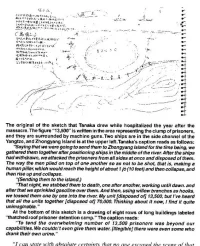
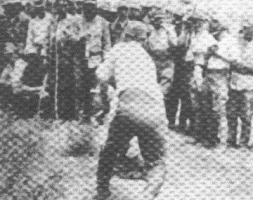
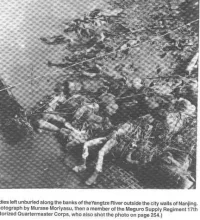
Finally, in the attachment 2 pics (which you will probably believe to be faked) - a beheading with Japanese soldiers standing around & corpses on the banks of the River Yangzi - & the account by a Japanese soldier of one of the massacres.
 

Attachments

  • katsuichi tanakas account.webp
    katsuichi tanakas account.webp
    94 KB · Views: 245
  • beheading.webp
    beheading.webp
    31.4 KB · Views: 607
  • yangzi bodies.webp
    yangzi bodies.webp
    50.8 KB · Views: 386
my god..
I always feel sorry and scary after watch those pics. no matter how much time i did.
 
bossel said:
Even if that wouldn't be the case, I don't think it is considered alright to invade other countries just because you feel like it.
I don't mean that it was alright to invade.but it was not illegal.
It was critisizable but not deserved death penaltiy.

bossel said:
That's because it's an estimate. For me the origins are hard to trace because the East Asia Institute at my university is rather small & the attached library not really bigger. Hence I didn't find very much, the best I can come up with is Honda Katsuichi's The Nanjing Massacre. Actually a very good book, as it seems, but he doesn't do his own evaluation of victim numbers. Yet he sums my thoughts about pretty well up (since I don't really understand why this 300,000 number matters so much for you; whether 40,000 or 400,000, it's still a massacre):
First of all,I said about 40,000 killed.But everyone denied.
Most people say there were 300,000 killed.
Then I aked where the number came from.
I need to show how chinese claimed Nanking Massacre biases against Japan.

bossel said:
Between these extremes, we find the 300,000 claimed by the City of Nanjing; or 200,000 soldiers and civilians, excluding battlefield deaths (Hora Tomio). Among the lower estimates are 38,000 to 42,000 (Hata Ikuhiko) or 3,000 to 6,000 (Unemoto Masami), but what the lower estimates have in common is that they do not include the killing of prisoners and surrendered soldiers as part of the massacre. Yoshida Hiroshi estimates that at least a hundred thousand soldiers and civilians were killed, excluding those who died on the battlefield. I have not made my own estimates or investigations of these figures, but to me the most problematic point is where to draw the geographical boundaries of the atrocities.
Hata's number includes the killing of prisoners and suspects of guerillas.
The number of surrendered soldiers is unknown.How can they count it.
Actually,Japanese Army caught from about 30,000 POWs and from 35,000 to 50,000 Chinese soldiers ran away.Chinese gov't said 35,000 soldiers successfully ran away.but 4 army divisions were not recorded and one division had 2000 to 5000 soldiers before the battle.Thus the number would be more than 40,000.Foreigner said the number of Chinese soldier was about 50,000 and Japanese as well.Chinese gov't said 100,000.
According to 譚道平,the number would be about 80,000(50,000 soldiers and 30,000 coarse soldiers who helped with the logistics).This number is least inconsistent with other sourses.
Then how many soldiers died in battlefield?
Chinese gov't said 20,000 soldiers died.But this number includes dead soldier in surrounding area.so the number would be from 10,000 to 20,000.
How many of them do you think were surrendered soldiers?
although I said JA had killed 30,000 POWs,this number comes from record of buried corpses and this buried corpses must includes dead soldiers in battle.
So this 30,000 would include most or some part of dead soldiers in battle.
In that meaning,number of surredered soldiers can be ignored.

Tokyo trial defined Nanking Incident the incident which committed by Japanse Army which had been occupying Nanking City from 17th of Dec. for about 6 weeks in Nanking City and the surruounding area.
Although I said it does not includes the surrounding area,it was wrong.
However this surrounding area does not mean the surrounding area which Yoshida Hiroshi mentioned.The small surrounding area is a few kilos away from Nanking castle.
The reason why Nanking Incident includes the small surrounding area is the POWs were killed out of nanking castle,I reckon.

Chinese Nanking massacre includes big surrounding area.However they claim JA killed 300,000 in Nanking castle and small surrounding area.

When historians think about how many people were killed in Nanking Massacre,the area is Nanking castle and small surrounding area besides Japanse "Big massacre School."

How many people does Yoshida say were killed in Nanking city and small surrounding area? These people must be connected Nanking battle or civilians of Nanking.
bossel said:
Yes, there are enough people who are actually proud of their deeds. Happened in Germany, Japan, all over the world.
Many Japanese soldiers were obviously not really ashamed for killing Untermenschen.
No.At that time,Japanese policy was equality of human beings.
Japan tried to ban racial discrimination at the comference in League of Nations.And Japan accepted Jewish refugees even though alled Germany asked Japan not to do so.
Admittedly,many japanese soldiers would have looked down Chinese,but it does not automatically mean that they were not ashamed for killing the Chinese.

Anyway,are there any pictures which show just before or after the scean the Germany personally killed Jews?

bossel said:
They didn't want foreigners as witnesses for massacres. When you keep the evidence in your hands, it's easier to later go & say that nothing happened.
Then why there are many pictures?
bossel said:
Furthermore, it is rather probable that the higher in command an officer was, the more he wanted to keep the record clean, while the lower the rank (& perhaps education) the more they wanted to show off their "superiority" (that's just my guess, though).
Who wanted to show off committing raping?
bossel said:
Finally, in the attachment 2 pics (which you will probably believe to be faked) - a beheading with Japanese soldiers standing around & corpses on the banks of the River Yangzi - & the account by a Japanese soldier of one of the massacres.
This massacre was executing POWs and I have admitted that.
Second one just shows that they executed someone and it must have been under military order.
Third one just shows corpses besides the river.
Some websites said the third one was taken by Murase Moriyasu and he said they are dead soldier who tried to swin across the river in order to escape.
The Alleged 'Nanking Massacre' Chapter III ÄRu"싞'å‹sŽEv'æŽOÍ

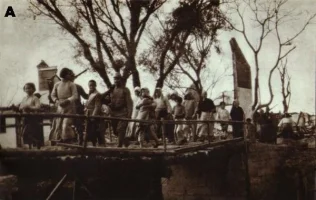
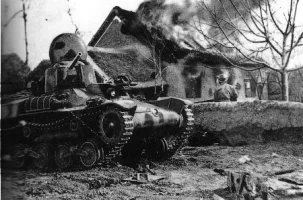
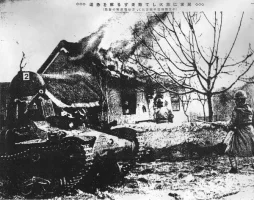
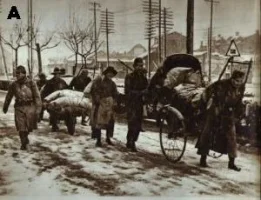
I am attaching fake pictures which are still used in many website and the nanking massacre museum.

The first one's explaination is "The Japanese rounded up thousands of women.Most of them were gang raped or forced into military prostitution.(『THE RAPE OF NANKING』)"
However this picture had been used in Asahi Graph and its explaination is the women went back their village protected by the Japanese.

The second one is explained that "Japanese troops setting fire to a civilian house in the Nanking suburbs."
(『THE RAPE OF NANKING』-AN UNDENIABLE HISTORY IN PHOTOGRAPHS)
But this tank was not produced in 1937.
The third one is origin of the second one.Which is used in japanese book published in 1941.And its explaination is "the tank fought against Chinese soldier who had committed incendiarism.Some people say it was fake photo for propagating.In any case,the second one can't be proof of Nanking Incidnet.

The forth one is explained that "Provisions窶徑evied窶?#12288;with force by the Japanese troops.
(『THE RAPE OF NANKING』 AN UNDENIABLE HISTORY IN PHOTOGRAPHS)"
But it had been originally used in 支那事変写真全輯 published by Asahi Newspaper in 1938 and its explaination is "shopping with Chinese."

the fifth one is widely used.
But this face is very clean as if he is alive.
And the sward is very clean so this navy could not kill by his own sward.
If another soldier had cut him,the head must be dirty,but it's clean.
In any case,navy did not enter the Nanking castle.
 

Attachments

  • renkoA.webp
    renkoA.webp
    40.5 KB · Views: 390
  • tank.webp
    tank.webp
    46.8 KB · Views: 240
  • tank2.webp
    tank2.webp
    97.1 KB · Views: 222
  • toru2.webp
    toru2.webp
    19.4 KB · Views: 216
  • 105.gif
    105.gif
    46.2 KB · Views: 584
urecco said:
What I want to emphasise is that even bossel and sabro ,who know lots of things about Nanking Massacre, can't show immediately the sourse of 300,000 killed and any websites don't either.
Many websites use the pictures of masscre.But there is no reason Japanese Army allow people to take picture of murder.
Do you know any pictures of murder?
Rabe mentioned Japanese Army hadn't wanted to be seen when they had executed.How could they take pictures?
At that time,cameras were very expensive,so not many people had cameras.
If they had taken pictures,they would have been used on newspapers.During the war,China propagated Japanese war crimes or brutality.It was totally unreasonable not to use the photoes in Nanking if they had them.How many of these photoes were used timely?

I once heard a professor at a medical school say: "When you see hoofprints, look for horses, not zebras. Although they are exotic and finding one wound be quite unique, Zebras are rare in these parts."

I stick to mainstream sources, like most of the internet ones that turn up when you type in "Nanking Massacre" Unless there is some reason to doubt the "official" account, that run of the mill, everyday, pedestrian version of history is what I stay with. Urecco, the ball is in your court. If you want to challenge the mainstream version, the burden of proof is yours.

Where I get my information:

The World History (Like Houghton Mifflin's World History) textbooks and Encycopedia articles, written by fairly good historians agree on a number between 200,000 and 330,000. I can get the names of these and check the bibliography for their sources if you like.

One good source was Chapter 5 of James Bradley's Flyboys: A True Story of Courage (2003)

Other sources that I need to check out:

The beheading contest was covered in the Tokyo Nichinichi Shimbun from November 10, 1937 to December 13, 1937.

Iris Chang (God rest her soul, she committed suicide two weeks ago) wrote a scathing, graphic and controversial account: The Rape of Nanking (1998) As a former AP reporter, she does an outstanding job citing her sources.

also: Yuki Tanaka's Hidden Horrors: Japanese War Crimes in World War II (1998) and Katsuichi Honda's The Nanjing Massacre: A Japanese Journalist Confronts Japan's National Shame
(1998)

and: Theodore Cook's Japan at War and Russel, Lord of Liverpool's the Nights of Bushido: A Short History of Japanese War Crimes (1958)

Your logic about the photos is flawed. the Photos were taken by Japanese soldiers (a few of whom owned expensive cameras) and printed in Japanese newspapers of the day. (some citations were wrong then, others have been used out of context since then) but there are hundreds and hundreds more.

The numbers: many have spoken about how difficult it is to come up with accurate numbers when the scale of murder is so massive. Some reason that 300,000 is too high because of nanking's pre invasion population. Estimates of Nanking's 1937 population range from 200,000 to 600,000. Others say that the deaths were primarily military. Chinese military deaths in that area range from about 30,000 to over 100,000 (the difficulty is that Japanese sources counted any male of military age as a combatant.) One Japanese newspaper (cited in Honda's book) boasted of 30,000 chinese slaughtered in Nanking in one day. (I have to look this up, I can't confirm it). anyway, all of this supports a much higher number than you (Urreco) seem to want to believe.

Russel and Honda put the total number of war deaths in all of China during eight years of Japanese occupation in the tens of millions. The overwhelming proportion of these is civillian.

Like Guernica, the world was appalled by Japan's Aerial bombardment of a dozen Chinese cities in 1937. They considered it a crime. Eight years later however, it was widely accepted. (I think this is sad)

Invading another country was illegal by Japans ratification of the League of Nations Charter. I hope it still is today.

I think you need to come to terms with history here. There is no conspiracy to make Japan look bad. There is no "Zebra" in this story, ony regular everyday horses.

Urecco-

Photo logic:
The women weren't being marched to a rape camp-- only to nice vacation huts. You can tell by the mickey mouse ears they are wearing. (wishful thinking) The tank is too new, (this is obviously from an attrocity later in the invasion.)
The Soldiers are shopping.(You can tell by the gift bags) The Sword and the dead man's head is too clean. Corpses and soldiers are always dirty on old grainy photos. Does this make sense to anyone? Is it less of an attrocity if the victims were soldiers executed under some order, or soldiers that drowned trying to get away?

Are you trying to say that invading another country and killing hundreds of thousands, if not tens of millions was bad, but not deserving of the death penalty?

Get a grip. Japan's conduct during WWII was atrocious on a scale equal to their Nazi alies. Japan commited rape and murder on a scale rarely seen in history. They waged a war of agression against a largely defenseless civillian population and have shown only a scant sign of remorse or regret for this action.
 
sabro said:
I stick to mainstream sources, like most of the internet ones that turn up when you type in "Nanking Massacre" Unless there is some reason to doubt the "official" account, that run of the mill, everyday, pedestrian version of history is what I stay with. Urecco, the ball is in your court. If you want to challenge the mainstream version, the burden of proof is yours.
According to Robe,the population of Nanking Peace are was about 200,000 and it increase in 250,000.And there were almost nobody outside of the Peace area.Robe told Hitler that foreigners thought from 50,000 to 60,000 civilians were killed,because the group called 紅卍会 had buried less than 200 corpses a day,but there were still 30,000 corpses bisides the river.
Although Robe said they were civilians,the group also or mainly buried dead soldiers and the corpses bisdes the river were dead soldiers.Thus the number of 50,000 to 60,000 victims must include dead soldiers.
In any case,Robe's diaries and report deny 300,000 killed.
Smythe survery mentioned there were 2400 killed and 6400 kidnapped.
It aslo denies 300,000 killed.
The record or Peace area committee say there were 53 killed.
The buried record of the group called 紅卍会 is about 45,000,this number includes dead soldiers.AFAIK,this group was only group mentioned in Western record and Japanese record and paid money by Japanese Army.

How could you deny all of these primary sourses?

Everybody says 300,000 killed is mainstream,thus I am wrong.
So I have been asking where the number 300,000 comes from.
sabro said:
Where I get my information:.
Then what are the sourses of these books.
sabro said:
Your logic about the photos is flawed. the Photos were taken by Japanese soldiers (a few of whom owned expensive cameras) and printed in Japanese newspapers of the day. (some citations were wrong then, others have been used out of context since then) but there are hundreds and hundreds more.
Why they use pictures with wrong citations?
It is a proof of inaccuracy of Iris' book and many websites.

sabro said:
The numbers: many have spoken about how difficult it is to come up with accurate numbers when the scale of murder is so massive. Some reason that 300,000 is too high because of nanking's pre invasion population. Estimates of Nanking's 1937 population range from 200,000 to 600,000. Others say that the deaths were primarily military. Chinese military deaths in that area range from about 30,000 to over 100,000 (the difficulty is that Japanese sources counted any male of military age as a combatant.) One Japanese newspaper (cited in Honda's book) boasted of 30,000 chinese slaughtered in Nanking in one day. (I have to look this up, I can't confirm it). anyway, all of this supports a much higher number than you (Urreco) seem to want to believe..
You or Honda means 30,000 Chinese civilans were slaughtered in one day?
If Japanese newspaper boasted of many enemies killed,it will be no problem,right?
If Japanese newspaper boasted of many civilians killed,it will be the proof of Japanese brutality.

sabro said:
Invading another country was illegal by Japans ratification of the League of Nations Charter. I hope it still is today.
Japan had not been member of the League of Nations,before WWII broke up.
Anyway,please tell me when and in what conference invading another country became illegal.

sabro said:
Urecco-

Photo logic:
The women weren't being marched to a rape camp-- only to nice vacation huts. You can tell by the mickey mouse ears they are wearing. (wishful thinking) The tank is too new, (this is obviously from an attrocity later in the invasion.)
The Soldiers are shopping.(You can tell by the gift bags) The Sword and the dead man's head is too clean. Corpses and soldiers are always dirty on old grainy photos. Does this make sense to anyone? Is it less of an attrocity if the victims were soldiers executed under some order, or soldiers that drowned trying to get away?
Besides last one,those photoes were taken by the Japanese and originally used in Japanese books or newspapers with other explainations.So they can't be proof of being marched to a rape camp,burning the houses,or looting.
Is there any evidence that forth picture show looting?
Even if so,Iris or anyone should explain like "this picture was taken by Japanese and originally used Japanese book as a scean of shopping,yet it must be a scean of looting because of the evidence of..."
About fifth one,do not miss the point that there was not Navy in Nanking castle.

I never say killing POWs was alright.I just say 300,000 killed was wrong.
sabro said:
Are you trying to say that invading another country and killing hundreds of thousands, if not tens of millions was bad, but not deserving of the death penalty?.
Were any British policians executed for invading all over the world?
Will Bush be executed for invading Iraq?
Will Chinese leader be executed for invading Tibet?
 
Last edited:
The first time I say something to Japanese: From your words, I recoglize it's true that your government has hidden the real history of WWII. You Japanese people are so bad in our mind except a few kind individuals. I can understand that you wanna fight for your country. But remember, if you dare invade china or commit crimes on Chinese territory, we will check together. And remind you, take care of your behavior and words when you come China. If you hurt Chinese people's feeling again, you might not go back your hogpen.

Wang said:
I can name a list of houses China went to and did bad things to them in the past.
The Japanese government has up to now payed over 6 trillion yen to the PRC alone and still has the ODA program (Japan's Official Development Assistance).
I don't want to waste time telling my opinion about the screwed up land (read prison) called the People's Republic of China.

FK U! Several years later, we will get back Taiwan !!!

打心眼里瞧不起[日本人]!!!用中国的汉字,中国的文化,连你们文字发音都类似与中国汉语,你们却欺师灭祖, 在中国犯下灭绝人寰的滔天罪行,并且厚颜无耻地觉得自己民族优越,现在告诉你:日本大和民族是世界上最劣等的民族,因为你们不敢承认自己犯下的错误,还有什么颜面活在人世???你认为你经济强大就不可一世了吗?告诉你,中国马上就会超越你们,我们一定可以战胜你们!!!
 
Sam said:
打心眼里瞧不起[日本人]!!!用中国的汉字,中国的文化,连你们文字发音都类似与中国汉语,你们却欺师灭祖, 在中国犯下灭绝人寰的滔天罪行,并且厚颜无耻地觉得自己民族优越,现在告诉你:日本大和民族是世界上最劣等的民族,因为你们不敢承认自己犯下的错误,还有什么颜面活在人世???你认为你经济强大就不可一世了吗?告诉你,中国马上就会超越你们,我们一定可以战胜你们!!!
If you reply do it in english so everybody understands... ;-) from the text above I can see you are one of those fools who thinks Japan is the all evildoer, and China didn't do anything bac right??wake the fk up !!!! The crimes China committed in the past aren't that nice either..so stop blaming other countries.What happened happened...you didn't suffer from it, so why the hell get upset with it???If you can't say anything sane please leave the forum before your *** gets banned....thank you very much !!
 
You know nothing about your history. What a pity! What a shame! Don't you think Japan an evildoer? If do, ask your government to apologize!!! Just be a man! It's a shame for your country live with the committed crimes in China and Korea.
 
Back
Top Bottom