


- 14 Mar 2002
- 21,057
- 18,914
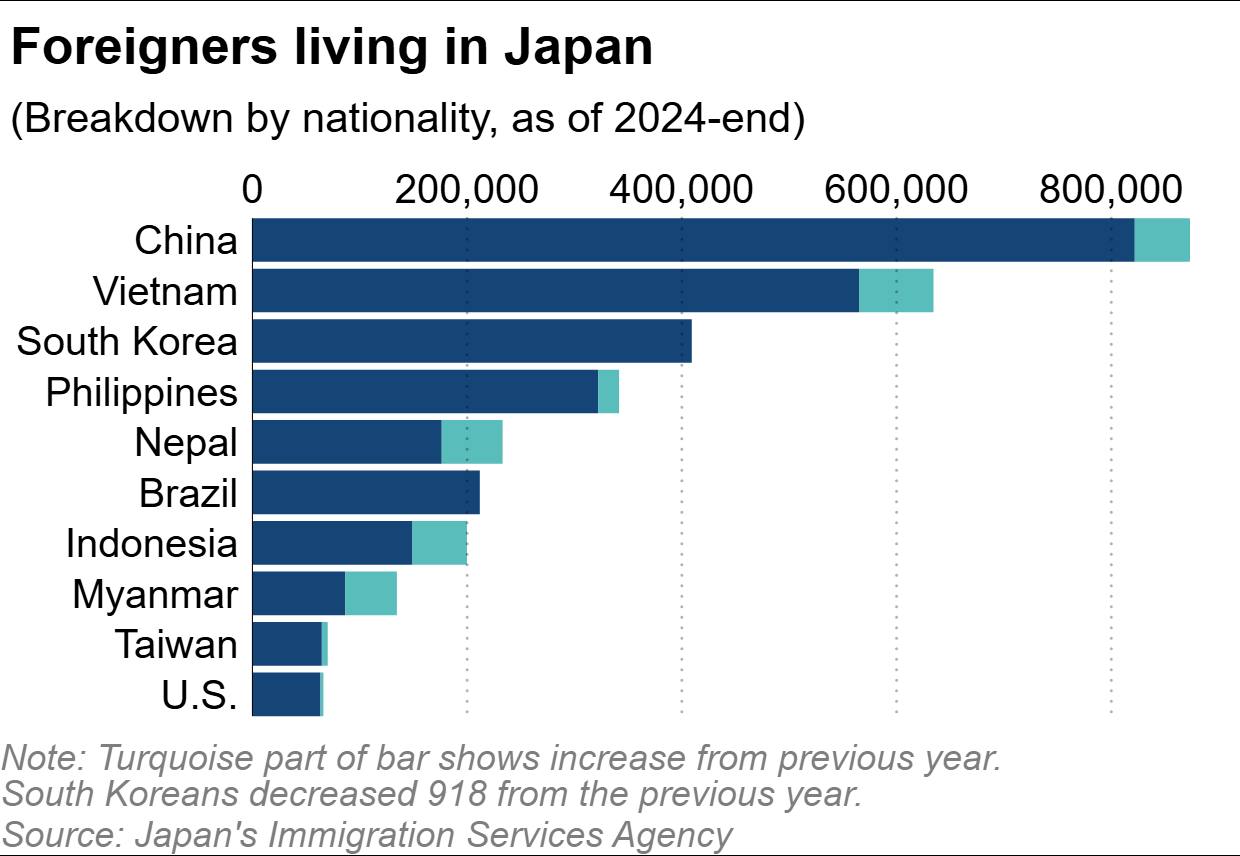
Japan's foreign resident population reached a record 3.77 million for the third consecutive year and expanded at twice the anticipated rate last year. The increase, driven by an influx of talent from South and Southeast Asia, rose by approximately 358,000, or 10.5%, from the end of 2023.
Over the past three years, the foreign population has grown by around 1 million. In 2023, the National Institute of Population and Social Security Research estimated an annual net migration of about 165,000, with non-Japanese residents expected to surpass 10% of the total population by 2067. With birth rates falling below expectations, this demographic shift is expected to happen sooner if the current trend continues.
Paywall alert:

 asia.nikkei.com
Over the past three years, the foreign population has grown by around 1 million. In 2023, the National Institute of Population and Social Security Research estimated an annual net migration of about 165,000, with non-Japanese residents expected to surpass 10% of the total population by 2067. With birth rates falling below expectations, this demographic shift is expected to happen sooner if the current trend continues.
Much of the rise came from immigrants moving to Japan for work. Residents with visas under the specified skilled worker program rose 36.5% from 2023, while highly trained professionals were up 19.8%. By nationality, Vietnam accounted for the largest share of last year's increase at 69,000, followed by Nepal at 57,000. Immigration from Myanmar jumped 55.5% on the year, with rises of 35.2% and 34% from Sri Lanka and Indonesia, respectively. Some observers had predicted that the yen's weakness, which makes wages earned in Japan worth less when converted to other currencies, would make the country less appealing to foreign talent.
In 2023, Japan had established 261 one-stop consultation centres for foreign nationals, nearly doubling from 139 in 2019. The number of institutions providing Japanese language education grew by approximately 20% over five years, reaching 2,727. Keizo Yamawaki, a Meiji University professor specialising in migrant integration policy, noted that many consultation centres lack staff with specialised expertise, and Japanese language schools follow curricula set by local governments, leading to significant regional disparities.
Paywall alert:
Japan foreign population grows twice as fast as expected on worker influx
Vietnam and Nepal arrivals rise as companies court talent
asia.nikkei.com


