Need a word or phrase translated?

Hardcore! Will definitely frequent these boards again. It makes my life so much easier. Arigato gozaimasu.
 
ザ・忠臣蔵 in 1980/the 1980 version's 忠臣蔵

This song was released in 1980. Pink Lady also has a hit song カルメン'77, which was released in 1977, of course.:)
 
Hello again,

Would appreciate anyone's help in translating.

本番までゆっくり休んでかぜを完璧治すこと そしてみんなで本番を迎えること (rest up until the performance and make yourself feel better, and then we will all perform together)
What is the function of ni here? "To cure ______ perfect cold?"
What is the function of koto?


梓: いやです。やっぱりいやです。このまま唯先輩抜きで演奏して意味ないです。(there is no point in performing without Yui sempai)

What is mo doing here? As far as I know mo generally means also. Is it something like "there is also no meaning without performing with Yui???"

和: 夢中なことがあると、唯はそれだけしか見えないってこと。(what I'm saying is that once yui has her heart on something she
goes all out)

Lost. Here is how it is translating in my head.
muchuu-trance (right word)?
na- ???? (can't understand how na is connecting with the expression koto ga aru. I know of na adjectives, but...)
Koto ga aru- something has occured

tada- mere???
wa
soredake- only that/that alone???
shika- only??? (why are they using only again?)
mienai- to not see???
tte koto- is this the contraction of to iu koto ka

あの浴衣の防寒バージョンを作っていたのです (after considering the cold, I upgraded the yukatas with cold protection)
no koto mo- can someone break this part down
 
本番までゆっくり休んでかぜを完璧治すこと そしてみんなで本番を迎えること (rest up until the performance and make yourself feel better, and then we will all perform together)
What is the function of ni here? "To cure ______ perfect cold?"
完璧に: perfectly

完璧 is a na-adjective. That's an adverbial usage of "the stem of na-adjectives + に", as same as the -ku form of i-adjectives(e.g. 早く治す: to cura rapidly).

What is the function of koto?
こと is a nominalizer, and is used to make the sentence a(n) advise/suggestion form here.

梓: いやです。やっぱりいやです。このまま唯先輩抜きで演奏して意味ないです。(there is no point in performing without Yui sempai)

What is mo doing here? As far as I know mo generally means also. Is it something like "there is also no meaning without performing with Yui???"
"The -te form of verbs/i-adjectives + も" is a conditional clause.

唯先輩抜きで演奏しても意味ないです: even if we performed without Yui sempai, it's pointless.

和: 夢中なことがあると、唯はそれだけしか見えないってこと。(what I'm saying is that once yui has her heart on something she
goes all out)

Lost. Here is how it is translating in my head.
muchuu-trance (right word)?
na- ???? (can't understand how na is connecting with the expression koto ga aru. I know of na adjectives, but...)
Koto ga aru- something has occured
夢中 is actually a na-adjective.
こと is a pronoun.

夢中なことがあると: (lit.)when there is something Yui is obsessed with/when Yui has has something obsessing her mind

tada- mere???
唯: Yui

soredake- only that/that alone???
shika- only??? (why are they using only again?)
だけ emphasizes しか. Don't you use, for instance, "just" and "only" at the same time in English, even when it's enough to use just/only one of them?;-)

mienai- to not see???
ない: can't see

それだけしか見えない: can't see anything besides it

tte koto- is this the contraction of to iu koto ka
more likely ということ.

あの浴衣の防寒バージョンを作っていたのです (after considering the cold, I upgraded the yukata with cold protection)
no koto mo- can someone break this part down
You misquoted the sentence. There is no "no koto mo" in your quotation.;-)
After googling it, I suppose you wanted say about のことも in 寒さのことも考えてあの浴衣の防寒バージョンを作っていたのです.

~のこと: thing(s) about ~
も: too/also

寒さのことも考えて: (lit.)also considering things about the cold
 
Hello, I need help with this line. An antisocial guy who doesn't like to talk to people says:

鯉香と喋るうちに 好きになってしまった

Is it "came to like to talk to" or "fell in love while talking to" or something like that?

Thanks.
 
The latter interpretation, i.e., 鯉香と喋るうちに(鯉香を)好きになってしまった would be most common, but another person/thing can be the object of 好き when it's obvious from the context.
 
Hello,

* チームに加わりたくば、厳しい訓練をクリアせよ!

Is the ば= if ? If you joined the team, you will succeed in the difficult training ?

* 時間をおいてからミッションを実行するのだ。

おいてから= ??

おいて+から or 時間をおう maybe ?

=> carry out the mission after... time ?

* 変わり身の木 : is it a tree that change of form? A sort of disguise?

* 2本の山賊刀: I think it may be two special katana but I don't understand the 山賊.

I'm quite lost...
 
Hello,
* チームに加わりたくば、厳しい訓練をクリアせよ!
Is the ば= if ? If you joined the team, you will succeed in the difficult training ?

It's an older form of ~たければ, in this case 加わりたければ, meaning "if you want to be a part of the team." The second phrase is a command: "clear the difficult training."

* 時間をおいてからミッションを実行するのだ。
おいてから= ??
おいて+から or 時間をおう maybe ?
=> carry out the mission after... time ?

~をおいて here means to leave (time), from this definition:
時間的、空間的に間を隔てる。「一日―・いて行く」「一軒―・いた隣」
置く(おく)の意味 - goo国語辞書

* 変わり身の木 : is it a tree that change of form? A sort of disguise?
* 2本の山賊刀: I think it may be two special katana but I don't understand the 山賊.
I'm quite lost...

変わり身の術 I'm familiar with. Perhaps the tree is what they changed places with.

山賊 is just mountain bandits.
 
Hi guys!

There are a couple of things in this excerpt from my friend's e-mail that I don't quite understand:
小説は、乗ってくると、書けるんだよ

In my understanding, notte (to ride) and kuruto (to come?) is like saying "come aboard". But what does this mean in the context that he is talking about his novel?

昔書いたやつは、実家のパソコンにあるから、一ヶ月ほど待ってもらえれば、出せるよ.

Here, I don't understand what moraereba means. I tried searching the net but nothing comes up. Also, is my understanding of yaseru correct? Does it mean he will try to "take out"/"retrieve" the novel for me?

Thanks guys. :D
 
There are a couple of things in this excerpt from my friend's e-mail that I don't quite understand:
小説は、乗ってくると、書けるんだよ
In my understanding, notte (to ride) and kuruto (to come?) is like saying "come aboard". But what does this mean in the context that he is talking about his novel?
That's 気分が乗ってくると; when I feel uplifted.

昔書いたやつは、実家のパソコンにあるから、一ヶ月ほど待ってもらえれば、出せるよ.
Here, I don't understand what moraereba means. I tried searching the net but nothing comes up.
~てもらう is a humble expression.

一ヶ月ほど待ってもらえれば: (lit)if I receive the favor of you waiting a month or so,

Also, is my understanding of yaseru correct? Does it mean he will try to "take out"/"retrieve" the novel for me?
Yes, except the reading daseru.;-)
 
Thanks toritoribe!

That cleared up a lot of stuff, especially on nottekuruto. I have to do more research on their slang, idioms and other words that don't have english equivalents. Sorry about the typo on daseru tho. :))
 
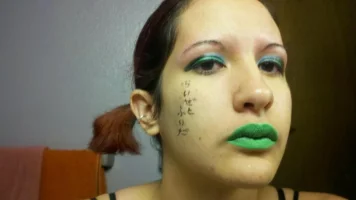
I am sorry if this seems really basic. I have been learning romaji, but my grasp on on the symbolic scripts are basically just enough to tell Hiragan, Katakana, and Kanji apart from each other and being able to pick out certain symbols.
Anyways, I was shown a picture and asked what something in the picture meant, and I was able to tell right away it was written in Hiragana but I am having trouble translating it as like I said, my grasp on Hiragana is almost non-existant at the moment though I am working on it.

What I think I have so far is:
ra
i
ze
hu - ?
ri
ta
I would like to know if I got the character correct to begin with and how to go from there to the actual translation if possible.
 

Attachments

  • 278376_2247333349135_1422221913_32668961_5079067_o.webp
    278376_2247333349135_1422221913_32668961_5079067_o.webp
    37.6 KB · Views: 172
* 伝承の地を辿る

I have problems with 辿る : I found to follow, to pursue but it doesn't mean anything with "legendary place" (or I made mistakes with "legendary place")...

* 警戒心が強く、しかも恐ろしく俊敏なため見つかれば最後だ!

For this one, I'm totally lost.
Is it, something like :

Wariness is strong, moreover if awfully keen things are found, it will be the end !

:?:?

Thank you

@fadelius : what is on your face en romaji, if I understood well ?

ra
i
ze
to
fu
ri
da

^^
 
It's not my face. One of my friends sent it to me asking me to translate it, because they knew I was trying to teach myself Japanese, but I started with Romaji and havn't really worked with the symbols much...if you read my post carefully I basically came up with what you thought, but I don't know enough about the symbols to turn that into a word/words.
 
hello guys,
I'd like to begin to learn the Japanese language,you can help me in this? What are the basic issues for beginners?
How can I say: good morning,good evening,good night,good bye,thank you.....in Japanese,thank you.
 
I am sorry if this seems really basic. I have been learning romaji, but my grasp on on the symbolic scripts are basically just enough to tell Hiragan, Katakana, and Kanji apart from each other and being able to pick out certain symbols.
Anyways, I was shown a picture and asked what something in the picture meant, and I was able to tell right away it was written in Hiragana but I am having trouble translating it as like I said, my grasp on Hiragana is almost non-existant at the moment though I am working on it.
What I think I have so far is:
ra
i
ze
hu - ?
ri
ta
I would like to know if I got the character correct to begin with and how to go from there to the actual translation if possible.
The hiragana on the face doesn't make sense as a word/phrase/sentence at all.

* 伝承の地を辿る

I have problems with 辿る : I found to follow, to pursue but it doesn't mean anything with "legendary place" (or I made mistakes with "legendary place")...
伝承の地 would be the the plural here.

trace the legendary places (of someone/something)

* 警戒心が強く、しかも恐ろしく俊敏なため見つかれば最後だ!

For this one, I'm totally lost.
Is it, something like :

Wariness is strong, moreover if awfully keen things are found, it will be the end !
I assume that that sentence is an explanation regarding an animal, monster, or like that. The subjects of 警戒心が強く and 恐ろしく俊敏 is the animal/monster.

They are very cautions, moreover awfully keen, so if you are found out (by them), that's the end (of you).
 
Some translation help, o-negai shimasu.
入学式のときこの道を走った (I remember running like this on the day of the opening ceremony)
What is the function of mo in this case? My best guess is this textbook reference stating "show emphasis or absence of doubt concerning a question of time, quantity" (If so, it's still a somewhat muddled explanation to me).:?

何かしなきゃって思いながら (I told myself I had to do something)
しなきゃ- is this derived from suru. I understand the suffix "nakya" part
って- is she using "quotations" in this case.

今日は私がギターを忘れたせいでこんなに遅れてしまいました (I was late today because I left my guitar at home)
"sei de"- meaning?

In regards to the following sentences below, I think I'm mixed up more by the rules of complex sentence structure/layout than the actual meaning and context of the grammar. For those who are willing to continue to share their words of wisdom, please understand that I am looking for a breakdown of how these sentences are properly structured (i.e. the syntax of subordination, embedding, etc) as well as grammar translations.

このまま大人になっちゃうかなって思いながら (I was worried I would grow up without doing anything)
(my literal interpretation: at this rate adult to become ______ wish/desire thought/thinking)
の- what is the function of no. Is it a nominalization?

目標は武道館」とか言って私達の軽音部は始まりました (we began the light music club with the budokan as our goal)
(lit: "we the light music club began with to state "our goal is budokan")??? 😌
I'm a little bit confused the the placement of とか言って
toka- isn't this the english equivalent of etc, etc. What are the syntax rules of how it is placed in sentences.
iu- should this be translated as "to say/to state." Again, I think there is some confusion over snytax.

わき目もふらずに練習に打ち込んできたなんてとても言えないけど
What is the literal translation
What is the function of ni in both cases
 
Hey everyone. :D I just joined, and I've taken Japanese 101 and 102 at my college. However, I am getting in over my head with some stuff.

(For the curious, my 先生 said to practice my 日本語 by keeping a journal. I dislike keeping journals, so I'm making a book of lyrics for Japanese rock songs I'm learning to sing, instead. But, 先生 suggested a 2-3 sentence intro (for added practice), and that's where I'm stuck!)

What I want to say:
This book contains the lyrics to songs I want to learn. Certain lyrics here mean a lot to me, while others are just from songs that are fun to sing. In any case, enjoy!
((or something to that effect))

What I wrote (so far):
この本は、私が習いたい曲の歌詞が含まれています。

^^ Only one sentence in and I'm already having issues! I don't know a few of those words, so without help, I can't verify the correct usage of them. This should also be informal, and I know it's not, I just keep having issues with making it so (for some reason - I bet it's just me being stupid/forgetting my Japanese).

Well, I used online dictionaries and got it to a point where Google Translate has that sentence meaning something (vaguely!) CLOSE to what I wanted, but I'm sure we all know how reliable that is.
So maybe you guys can help? I'd appreciate it. :)
 
Hey everyone. :D I just joined, and I've taken Japanese 101 and 102 at my college. However, I am getting in over my head with some stuff.
(For the curious, my 先生 said to practice my 日本語 by keeping a journal. I dislike keeping journals, so I'm making a book of lyrics for Japanese rock songs I'm learning to sing, instead. But, 先生 suggested a 2-3 sentence intro (for added practice), and that's where I'm stuck!)
What I want to say:
This book contains the lyrics to songs I want to learn. Certain lyrics here mean a lot to me, while others are just from songs that are fun to sing. In any case, enjoy!
((or something to that effect))
What I wrote (so far):
この本は、私が習いたい曲の歌詞が含まれています。
^^ Only one sentence in and I'm already having issues! I don't know a few of those words, so without help, I can't verify the correct usage of them. This should also be informal, and I know it's not, I just keep having issues with making it so (for some reason - I bet it's just me being stupid/forgetting my Japanese).
Well, I used online dictionaries and got it to a point where Google Translate has that sentence meaning something (vaguely!) CLOSE to what I wanted, but I'm sure we all know how reliable that is.
So maybe you guys can help? I'd appreciate it. :)
I think you should listen to your teacher and stick to keeping a regular journal.
The reason your teacher wants you to keep a journal, I believe, is by writing down what you've done, and whatever's on your mind on a day to day basis, you will learn how to express yourself in everyday situations, using words and expressions you have learned in class.
It doesn't really matter how simple (and mundane) your entries may look at first. The important thing here is that you master what you THINK you have learned in class by incorporating it in your writing, and doing it over and over until it becomes your own.
I don't know what your goal is, but if it is being able to express yourself in Japanese, and NOT being able to "decode" song lyrics, practicing by keeping a journal makes more sense whether you like it or not.
Here's my suggestion for the sentence in question.
私が習いたい (歌いたい) と思っている歌の歌詞を一冊の本にまとめてみました。
I have gathered into a book the lyrics to the songs I want to learm (sing).
 
Back
Top Bottom