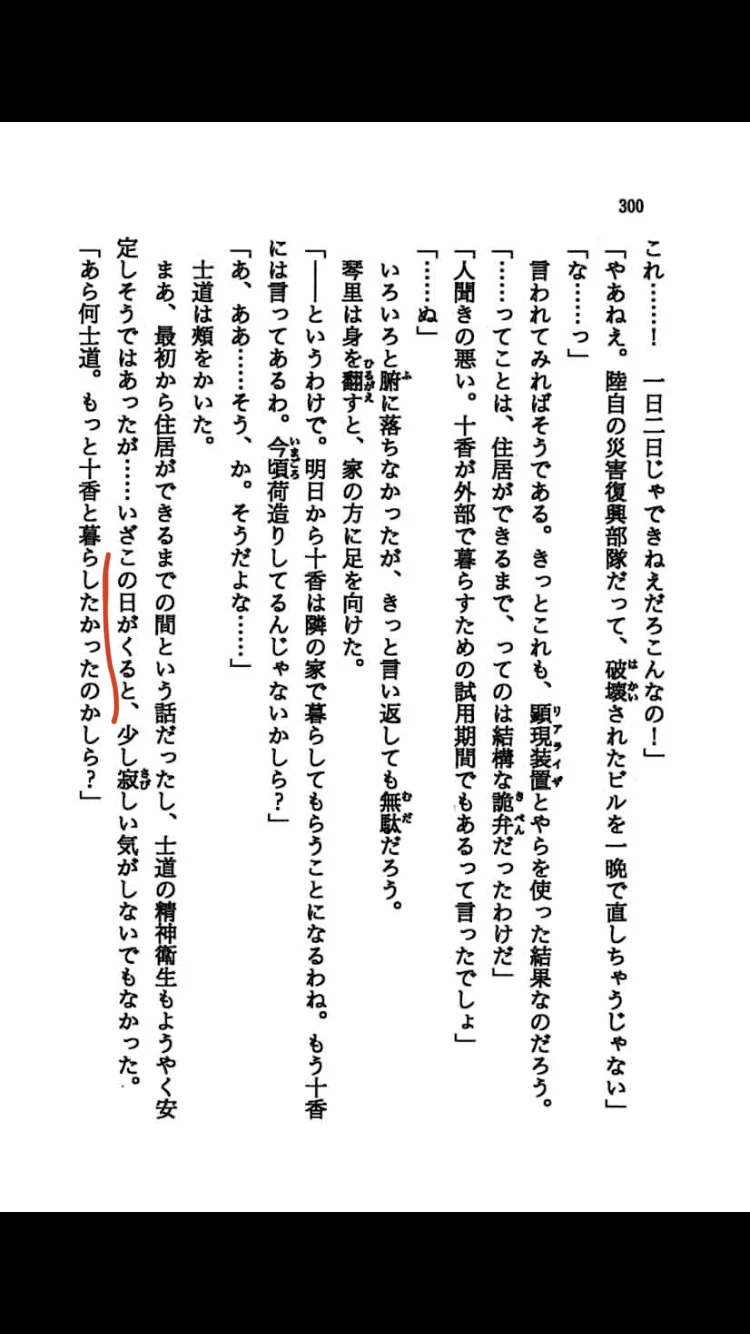
The past form is used there because it's a wish which is impossible to be fulfilled at the time. For instance, when a player has lost a game, they would say 勝ちたかった. This doesn't mean they don't want to win anymore. It means that it's impossible to win the game.
Similarly, when a child is told that the dinner is sashimi, but they actually want to eat curry rice, they say カレーが食べたかった. This doesn't mean they don't want to eat rice and curry anymore, either. They already accepted the fact that the dinner is sashimi, and then said their wish. If they don't accept sashimi and insist that they want to eat rice and curry instead of sashimi, they say カレーが食べたい。.
Back to your question, 暮らしたかった is used there because the plan "her moving to the next house" is already decided. If she asks もっと十香と暮らしたいのかしら, it suggests that the plan still can be changed.