Nature The Japanese brown and black bear thread

On the Shiretoko Peninsula in eastern Hokkaidō , a growing number of unusual encounters between humans and brown bears has become a source of mounting concern. Creatures ordinarily characterised by a natural shyness are increasingly losing their instinctive wariness — a behavioural shift that experts attribute to the steady rise in tourism and to the illicit feeding of wildlife.

A shocking incident occurred in 2019 in the town of Rausu: a bear seized a tethered dog in broad daylight from the garden of a private home. Tracks led to a nearby forest, where a hunter discovered the bear consuming the carcass. Subsequent DNA analysis confirmed that the culprit was a bear long known by the moniker Rusha Tarō, a notorious animal responsible for killing several domestic pets over the years. In 2022, the bear was ultimately captured alive in a trap and euthanised.
e649bd4636169bd8ce5d28615153e01b.jpg

Photo credit: Masafumi Kamimura via Asahi

Some tourists and amateur photographers throw caution to the wind and approach the bears up close. [...] Typical sightings include a brown bear gnawing on a car that had stopped on the Shiretoko Crossing Road one afternoon in May 2022. The rental car was parked near the center line on a downhill section of the road in Shari which lies in the western part of the peninsula. A mother and her two cubs were within 10 meters of the vehicle when they approached. The mother put her nose against the door on the driver's side while one of the cubs reared up and shook its head repeatedly as it bit into a side mirror. Between 400 and 500 brown bears inhabit the Shiretoko Peninsula, giving it one of the world's highest concentrations of the animal.

 
I learned a strong lesson about feeding wild animals several years ago. I have always put food out for the local raccoons. A pair of grey foxes started showing up and I fed them every night for several months. Then I started sitting out next to their food while they ate. Then I got them to eat out of my hand. If I didn't put any food out the 2 would bark and howl for an hour or more. Then because they decided all humans were a source of food , they started going on my neighbor's porches looking for any food. By then , the neighbors knew I was the one feeding them and I was not too popular to say the least. Even worse , they started coming out during the day and following people , begging for food. It ended up , I had to get a friend to trap them and take them way up state to release. Feeding wild bears will never end well.

200.gif
 
The Shiretoko Road is a scenic route leading to attractions such as the Shiretoko Five Lakes and Kamuiwakka Falls. It's traveled not only by cars but also by many bikers on Hokkaido tours. Unfortunately, some people feed bears from their cars, which causes the bears to stop fearing humans and start approaching them when they see people. While people inside cars may be relatively safe, motorcyclists face life-threatening danger. On my very first Hokkaido tour, I rode along the Shiretoko Road and encountered a bear. When bears become habituated to humans, they become extremely dangerous.


October 1, 2021
For the first time in 15 years, a previously restricted area of Shiretoko's hidden hot spring, Kamuiwakka Hot Falls, has been opened to the public.
A UNESCO World Natural Heritage site, Kamuiwakka Hot Falls is a popular tourist spot where natural hot spring water flows directly into the river.
However, due to the risk of falling rocks, access had been restricted since 2006 to "First Falls," about 100 meters upstream from the entrance.
As part of a trial project toward full reopening, the local tourism association opened an additional 200-meter section — from "Second Falls" to "Fourth Falls" — for three days only, starting October 1.
Visitor: "I've been here several times, but it's still wonderful."
Visitor: "Beyond Third Falls is pretty tough. If it were improved a bit more, it would be easier to visit."
Entry was by reservation only, with free shuttle buses running from the Shiretoko Nature Center.


The first time I visited Kamuiwakka Falls was about 30 years ago, before the restrictions were put in place. I rode my motorcycle close to the river, then hiked up the stream on foot and soaked in the hot spring pool at the base of the waterfall. It was a mixed bath for both men and women.


If you live in bear country, do your part and keep food and food scraps securely where bears can't get at them.

EDIT: Looks like @Hiroyuki Nagashima beat me to this one. I just happened to chance upon this news story and was reminded of this thread. After posting, I thought to review the thread, and sure enough, this news was covered on this thread.
 
Shiretoko / Mount Rausu – Three Bears Killed at Search Site of Missing Man – Could They Be the Ones That Attacked Him?
August 15, 2025

Reporter Yuna Nagayama:
"It's 5:00 a.m. The mountain rescue team has just arrived, and now the hunters are here as well. They will begin searching the mountain shortly."
The search continues for a man attacked by a bear in Shiretoko.

At around 11:00 a.m. on the 14th, a man in his twenties was hiking down Mount Rausu in Shari Town with a friend when he was attacked by a bear. The man, bleeding from his thigh, was dragged from the trail into the forest.

A hiker rescued by helicopter from near the summit:
"I had always thought that the bears here in Shiretoko were large but gentle, and that they would never attack people."
"Hikers love nature, so this is a really shocking incident."

The search resumed at 5:30 a.m. on the 15th with 18 people, including police and hunters. About four hours later, at around 9:40 a.m., a wallet containing the man's credit card and pepper spray was found near the site of the attack. Later, a torn shirt and pants believed to belong to the man, as well as his shoes, were discovered. The shirt had bloodstains, and nearby there were blood trails suggesting he had been dragged.

Reporter Yuna Nagayama:
"This is the Mount Rausu trailhead. It's now noon, and the mountain rescue team and hunters are coming down from the mountain."

Shortly after 1:00 p.m., a mother bear and two cubs were spotted near the site. Hunters opened fire, and the three bears were killed. Since Shiretoko was designated a UNESCO World Natural Heritage Site in 2005, this is the first time a hiker has been attacked by a brown bear. Why did this happen?

Associate Professor Tomohito Shimozuru, Hokkaido University, Graduate School of Veterinary Medicine:
"Bears learn from their experiences what kind of behavior to take next. The kind of experiences they had before actually attacking a person are likely part of the background to why they engaged in such dangerous behavior."

The incident is affecting tourism in Shiretoko during the busy Obon holiday period. At one of its major attractions, the Shiretoko Goko Lakes, there is no one on the walking trails. Even the parking lot, which is now being used as a heliport for rescue operations, is empty. In response to the bear attack, all Mount Rausu trails have been closed, and nearby tourist spots such as the Shiretoko Goko Lakes and Kamuiwakka Hot Falls are off-limits for the time being.

Local fisherman (on camera):
"They've become too accustomed to people. There's a risk that this incident will drive tourists away again."

Shari Town officials stated, "The economic impact is significant, but we are prioritizing rescue operations, and the tourism industry is cooperating with us."
 
Shiretoko is a national park and a sanctuary. It is a UNESCO World Natural Heritage, too. I hope they find the missing person, but it is basically bear territory, not humans'.
 
Body Found — Possibly Missing Man in His 20s — Three Bears Killed Nearby, Mt. Rausu, Hokkaido
August 15, 2025

[ Video deleted ]

On August 14, in the Mt. Rausu area of Shiretoko, Hokkaido , a man in his 20s was attacked by a bear. According to the town of Shari, a body believed to be that of the missing man has been found.
 
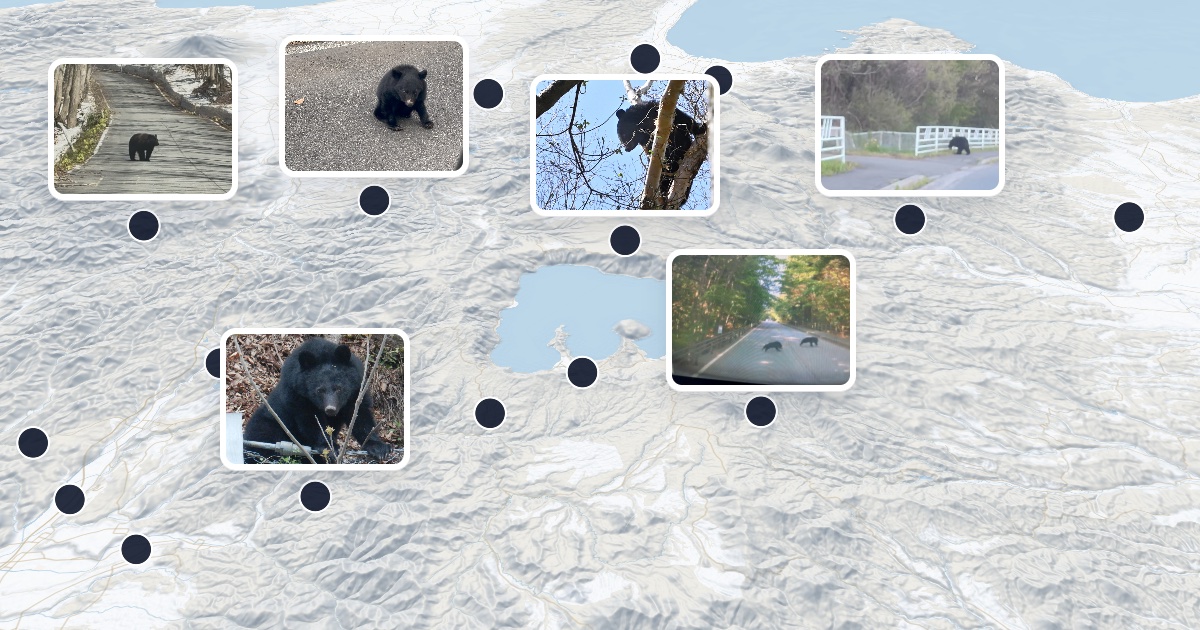
The bears are moving into the western outskirts of Tokyo: Several bear sightings have recently been reported in the mountainous Nishitama region of Tokyo, including Okutama and Ome. On 23 August, a man fishing in the Otaba River in Okutama was attacked and injured by a bear. More sightings followed on Wednesday in Ome and Hinode, prompting local authorities to urge residents to remain cautious.

As of 21 August, 154 bear sightings have been reported this year. They are concentrated in mountainous regions in the Tama region in western Tokyo, including Okutama Town and Hinohara Village.

Map of bears spotted in Tokyo online

Map of bears spotted in Tokyo online (NHK)


Since the 23 August attack in Okutama, bears have been seen in Ome at least three times. In the early hours on Wednesday morning, a bear was seen along Ome Kaido Avenue near Hinatawada Station on the JR Ome Line. Some municipal government officials and members of the local hunters' association were called in, and they searched the neighbourhood. However, they did not see any signs that a bear was nearby. At about 1:40 p.m. on Wednesday, a bear was seen on a road near a tourist facility in the Oguno district of Hinode. The town's municipal government told residents to stay alert and said, "If you see a bear, don't go near it. Call the police."


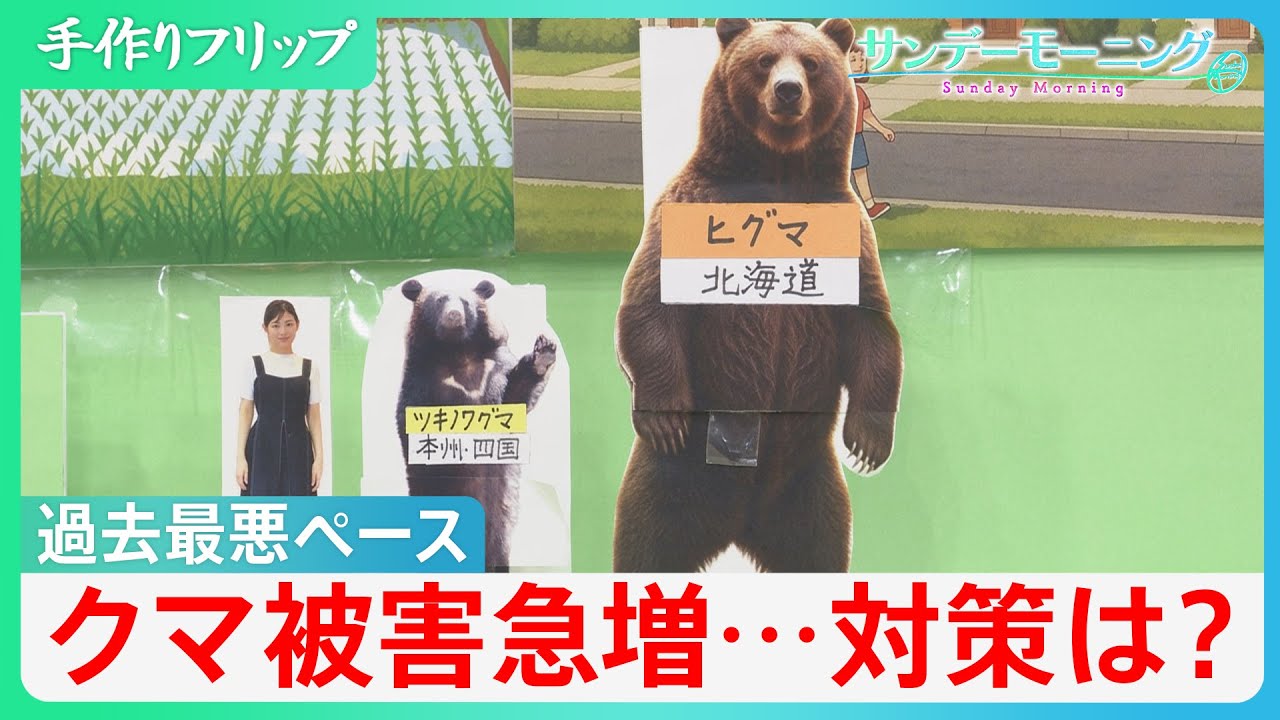
Autumn is the riskiest time of year in Japan for bear encounters, as the animals become especially active while stocking up on food before hibernation. The country has two native species: the brown bear (羆, higuma), which lives in Hokkaido , and the Asiatic black bear (月の輪熊, tsukinowaguma), found in Honshu and Shikoku . A fully grown brown bear can reach nearly three metres in height and is powerful enough to kill a horse with a single strike. They can cover 100 metres in around six seconds, while black bears manage the same distance in about eight.

Encounters with brown bears are hazardous, with fatality rates at 24% compared with 2.3% for black bear attacks. Between April and August 2025, 69 people were killed or injured in bear encounters, matching the pace of 2023, when a poor acorn harvest triggered Japan's worst year on record for bear attacks. Surveys have confirmed that bear populations are spreading into new areas across the country, except for Shikoku. Hokkaido's brown bear numbers have more than doubled over the past three decades, while black bears have expanded their habitat range by 1.4 times. Today, Chiba Prefecture is the only region of Honshu without wild bears, whereas in Kyushu, the species has already become extinct.


Bear attacks have been increasing across Japan, and the number of deaths this fiscal year has already reached the record level seen in 2023. People studying the issue said the rise is not only due to more bears but also because human activity has spread further into mountain areas, making the divide between wildlife habitats and towns less clear.


According to preliminary data from the Environment Ministry, incidents have occurred mainly in Hokkaido and the Tohoku region, but also in Tokyo and western Japan.

2023: 219 victims (6 deaths)
2024: 85 victims (3 deaths)
2025 (as of October): 109 victims (6 deaths)

The number of victims in the first half of fiscal 2025 has already surpassed the total for 2024, and fatalities have reached the same level as the record year of 2023.
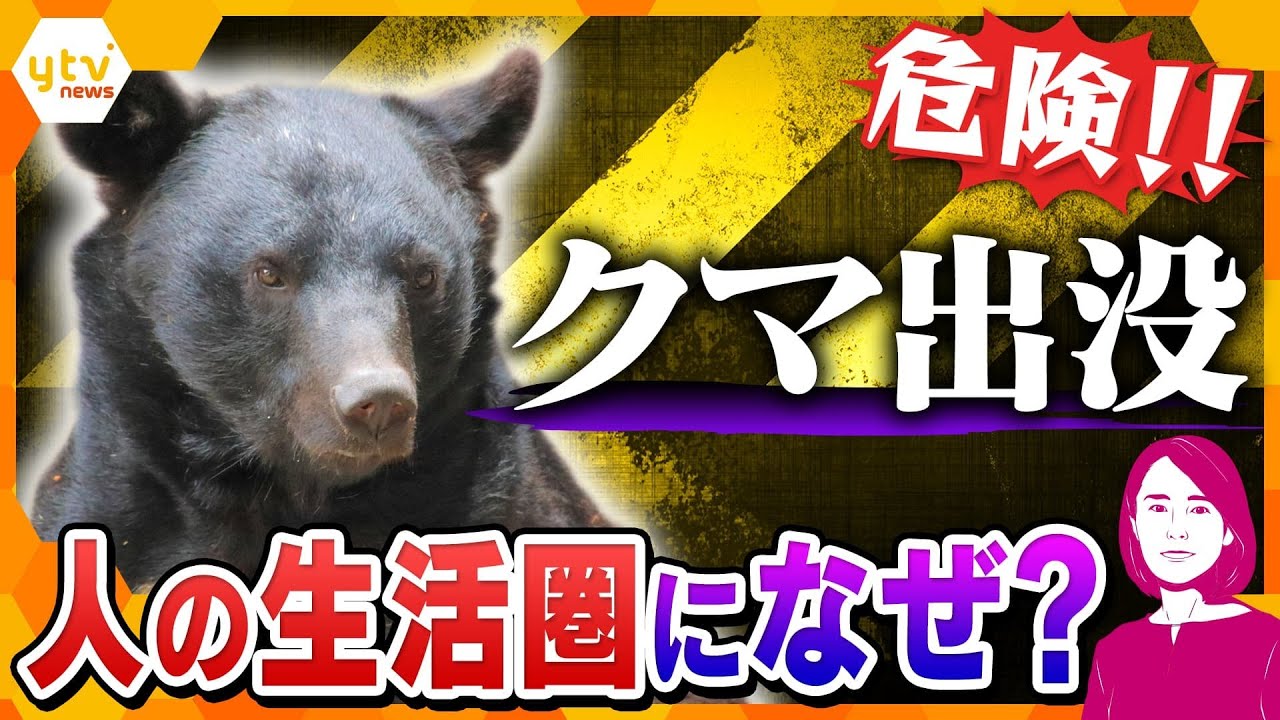


On Tuesday, an agitated bear roamed the aisles of a supermarket in central Japan, injuring two men and frightening shoppers, while separately, a man was found dead in a suspected mauling.

Bear injures two in Japan supermarket; man killed in separate attack

 
I started going to hunting camp around 1957. As a child , I was terrified a bear would eat me. That fear was always with me when in the woods. In all my time in the woods , I have only seen 2 bears that were small and ran in fear of me.
 
People studying the issue said the rise is not only due to more bears but also because human activity has spread further into mountain areas, making the divide between wildlife habitats and towns less clear.
Interesting. It's been a while, and no source for this, but I once heard that bears (and pigs, etc) were getting closer--coming into more populated areas--because there were fewer people going into and "managing" mountain or wilder areas. Or foraging there. So the 'boundary' or where bears and people meet has shifted from farther into the mountains to city-adjacent. A sato-yama/里山 thing.
 
One lucky New Zealander! This happened on a mountain trail in Niigata. :oops:

Bear attack in Myoko, Niigata

Halloran was on one of his routine runs in early October when he saw something he'd never encountered before: two Asiatic black bears. He immediately knew he was in trouble. Bear attacks have been rising across Japan, with more than 100 people injured so far this year and at least seven killed, the highest since records began in 2006. One recent deadly attack took place just a few miles from where he lives. Now, he was alone on the trail, kilometers away from where he'd parked his car, contemplating how to escape the two bears staring at him from bushes less than 30 meters away. When he tried backing away slowly, one bear began moving toward him, said the 32-year-old originally from Auckland, New Zealand. "It was around my size, it was an adult, it was at least 60 or 70 kilos (about 132 to 154 pounds)," he said. Halloran decided not to run, afraid it would chase and jump onto him from behind. So instead, he tried to scare it off by shouting. "I could see it was going to lunge at me – and it did." He held up his arm in front of his face, "and it grabbed my arm, and I got pushed to the ground," Halloran said. "Then in one bite, my arm was done." The bear then attacked his leg, leaving claw punctures and scratches, before it backed off. Running on adrenaline, Halloran managed to get up, then engaged in a brief "standoff" with the bear – before it disappeared back into the bush.
 
One recent deadly attack took place just a few miles from where he lives.
And he still goes out running unprepared. Seems like he was trying for a Darwin Award. Maybe next time.
 
I know you can't carry a handgun in bear territory , but can you buy & carry the super strong bear spray?

91yDL+przCL._AC_UF350,350_QL80_.webp
 
There have been many jokes about bear poop being filled with bells and smelling of bear spray. The other joke is always about escaping a bear attack with just a tiny .22 gun. It then goes on about how , he shoots his hiking buddy in the knee.
 
Japanese researchers reported on Sunday that people attacked by bears were less likely to suffer serious injuries if they lay face down and shielded their heads and necks. The finding comes as Japan faces an unprecedented rise in fatal bear encounters this fiscal year. Nine people have died in bear attacks nationwide since April, marking the highest number ever recorded in a single fiscal year.

A research team from Akita University's graduate school in northeastern Japan examined seventy cases of bear-related injuries that occurred in the prefecture during fiscal 2023, a year that saw six deaths across the country — the second-highest total on record. Their study found that wounds to the face, hands, and arms were most prevalent, but every one of the seven people who protected themselves by lying face down and covering their head and neck escaped with only minor injuries.

Yuki Ishigaki, an orthopedic surgeon at the graduate school, said, "It is important for people to understand bear habits and learn effective ways to protect themselves from attacks." Ishigaki said his team reviewed injury details by linking Akita Prefecture's database on bear-related casualties with medical records of people who sought treatment in the area during fiscal 2023. The 70 injured people had an average age of 70. Facial wounds accounted for 55.7 percent, followed by hands and arms at 54.3 percent and head injuries at 44.3 percent, with most cases affecting mainly the upper body.

Researchers explained that since bears tend to stand upright when threatening or attacking, victims are most often struck in the face or head. The Environment Ministry advises that anyone confronted by a bear at close range should curl up or lie face down, covering their head, neck, and abdomen to reduce the risk of serious injury.

All seven people who adopted this position avoided life-threatening harm, though many still sustained cuts or bruises to their hands and arms. It also noted that the impact of bear attacks was comparable to that of traffic accidents, with victims spending an average of nearly thirteen days in hospital and continuing outpatient care for around three months afterwards.

 
That's extremely valuable info--thanks!

But after you have ducked and covered (with no life-threatening injuries), how do you determine when it is then safe to get up? (When do bears typically leave after an attack?) That would also be helpful info.

I mean, you wouldn't want to get up too soon, right? Maybe just nap there for a while--let the bleeding stop, and then get up?
 
Last edited:
This might be a typical bear attack (happened two weeks ago in Akita): from behind, lunging at the neck or face, then legging it.


I would assume it's pretty challenging to suppress your urge to escape. Curling up and preparing for the blows and bites takes guts.
 
Back
Top Bottom