I used to try to remember how to write hiragana and katakana, but I find that after practicing writing them all, after a few days I would forget how to write the majority of them.
The only way around this is practice. You need to practice reading and writing kana at least 20 minutes a day.
Here is a website that has kana and no kanji. Go down to the links for Princess Kaguya and Momtaro. Copy the kana from the screen and write them down.
Either if you have memorized the shape of Hiragana manually or by using mnemonics provided by our guide, you will still need to practice a lot of reading to lock them up to your long term memory. But yes, it’s not easy to gather material to practice Hiragana. So we try to create a page

crunchynihongo.com
Here is another website.
Looking for free Japanese reading practice online? Check out out monster list of websites and resources for beginners, intermediate and advanced learners!

teamjapanese.com
Next is a website that reads kana out loud and you can write them as you hear them.
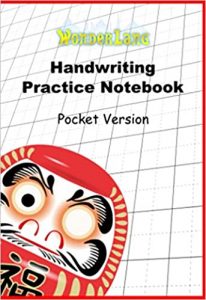
Here is some material to help you practicing hiragana and katakana listening and writing.

wonderlang.xyz
Next is a website that sings Japanese songs and you can read the kana as you listen to the songs. Click on a song, click on the "Japanese page" link in the upper left corner. At the bottom of the page are two links to sound files. Click on the sound-file on the right side, an you can listen to the song while reading the kana on the page.
I also find long and short vowels hard to understand,
Japanese is a short-syllable polysyllabic language, where the syllables are spoken with a quick, staccato sound. About 800 years ago, the Chinese language was introduced to Japan. The Chinese language is just the opposite, using a much smaller number of syllables per sentence and syllables that are comparatively long. For example, the sentence for "good morning" in Chinese has only three syllables, whereas the Japanese sentence has nine syllables.
The sentence for "I don't want it" in Chinese has only two syllables, whereas the Japanese sentence has seven syllables.
When Japanese people first heard spoken Chinese, they quickly noticed the sounds of the two languages were quite different, including the use of long syllables in Chinese and short syllables in Japanese. The Japanese people developed a way of distinguishing long syllables in Chinese and short syllables in Japanese, which is why we have words like KOKO (a 'Japanese' word') and KOUKOU (a 'Chinese word'). The distinction is very important.
Do you write it as おはよ or おはよう or おはよー?
It is written おはよう. If you see おはよー, I would say it is a type of slang, and you should not use it.
ー should be used with katakana only.
Correct.
What are these topics, if you don't mind sharing?
Intermediate-level topics
Self-intro (quick summary of place of residence, type of personality, hobbies, family, friends, etc.)
Family
Friends
- My friend who has a 'weird' personality
My house/apartment/dorm room
My dream house
Shopping
- Shopping for food
Cooking (how to cook rice, cook hotpot, etc.)
Eating out
Getting sick
Getting injured
Hanging out – free time
- Playing video games ("I made ten million points and the top level!")
- I know how to fix a computer.
- I know how to work on a car, change a tire, change oil, etc.
Typical day, typical weekend
Chores, cleaning, laundry, etc.
Sports, doing and watching (badminton, bicycle, skateboard, skating, ice skating, snow skiing, water skiing, etc.)
- Extreme sports (skydiving, bungee jumping, climbing up the face of a mountain, etc)
Exercising (running, jogging, weightlifting, working out, running 100 meters and 800 meters and 1 kilometer, etc.) ("If I ran 800 meters I would die!")
Music – listening and playing
- I want to learn how to play the guitar, piano, I am learning now, etc.
Watching movies
- Tell the story of a movie, for example, Titanic.
Watching TV
- my favorite T show
Traveling in Japan
Traveling to foreign countries
Transportation (bus, train, etc.)
Car
Money
Weather
- Getting caught in the rain while waiting for the bus
- Dealing with a pickpocket on the bus
- Dealing with bad weather (got caught in a snowstorm, drenched in the rain, slipped and fell on some ice, got heatstroke, got blinded by dust, typhoon damage, etc.)
Pets
Animals
- Exotic animals and pets ("My friend has a pet boa constrictor!" "I want to ride a horse and ride an elephant.")
National holidays
- Summer vacation, etc.
- Japanese New Years. Going to a temple on New Years.
My life story (includes high school life)
- The first thing I remember in my life
- An injury I had as a small child (scraped my knee, fell off my bike, cut myself, burned myself, got an injection, etc. I had my tonsils out.)
- I stole some candy when I was a child.
- My best teacher in elementary school
- My worst teacher in elementary school
College life
- I flunked a test or class.
- The College entrance exam was a nightmare.
Studying English
- My parents force me to study English.
Work
My life plan
My career
- My dream job (be a rock star, astronaut, symphony pianist, president of this university, Prime Minister of Japan, etc.) I want to be a bum and stay home all day!
Fashion
- Shopping for clothes
Getting my hair cut/done
Generation gap
- Arguments I have/had with my parents (especially a girl who argues with them about clothes/money)
Japanese culture
- Food (how to make rice, make gyoza)
- Language
- Chinese characters
- radicals
- Japanese art and paintings
- Japanese 'dance' and stage
- Japanese music
- going to karaoke
- Games – cards, shogi, igo, etc. Japanese New Years card games.
- Japanese history
Pollution
- Air pollution
- Bus exhaust
- Water pollution
- Supermarket plastic bags – good or bad?
- My hometown's environment
Religion
- Buddhism
- Islam
- Christianity, etc., as they are practiced in Japan
Literature
- Tell the story of Momotaro, Hachiko the Dog, etc. Tell only the important points in five minutes or less.
Philosophy
- Shintoism
- Confucianism