Need a word or phrase translated?

Kalan:
I like her.彼女が好きです。
'Cause I like/love her.彼女が好きだからです。
Clarity:
友達は午後3時に
->友達には午後3時に or
->午後3時に友達に
昼ご飯ゐたてから
->昼ご飯を食べてから
詰らない日
->つまらない日 We usually use hiragana.
いま、何もしないこと。
->いま、何もしていません。

Thanks for the help :-)
 
A couple of questions having to do with (quite) informal japanese:

1) Verbる形 + んじゃね --> This is an exclamation that means 'Don't do ___!'...right? e.g.: 人の顔をじろじろ見るんじゃねー

2) Verbです形 + やがる --> This is used to show disdain for another's action? Is it used in any other cases?

3) What is the difference between ぜ and ぞ? Is there a difference in nuance between them, or cases where using one would be acceptable but not the other?

4) What is going on in cases where it seems like there is an extra て after the て form of a verb? Its not a って so its not indicating a quotation. It just seems like a superfluous て is added onto a request using the て form. I don't have a great example on me, but something like "ちょっと待ってて." Why the extra て?

Thanks in advance...
 
> 1) Verbる形 + んじゃね --> This is an exclamation that means 'Don't do ___!'...right?

Yeah, pretty much. It's not always used as a command, though. Sometimes more of a "What are you doing X for!?" or just showing anger.

> 2) Verbです形 + やがる --> This is used to show disdain for another's action? Is it used in any other cases?

Yeah, verb stem plus やがる shows disdain, dislike, annoyance.

> What is going on in cases where it seems like there is an extra て after the て form of a verb?

It's a shortened いて.
So ちょっと待ってて is a short form of ちょっと待っていて.
It's not too different than just saying ちょっと待って, but the nuance would be more of a continious action. "Wait there (and stay)" sort of.
 
It's a shortened いて.
So ちょっと待ってて is a short form of ちょっと待っていて.
It's not too different than just saying ちょっと待って, but the nuance would be more of a continuous action. "Wait there (and stay)" sort of.

Huh. Interesting. I will have to try to keep my ear open to hear when people say てて as opposed to just the て in commands/requests. As always, thanks for the help.

Any idea on ぜ and ぞ? Also, one other question, but how do you get those dots on the left of your characters that are used for emphasis/drawing attention to repetition/mispronounciation? You know, the big black ones used during vertical writing? What do you do on a Japanese keyboard to get those?
 
> Any idea on 窶堋コツ and 窶堋シツ?

When used at the end of an utterance to sound "cool" or "masculine", I'm pretty sure they're interchangeable.
Just be aware that 窶堋シ has some other functions as well.
 
ニューヨーク is how you write New York in katakana. There is no kanji for it.
 
Could you please help me? I can't figure out how to write New York in kanji.
Thank you

You can use 紐育, but it is EXTREMELY outdated and almost nobody will know what it means. Don't use it for a tattoo.

As the poster above mentioned, it's commonly written as ニューヨーク in katakana.
 
You can use 紐育, but it is EXTREMELY outdated and almost nobody will know what it means. Don't use it for a tattoo.
As the poster above mentioned, it's commonly written as ニューヨーク in katakana.
It's written as 紐約 in Chinese. If you're going for overall recognition and you have to use Chinese characters, you should probably go with this, as it's at least still used in Chinese.
 
One more question: 言っておく

This is used all the time in the manga I am reading now (花より団子). Times when the ておく is used after the verb 言う seem to outnumber the times when it isn't, it appears that often. I think I have a good feel for the ておく form most of the time, but I am having difficulty wrapping my head around how its used with 言う. Would it translate like 'I had to tell you' or 'I wanted you to know'? Something else?

Thanks in advance.
 
> Any idea on ぜ and ぞ?
When used at the end of an utterance to sound "cool" or "masculine", I'm pretty sure they're interchangeable.
I think so too. But does anyone really use ぜ anymore ? Maybe it is when men get together in casual conversation, or to sound patronizing to a subordinate, but I don't come across it nearly as much as ぞ...
 
> One more question: 言っておく

When it shows up is it sort in a lecturing tone?

"Let me tell you something."
"Let me set the record straight."

It can be used like that to put emphasis on the fact that you are stating something for some inferred purpose.
 
Let me set the record straight--that sounds good. There are a lot of records that must be set straight in this story, as no one has any idea what anyone else's real intentions are.

I kinda of figured that's what it would be, that you are telling someone something to make sure he knows it before he makes his next move. It's interesting that the form would appear there though--I just never would have expected it...
 
Well ておく is usually used when something is done for a future purpose or reason, so I think it works here in that regard, too, with 言っておく. (I'm telling you this for a reason, so listen.)
 
If anybody has time, I would greatly appreciate it if someone could check my latest blog entry here. It's a how-to guide on how to get Japanese and Korean running on a mobile device. Many Japanese people have tried to read my English version, to which they usually say 「よく分からない」. So I decided to give translating it into Japanese a stab.

It's a goldmine of errors, I'll admit my Japanese is..not the best ><
 
ニューヨーク is how you write New York in katakana. There is no kanji for it.
orochi;549785 said:
You can use 紐育, but it is EXTREMELY outdated and almost nobody will know what it means. Don't use it for a tattoo.
As the poster above mentioned, it's commonly written as ニューヨーク in katakana.
It's written as 紐約 in Chinese. If you're going for overall recognition and you have to use Chinese characters, you should probably go with this, as it's at least still used in Chinese.

Thank you very much :cool:
 
As a response to an inquiry like this, I would think it more natural to say something like 好きなんです。Where the なん presents the preceding clause as some kind of explanation
Really ? Why? If anything, I think 好きだから is probably more natural. Or maybe I should say more assertive/affirmative sounding because 好きなんです could be interpreted as an indirectly defensive plea ("Because I like her -- that's why").

I think so too. But does anyone really use ぜ anymore ? Maybe it is when men get together in casual conversation, or to sound patronizing to a subordinate, but I don't come across it nearly as much as ぞ...
Anyone have any updates on the current uses of せ? :)
 
Last edited:
好きなんで is more similar than 好きなんです to 好きだから.
「何で一緒にいるの?」「好きなんで……」

好き な ので
好き だ から
These sound almost same to me.


ぜ sounds little uncool recently, but it still sounds natural when it's used in particular expression like 「~しようぜ」 etc.


窶堋コ sounds little uncool recently, but it still sounds natural when it's used in particular expression like ツ「ツ〜窶堋オ窶堙ヲ窶堋、窶堋コツ」 etc.
 
Hello everyone
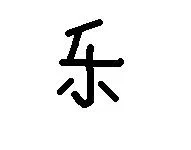
I've already asked in the kanji forum what does this mean but I was told it was Chinese
today I asked the owner of the tattoo about the language and he said it was Japanese
so, I'm asking again 🙂:
Does anyone know ?
 

Attachments

  • alabala.webp
    alabala.webp
    1.5 KB · Views: 161
Checho:
It is Chinese character only used in China means 'joyful'.
We Japanese use 楽 instead of it.
Ordinary Japanese never know of the character.

xin_1a998943bb764bac9f481e9dea24ce4e_bkmu309154.webp
 
好きなんで is more similar than 好きなんです to 好きだから.
「何で一緒にいるの?」「好きなんで……」
or 好きだからなんです, which is not to say it is anything like すきなんだから。。。:-)
 
Back
Top Bottom