News Aichi town wants residents to limit smartphone use to two hours a day

thomas

Unswerving cyclist
Admin
Joined
14 Mar 2002
Messages
21,050
Reaction score
18,903
Perhaps not such a bad idea.

In the town of Toyoake in Aichi, officials are debating a proposal that would ask its 69,000 residents to limit smartphone use to just two hours a day. The idea, submitted to the city assembly this week, is believed to be the first of its kind in Japan and has sparked discussion about how communities should address growing concerns over screen dependency.

Mayor Yoshihiro Nagino explained that the restriction would not apply to time spent on work or study. Instead, it is meant as a guideline to encourage people to reflect on their daily habits. He also made clear that there would be no penalties for exceeding the limit, since the measure is not designed to be enforced in a strict sense. If the assembly gives its approval, the town expects to implement the guideline in October.
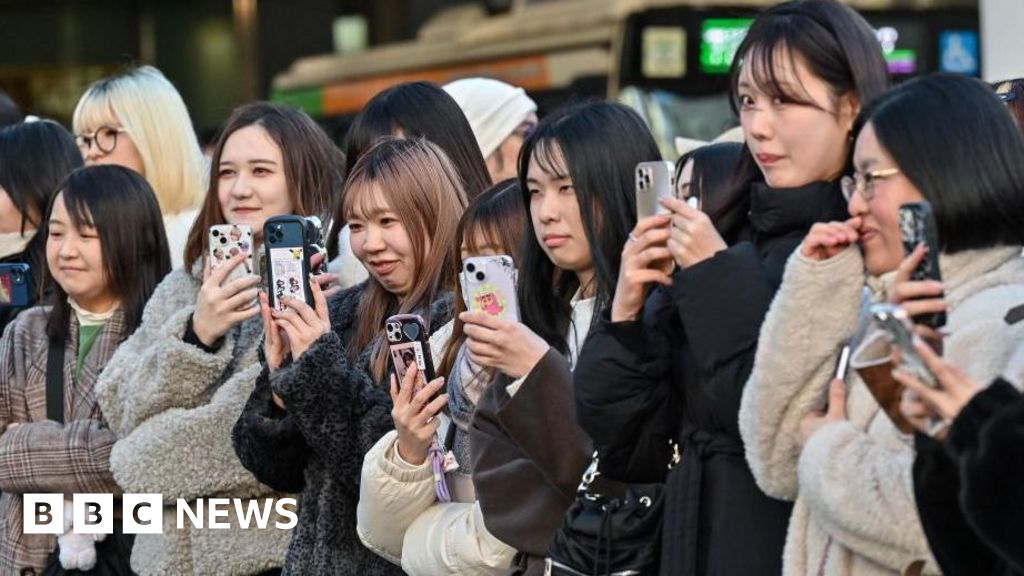
Smartphone use during non-leisure activities, such as watching videos while cooking or exercising, online learning and practicing for an e-sports tournament, will not count towards the two hours. Toyoake Mayor Koki Masafumi said he recognised smartphones were "useful and indispensable in daily life" but pointed out that some students were missing school because they refused to leave home without their phone. Adults were also sacrificing sleep or time with families so they could keep scrolling on their phones and tablets, the mayor said. More than 120 residents called and emailed local city authorities during a consultation period, according to Japanese news outlet Mainichi, with the majority (80%) not happy about the proposal. Some, however, showed support for the bill. The proposal suggests that primary school students should stop using devices by 21:00 while older students and adults should stop by 22:00.


Toyoake! That's in my old stomping grounds!

Regarding this measure, I think it's well-intentioned, but from a practical standpoint the only effect it will have is a short-term response as people debate the measure and are more generally aware of screen time. I suppose the people in charge of Toyoake wanted to feel (and show) that they were doing something at least.
 
On Wednesday, Toyoake will begin enforcing a new ordinance that encourages residents to limit personal smartphone use to two hours daily. The recommendation excludes work and study, but since it was unveiled in late August, the so-called "two-hour rule" has gone viral on social media, sparking both strong approval and sharp criticism. Toyoake's mayor, Masafumi Koki, insists he has nothing against smartphones. He admits he relies on his own to keep up with baseball scores and to navigate on the job.

Toyoake Mayor Masafumi Koki

Toyoake Mayor Masafumi Koki (via Kyodo)


What troubled him, however, was watching children lose sleep and families spending less time together as screens took over daily life. That concern pushed him to suggest a simple guideline for his city outside Nagoya: perhaps two hours a day is enough. That is why the city decided to take a bold step: to write their concern into an ordinance, not to police people's behaviour but to send a message.

"If we had only put out a pamphlet or a slogan, people would have ignored it," Koki says. "But by making it an ordinance, people took it seriously." Koki insists he has nothing against smartphones. He admits he relies on his own to keep up with baseball scores and to navigate on the job.

But Koki shrugs off the backlash. For him, the ordinance is not about punishment; it's about sparking reflection. "If someone hears for two hours, they'll stop and think about how long they really use their smartphone. That's the point." The roots of the ordinance lie not in abstract theory but in the lived reality of children and families in Toyoaki. In recent years, an increasing number of students in the city have stopped attending school, often spending long hours on their smartphones at home. Koki does not blame smartphones outright, but he has seen how easily they become a crutch for lonely, isolated children.

The mayor acknowledged that smartphones had become an indispensable part of daily life. He said the city wanted residents to pause and reflect on whether constant use was eating into their rest or disrupting family conversations. That concern, he explained, was the reason Toyoake chose to enshrine the idea in an ordinance. The intention, he stressed, was not to control people's behaviour but to send a message that would resonate. A simple leaflet or slogan, he believed, would likely have been brushed aside, whereas giving it the weight of an ordinance ensured people paid attention.

 
The NYT on Toyoake's decision to (symbolically) limit the use of digital devices. Some residents view the rule as an overreach.

The idea came to Masafumi Kouki, the energetic mayor of the Japanese city of Toyoake, on a summer day as he pondered rising truancy rates at local schools. Toyoake's nearly 68,000 residents, especially children, seemed increasingly addicted to their digital devices, he thought, so why not try to reduce the amount of time they spent staring at screens? Within a few days, Mr. Kouki and his staff had drafted a 2,400-character ordinance limiting the use of smartphones, tablets, game consoles and computers to two hours per day for Toyoake's residents, not counting work and school hours. The ordinance, which goes into effect on Wednesday, will make Toyoake one of the first cities in Japan to attempt to use the platform of the government to get its citizens to put down their phones.

Gift article:
 
I don't think the issue is 'screen time' per se, but what is being displayed during that time. Mobile phones have many positive aspects to them; access to this forum, for example (although it doesn't load on my phone for some reason🤷🏾), kanji study apps, science websites etc. The policy should be aimed at reducing social media time with its purposely embedded, doom-scrolling algorithms, scams and much worse (influencers) etc to which the platforms seem to turn a blind eye, and are likely to be the 'modern tobacco', damaging people's (mental) health rather than their bodies.

Cat and dog videos are fine, though 🐈‍⬛🐕😑🤗🥰
 
I don't think the issue is 'screen time' per se, but what is being displayed during that time. Mobile phones have many positive aspects to them; access to this forum, for example (although it doesn't load on my phone for some reason🤷🏾), kanji study apps, science websites etc.

I'd say both screen time and content matter. In my childhood, it was "TV time". Fortunately, back then, TV programs were not aired around the clock. :LOL:


... access to this forum, for example (although it doesn't load on my phone for some reason🤷🏾)

If you send me a direct message with your IP address, I can check whether it's blocked by CF or our server.
 
The Guardian challenged Japanese in their 20s to limit their cellphone time to two hours a day. There were resounding successes and abject failures.

Moriyama, who habitually checks LINE – an instant-messaging, news and entertainment "super app" popular in Japan – as well as TikTok, Instagram and X\, conceded that staying off the sites, or at least dramatically curtailing his usage, had been a struggle. "I spend around eight hours a day on my phone, so two hours is way too little … and not enough time for me to stay up to date with everything," he says. "In the end, I used my smartphone for an hour and 50 minutes, which is a massive reduction on my usual screen time. I used the extra time to read a book, study a little and go to the gym, so my day wasn't wasted." His colleague Tomomi Hanaoka also managed to rein in her habit. "I spend about three hours on my phone on weekdays and six or seven hours at weekends, so two hours felt very short. Most people need at least three to four hours," says Hanaoka, who usually "can't do" without LINE, TikTok and Instagram.

 
Got my cell phone about 3 years ago. I've turned it on about 5 times since I got it. I pay TracFone $100US a year only for calling 911 in an emergency. I think I use my landline just once or twice a month. Terrible when you outlive everyone else and no one left to talk to , LOL.
 
Got my cell phone about 3 years ago. I've turned it on about 5 times since I got it. I pay TracFone $100US a year only for calling 911 in an emergency. I think I use my landline just once or twice a month. Terrible when you outlive everyone else and no one left to talk to , LOL.
Good thing you can hang out here with the rest of us old(ish) farts!
My phone is basically a glorified notification device that tells me if someone has written, called, messaged, emailed, or similar. I then check who or what it's all about on my pc (I really hate using my phone for anything 😅).

Aren't 'emergency calls' free in the USA?
I assume the $100 Frank mentioned is for having a subscription so he can call in the first place.
 
Ah I see. That's free here (and in Europe, I think); you can make emergency calls even if you're not subscribed to a provider.
Without a SIM card? Well, today I learned! I've never had to call emergency services so I just assumed you needed a SIM card for it. That's pretty neat.
 
Without a SIM card? Well, today I learned! I've never had to call emergency services so I just assumed you needed a SIM card for it. That's pretty neat.
You need a SIM card but you don't need to have a monthly subscription to a phone service provider to make emergency calls. It's to avoid people with lapsed subscriptions getting into difficulty during an emergency…like having one's phone snatched 😐

I bought a really cheap SIM card (you can get them for as little as £1.48!) to make the phone work, then I subscribe to a provider of my choice on a monthly basis and, crucially, chop and change between providers when a better deal comes along.
 
I keep mine active just in case my wife needs something special and lets me know to "turn on and tune in" to fill her demands , LOL. As far as I know , if you cell will turn on , it can dial 911. The few times I've had to use it , I forget it's answered by our state police and you then have them transfer you to your police station nearest to your location.
 
Yes, phones without an active plan can contact 911 (emergency services). And the newest phones can even do this via satellite.
But most people who carry "emergency" phones carry them for non-emergency urgent matters too. Like if their car breaks down.

The ability to call 911 on a deactivated phone saved the Turpin childrens' lives.
 
Ah I see. That's free here (and in Europe, I think); you can make emergency calls even if you're not subscribed to a provider.
It is free. You do not even need a SIM or a contract with any provider. This is 911 only. Even old half dead phones show 911 calls only.

Yes, calling 911 is free in the USA, and you can do so from any phone, including mobile phones with no service or a canceled plan. Federal law requires that all 911 calls be connected without a user depositing money. While the call itself is free, you may still incur charges for services like ambulance or fire response depending on your insurance and the nature of the emergency.

He could use the phone on wifi for browsing at home and for 911 ONLY he does not need any plan at all.
 
There's a good reason why reducing screen time for children, in particular, is important and it's to do with the brain's Default Mode Network (DMN). It's a very important module of the brain which has many important functions including self-identity, theory of mind, moral reasoning, social evaluation…the very things that make us human, perhaps (do have a look at the link). However this module is only activated and processing incoming information when we're doing nothing; staring into space, daydreaming, being bored! You need downtime, where you're doing nothing at all, for the DMN to perform it's important function and in children the activation of the DMN stimulates it's normal development just like exercising stimulates muscles to grow and strengthen. However, children and indeed adults, are seldom bored these days because the moment that state threatens to manifest, they reach for their phone and occupy themselves meaning the DMN isn't activated or in children, doesn't develop normally.

I hypothesise that this continuous occupation of the brain with mobile phones and tablets etc, might be responsible for the recent various mental health issues that are epidemic; body dysmorphia, gender dysphoria and all the other dissatisfactions that seem to be afflicting people. I'd love to test this 'Sahal hypothesis' (😉) but I'm retired, lazy and don't really care 😆
 
The ordinance seems to be (partially) successful: almost 30% of residents and commuters told a recent survey that they haven't changed their usage but have become more mindful since the ordinance went into effect.

[...] 7.1% of respondents said there was a change, 65.4% reported no change, and 27.5% noted no change but increased awareness. The city government has pointed to adverse effects of prolonged smartphone use including sleep deprivation. On sleep duration, 2.7% said there was a change, 84.6% reported no change, and 12.6% responded there was no change but they became more conscious of it.

One of the ordinance's aims is to promote "dialogue within families." The survey also asked whether the ordinance had prompted changes in family conversations or lifestyle reassessments, with 39% saying "yes" and 61% saying "no." A city official noted that about 40% found it a catalyst for changes in family dialogue, saying, "The interest shown by many citizens in the ordinance is seen as a factor, and we see it as having had a certain positive effect."

 
This didn't really work out as planned.

Toyoake drew national attention when it adopted an ordinance urging residents, especially children, to cut back on smartphone use. But a city survey suggests the nonbinding measure, which took effect in October, has so far fallen well short of its aims. Results released on 26 March showed more than 60% of junior-class kindergarten children in the city had been exposed to smartphones and other digital devices before the age of four.

Use among older children was also heavy. More than 20% of junior high school students spent 4 hours or more a day on such devices.
Toyokawa's ordinance encourages all residents to limit recreational smartphone use to no more than 2 hours a day. It also calls on elementary school pupils and younger children not to use smartphones after 9 p.m. For children aged 12-17, it recommends that screens be locked by 10 p.m. each day. The rules are advisory, not enforceable, and the survey appears to show habits have not shifted much. At least not yet.

According to the survey, digital devices such as smartphones were used for two hours or more a day by: 18% of first- through third-graders and 35% of fourth- through sixth-graders at elementary school; and 65% of junior high school students. Thirty percent of the fourth- through sixth-graders at elementary school and about 40% of junior high school students said they sometimes stayed up late to use smartphones and other devices. The survey showed that parents and guardians of more than 60% of junior-class kindergartners, who are typically 3 or 4, and more than 40% of pre-kindergartners started using digital devices before their fourth birthdays. More than 20% of senior-year kindergartners, who are typically 5 or 6, used the devices for two hours or more a day, the survey showed. "The findings have shown the use of digital devices is spreading to younger ages to a greater extent than we ever thought," Toyoake Mayor Masafumi Kouki said. "We hope to step up our awareness-raising campaigns against smartphone addiction." Some 55.3% of parents and guardians said they themselves used digital devices for two hours or more on weekdays.

 
This didn't really work out as planned.

Toyoake drew national attention when it adopted an ordinance urging residents, especially children, to cut back on smartphone use. But a city survey suggests the nonbinding measure, which took effect in October, has so far fallen well short of its aims. Results released on 26 March showed more than 60% of junior-class kindergarten children in the city had been exposed to smartphones and other digital devices before the age of four.

Use among older children was also heavy. More than 20% of junior high school students spent 4 hours or more a day on such devices.
Toyokawa's ordinance encourages all residents to limit recreational smartphone use to no more than 2 hours a day. It also calls on elementary school pupils and younger children not to use smartphones after 9 p.m. For children aged 12-17, it recommends that screens be locked by 10 p.m. each day. The rules are advisory, not enforceable, and the survey appears to show habits have not shifted much. At least not yet.


Coincidentally, I'm taking a break from copy-editing a paper on smartphone use and some experimental measures taken to reduce its use among young people! A few comments on the article.

1) 'The results showed digital device use is spreading to increasingly younger ages. Children are using them for longer hours, at the cost of fewer hours of sleep, particularly as they move on to upper grades.'

They mean 'has already spread', not 'is spreading'. They cannot conclude that the spread continued during the period of the study unless they assessed smartphone use before and after implementing the ordinance.

2) And where are the 'before' and 'after' results? It appears that Toyokawa introduced the ordinance without carrying out a survey beforehand to establish the size of the problem. Smartphone use could have been even greater before the ordinance. It seems like a potentially valuable piece of research has produced results of little value because of this omission, as the effect of the ordinance has not been examined. Or there is no omission and the article is very badly written up.

3) The figures for smartphone use, though not reassuring, are relatively good compared with those from other countries, where average daily use of 7 hours among young people is not uncommon.
 
A solution to this problem appears to have been found.
Japanese dev made an app that forces you to take breaks with a fat cat!

"Cat Gatekeeper"

What it does
It tracks how long you've been browsing (especially on sites like YouTube or TikTok)
After a set time (e.g. ~60 minutes), it forces a break
A big animated chonky cat appears and blocks your screen
You literally can't continue until the break time finishes

So unlike normal "reminder" apps you can ignore, this one is more like:

"Nope. You're done. Go touch grass."

Why it went viral
It's funny (people love the fat cat)
It's actually effective because it removes your ability to ignore it
Clips of people getting interrupted mid-work or mid-scroll spread fast online

From Reddit reactions:

"Boss: why did you miss the deadline?
Me: there was a fat cat on my screen"

One ironic downside

People joked that instead of taking a break…
they just sit there staring at the cat

 
Back
Top Bottom