

The Hiki Incident (比企能員の変 Hiki Yoshikazu no Hen), also known as the Hiki Rebellion (比企能員の乱 Hiki Yoshikazu no Ran) or the Hiki Clan Incident, was a political purge that took place within the Kamakura shogunate on 2 September 1203. It marked a decisive turning point in the early history of the military government. During the struggle, Hiki Yoshikazu (比企能員, d. 1203), one of the shogunate's most influential retainers, and almost the entire Hiki clan were eliminated by forces led by Hōjō Tokimasa (北条時政, 1138–1215). The destruction of the Hiki not only removed the most powerful supporters of the second shōgun but also paved the way for the Hōjō family 's domination of the Kamakura government through the office of shikken (執権, regent).
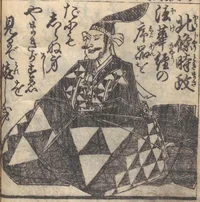
Hōjō Tokimasa (北条時政, 1138–1215)
Background
When Minamoto no Yoritomo died in January 1199, he was succeeded by his eighteen-year-old son Minamoto no Yoriie (源頼家, 1182–1204). Yoriie inherited the title of shōgun, but not the unquestioned authority his father had exercised. Within only a few months, his ability to make judicial decisions independently was curtailed, and political authority was transferred to the Council of Thirteen (十三人の合議制 Jūsan-nin no Gosei), a body of leading retainers established to govern collectively.The arrangement reflected a growing concern among senior gokenin that the young shōgun lacked both experience and his father's political authority. It also ensured that no single individual could dominate the government as Yoritomo had done. Among the thirteen councillors were Hiki Yoshikazu, Hōjō Tokimasa, Ōe Hiromoto (大江広元, 1148–1225), Kajiwara Kagetoki (梶原景時, 1140–1200), Wada Yoshimori (和田義盛, 1147–1213) and several other powerful military leaders.
The balance of power within the council proved fragile. In 1200, Kajiwara Kagetoki, one of Yoriie's closest supporters and an important figure in the administration, was overthrown in what became known as the Kajiwara Kagetoki Incident. His removal left Hiki Yoshikazu as the shōgun's principal political ally within the Kamakura government, thereby significantly strengthening the Hiki family's position.
Hiki Yoshikazu and the rise of the Hiki clan
Little is known with certainty about Hiki Yoshikazu's early life. He is generally believed to have been born into the Hiki family of Musashi Province, in what is now Saitama Prefecture. According to later tradition, he was adopted by Hiki no Ama (比企尼), the widow who had served as Yoritomo's wet nurse and remained one of his most loyal supporters throughout his years of exile in Izu. Since she had no male heir, she adopted her nephew Yoshikazu and made him head of the Hiki clan. Through her influence, he entered Yoritomo's service and gradually became one of his trusted retainers.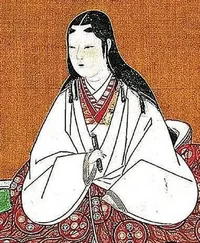
Hōjō Masako (北条政子, 1157–1225)
The Hiki family's political influence reached its height in 1198, when Yoshikazu's daughter Wakasa no Tsubone (若狭局) became Yoriie's consort and gave birth to his eldest son, Ichiman (一幡, 1198–1203). As the maternal grandfather of the shōgun's heir, Yoshikazu became an influential member of the ruling family's circle. He also placed many of his own relatives and followers in positions around the young shōgun, further expanding Hiki's influence within the government. This rapid rise increasingly alarmed the Hōjō family, who had previously occupied the dominant position as the shōgun's maternal relatives through Hōjō Masako (北条政子, 1157–1225), Yoriie's mother.
By the early thirteenth century, two rival factions had emerged in Kamakura. One centred on Yoriie and the Hiki clan. At the same time, the other was led by Hōjō Tokimasa and supported by members of the Hōjō family together with influential administrators such as Ōe Hiromoto. The rivalry went beyond a personal dispute. It concerned the future structure of the new military government and whether political authority would remain with the shōgun or increasingly pass into the hands of his senior retainers.
The succession crisis
The immediate crisis began in the summer of 1203 when Yoriie fell seriously ill. His condition deteriorated rapidly, and by late August, many believed he would not survive. Attention, therefore, turned to the succession.Two candidates stood before the court. The obvious heir was the six-year-old Ichiman, Yoriie's eldest son and the grandson of Hiki Yoshikazu. The alternative was Yoriie's younger brother Senman, better known as Minamoto no Sanetomo (源実朝, 1192–1219), whom the Hōjō family supported.
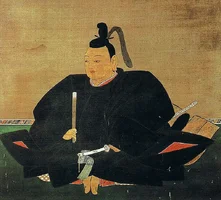
Minamoto no Yoriie (源頼家, 1182–1204)
To Hiki Yoshikazu, the proposal was unacceptable. As Ichiman's grandfather, he expected his grandson to inherit the shogunate in full. He regarded the division as an attempt by the Hōjō family to prevent the Hiki from exercising influence through the young heir. According to the traditional account preserved in the Azuma Kagami (吾妻鏡), Yoshikazu discussed the situation with the bedridden Yoriie and suggested eliminating Sanetomo to secure Ichiman's succession. Hidden behind a screen, Hōjō Masako supposedly overheard the conversation and immediately informed her father, Hōjō Tokimasa.
Whether this conversation actually took place remains uncertain. Later historical sources provide different accounts, and modern historians generally regard the episode with caution. Nevertheless, it became the justification for the events that followed.
The Hiki Yoshikazu Incident
On 2 September 1203, Hōjō Tokimasa acted before the Hiki faction could strengthen its position. According to the traditional account preserved in the Azuma Kagami, he invited Hiki Yoshikazu to his residence at Nagoe (名越) on the pretext of attending a Buddhist memorial service and discussing political matters.Several members of the Hiki family reportedly warned Yoshikazu that the invitation was a trap. He nevertheless decided to go, reasoning that refusing the summons would only arouse suspicion. To demonstrate his peaceful intentions, he wore ordinary court dress and took only a small number of attendants rather than arriving fully armed.
Illustration of the assassination of Hiki Yoshikazu (比企能員) by Nitta Tadatsune (仁田忠常) and Amano Tōkage (天野遠景), depicting the opening of the Hiki Incident of 1203. This reproduction is commonly attributed to the Edo-period ukiyo-e artist Hishikawa Moronobu (菱川師宣, 1618–1694), although the attribution remains uncertain.
When Yoshikazu entered Tokimasa's residence, he was seized by Amano Tōkage (天野遠景, d. 1219) and Nitta Tadatsune (仁田忠常, d. 1203), two of Tokimasa's retainers. They dragged him into a bamboo grove within the compound, where he was killed. A contemporary family record, the Shōdai Monjo, also records that Yoshikazu arrived alone and unarmed, lending some support to this part of the narrative.
News of Yoshikazu's death quickly reached the Hiki residence, known as the Kogosho (小御所), where his grandson Ichiman was staying. Members of the Hiki clan barricaded themselves inside together with their retainers, preparing to resist what they now realised was a coordinated attack.
The Hōjō immediately branded their resistance as rebellion. Under the command of Hōjō Yoshitoki (北条 義時, 1163–1224), a large force of leading gokenin advanced on the residence. Among those said to have taken part were Hatakeyama Shigetada (畠山重忠, 1164–1205), Miura Yoshimura (三浦義村, 1168–1239), Wada Yoshimori, Koyama Tomomasa (小山朝政, 1159–1238), Hōjō Yasutoki (北条泰時, 1183–1242), who was still a young man, and numerous other prominent warriors of the Kamakura government.
Despite being heavily outnumbered, the Hiki fought fiercely. The battle reportedly continued until late afternoon, and several of the attackers were wounded badly enough that they were forced to withdraw temporarily. Hatakeyama Shigetada's troops eventually broke the defenders' resistance.
Realising defeat was inevitable, the Hiki set the residence on fire. Many members of the family committed suicide rather than surrender. According to the Azuma Kagami, Ichiman also perished in the flames together with most of his mother's relatives. Virtually the entire Hiki clan was destroyed in a single day.
The purge continued after the fighting ended. During the night, Yoshikazu's father-in-law Shibukawa Kanetada (渋河兼忠) was executed. Over the following days, suspected supporters of the Hiki were arrested, exiled or put to death, while their estates were confiscated. Shimazu Tadahisa (島津忠久, c.1179–1227), founder of the Shimazu clan , lost his appointments as military governor of Satsuma , Ōsumi and Hyūga because of his association with the Hiki faction. However, he later recovered much of his standing.
The fall of Yoriie
Yoriie, meanwhile, recovered sufficiently from his illness to learn what had happened. Far from accepting the destruction of his supporters, he reportedly reacted with fury. After discovering that his son and his wife's family had been wiped out, he ordered Wada Yoshimori and Nitta Tadatsune to eliminate Hōjō Tokimasa.The plan never came to fruition. Wada Yoshimori informed Tokimasa of the shōgun's orders, allowing the Hōjō to move first once again. Hori Chikaie (堀親家), who carried Yoriie's written command, was arrested and executed, while Nitta Tadatsune himself was killed only a few days after taking part in Yoshikazu's assassination. Medieval sources differ over the circumstances of his death, but it appears he had become politically inconvenient once the Hiki had been eliminated.
On 7 September, Yoriie was compelled to become a Buddhist monk. Soon afterwards, he was removed from Kamakura and confined at Shuzenji (修禅寺 Shuzenji) in Izu Province. His younger brother Sanetomo was appointed the third shōgun while still a child, placing effective authority in the hands of Hōjō Tokimasa and the Hōjō family.
Yoriie survived in confinement for less than a year. On 18 July 1204, he died at the age of twenty-three. The Azuma Kagami merely records his death without explaining the cause. Other medieval works, including the Gukanshō (愚管抄), the Buke Nendaiki and the Masukagami, claim that assassins sent by Hōjō Yoshitoki murdered the former shōgun at Shuzenji after a violent struggle. Another tradition says he was attacked while bathing. The precise circumstances remain uncertain, but historians generally agree that Yoriie's death was unlikely to have been natural.
With both Yoriie and his son Ichiman removed, the Minamoto succession passed entirely to Sanetomo. Although he held the title of shōgun, real political authority increasingly rested with the Hōjō regents, establishing the pattern that would dominate the Kamakura shogunate for more than a century.
Historical sources and interpretations
Much of what is known about the Hiki Yoshikazu Incident comes from the Azuma Kagami (吾妻鏡), the official chronicle of the Kamakura shogunate. Compiled several decades after the events, probably during the late Kamakura period under the dominance of the Hōjō regents, it presents a detailed account of the political crisis. According to this version, Hiki Yoshikazu plotted with the ailing shōgun Yoriie to eliminate Minamoto no Sanetomo and overthrow Hōjō Tokimasa. After Hōjō Masako overheard their conversation, Tokimasa acted pre-emptively by assassinating Yoshikazu and crushing the Hiki clan. The chronicle, therefore, portrays the Hōjō as acting to suppress treason and preserve the stability of the shogunate. Other contemporary and near-contemporary sources, however, present a rather different picture.The diary of the court noble Fujiwara no Teika (藤原定家, 1162–1241), the Meigetsuki (明月記), records that a messenger reached Kyoto on 7 September 1203, announcing that Yoriie had already died on 1 September and that a struggle over the succession had broken out among the Kamakura retainers. The same report states that Yoriie's son had been killed by his grandfather, Tokimasa, and that the Kamakura government had requested the imperial court to approve Sanetomo as the next shōgun. Similar entries appear in the Inokuma Kanpaku-ki (猪隈関白記) of Konoe Iezane (近衛家実, 1179–1243) and the Gyokushi-ōki (業資王記). Since Yoriie was still alive on 7 September and was only forced to take Buddhist vows that day, these reports suggest that plans for removing both Yoriie and Ichiman had already been made before the fighting against the Hiki clan began.
Another important source is the Gukanshō (愚管抄), completed by the monk Jien (慈円, 1155–1225) in 1220. Unlike the Azuma Kagami, it was written much closer to the events and is thought to incorporate information preserved by relatives of the Hiki family, including descendants of Yoshikazu's son-in-law Kasuya Arisue (糟屋有季). Its account differs from the official Kamakura version in several significant respects.
According to the Gukanshō, Yoriie voluntarily became a monk on 30 August after his illness worsened, intending to leave everything to his son, Ichiman. Tokimasa, fearing that this would place the government under Hiki's control, summoned Yoshikazu on 2 September and had him killed. At the same time, warriors were dispatched both to place Yoriie under guard and to attack Ichiman's residence. In this version, Ichiman initially escaped with his mother before later being captured and killed, rather than dying during the fighting itself. The Hiki clan was therefore destroyed as part of a coordinated seizure of power rather than as punishment for rebellion.
These conflicting accounts have led historians to question several key elements of the Azuma Kagami narrative. One difficulty concerns the alleged conspiracy itself. The Azuma Kagami claims that Yoriie and Yoshikazu secretly discussed assassinating Tokimasa inside the shōgun's residence, while Masako overheard every detail from behind a screen. Yet the Gukanshō places the gravely ill Yoriie at Ōe Hiromoto's residence during this period, making it difficult to reconcile such a meeting. If Yoriie had already been incapacitated, the famous conversation might never have taken place.
Another point of disagreement concerns responsibility for the violence. In the Azuma Kagami, Hōjō Masako orders the destruction of the Hiki after they are declared rebels, presenting the attack as a lawful response to treason. The Gukanshō, by contrast, depicts Tokimasa as initiating both Yoshikazu's assassination and the assault on the Kogosho without any prior Hiki uprising. If this account is accepted, the incident appears less as the suppression of a revolt than as a carefully planned coup carried out by the Hōjō faction.
The fate of Ichiman is similarly disputed. The official chronicle states that the six-year-old heir died when the Kogosho was set ablaze. Jien's account instead claims that he escaped the initial attack with his mother but was later captured by Hōjō Yoshitoki's retainers and put to death. Modern historians generally acknowledge that the available evidence is insufficient to determine which version is correct.
These discrepancies have encouraged many scholars to view the Hiki Yoshikazu Incident not as a simple conspiracy by an ambitious courtier but as the culmination of an escalating struggle between competing centres of power within the young Kamakura shogunate. At the time, the Hōjō family had not yet secured the hereditary regency it would later enjoy. Tokimasa still depended on the cooperation of other leading eastern warriors, many of whom participated in the attack on the Hiki. From this perspective, the incident represents a coalition of influential gokenin acting against a rival faction that threatened both their interests and the emerging balance of power within the military government.
Modern scholarship has also reassessed the role of Hōjō Masako. The Azuma Kagami repeatedly portrays her as issuing orders to suppress the Hiki and, later, to confine Yoriie. Far from acting merely as Tokimasa's daughter, she appears to have exercised considerable independent authority. As Yoritomo's widow, she occupied a unique position within the shogunate's religious and ceremonial life. At the same time, her close relationship with administrators such as Ōe Hiromoto gave her influence beyond the Hōjō clan itself. Some historians therefore argue that, after Yoritomo's death, political authority was effectively divided between Yoriie as shōgun and Masako as the central figure capable of mediating between the military elite and the administrative bureaucracy. The Hiki Yoshikazu Incident illustrates not only the evolving power structure but also the Hōjō family's ambitions.
Regional consequences
The destruction of the Hiki clan had consequences well beyond Kamakura. The family had established considerable influence in the Hokuriku region during Yoritomo's reign, particularly through Hiki Tomomune (比企朝宗), who had been appointed agricultural commissioner for the Hokurikudō after the fall of Kiso Yoshinaka (木曾義仲, 1154–1184). From this position, the Hiki expanded into Shinano and the provinces along the Sea of Japan, where they acquired extensive estates and administrative authority.Their growing presence was not without controversy. Landholders in Etchū Province complained that Hiki retainers were interfering with established property rights, prompting Yoritomo to issue orders limiting the appointment of jitō (地頭) in certain estates. After Yoritomo's death, however, the Hiki appear to have ignored these earlier compromises and attempted to reassert their influence across the region.
The fall of the Hiki in 1203, therefore, triggered a wider purge. In Etchū Province, local warriors associated with the Hiki were investigated, dismissed or stripped of their offices. Estates believed to have supported the Hiki faction were confiscated, while others hurried to demonstrate their loyalty to the new regime. Historian Kubo Naofumi has argued that these events show the incident was not simply an internal struggle within the Kamakura government. It also reflected conflicting approaches to provincial administration and relations between the military government and the imperial court, with the Hōjō presenting themselves as defenders of political stability against a faction whose policies risked reviving earlier disputes over provincial authority.
Consolidation of Hōjō rule
The Hiki Yoshikazu Incident fundamentally altered the balance of power within the Kamakura shogunate. The destruction of the Hiki removed the strongest supporters of Yoriie, while his own deposition and death eliminated any immediate challenge to the Hōjō.Sanetomo succeeded as the third shōgun, but because he was still a child, real authority increasingly rested with Hōjō Tokimasa. The office of shikken, originally intended as a regency for the young shōgun, gradually developed into the true centre of government. Over the following decades, the Hōjō transformed the regency into a hereditary office, exercising effective control over the shogunate while members of the Minamoto line, and later other shōgunal houses, served largely as figureheads.
The Hiki purge was only the first of several major political struggles among the leading gokenin. The downfall of Wada Yoshimori in the Wada War of 1213 and subsequent conflicts further concentrated authority in the Hōjō's hands, establishing the political structure that would dominate Kamakura until the fall of the shogunate in 1333.
The Hiki clan memorial graves at Sōgo-ji (宗悟寺, Higashimatsuyama, Saitama Prefecture) commemorate Hiki Yoshikazu (比企能員, d. 1203) and members of the Hiki clan who were killed during the Hiki Incident of 1203. The temple has long been associated with the memory of the clan, and in 2023, a memorial service was held here to mark the 820th anniversary of their destruction. Today, the site remains one of the principal places dedicated to preserving the history of the Hiki family.
Legacy
Although the Hiki clan was almost annihilated, one important branch survived. Hiki Yoshimoto (比企能本), the youngest son of Hiki Yoshikazu, escaped the massacre because he was away from Kamakura when the attack took place. Still a small child, he and several women of the family were spared and placed in the custody of Wada Yoshimori before being exiled to Awa Province.Yoshimoto later entered the service of Emperor Juntoku (順徳天皇, 1197–1242) and eventually became a follower of the Buddhist monk Nichiren (日蓮, 1222–1282). He established a small religious hall on the former Hiki estate in Kamakura, which developed into Myōhon-ji (妙本寺 Myōhon-ji). Today, the temple remains one of the principal temples of the Nichiren school. It preserves several monuments associated with the Hiki family, including a memorial tower for the clan and the Sode-zuka (袖塚), which, according to tradition, enshrines the burnt sleeve of the young Ichiman recovered after the destruction of the Kogosho.
The Hiki are also commemorated elsewhere. At Sōgo-ji (宗悟寺) in present-day Higashimatsuyama, Saitama Prefecture, a monument honours the clan and its destruction. On 2 September 2023, the 820th anniversary of the incident was marked there with a memorial service dedicated to Hiki Yoshikazu and his family.
Historical significance
The Hiki Yoshikazu Incident occupies an important place in the history of the early Kamakura shogunate because it marked the collapse of the first serious challenge to Hōjō authority. Whether viewed as the suppression of a genuine conspiracy or as a carefully orchestrated coup, the affair demonstrated that military power within the new warrior government no longer rested solely with the shōgun. Instead, it increasingly depended on the support of the leading gokenin and, above all, the Hōjō family.The conflicting accounts preserved in medieval chronicles continue to fuel scholarly debate. While many details remain uncertain, there is broad agreement that the events of September 1203 reshaped the political structure established by Minamoto no Yoritomo. Within a few years, both Yoriie and his heir were dead, the Hiki clan had disappeared as a political force, and the Hōjō regency had emerged as the dominant institution of the Kamakura shogunate—a position it would maintain for more than a century.
References:
- The Hiki Yoshikazu Incident (比企能員の変). From Japanese Wikipedia.
- Adolphson, Mikael S., The Gates of Power: Monks, Courtiers, and Warriors in Premodern Japan, University of Hawai'i Press, 2000.
- Friday, Karl F., The First Samurai: The Life and Legend of the Warrior Rebel, Taira Masakado, Wiley, 2008.
- Hall, John Whitney (ed.), The Cambridge History of Japan, Vol. 3: Medieval Japan, Cambridge University Press, 1990.
- Mass, Jeffrey P., Lordship and Inheritance in Early Medieval Japan: A Study of the Kamakura Sōryō System, Stanford University Press, 1989.
- Mass, Jeffrey P., The Development of Kamakura Rule, 1180–1250: A History with Documents, Stanford University Press, 1979.
- McCullough, Helen Craig (trans.), Gukanshō: The Future and the Past, University of California Press, 1979.
- Varley, H. Paul (trans.), A Chronicle of Gods and Sovereigns: Jinnō Shōtōki of Kitabatake Chikafusa, Columbia University Press, 1980.

