

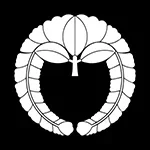
Fujiwara family crest
Nara Period:
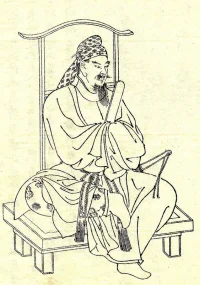
Nakatomi no Kamatari
Fujiwara no Fuhito (藤原不比等, 659-720), who had already served under Emperor Tenmu (天武天皇 Tenmu tennō, c. 631-686), succeeded in elevating another daughter, Kōmyō(shi), Empress of Shōmu. She was the first empress not descended from the imperial family. In 707, Mommu awarded Fuhito a sinecure of 5,000 houses for special services. Thus, the Fujiwara family attached itself to the imperial family by marrying Fujiwara's daughters to reigning and future emperors. Fujiwara women were imperial consorts, impresses, and mothers of princes and emperors, and, as maternal grandfathers, uncles, and fathers-in-law of emperors, Fujiwara family heads gained tremendous influence.
Fuhito had four sons, each of whom founded a family, which then developed into the "houses" of the Fujiwara: Fusasaki, the Southern House, Umakai, the Rite House, Maro, the Capital House and Muchimaro, the Northern House (Hokke), usurped power and was regarded as the leader of the whole clan. All the descendants of the third generation, including Muchimaro (680-737) and Fusasaki (682-737), fell victim to the smallpox epidemic of 737.
Heian Period (794-1185):
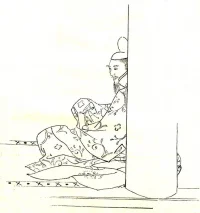
Fujiwara no Mototsune
As the regency had to be vacated when the young emperor came of age, the resourceful Fujiwara no Mototsune (藤原基経, 836-891), Yoshifusa's nephew and adoptive son, established the new position of kampaku (関白) in 887 to act as Emperor Kōkō's (光孝天皇, 830-887) advisor, even though the sovereign was already an adult. Mototsune had ruled as de facto regent since 884. Kōkō's successor, Emperor Uda (宇多天皇, 866-931), challenged Mototsune and ruled for six years without Fujiwara interference, as the clan was unable to name a successor after Mototsune's death.
Thus, the Hokke established a hereditary claim to the position of regent for minor emperors (sesshō) or adult emperors (kampaku). Several members of the Fujiwara occupied these positions more than once and for more than one emperor. Less important clan members acted as court nobles, provincial governors and vice-governors, members of the provincial aristocracy or even samurai . The Fujiwara were the most influential of the four prominent families that dominated Japanese politics in the Heian period. The other families were the Tachibana (橘氏), the Taira (平) and the Minamoto (源).
Fujiwara Tokihira (藤原時平, 871-909), Mototsune's son, quickly dispelled any illusions the emperors Uda and his successor Daigo (醍醐天皇, 885-930) might have had about restoring imperial authority. Although only twenty years old at his father's death, he successfully removed all opposition without assuming the office of sesshō or kampaku and reestablished Fujiwara hegemony.
The decline of the Fujiwara:
Only forty years after Michinaga's death, the Fujiwara were unable to prevent the accession of Emperor Go-Sanjō (r. 1068-1073), the first emperor since Uda (r. 887-897) whose mother was not a Fujiwara. The rule of abdicated emperors, usually retired to monasteries (太上天皇 daijō tennō), further weakened Fujiwara sway over the imperial court from 1087.The Fujiwara-dominated Heian period was nearing its end with the riots of the 12th century. The dynastic struggle known as the Hōgen Rebellion (保元の乱 Hōgen no Ran) led to the rise of the Taira as the most important clan in 1156. In 1160, the Taira defeated the Fujiwara and Minamoto coalition during the Heiji Rebellion (平治の乱 Heiji no Ran), sealing the end of Fujiwara influence.
Split into go-sekke:
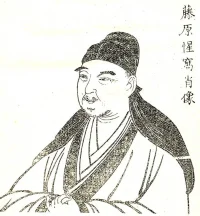
Fujiwara Seika
At the end of the Heian period, the Hokke house broke up into various branches. By 1400, the following lineages had emerged from the go-sekke houses, which provided regents:
- Konoe branch with the lateral lines of Konoe, Takatsukasa, and Matsudono.
- Kujō branch: Kujō, Ichijō and Nijō
There were several other branches:
- Kan'in branch: Saionji, Ōmiya, Shimizudani, Tōin, Ōgimachi, Sanjō, Ōgimachi-Sanjō, Sanjōnishi, Shigenoi, Kawabata, Ano, Anegakōji, Mushanokōji, Oshinokōji, Takamatsu, Imadegawa, Hashimoto, Ogura, Uratsuji, Yotsutsuji, Tokudaiji, Kawara.
- Kazan'in branch: Kazan'in, Horikawa, Nakayama, Oimikado, Namba, Asukai
Nakamikado branch: Nakamikado (Matsuki), Bōmon, Sono, Mibu, Rokkaku - Mikohidari branch: Reizei, Fujigaya, Irie
- Hino branch: Hino, Toyama, Toyooka, Hirobashi, Hinonishi, Takenoya, Yanagibara, Kitanokōji, Machi (Hinomachi), Karasumaru, Kadenokōji, Uramatsu
- Kaūji branch: Kaūji, Kanroji, Bōjō, Madenokōji, Seiganji, Nakamikado, Hamuro, Hachijō, Machi
- Shijō branch: Shijō, Nishiōji, Aburakōji, Washio, Yamashina
- Minase branch: Minase, Machigami, Sakurai, Yamanoi
- Takakura branch: Takakura, Horikawa, Higuchi
There were also the Fujiwara lines of Sesonji, Muromachi (Kobata) and Yabu.
The individual lineages' names were mostly toponyms of the family residence or related to the family temples (菩提寺 bodaiji). About a third of present-day Japanese can call themselves descendants of the Fujiwara in one way or another.
Until the marriage of Crown Prince Hirohito (posthumously Shōwa-Tennō) to Princess Kuni Nagako (Kuninomiya Nagako Nyoō) in January 1924, the principal wives of emperors and crown princes were always chosen from one of the five Sekke Fujiwara. Imperial princesses were also often married to Fujiwara for at least a millennium. This extends to Emperor Shōwa's third daughter, the late Princess Takanomiya (Kazoku), and Prince Mikasa's elder daughter, the former Princess Yasuko, who married into the Takatsukasa and Konoe families.
The Fujiwara regents:
"Sesshō" refers to a guardian for an underage Japanese tennō, while "Kampaku" were counsellors. Both offices were mutually exclusive.| Sesshō | Kampaku | Tenure | Tennō |
|---|---|---|---|
| Fujiwara no Yoshifusa (藤原良房, 804–872) | 858–872 | Seiwa | |
| Fujiwara no Mototsune (藤原基経, 836–891) | 872–880 | Seiwa, Yōzei | |
| Fujiwara no Mototsune (藤原 基経) | 880–890 | Yōzei, Uda | |
| Fujiwara no Tadahira (藤原忠平, 880–949) | 930–941 | Suzaku | |
| Fujiwara no Tadahira | 941–949 | Suzaku, Murakami | |
| Fujiwara no Saneyori (藤原実頼, 900–970) | 967/6/22–969 | Reizeiooeno | |
| Fujiwara no Saneyori | 969–970 | En'yū | |
| Fujiwara no Koretada (藤原伊尹, 924–972) | 970–972 | En'yū | |
| Fujiwara no Kanemichi (藤原兼通, 925–977) | 972–977 | En'yū | |
| Fujiwara no Yoritada (藤原頼忠, 924–989) | 977–986 | En'yū, Kazan | |
| Fujiwara no Kaneie (藤原兼家, 929–990) | 986–990 | Ichijō | |
| Fujiwara no Kaneie | 990/5/5–990/5/8 | Ichijō | |
| Fujiwara no Michitaka (藤原道隆, 953–995) | 990/5/8–990/5/26 | Ichijō | |
| Fujiwara no Michitaka | 990–993 | Ichijō | |
| Fujiwara no Michitaka | 989–995 | Ichijō | |
| Fujiwara no Michikane (藤原道兼, 961–995) | 995/4/28–995/5/8 | Ichijō | |
| Fujiwara no Michinaga (藤原道長. 966–1028) | 1016–1017 | Go-Ichijō | |
| Fujiwara no Yorimichi (藤原頼通, 990–1074) | 1017–1019 | Go-Ichijō | |
| Fujiwara no Yorimichi | 1019–1067 | Go-Ichijō, Go-Reizei | |
| Fujiwara no Norimichi (藤原教通, 997–1075) | 1068–1075 | Go-Sanjō, Shirakawa | |
| Fujiwara no Morozane (藤原師実, 1042–1101) | 1075–1086 | Shirakawa | |
| Fujiwara no Morozane | 1086–1090 | Horikawa | |
| Fujiwara no Morozane | 1090–1094 | Horikawa | |
| Fujiwara no Moromichi (藤原師通, 1062–1099) | 1094–1099 | Horikawa | |
| Fujiwara no Tadazane (藤原忠実, 1078–1162) | 1105–1107 | Horikawa | |
| Fujiwara no Tadazane | 1107–1113 | Toba | |
| Fujiwara no Tadazane | 1113–1121 | Toba | |
| Fujiwara no Tadamichi (藤原忠通, 1097–1164) | 1121–1123 | Toba | |
| Fujiwara no Tadamichi | 1123–1129 | Sutoku | |
| Fujiwara no Tadamichi | 1129–1141 | Sutoku | |
| Fujiwara no Tadamichi | 1141–1150 | Konoe | |
| Fujiwara no Tadamichi | 1150–1158 | Konoe, Go-Shirakawa | |
| Konoe Motozane (近衛基実) | 1158–1165 | Nijō | |
| Konoe Motozane | 1165–1166 | Rokujō | |
| Fujiwara no Motofusa (藤原基房) | 1166–1172 | Rokujō, Takakura | |
| Fujiwara no Motofusa (藤原基房, 1144–1230) | 1172–1179 | Takakura | |
| Konoe Motomichi (近衛基通) | 1179–1180 | Takakura | |
| Konoe Motomichi | 1180–1183 | Antoku | |
| Matsudono Moroie (松殿師家, 1172–1238) | 1183–1184 | Antoku | |
| Konoe Motomichi | 1184–1186 | Antoku, Go-Toba |
Prominent Fujiwara members:
- Fujiwara Michiie (1193-1252), also Kujō Michiie (九条道家), kampaku and the father of the shōgun Kujō Yoritsune
- Fujiwara no Akimitsu (藤原顕光, 944-1021), son of Fujiwara no Kanemichi (藤原兼通, 925-977)
- Fujiwara no Fuhito (藤原不比等, 659-720), son of Fujiwara no Kamatari (藤原鎌足, 614-669)
- Fujiwara no Ietaka (藤原家隆, 1158-1237), Japanese waka poet
- Fujiwara no Kamatari (藤原鎌足, 614-669), founder of the Fujiwara family
- Fujiwara no Kaneie (藤原兼家, 929-990), son of Fujiwara no Morosuke
- Fujiwara no Kanemichi (藤原兼通, 925-977), son of Fujiwara no Morosuke
- Fujiwara no Kanesuke (藤原兼輔, 877-933), son of Fujiwara no Toshimoto
- Fujiwara no Kanezane (藤原兼実, 1149-1207), also Kujō Kanezane, founder of the Kujō family
- Fujiwara no Kintō (藤原公任, 966-1041), Japanese poet and son of Fujiwara no Yoritada
- Fujiwara no Kiyosuke (藤原清輔, 1104-1177), Japanese waka poet and son of Fujiwara no Akisuke
- Fujiwara no Masatsune (藤原雅経, 1170-1221), Japanese waka poet and son of Nanba Yoritsune
- Fujiwara no Michinaga (藤原道長, 966-1028), son of Fujiwara no Kaneie
- Fujiwara no Michinori (藤原通憲, d. 1160), also Shinzei, chief adviser and chancellor to the Japanese emperor Nijō
- Fujiwara no Michitaka (藤原道隆, 953-995), son of Fujiwara no Kaneie
- Fujiwara no Michitsuna no Haha (藤原道綱母, c. 935-995), Japanese poet and diarist, mother of Fujiwara no Michitsune.
- Fujiwara no Morosuke (藤原師輔), also Kujō Morosuke (908-960), son of Fujiwara no Tadahira.
- Fujiwara no Mototoshi (藤原基俊, 1060-1142), Japanese waka poet.
- Fujiwara no Mototsune (藤原基経, 836-891), high Japanese court nobleman
- Fujiwara no Morozane (藤原師実, 1042-1101), son of Fujiwara no Yorimichi
- Fujiwara no Nagako (藤原長子, c. 1079-1119+), daughter of Fujiwara no Akitsuna and court servant of Emperor Horikawa
- Fujiwara no Nobuzane (藤原信実, 1177-1266) son of Fujiwara no Takanobu
- Fujiwara no Okikaze (藤原興風), Japanese waka poet, civil administration official for nobles of the Heian period
- Fujiwara no Saneyoshi, also Sanjō Sanetomi (三条実美, 1837-1891), a Japanese court nobleman
- Fujiwara no Tadahira (藤原忠平, 880-949), son of Fujiwara no Mototsune
- Fujiwara no Tadamichi (藤原忠平, 1097-1164), son of Fujiwara no Tadazane, ancestor of the Kujō family
- Fujiwara no Tadazane (藤原忠実, 1078-1162), grandson of Fujiwara no Morozane
- Fujiwara no Takanobu (藤原隆信, 1142-1205), Japanese painter
- Fujiwara no Sadaie (藤原定家, 1162-1241), also Fujiwara no Teika, Japanese poet and son of Fujiwara no Shunzei
- Fujiwara no Sadanaga (藤原定長, c. 1139-1202), Japanese poet and Buddhist monk, see Jakuren
- Fujiwara no Umakai (藤原宇合, 694-737), Japanese statesman, general, poet and son of Fujiwara no Fuhito
- Fujiwara no Yorimichi (藤原頼通, 990-1074), son of Fujiwara no Michinaga
- Fujiwara no Yorinaga (藤原頼長, 1120-1156), son of Fujiwara no Tadazane
- Fujiwara no Yoshifusa (藤原良房, 804-872), the first of the great regents of Japan from the family of Fujiwara
- Fujiwara no Yoshitsune (1169-1206), also known as Kujō Yoshitsune (九条良経), a Japanese politician, poet and son of Kujō Kanezane
- Fujiwara no Sukemasa (藤原佐理, 944-998), Japanese calligrapher
- Fujiwara no Yukinari (藤原行成, 972-1028), Japanese calligrapher
References:
- Endreß, Gerhild/Dettmer, Hans (eds.): Japanische Regierungs- und Verwaltungsbeamte des 8.-10. Jahrhunderts; Wiesbaden 1995/2000, two volumes
- Nussbaum, Louis-Frédéric: Japan Encyclopedia; Cambridge; Harvard University Press, 2005
- Papinot, Edmond: Historical and Geographical Dictionary of Japan. Reprint from 1910; Tuttle, 1972


