

The Ōtate Disturbance (御館の乱 Otate no Ran) was a bitter succession struggle within the Uesugi clan that erupted after the sudden death of Uesugi Kenshin in 1578. The conflict divided Echigo Province and much of the wider Hokuriku and Kantō political world for nearly two years, pitting Kenshin's two adopted heirs, Uesugi Kagekatsu and Uesugi Kagetora , against one another in a violent civil war that permanently weakened the Uesugi house.
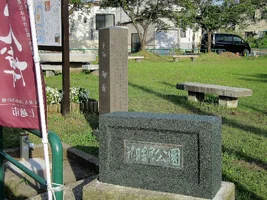
The former Ōtate residence at Ōtate Park (御館公園) in Jōetsu, Niigata Prefecture, near Naoetsu Station.
Kenshin died abruptly on 13 April 1578 at the age of forty-nine. Several days earlier, he had reportedly collapsed in the lavatory at Kasugayama Castle and never regained consciousness. Contemporary sources describe the cause variously as a sudden illness or stroke, and later historians have frequently suggested cerebral haemorrhage.
The immediate problem was that Kenshin had left no biological heir, and no definitive record survives naming a successor. Historians have long debated whether he intended Kagekatsu alone to inherit, whether he favoured Kagetora, or whether he envisioned a divided arrangement in which both men would govern separate spheres within the Uesugi domain.
Kagetora's claim rested heavily on his political position and the favour he appeared to enjoy during Kenshin's final years. Born Saburō, he was the seventh son of Hōjō Ujiyasu of the Later Hōjō clan. During the Echigo–Sagami alliance forged against the Takeda in 1569–1570, he entered Echigo as a political hostage and was adopted by Kenshin. He married Kenshin's niece, notably Kagekatsu's sister, and took the name "Kagetora", the same name Kenshin had once used. He lived in the San-no-maru of Kasugayama Castle and appears to have been treated with unusual distinction. He sent New Year greetings to temples and shrines in Kenshin's stead, and some records suggest he may even have enjoyed exemption from military levies.
Kagekatsu's position, however, rested on blood and long-standing authority within the clan. Born Nagao Akikage, he was the son of Nagao Masakage and Kenshin's elder sister Sentōin. Through both his mother's and grandmother's lines, he possessed close ties to branches of the Uesugi family, giving him a stronger hereditary connection to the house than Kagetora did. After his father died in 1564, he entered Kasugayama Castle and became Kenshin's adopted son. Over time, he emerged as one of the leading commanders within the Uesugi military structure. In 1575, Kenshin granted him the name "Uesugi Kagekatsu" and conferred on him the court title of Danjō Shōhitsu (弾正少弼, "Junior Assistant Director of the Board of Censors"). Military registers from the same year show him responsible for some 375 troops, one of the largest forces within the clan.
Modern scholarship has increasingly emphasised that the succession question was not straightforward. Some historians argue Kenshin may have intended Kagetora to inherit the Kantō Kanrei position while Kagekatsu governed Echigo itself. Others believe Kenshin initially favoured Kagetora during the period of alliance with the Hōjō, but shifted toward Kagekatsu after relations with the Hōjō deteriorated. Another theory suggests that the conflict was less about immediate succession and more about the future guardianship of Dōmanmaru (道満丸), Kagetora's son.
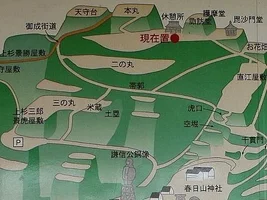
Kasugayama Castle, with Kagetora's residence indicated at the San-no-Maru (三の丸).
Kagekatsu's swift seizure of power gave him important institutional legitimacy. Documents issued under his authority closely resembled those produced during Kenshin's lifetime, and many of Kenshin's senior secretaries and attendants continued to co-sign his orders. Yet the speed and force with which he acted also alarmed many retainers and regional lords. His refusal to accept mediation from Uesugi Norimasa and his harsh response toward local magnates investigating rumours of Kenshin's death created growing resentment across Echigo.
As tensions spread, the province was divided into two armed camps. Uesugi Kagekatsu attracted many of Uesugi Kenshin's closest retainers and much of the Uesugi state's administrative core. Among his principal supporters were Naoe Nobutsuna (直江信綱, 1549–1580), Kawada Nagachika (河田長親, 1534–1581), Saitō Tomonobu (斎藤朝信, 1513–1581), Amakasu Nagashige (甘粕長重), Honjō Shigenaga (本庄繁長, 1539–1614), Irobe Nagazane (色部長実, 1548–1619) and Shibata Naganori (新発田長敦). Several branches of the Uesugi family also sided with him, including Jōjō Masashige (上条政繁) and Yamaura Kunikiyo (山浦国清). Much of the Agakita-shū (揚北衆), the powerful warrior groups north of the Agano River, joined his side as well.
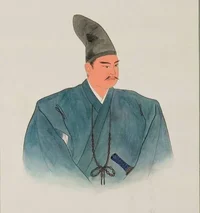
Uesugi Kagekatsu (上杉景勝, 1555–1623)
On 13 May 1578, Kagetora withdrew from Kasugayama Castle and established himself at the Ōtate residence, from which he appealed to the Hōjō for military aid. Fighting intensified almost immediately. Kagetora launched attacks on Kasugayama Castle on 17 and 22 May, but both failed. Across Echigo, castles and local domains were split between the two factions, while neighbouring powers manoeuvred for advantage.
Takeda Katsuyori 's intervention proved decisive. Initially, Katsuyori moved to support Kagetora, partly at the urging of the Hōjō. Yet relations between the Takeda and Hōjō had deteriorated badly, while the Takeda also faced pressure from Tokugawa Ieyasu in Suruga and Tōtōmi. During the summer of 1578, Kagekatsu successfully negotiated with the Takeda, offering territorial concessions and financial inducements. The resulting Kai–Etsu alliance transformed the balance of power.
With the Takeda threat removed, Kagekatsu regained momentum. His forces captured key strongholds and restored communications between Kasugayama and his own base at Sakatō Castle. Several important Kagetora commanders, including Nagao Kageaki and Uesugi Kagenobu, were killed. Katsuyori attempted to mediate a settlement between the two sides, and for a time, an uneasy peace seemed possible. But in August 1578, Tokugawa forces invaded Takeda territory at Tanaka Castle in Suruga, forcing Katsuyori to abandon mediation and withdraw.
The collapse of negotiations marked a turning point. In September, the Hōjō at last mounted a major intervention, sending troops across the Mikuni Pass into Echigo. Although they captured Kabasawa Castle and threatened Sakatō Castle, Kagekatsu's forces held firm. The approach of winter and the continuing presence of scattered Takeda troops discouraged a deeper advance. Meanwhile, Kagekatsu skilfully maintained Takeda support by ceding certain frontier castles to them.
By autumn, Kagetora's position had deteriorated sharply. Supplies inside Ōtate were running low, communication with allied lords became increasingly difficult, and defections spread through his faction. Kagekatsu resolved to finish the war before the spring thaw. On 1 February 1579, he ordered a general assault on Ōtate. Fires broke out across the complex, and Kagekatsu's commanders methodically destroyed the remaining resistance.
The final collapse came in March. On 17 March, Uesugi Norimasa attempted to flee Ōtate with Dōmanmaru in hopes of negotiating peace, but both were intercepted and killed. Ōtate itself fell soon afterwards. Kagetora escaped and fled toward Samegao Castle (鮫ヶ尾城), located in present-day Myōkō, Niigata, only to be betrayed by the castle lord Horie Munachika (堀江宗親, 1543–1611), who had switched allegiance to Kagekatsu. On 24 March 1579, Kagetora committed suicide.
Although Kagekatsu emerged victorious and became head of the Uesugi clan, the conflict's consequences were severe. Resistance continued in parts of Echigo until 1580, and the civil war devastated the military and political strength Kenshin had built. The distribution of rewards after the war created new tensions, particularly because Kagekatsu favoured retainers from his own Ueda faction. Discontent eventually contributed to Shibata Shigeie's rebellion, which took years to suppress.
The wider geopolitical effects were equally important. During the disorder, Oda Nobunaga 's general, Shibata Katsuie , advanced through Hokuriku, while neighbouring powers such as the Ashina and Date expanded their influence. The conflict also helped destroy the alliance system surrounding the Takeda. Hōjō Ujimasa regarded Katsuyori's reconciliation with Kagekatsu as a betrayal, leading the Hōjō to abandon the Takeda and instead align with the Tokugawa and Oda. Isolated on several fronts, the Takeda collapsed in 1582 during the invasion of Kai.
For the Uesugi, the long-term effects of the Ōtate Disturbance shaped the remainder of the Sengoku period . Kagekatsu eventually submitted to Toyotomi Hideyoshi and later received the vast Aizu domain. After the Battle of Sekigahara in 1600, however, the clan was reduced and transferred to Yonezawa. The once-dominant Uesugi house survived, but as a far smaller regional power. Even so, later generations carefully cultivated the memory of Kenshin and the prestige of the Uesugi name, preserving a legacy that endured long after the devastation of the civil war itself.
References:
- Siege of Otate (御館の乱). From Japanese Wikipedia.
- Berry, Mary Elizabeth. Hideyoshi. Cambridge, MA: Harvard University Press, 1982.
- Farris, William Wayne. Japan to 1600: A Social and Economic History. Honolulu: University of Hawai'i Press, 2009.
- Friday, Karl F. Samurai, Warfare and the State in Early Medieval Japan. London: Routledge, 2004.
- Hall, John Whitney, Nagahara Keiji and Kozo Yamamura, eds. Japan Before Tokugawa: Political Consolidation and Economic Growth, 1500–1650. Princeton: Princeton University Press, 1981.
- Sansom, George. A History of Japan, 1334–1615. Stanford: Stanford University Press, 1961.
- Souyri, Pierre-François. The World Turned Upside Down: Medieval Japanese Society. Translated by Käthe Roth. New York: Columbia University Press, 2001.
- Turnbull, Stephen. The Samurai Sourcebook. London: Cassell, 1998.
- Turnbull, Stephen. Samurai Warlords: The Book of the Daimyo. London: Blandford Press, 1989.
- Turnbull, Stephen. The Samurai Capture a King: Okinawa 1609. Oxford: Osprey Publishing, 2009.
- Weston, Mark. Giants of Japan: The Lives of Japan's Greatest Men and Women. Tokyo: Kodansha International, 2002.

