Why Japan's streets stay clean without trash cans

thomas

Unswerving cyclist
Admin
Joined
14 Mar 2002
Messages
21,050
Reaction score
18,903
USA Today on why Japanese streets are clean in the absence of rubbish bins:

Although it was slightly annoying at times, I didn't find the lack of trash cans in Japan to be a significant problem as long as I was mindful of what I ate and bought. However, some travellers struggle with it: 21.9% of 4,000 foreign visitors cited it as their most significant inconvenience in a 2025 Japan Tourism Agency survey. It was the leading complaint, followed by language barriers and overcrowding.

 
I didn't find it too much of an issue, despite Japan's habit of over-packaging their goods. If one's rubbish is 'clean', fairly free from oily residue, yogurt/chili sauce etc then slip it into a plastic carrier bag and take it home. 🤷🏾
 
Given that it's the most significant inconvenience that pretty much means there are almost no inconveniences. I'd have thought the language barrier would outrank lack of waste receptacles.
 
From the article: "At the Takayama morning market, where travelers can sample local delicacies such as beef nigiri sushi, I ran into the same issue. Looking to discard my wrapper and fork after finishing a baked sweet potato,..."

The big local market here** has been transformed by this--when it once just never existed nor was possible, and was 'just' a big market for buying things, now there are lots of places that sell stuff as finger food/串焼き that is eaten on the spot. A few spots even have small, high tables for people to stand at briefly while they have their snacks.

**Google: "omicho market kanazawa" for images, I can't seem to get a direct link to work.
 
sweep.webp I swear there was an old mama-san every 50 feet in Fukuoka when I was there in the 70's. I often wondered how much they were paid for their diligent cleaning?
 
I didn't find it too much of an issue, despite Japan's habit of over-packaging their goods. If one's rubbish is 'clean', fairly free from oily residue, yogurt/chili sauce etc then slip it into a plastic carrier bag and take it home. 🤷🏾
If you are not aware of it though it can be very inconvenient. I would imagine that many foreign tourists from "Western" countries would be caught off guard because they are just used to public trash cans. It's not something you would notice until you need one. Get a ice cream or other messy treat and then look for the trash can for the wrapper, especially with young kids, and it can get frustrating quickly. I think for many people it would result in a "Seriously, what?!?!" situation.

Japanese, foreign residents, and frequent visitors are likely affected less because they already know about it and are mentally, and logistically, prepared for it. Though I did watch a video of Yuka-chan's on Youtube, you guys got me hooked, in which she ran into that issue after having an ice cream as well. She eventually found a garbage somewhere and was able to throw the wrapper away. So even those groups can run into the issue.
 
View attachment 134376 I swear there was an old mama-san every 50 feet in Fukuoka when I was there in the 70's. I often wondered how much they were paid for their diligent cleaning?
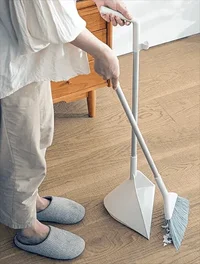
Those cleaning activities are carried out as voluntary, unpaid service. In addition, people clean not only the area in front of their own homes but also the mukō sanken ryōdonari—the three houses across the street and the two neighboring houses on either side—so the entire residential area is kept clean.

"向こう三軒両隣 (Mukō sanken ryōdonari)"

"Mukō sanken ryōdonari" is a traditional Japanese expression meaning
the closest neighbors around one's home.

Literally, it refers to:
the three houses across the street, and
the two houses immediately next door on both sides.
Together, it describes the five nearest households surrounding a home.

Cultural meaning
Beyond the literal sense, the phrase represents:
close neighborhood relationships
mutual assistance among neighbors

a sense of local community responsibility
Historically, especially in Edo-period Japan, these neighbors formed the smallest unit of cooperation, helping one another during fires, illnesses, funerals, and other emergencies.
Simple English equivalent

There is no exact English idiom, but similar ideas include:

"the immediate neighbors"
"the surrounding households"
"the close-knit neighborhood"

Example sentence
In traditional Japanese communities, people believed in helping one another within their mukō sanken ryōdonari, or immediate neighbors.
 
Back
Top Bottom