


- 14 Mar 2002
- 21,050
- 18,903
Nikkei Asia on an expanding Japanese industry catering to plush toy owners.
As plush toys increasingly appear alongside their owners in public and on social media, businesses offering cleaning and repair services for stuffed animals are seeing rising demand. These mainly small and mid-sized firms specialise in restoring toys to a near-new condition while preserving their character and sentimental value.
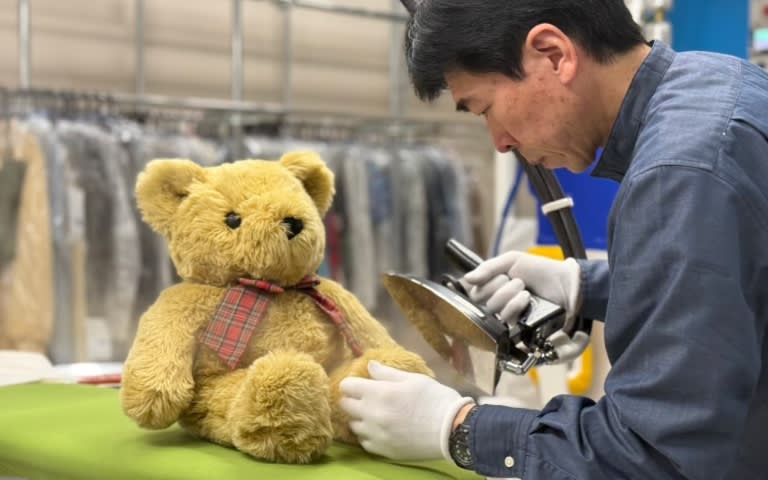
Yonmarusan, a home-delivery cleaning service in Fujikawaguchiko, Yamanashi Prefecture, now processes about 800 plush toy cleaning and repair requests each month, up from around 50 in 2022. Demand rose after the company began posting behind-the-scenes repair work online, and it now receives about 10 orders a month from overseas customers. Each toy is washed using one or more of the more than 25 methods tailored to the fabric and level of soiling, starting with stain treatment using in-house solutions, followed by careful shampooing with controlled water temperatures and detergents.
Repairs average around 40,000 yen ($253). Despite the price, 30% to 40% of clients are repeat customers. Orders the company received in 2025 were up 40% from five years earlier. Atdea, another plush toy service provider, based in Saitama, shampoos the dolls with rice-derived natural soap. According to research companies Global Information in Japan and Technavio in the U.K., Japan's plush toy market is projected to reach about $1 billion in 2029 -- up roughly 50% from a 2025 estimate.
Paywall alert:

 asia.nikkei.com
As plush toys increasingly appear alongside their owners in public and on social media, businesses offering cleaning and repair services for stuffed animals are seeing rising demand. These mainly small and mid-sized firms specialise in restoring toys to a near-new condition while preserving their character and sentimental value.
Yonmarusan, a home-delivery cleaning service in Fujikawaguchiko, Yamanashi Prefecture, now processes about 800 plush toy cleaning and repair requests each month, up from around 50 in 2022. Demand rose after the company began posting behind-the-scenes repair work online, and it now receives about 10 orders a month from overseas customers. Each toy is washed using one or more of the more than 25 methods tailored to the fabric and level of soiling, starting with stain treatment using in-house solutions, followed by careful shampooing with controlled water temperatures and detergents.
After a full day of natural air-drying, the fur is groomed using seven different brushes, selected by length and stiffness, before being finished with an industrial iron. [...] The foreign customers are mainly Chinese and Taiwanese, with an occasional Australian, Mori noted. In many cases, the repaired plush toys are delivered directly to hotels so the owners won't have to make the return trip home alone. [...] The dolls can suffer from flattened internal stuffing to accidentally amputated limbs. After assessing a patient's materials and condition, the company determines a repair plan in consultation with each customer. If the other side of a missing arm or leg of the plush toy remains, patterns are re-created from it; if both arms or legs have been lost, restoration is based on photographs. The team searches for fabric that mirrors the original; if none can be found, they dye a substitute material to match. Repairs typically take one to two months, and customers receive photo updates at each stage of the process via a dedicated chat system.
Repairs average around 40,000 yen ($253). Despite the price, 30% to 40% of clients are repeat customers. Orders the company received in 2025 were up 40% from five years earlier. Atdea, another plush toy service provider, based in Saitama, shampoos the dolls with rice-derived natural soap. According to research companies Global Information in Japan and Technavio in the U.K., Japan's plush toy market is projected to reach about $1 billion in 2029 -- up roughly 50% from a 2025 estimate.
Paywall alert:
In Japan, plush toys are family members deserving of regular baths
Repairs are also a big business, with demand even coming from foreign tourists
asia.nikkei.com
"Nuikatsu" (ぬい活) is the practice in Japan of taking plush toys on outings or trips, photographing them, and sharing the images online. On Instagram, posts often use hashtags like #nuidori (ぬい撮り) to show plush toys at well-known landmarks, scenic spots, or alongside local food.
Familiar plush toys include Chiikawa, Usagi, Sanrio characters like Hello Kitty, Pokémon—especially the Fit series—Rilakkuma, Poteusa Loppy, and Okaeri Sonoda-kun. For many people who do this, nuikatsu goes beyond photography and involves treating the plush toy as a companion, choosing outfits, adding accessories, and arranging photo scenes.
Products used in this practice include plush-sized hats, capes, and display bags to keep toys clean while on display. Some hotels cater to this interest by providing small beds and pyjamas for stuffed toys. Frequently photographed locations include Shibuya Scramble Square, Guf in Nippombashi and Kyoto , and several areas of Tokyo DisneySea.
Familiar plush toys include Chiikawa, Usagi, Sanrio characters like Hello Kitty, Pokémon—especially the Fit series—Rilakkuma, Poteusa Loppy, and Okaeri Sonoda-kun. For many people who do this, nuikatsu goes beyond photography and involves treating the plush toy as a companion, choosing outfits, adding accessories, and arranging photo scenes.
Products used in this practice include plush-sized hats, capes, and display bags to keep toys clean while on display. Some hotels cater to this interest by providing small beds and pyjamas for stuffed toys. Frequently photographed locations include Shibuya Scramble Square, Guf in Nippombashi and Kyoto , and several areas of Tokyo DisneySea.


