


- 14 Mar 2002
- 21,050
- 18,903
Japan is one of the most popular marketplaces for pre-owned ("secondhand") luxury goods, from handbags and watches to trading cards. The weak yen plays a role, but so does the condition of the goods, which are often noticeably well kept. Japan's resale market is also widely regarded as safer against counterfeits. This was clear at the opening of a new Komehyo store in Omotesando on 28 November, where overseas customers were picking up branded items at prices they said would be difficult to find back home.
An overseas reseller explains the high resale value of Japanese luxury watches, thanks to their careful storage, light use, and owners who tend to look after their appearance long after purchase. Japan's long tradition of pawnshops has made appraisal faster and more reliable. The weak yen has helped, but the real draw is a system that buyers trust. Rising overseas demand for Japanese used luxury items is beginning to lift interest in other secondhand categories as well, as buyers apply the same high expectations for quality to other goods.
Japanese online marketplace Mercari and NLI Research Institute jointly estimated the potential value of "used in Japan" goods at 91 trillion yen ($580 billion).
Paywall alert:

 asia.nikkei.com
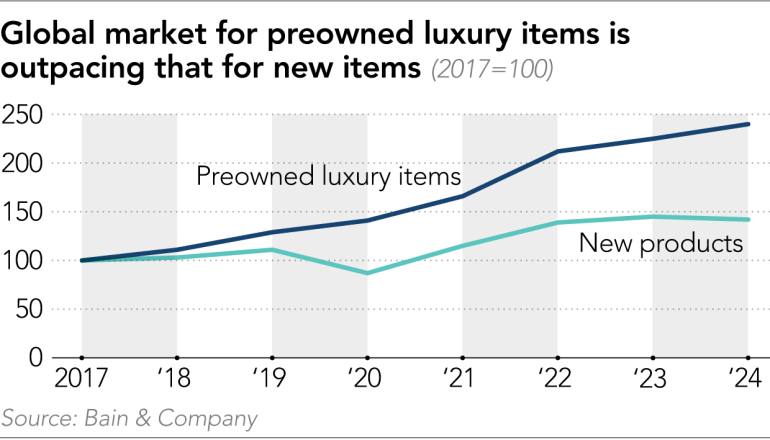
About a year ago, Komehyo opened its first outlet in Omotesando. The store quickly became popular with foreign shoppers, who now account for 70% of its sales. According to the company, opening day sales at the second shop more than doubled the initial forecast. Rising overseas interest in Japan's resale sector is lifting demand for luxury items and driving sales of preowned luxury brand items worldwide. The global secondary market for high-end watches and other high-end goods totaled 48 billion euros ($56 billion) in 2024, up 140% from 2017, according to U.S. consultancy Bain & Company. By comparison, sales of new items rose 42% over the same period. The jump in foreign buyers at Japanese resale shops highlights the robust demand for used luxury goods.
An overseas reseller explains the high resale value of Japanese luxury watches, thanks to their careful storage, light use, and owners who tend to look after their appearance long after purchase. Japan's long tradition of pawnshops has made appraisal faster and more reliable. The weak yen has helped, but the real draw is a system that buyers trust. Rising overseas demand for Japanese used luxury items is beginning to lift interest in other secondhand categories as well, as buyers apply the same high expectations for quality to other goods.
Japanese online marketplace Mercari and NLI Research Institute jointly estimated the potential value of "used in Japan" goods at 91 trillion yen ($580 billion).
Paywall alert:
From Rolexes to iPhones, 'used in Japan' gains global cachet
Care, authentication lift sales of pre-owned items in $580bn market
asia.nikkei.com


