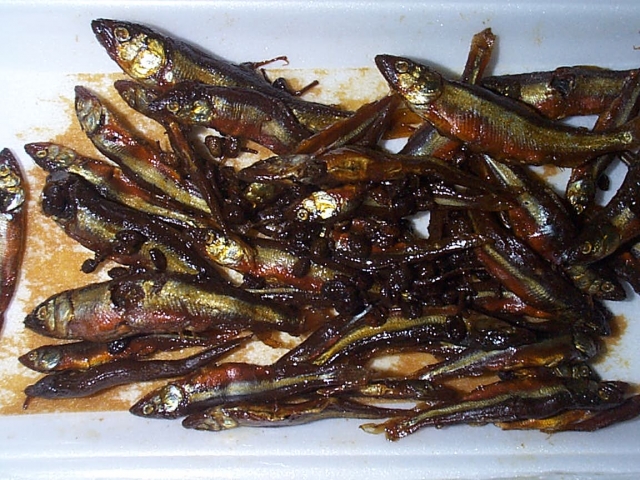
Tsukudani (佃煮) are simmered in a concentrated sauce made from soy sauce (醤油 shōyu), mirin, and sugar. The result is a richly flavoured, glossy condiment with strong savoury-sweet notes, designed to be eaten in small amounts with plain white rice.
Tsukudani (佃煮) is a deeply rooted part of Japanese food culture, born out of necessity and ingenuity. A way of preserving small amounts of food—typically seafood, seaweed, vegetables, or meat—they are simmered in a concentrated sauce made from soy sauce (醤油 shōyu), mirin, and sugar. The result is a richly flavoured, glossy condiment with strong savoury-sweet notes, designed to be eaten in small amounts with plain white rice.
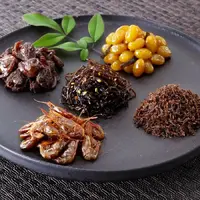
A variety of tsukudani (佃煮)
The name derives from Tsukuda Island (佃島) in Edo, now located in the present-day Chūō ward, Tokyo. The...
AP on Tsukushin, a factory-turned-shop tucked away in a corner of a quaint, humble Tsukuda neighbourhood by the Sumida River in downtown Tōkyō, where tsukudani was born.
The origin of tsukudani (a type of preserved food simmered in soy sauce) is said to trace back to Tsukuda Village in Settsu (present-day Tsukuda area in Yodogawa Ward, Osaka City), and it has a deep historical connection with Tokugawa Ieyasu . Let's explore its history and how tsukudani gained fame.
Did the Honnō-ji Incident Make Tsukudani Famous?
Originally, tsukudani was a preserved food made by fishermen in Tsukuda Village, simmering small fish and shellfish in soy sauce, but it was not particularly popular. So how did it become well-known? The story dates back to the Honnō-ji Incident.
When Oda Nobunaga was assassinated during the Honnō-ji Incident and Tokugawa Ieyasu, who was in Sakai at the time, found himself in grave danger, he fled desperately toward the area around Tsukuda Village in Settsu. From there, he escaped further by boat to Okazaki . It was the fishermen of Tsukuda Village who provided him with the boat, and at the same time, they offered him tsukudani as portable preserved food.
As is widely known, Ieyasu eventually rose to rule the country. In gratitude for their help, he summoned the residents of Tsukuda Village to Edo, where he settled them in the area around what became Tsukuda Island. The preserved food produced there came to be known as "Tsukudajima-ni" and later simply as "tsukudani."
The Evolution of Tsukudani: From Small Fish to Gourmet Varieties
Originally, the residents of Tsukuda Village made tsukudani by simmering small fish and shellfish in a sweet-salty sauce, but today there is a wide variety of tsukudani available. For example:
Eirakuya specializes in thick, small-sized dried shiitake mushrooms (donko).
Nakamuraken uses eel.
Mishimatei offers beef tsukudani.
Watanabe Kinome-ni Honpo is known for using Japanese pepper (sanshō).
Each of these products reflects the dedication of the maker and is a perfect accompaniment to sake or rice.
Fish and shellfish still make up the majority of tsukudani ingredients. Popular varieties include sand lance, pond smelt, ark shell, and oysters. Seasonal varieties like tsukudani made from horsetail (tsukushi) or butterbur (fuki) also exist, offering a distinct sense of the season and making excellent tea-time snacks.
More unusual ingredients include locusts and bee larvae. Though sometimes classified as eccentric foods, these too are considered respectable local dishes.
Making Tsukudani from Leftover Ingredients
Because tsukudani can be made from a wide range of ingredients, it is possible to make it from leftover foods or vegetable scraps. The method is simple: simmer the ingredients with soy sauce, sugar, mirin, and sake (sometimes adding vinegar, ginger, or dashi) while taking care not to burn them. This makes it a practical way to use up leftovers in the refrigerator.
For example, seaweed received as a seasonal gift may lose its crispness before you can finish it. In such cases, turning it into tsukudani is ideal. Cut the seaweed finely, melt it in a heated pan, and simmer it with soy sauce, sugar, and mirin. Once it reaches the right consistency, adding a starch slurry to thicken it creates an excellent seaweed tsukudani.
The taste of tsukudani depends on the amount of sugar, soy sauce, and other seasonings used, as well as any hidden flavors or dashi. Adjusting these according to the ingredients or developing your own homemade flavor can make tsukudani both easy to prepare and a food with surprisingly deep culinary potential.
Leftover sashimi, vegetable scraps from cooking, or dried foods hiding in your cupboard can all be turned into delicious tsukudani. Not only is it budget-friendly, but it also whets the appetite. If you're unsure what to do with surplus ingredients in your fridge, why not try making tsukudani?
This site uses cookies to help personalise content, tailor your experience and to keep you logged in if you register.
By continuing to use this site, you are consenting to our use of cookies.



 apnews.com