Trying to figure out the meaning of a sentence

Hi, still struggling and needing ideas here! 😁 I found 扱き as a kind of waistband/girdle, so 小女郎の扱き would be a young girls girdle, but what about お七の蹴出し? 蹴出し seems to be a undergarment similar to a petticoat, but what does お七 refer to? I've found a character from a Joruri play called お七 though... And what about 襞積(ひだ)を打つ? (The kanji for 積 is not correct, but I couldn't find exactly the same kanji, it is originally written with a koromo-hen). I've found 襞積 as folds or creases of a cloth/clothing, would it mean something as straightning the creases of those pieces of clothing?

私は又、自分の現在の生活の上にぴったりと面と向ける人間になりました。あなたがおもちやが厭になり千代紙が厭になり、さうして物に驚き物に喜んでゐた子供っぽさが馬鹿々々しくなつて了つたやうに、私も赤い麻の葉の千代紙を手に取っても其れが唯の紙と云ふ感じばかりしきや残りません。小女郎の扱きになりお七の蹴出しになつて襞積を打つやうな媚めかしさを、どうしてあの頃私の胸にまざまざと映してみたのかと不思議に思ふほどに、あれが唯一枚のぱさつとした紙なんです。
 
Your interpretations are correct except the last one. ひだを打つ means creases/pleats appear on a cloth, like 波を打つ/波打つ.

And yes, お七 refers to 八百屋お七. You can see creases on her red undergarment like waves in the wind in Ukiyoe.
 
You've chastised me about DeepL before but it's just another reference. A.I. tools like this provide a different perspective because it's pattern matching at a scale and in a different way than humans. To me it's no different than looking words up in jisho.org or asking random people on the Internet. It's just one more reference or "opinion" if you will. Obviously it's going to have difficulty with characteristics peculiar to this author.
Sorry for being late to reply to this. Just to be totally clear, I don't want to come off as 100% anti-DeepL. I'll be the first to admit it's an impressive piece of technology and has more than its fair share of uses.

If someone knowing no Japanese came here asking us to translate a huge block of text from their favorite Japanese band's blog or whatever, pointing them to DeepL and letting them know it's a great way for those unfamiliar with the language to process and understand massive paragraphs would be very, very helpful.

I just don't think it should be suggested as a way of understanding literary works or more complex, nuanced language -- especially to someone like Karenkさん who clearly possesses a high level of Japanese skill. Just like if someone came here with a one-line post asking "Wut is the Meiji Restoration ???1" it would make sense to point them to a Wikipedia article on the topic, but if someone working on their doctoral thesis in 19th-century Japanese history asked a nuanced question on the abolition of the feudal system, I would be disinclined to respond to them with, "Well, Wikipedia says..."

(And just for reference, it also had trouble correctly translating other elements of that sentence that can't really be described as 'characteristics peculiar to this author', but rather were just standard literary Japanese.)
 
Your interpretations are correct except the last one. ひだを打つ means creases/pleats appear on a cloth, like 波を打つ/波打つ.

And yes, お七 refers to 八百屋お七. You can see creases on her red undergarment like waves in the wind in Ukiyoe.


I see. So putting it all together, the narrator is saying that the chiyogami, in her mind, became and had the allure of a young girl's girdle and the pleats of Oshichi's petticoat? Or does になり~になって has another nuance I'm not getting?
 
Sorry for being late to reply to this. Just to be totally clear, I don't want to come off as 100% anti-DeepL. I'll be the first to admit it's an impressive piece of technology and has more than its fair share of uses.

If someone knowing no Japanese came here asking us to translate a huge block of text from their favorite Japanese band's blog or whatever, pointing them to DeepL and letting them know it's a great way for those unfamiliar with the language to process and understand massive paragraphs would be very, very helpful.

I just don't think it should be suggested as a way of understanding literary works or more complex, nuanced language -- especially to someone like Karenkさん who clearly possesses a high level of Japanese skill. Just like if someone came here with a one-line post asking "Wut is the Meiji Restoration???1" it would make sense to point them to a Wikipedia article on the topic, but if someone working on their doctoral thesis in 19th-century Japanese history asked a nuanced question on the abolition of the feudal system, I would be disinclined to respond to them with, "Well, Wikipedia says..."

(And just for reference, it also had trouble correctly translating other elements of that sentence that can't really be described as 'characteristics peculiar to this author', but rather were just standard literary Japanese.)
The translators I've talked to don't rely on machine translation when it comes to literary translation. I use it to check if I'm not missing anything or to have another take on something and because sometimes I get too tired to re-arrange the order of a passage/sentence 🤣. But I can see how useful it can be for everyday dialogues or messaging, even for more "technical" types of translation. It has its uses, but is not perfect. I want to believe that as long as books are written by human beings, they will continue to be translated by human beings as well.
 
I see. So putting it all together, the narrator is saying that the chiyogami, in her mind, became and had the allure of a young girl's girdle and the pleats of Oshichi's petticoat? Or does になり~になって has another nuance I'm not getting?
You got it right. The structure is just (赤い麻の葉の千代紙は)小女郎の扱きになりお七の蹴出しになつて襞積を打つ.
 
Hi! How would you translate 自分の二重三重の生活? That she was able to divide, add up, divide, isolate her life in portions two, three times? Or in two, three portions?

それは誠に不思議な生活の力ではないか。彼女は自分の二重三重の生活を等分し、調和し、区分し、隔絶し、調整することが出来るのである。
 
二重三重の生活 doesn't refer to her life after 等分し、調和し、区分し、隔絶し、調整する. It's her current life as a wife, as an artist, etc.(if it's quoted from the same novel), so it's more likely "her double or triple lives".
 
二重三重の生活 doesn't refer to her life after 等分し、調和し、区分し、隔絶し、調整する. It's her current life as a wife, as an artist, etc.(if it's quoted from the same novel), so it's more likely "her double or triple lives".

Thank you! This makes much more sense.
 
Hi, do you think that when the narrator's friend says よく然うしてゐられる, she is criticizing the narrator for crying, saying something like: "Don't be a child / this isn't pretty at all"?

どうする事もできないどうする事できないと云つて私は私の手足を放りだして、唯ぢたばたぢたばたして涙をこぼしてゐるだけのものなんですね。あなたが今の私を見たら、
「よく然うしてゐられる。」と云ふでせう。ぢつと自分の心を縮めてしまって、然うして眼ばかり燃えるやうにぴかぴかさせてゐる様な私の姿です。
 
What page did you quote the paragraph from? It seems that another interpretation can be possible depending on the context.
 
What page did you quote the paragraph from? It seems that another interpretation can be possible depending on the context.
Sorry I'm coming and going from two different texts. This one is also written by Tamura, but is called 悪寒 and can be found here: 誓言 - ジャパンサーチ , the passage is on page 146. I think that it could be also translated as "You keep acting like that"...
 
It means "How you can be like that?", implying "this isn't pretty at all". However, I don't think そうしている refers to "being a child". I think it's more likely ぢつと自分の心を縮めてしまって、然うして眼ばかり燃えるやうにぴかぴかさせてゐる, i.e., she is actually doing nothing.

Also, I think どうする事もできないどうする事できないと云つて私は私の手足を放りだして、唯ぢたばたぢたばたして涙をこぼしてゐる is not what she's really doing. It would be just a metaphor, in my interpretation.
 
Thank you, Tori! Yes I agree that she is not literally describing what she is actually doing. I think that it is a way to contrast her behavior with that of her husband: あるじは其れを腕組みをしてぼんやり立つて眺めてみます。私共夫婦は隨分とんちんかんな夫婦だとは思ひませんか, by the way could I translate とんちんかんな as "incompatible"? Or is it closer in meaning to absurd/incongruent?
 
I think the latter, especially "absurd" would be closer.
 
Hi! What would 鬼灯 mean? As in:
下は汽車が通った。子供を脊負った女が、白い前垂れを秋の風に靡かせながら其處に立つて、汽車の走ってゆくのた子供に見せてみることがあった。枸杞の實をここで見付けたのは、智佐子ばかりではなかった。原へ遊びに来る子供は誰れもこの椎の木の隅に赤い實がちらちらと色が滴してるのを見付けて取りに來た。智佐子は延子といっしょに、遂この間ここに枸杞が生ってるのを見付けたのであった。
「鬼灯にするのには青いのがいい。」

Does it mean more thant "Chinese lantern/physallis"? Or have I misread the kanji? The passage is here on page 70: 山吹の花 - ジャパンサーチ
 
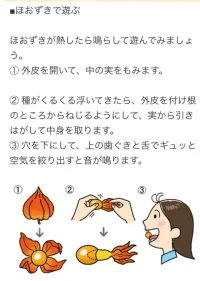
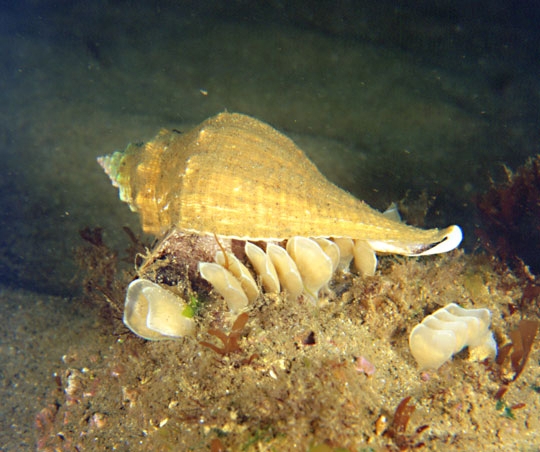
I think 鬼灯 refers to a toy there. A fruit of ホオズキ(physalis alkekengi) is usually used for this purpose, but whelk's egg capsules are also used, which is called 海ほおずき, so fruits of 枸杞 would be used similarly.

果実は…中身を取り除いて口に含んで音を鳴らす、風船のように膨らませるなど子供の遊びに使われていた

なお、玩具(植物のホオズキと同じように、口に入れて音を出して遊ぶ)用の商品としては

hoozuki.webp
 
I think 鬼灯 refers to a toy there. A fruit of ホオズキ(physalis alkekengi) is usually used for this purpose, but whelk's egg capsules are also used, which is called 海ほおずき, so fruits of 枸杞 would be used similarly.

果実は…中身を取り除いて口に含んで音を鳴らす、風船のように膨らませるなど子供の遊びに使われていた

なお、玩具(植物のホオズキと同じように、口に入れて音を出して遊ぶ)用の商品としては

View attachment 87936
I read about "playing" with it but I couldn't figure out how. It is kind of making a "whistle" with it then... Thank you!
 
As he did in the video linked below, press the skin of the fruit in one's mouth and make a sound.
 
Yeah, actually, it's not so beautiful sound. :LOL:

As people pointed out in the youtube page, it's actually difficult to make a sound of ほおずき. I was born and raised very near the sea, so ほおずき usually referred to 海ほおずき for us. 海ほおずき is far easier to make a similar sound since it's hard like rubber. Fishermen often gave us 海ほおずき in my childhood. Sweet memories...
 
Hi, what do you understand when the writer says that a school was 五六町 farther than another? 5-6 blocks away?

二人は、近所にめてもおんなじ学校に行くのではなかった。智佐子は延子り行く學校よりも、少し程度の高級な學校の方に行っていた。
延子の行く學校よりも五六町遠方であった。二三軒先きに住み合ってる二人は、學校の外の遊び友達になっていた。
 
typos
近所にても
二三軒先きに住み合ってる二人は

These are ワ行のゐ as same as 行ってゐた and 遊び友達になってゐた, as you must know.;)


町 is a unit for distance there.

町(ちょう) の意味
2 距離の単位。1町は60間で、約109メートル。丁。

 
typos
近所にても
二三軒先きに住み合ってる二人は

These are ワ行のゐ as same as 行ってゐた and 遊び友達になってゐた, as you must know.;)


町 is a unit for distance there.

町(ちょう) の意味
2 距離の単位。1町は60間で、約109メートル。丁。

Hi, yes, there must many typos, i converted the image into text and there are many things that the ocr software couldn't read or wrote wrong and that I was too lazy to correct. 😓

So 五六町 would be something around 550-650 meters away?

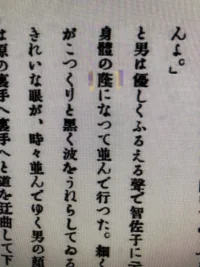
And are you able to read the kanji below? It is on page 85: 誓言 - ジャパンサーチ

Is it 陰?
 

Attachments

  • IMG_3129.webp
    IMG_3129.webp
    323.5 KB · Views: 153
Back
Top Bottom