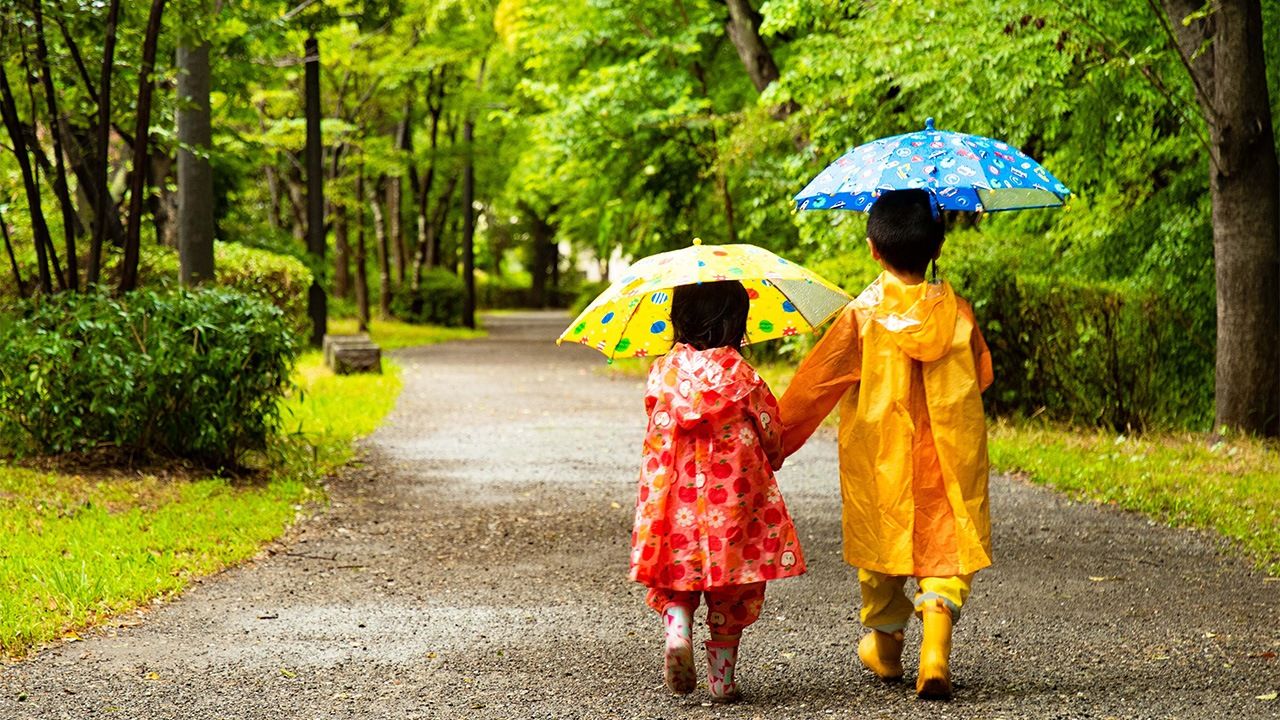
Rainy season begins in western and central Japan, ends in Okinawa

thomas

Unswerving cyclist
Admin
Joined
14 Mar 2002
Messages
21,058
Reaction score
18,915
Yesterday, the JMA announced that the rainy season has begun in the Tōkai region along central Japan's Pacific coast, as well as in the Kinki and Chūgoku regions in the west. The start of the rainy season in these areas came three days later than the average year. However, compared to 2024, it arrived 12 days earlier in Tōkai, eight days earlier in Kinki, and 11 days earlier in Chūgoku.

A day earlier, on 8 June, the northern part of Kyūshū and the Shikoku region also entered the rainy season. Meanwhile, Okinawa , Japan's southernmost prefecture, is believed to have marked the end of the rainy season this year.

The onset of the wet season in northern Kyushu was four days later than usual but nine days earlier than last year. In Shikoku, it was three days later than average and nine days earlier than last year. Okinawa's end of the rainy season was 13 days earlier than an average year and 12 days prior than in 2024.


Well, that was fast:

Today, the JMA announced that the rainy season has likely come to an end across large parts of western Japan, with most regions experiencing the earliest conclusion on record since observations began in 1951. According to the agency, the season has likely ended in southern and northern Kyushu (including Yamaguchi Prefecture), as well as in the Shikoku, Chūgoku and Kinki regions. Except for southern Kyushu, this marks the earliest recorded end to the rainy season in these areas.


We still see occasional showers here in Kanto, but overall, there wasn't much rain this year.
 
We had a very rainy season to go with our "April showers bring May flowers". It rained every Saturday for about 13 weeks in a row.
 
The hydrangeas in our garden are in full bloom, but the rainy season has already ended. Since the rainy season ended 20 days earlier than usual, I'm now worried about a water shortage and a potential power shortage due to increased air conditioning use.

Record Earliest End to Rainy Season Raises Concerns of Drought and Agricultural Damage — What About This Year? [Kumamoto] (June 27, 2025, 17:10)


This June marks the earliest end to the rainy season in recorded history.
On June 27, the Fukuoka District Meteorological Observatory announced that the rainy season is believed to have ended in Northern Kyushu, including Kumamoto Prefecture.

In Kumamoto City, people flocked to Ezu Lake to seek relief from the early summer heat.
The entire prefecture was under the influence of a Pacific high-pressure system, with intense sunlight shining down.
The rainy season ended 22 days earlier than the average and 20 days earlier than last year, marking the earliest end since records began in 1951.

Rina Nakahara, announcer:
"Normally, Kamiezuko is crowded with people during the height of summer, but even though it's still June, families with children are already gathering here for the cool water."
The temperature in Kumamoto City reached a high of 32.3°C (90.1°F). At the spring-fed "splash pond" at Kamiezuko, children in swimsuits were already enjoying the water.
A parent visiting with children:
"It feels really nice."
(The rainy season already ended in June?)
"That's so early—I'm shocked. It's just been so hot, we came looking for anywhere cool."
(How did the water feel?)
"It was cold."
"We'll probably be coming here for water play a lot from now on."
The previous record for the earliest end to the rainy season in Northern Kyushu was July 1, 1994—31 years ago.
Izumi Otani, announcer (from 1994):
"This is a speciality umbrella shop. Compared to the same time last year, only 20–30% of their usual rain umbrellas have been sold."
In that year, there was hardly any typical rainy season. Total rainfall in Kumamoto for June and July was just 300 mm—less than half the usual amount.

As a result, water shortages affected around 140,000 people in 20 municipalities, primarily on the Amakusa Islands, where the tap water supply relies on dam reservoirs. Measures such as "reduced water pressure" and "limited-hour water supply" were implemented.
In addition, agricultural damage, particularly to fruit like mandarins and pears, totalled around 11 billion yen across the prefecture.
So what about this year's rainy season?

This month (June) saw around 430 mm of rainfall, which is roughly average for a full month. Looking back further, May—before the start of the rainy season—had double the usual rainfall at 300 mm. In effect, rain that typically falls in June and July came about a month early.

As of 1 p.m. today, the Kamekawa Dam in Amakusa City had a water storage rate of 100% (usable capacity), indicating no immediate concern of drought.

With this year marking the earliest end to the rainy season on record, the focus will shift from heavy rain to heat precautions from now on.
 
Back
Top Bottom