Need a word or phrase translated?

Hey, I would be very grateful if you could help me with translation of the verse below.

ますます迷走気味な部員たち

I'm having difficulties especially with the word 迷走気味な. 迷走 means to stray and 気味 means feeling or something that feels like, seems, but it just doesn't add up, especially in that sentence. Could this mean somethin like "club members that seem more and more lost (as in not knowing what they are doing)? However, when I googled it, it seemed like it's a set collocation, with a slightly
 
What is the correct way to translate 「そのための成績学年一位」? Something like "I have the best grades in my grade for this." So, 「そのための」 means "in order to" here?

人A「あ、もうこんな時間?先輩、いつもの評議会があるんだろ」
先輩「今日は中止です。私の所用で評議室を使いたくて、皆にお願いしました」
人A「私的利用?教官からも許可が出たんだ?」
先輩「そのための成績学年一位ですわ」
 
What is the correct way to translate 「そのための成績学年一位」? Something like "I have the best grades in my grade for this." So, 「そのための」 means "in order to" here?

人A「あ、もうこんな時間?先輩、いつもの評議会があるんだろ」
先輩「今日は中止です。私の所用で評議室を使いたくて、皆にお願いしました」
人A「私的利用?教官からも許可が出たんだ?」
先輩「そのための成績学年一位ですわ」

You can't translate it as an isolated sentence. You have to find what it is referencing, which is his ability to get permission from the teachers to use the room for his own private purposes. The reason he is able to get such favorable treatment is because he has the best grades.

"That's the benefit of: being the best student / having the best grades / being number one / etc"

Word it however you like, but you'll need to go with something along those lines.
 
Hi, another question. How is 合う been used in this phrase from 貨幣 by Dazai Osamu?

人間は命の袋小路に落ち込むと、笑い合わずに、むさぼりくらい合うものらしうございます。

First part goes something like: "When our lives come to a dead end.."
Second part could be translated as "'we don't laugh, but seem to become greedy"?

Thank you!
 
I'm having a difficulty with translating 「風景を閉じ込めていた」in the following text. If I'm understanding correctly it means "to seal a scenery", from the outside world?
"Sky... Ceiling, shining with dim light, sealed this(広大な地底湖、白い砂浜) scenery in faint lightning."

目の前に広がるのは、広大な地底湖だった。波打ち際に広がる白い砂浜。
空・・・・・・天井は、かすかな光で輝いており、淡い薄明かりに、その風景を閉じ込めていた。
Context: The situation is taking place in some sort of cave.
 
A nice translation might be difficult but there isn't of course a "sky" - it's the roof of the cavern, so the … indicates the person correcting themselves. I don't know that it's talking about separation from the outside world, just the impact of the light from the ceiling onto the surroundings. Perhaps "enveloped" rather than "confined", or "sealed" because in English we don't talk about light confining something.

The sky-- the roof, rather-- shone faintly, enveloping the scene in dim light.
 
A nice translation might be difficult but there isn't of course a "sky" - it's the roof of the cavern, so the … indicates the person correcting themselves.
Guess I failed to reflect it in my translation, however I think I understand this part.

I don't know that it's talking about separation from the outside world, just the impact of the light from the ceiling onto the surroundings. Perhaps "enveloped" rather than "confined", or "sealed" because in English we don't talk about light confining something.
I understand now, thank you very much for your correction!
 
Hello,
I need the translation for the phrase: "All prices are in Yen". Any help would be very much appreciated!
 
Hello,
I need the translation for the phrase: "All prices are in Yen". Any help would be very much appreciated!

You might also wish to indicate if the prices include taxes (税込) or exclude taxes (税別).
 
Hello,
Please help me translate this phrase "取り急ぎ連絡まで".
Does this mean "We will contact you soon" or "You should contact us soon"?
Thank you in advance.
 
Neither, really. It's a sort of set phrase used when you write a quick(取り急ぎ) letter/mail , just to contact someone and let them know about a situation. e.g. they need to know right away but you can't/don't have time to explain in full right now. A little like "apologies for brevity".
 
hi,
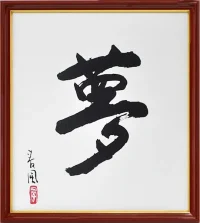
could someone please translate the image.
thanks.
 

Attachments

  • shunkei_shikishi.webp
    shunkei_shikishi.webp
    19.2 KB · Views: 150
Hi,
I am trying to get something engraved as a gift. Can anyone please translate the last name "Turner" into Japanese.
When I google search, it mainly comes up with the katakana ターナー but also 多奈.
The katakana is a bit silly looking but I understand there may be no formal translation for it so katakana is necessary.
The kanji gives me drop down menus for all of the different characters that make the sounds "ta" and "na" - which leads me to believe it is not an actual translation, because even though my last name is "kaneda" it is ONLY written 1 way - 金田.
Please help, confused!
 
The best choice is ターナー, since katakana is used to represent foreign names, for instance ジョセフ・ターナー for J. M. W. Turner or ティナ・ターナー for Tina Turner.
FYI, unlike long vowels ターナー "Tânâ", 多奈 is read たな "Tana". This is a female given name in the first place.
金田 is not the only possible kanji for かねだ. 兼田, 鎌田, 鐘田 or 金多 also can be a family name "Kaneda".
 
What's the context? That phrase can have several different meanings depending on the context.
 
Back
Top Bottom